
TL;DR
Educational science kits for kids make STEM ideas tangible through building, observing, and experimenting. Choose a kit around the child’s interests and abilities, check its safety and materials, and encourage them to predict, observe, and explain what happens.
A paper bridge can sag under one coin and hold a whole stack after a child folds it into an accordion. That small surprise is the pleasure of educational science kits for kids: a big idea becomes something you can touch, test, and talk about at the kitchen table.

Prime made for students and young adults
- Fast, free delivery for dorm and study essentials
- Prime Video and Amazon Music included
- Member-only deals
This guide helps you choose a kit that matches a child’s interests, reading ability, and coordination. You’ll also learn what to check before buying and how a few simple questions can turn an experiment into a lesson in curiosity, observation, and problem-solving.
Start with an interest the child already has, such as plants, building, rocks, or robots.
Check reading demands, coordination, small parts, and supervision needs alongside the age label.
Read the materials list to spot missing supplies, single-use ingredients, and extra device or battery costs.
Ask the child to predict, observe, and explain; the conversation helps connect the project to the science.
Treat app features and sustainability claims as product details to verify, not promises of learning value.
Why a hands-on kit can make science click
Educational science kits for kids make abstract ideas easier to grasp by giving children something to build, observe, or change. A magnet that pulls a paper clip across a table makes magnetic force visible; a seed that opens a pale green leaf in a jar shows plant growth over time. The kit provides a starting point, and the child’s questions turn the activity into learning.
For example, imagine your child rolls a toy car down two ramps, one steep and one shallow. Before the test, ask which car will reach the bottom first. Afterward, ask what changed and what stayed the same. Those few minutes of prediction and comparison connect the satisfying clatter of the car to ideas about motion and forces.
Activities can make concepts memorable, but a recipe alone does not guarantee understanding. If a child only follows steps to create a color change, they may remember the bright purple liquid without knowing what caused it. Invite them to describe what they saw in their own words, then connect the result to the explanation in the kit.
Learning can also include a failed attempt. A paper tower that leans to one side gives a child a reason to widen its base or change the shape of the supports. That kind of safe retry turns frustration into a useful clue.
Popular right now

De'Longhi Stilosa Compact Manual Espresso Machine with Milk Frother

KitchenAid Artisan Mini Tilt-Head Stand Mixer, 3.5 Quart, Aqua Sky Blue

De'Longhi Magnifica Duo Fully Automatic Espresso Machine with Milk Frother, Silver
As an affiliate, we earn on qualifying purchases.
Match the kit to what your child already loves
Educational science kits for kids work best when a child recognizes something they already want to explore. A child who collects rocks may happily sort minerals under a hand lens, while a budding storyteller may prefer building a cardboard creature with moving parts. Starting with a familiar interest gives the science idea a friendly doorway.
Use age labels as a guide, then consider the child’s reading, dexterity, attention, and experience. A seven-year-old who loves detailed instructions may manage a project rated for older children with an adult nearby; another child of the same age may have more fun with a simple build they can finish independently. What matters is whether the main task feels engaging rather than exhausting.
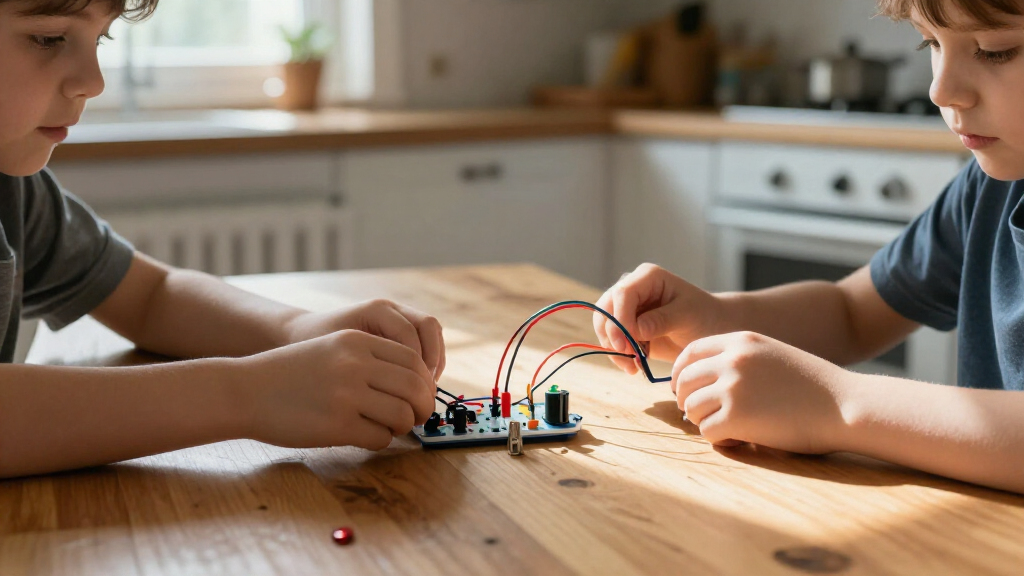
Look at the project itself. If a kit asks children to thread tiny wires through a small board, think about whether that fits their hand control and patience. If the kit relies on lots of text, illustrations or adult read-aloud support can help. For a child sensitive to strong smells or sticky textures, check what materials the activity uses before bringing it home.
For example, if your child spends afternoons watching snails in the garden, a nature observation kit may hold their attention longer than a robot kit with flashy lights. Interest, confidence, and fit usually matter more than a large experiment count on the box.
Compare kit types before you pick one
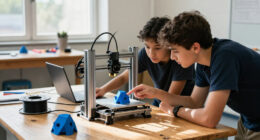
Different science kits let children explore different questions: what changes a substance, how a structure holds weight, or where a new leaf comes from. A quick comparison can help you find the right match for a child’s curiosity and the amount of adult help available. For example, a kitchen-table family might prefer a compact circuit project over a weather station that needs outdoor observations.
| Kit type | What children explore | Example activity | Check before buying |
|---|---|---|---|
| Chemistry | Color changes and reactions | Grow crystals or use an indicator | Supervision, ingredients, and disposal steps |
| Physics and engineering | Forces, structures, and simple machines | Build a bridge and test its load | Whether parts can be rebuilt and tested again |
| Electronics and robotics | Circuits, sensors, and beginner coding | Make a light switch or guide a small robot | Small parts, device compatibility, and extra costs |
| Nature and life science | Plants, animals, rocks, and anatomy | Track a seedling’s growth | Time, living-material care, and local conditions |
| Astronomy and earth science | Space, weather, and geology | Record cloud patterns or sort rocks | Whether the activity needs outdoor access |
The differences matter because the activity determines how learning fits into family life. A chemistry project may produce a quick, visible result, while tracking a seedling rewards patience and repeated observation. A bridge or circuit can be rebuilt and tested, which gives a child more chances to compare outcomes, but may require more setup and adult help.
Some kits offer one self-contained activity, while others provide several projects using reusable materials. A single crystal experiment may be simple to set up; a reusable building set can invite many redesigns. Read the materials list to see whether the kit includes everything or expects you to supply water, a flashlight, paper, batteries, or other household items. Reusable parts may improve value if the child wants to repeat or adapt projects; a one-time activity may be the better fit when you want a shorter, simpler experience.
Use five checks to choose a kit you can actually use
A good purchase balances learning, safety, clear directions, repeat use, and real cost. Before you choose, read beyond the front of the box: a vivid photo may show the finished robot, while the back reveals that batteries and a compatible device are sold separately. These checks help you judge not just what the kit promises, but whether its demands and likely use fit your home.
- Pick a learning goal. Look for an explanation of what the activity teaches, such as how a circuit connects a battery, wires, and a light. A clear goal gives you a way to talk about the result; a long list of unrelated experiments may offer variety but make it harder to see what the child is learning.
- Check safety and supervision. Read age guidance and warnings about small parts, sharp tools, heat, batteries, and chemical materials. The supervision requirement affects whether the child can explore independently or whether the activity needs a dedicated adult alongside them.
- Count the missing supplies. Note any household items or extra purchases needed before the first activity. A kit that needs only common supplies is easier to start on impulse, while specialized purchases can add cost and delay.
- Read a sample instruction. Clear, illustrated directions can save a project from stalling halfway through. They also leave more attention for noticing what happens; confusing steps can turn the session into troubleshooting the instructions instead of the science.
- Check repeat use and cost per activity. See which parts can be reused, which supplies run out, and how many projects the child can complete. Reusable components can lower the cost of future experiments, but only if the child is likely to want to use them again.
For instance, a low-priced kit with one experiment may cost more per activity than it first appears if you need to buy special supplies. A pricier set could offer reusable circuit pieces and several ways to build, though only if the child likes electronics. The best value depends on the child and the project, not the price tag alone.
Keep experiments safe and manageable at home
A science kit is suitable for home use only when its materials and activities fit the child and you follow the directions. Check warnings before starting, and provide the level of supervision the instructions call for. Kits that use chemicals, glass, heat, sharp tools, batteries, or small parts deserve particular attention.
Set up a clear patch of table before opening the box. Keep pets and younger siblings away from small pieces, make sure the child knows not to taste or mix materials outside the directions, and follow the kit’s cleanup and disposal instructions. After an activity, wash hands as directed. These small habits help the fun stay focused on the experiment.
Consider a child who wants to make a crystal garden while a toddler sibling plays nearby. The adult can prepare the workspace, keep the materials within reach of the older child only, and handle any step that the kit says needs adult help. If the instructions require equipment you do not have, choose another activity rather than improvising with a risky substitute.
Let the kit’s instructions and the child’s abilities guide supervision. A recommended age is a starting point; it does not replace checking the actual task.
Safety planning does not need to feel like a lecture. A short, calm reminder before the first step can make children feel like capable partners in caring for their materials and workspace.
Ask three questions that turn a project into learning
Three simple questions can help a child connect an activity to its science: What do you think will happen? What changed? How could you test that? These questions encourage children to make a prediction, notice results, and consider what to try next. You do not need to give a perfect explanation before the experiment begins.
Suppose a child builds a bridge from paper strips and craft sticks. Ask how many coins they think it will hold. When the paper bends, pause and look closely together: is it sagging in the middle, or pulling loose at an end? The child might fold the paper into ridges and test again, discovering that changing a shape changes how it supports weight.
Let the child do the observing and describe the result. You might ask whether the water looks clearer, the plant has grown taller, or the robot turned sooner after a coding change. If the result does not match the prediction, that is still useful information; the next test can help narrow down why.
Keep the conversation relaxed. Curiosity works better than a quiz, especially when the child is young or unsure. You can connect the activity to everyday life, such as explaining that folded cardboard can help a box stay firm or that the same sun warming a windowsill also helps a plant grow.
Know what app features and eco claims really offer
Some newer kits combine a physical project with an app, coding platform, video, or augmented reality feature. That combination can suit a child who loves screens and building: they might assemble a small robot, then use a simple program to change its route. The digital part adds value when it helps the child test or understand the physical project, rather than simply adding another set of steps to follow.
Check whether the app works on your device, whether it needs a subscription, and what happens if the app is unavailable. A robotics kit that cannot run without an unsupported tablet may become a box of idle parts. A digital guide can make a complicated build easier to follow, but a dependence on a specific device can shorten the kit’s useful life. Some children enjoy screen-guided steps; others learn more comfortably with a printed sheet they can spread beside the build.
Reusable parts and reduced packaging also appear in product claims. Look at what is actually reusable: a sturdy set of building pieces may support many projects, while an experiment that consumes its ingredients may allow only one run. Reusability can mean less waste and more chances to refine a design, though it matters only if the child returns to the materials. Read sustainability claims product by product, and compare them with the materials list and packaging details.
Design, coding, and science can meet in the same maker project, but broad trends do not tell you whether a particular kit teaches well. Ask what the child will build, what they can change, and how the kit explains the result. A clear activity with a few adaptable parts may serve a curious beginner better than an app packed with features, especially if it leaves room for the child to make choices and understand the outcome.
Frequently Asked Questions
What age is right for a science kit?
Use the manufacturer’s age guidance as a starting point, then think about the child’s reading, coordination, attention, and need for help. A younger child may enjoy observing plants or building with large pieces, while an older beginner may prefer a simple, well-explained circuit project.
Are science kits safe for children?
Safety depends on the specific kit and how the child will use it. Read the warnings, follow the directions for adult supervision, keep small parts away from younger children and pets, and pay special attention to activities with heat, glass, sharp tools, batteries, or chemicals.
Do science kits really teach children science?
They can help children learn when the activity asks them to predict, observe, compare, and explain what happened. A kit that only gives steps to follow may still be fun, but a conversation about why the result changed can make the idea easier to understand.
What should I look for in a first kit?
Choose a manageable activity tied to something the child already likes, with clear instructions and supplies that are easy to gather. A seed-growing project, a simple bridge build, or an introductory circuit can be a friendly first experience if it suits the child’s abilities.
Do science kits usually include all the supplies?
Some kits include everything, while others need household items such as water, paper, or a flashlight. Check the materials list before starting so you do not reach the middle of a project and discover that a key item is missing.
Can children reuse a science kit?
Building pieces, microscopes, and circuit components are often reusable, while ingredients for a chemical or growing experiment may run out. Read the product details to see which parts support repeat projects and which activities produce a one-time result.
Conclusion
Choose a science kit that gives your child a clear first step and a reason to ask what happens next. Check the materials and safety guidance, then leave room for a second try when the first result surprises them.
A bent paper bridge or a crooked seedling can start a better conversation than a perfect project. Follow the question that makes your child lean closer to the table.