
TL;DR

Prime made for students and young adults
- Fast, free delivery for dorm and study essentials
- Prime Video and Amazon Music included
- Member-only deals
Aviation Week reports that NASA approached former SR-71A test staffers with job offers tied to work on Tail No. 844, a Blackbird removed from display at California’s Armstrong Flight Research Center. NASA has not confirmed that it plans to return the aircraft to flight, and the technical, logistical and cost challenges remain unclear.
NASA has reportedly approached former SR-71A staffers about work on Tail No. 844, a retired Blackbird that the agency removed from display at Armstrong Flight Research Center in California. Aviation Week reports the aircraft was moved into a hangar for inspection and that staff were working on it, but NASA has not confirmed a plan to make it fly again.
Aviation Week says former NASA SR-71A test engineers Mike Relja and Tim Conners, along with others, received job offers over the summer for a project involving Tail No. 844. Relja, a former Air Force and NASA test engineer, told the publication that David Ash, hired by NASA in June as a special projects director, asked him to contribute his expertise. Relja said he was skeptical that the aircraft could be returned to flight.
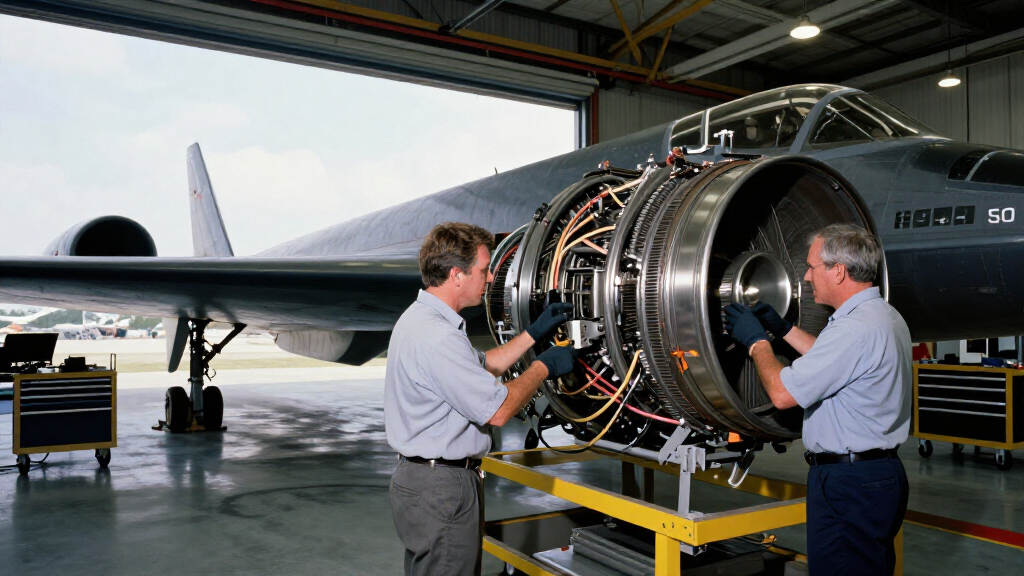
The aircraft was taken down from its display pole at Armstrong before May 17 and possibly before April, according to commercial satellite imagery cited by Aviation Week. The report says NASA employees moved it into a hangar formerly used for the Space Shuttle and inspected it. Relja said crews were working on the aircraft by the time he received the offer in August, while noting he did not know what work they were doing.
NASA has declined to elaborate. An agency spokesperson told Aviation Week: “We recognize the interest in the SR-71 and its remarkable history at NASA but have no additional information to share regarding the aircraft at this time.” The report links the activity to NASA Administrator Jared Isaacman’s stated interest in rebuilding the agency’s X-plane fleet, but does not establish that Tail No. 844 is part of a confirmed flight program.
The Cost of Reviving a Blackbird
If NASA is pursuing a return to flight, the effort would involve more than repairing an old airframe. The SR-71A was designed for Mach 3 flight, and Aviation Week reports that the aircraft has been out of the air for nearly 27 years. Former staffers cited missing specialist equipment, scarce parts, and the challenge of restoring engines and the aircraft’s support systems.
The report says the agency would also need to address supplies of the Blackbird’s JP-7 fuel, ignition chemical, engine oil and hydraulic fluids. Relja described bespoke carts and other ground equipment once used to service the aircraft, saying that equipment is gone. Those issues point to a complex restoration and support effort, though NASA has not disclosed a project scope, budget or schedule.
A flight by Tail No. 844 could also serve NASA’s broader aeronautics research ambitions if the aircraft is being prepared for that purpose. Isaacman has said the agency is rebuilding its X-plane fleet to pursue advances in aviation. Whether this Blackbird is connected to that campaign remains unconfirmed.
From Final Flight to Hangar
Tail No. 844 had stood on a display pole at Armstrong Flight Research Center, located at Edwards Air Force Base, since about October 9, 1999. Aviation Week identifies that date as the aircraft’s final flight and the final flight of any Blackbird. NASA later removed the aircraft from the display position and moved it into a hangar, according to the report.
The SR-71 fleet’s support network has also changed. Aviation Week reports that the Air Force and NASA destroyed a reported $600 million supply of Blackbird spare parts in 2007, after a return to service appeared unlikely. The report says that decision could add to the difficulty of any restart, alongside the loss of maintenance equipment and the need to re-establish supplies for the aircraft.
Public attention grew after Isaacman showed an image with the SR-71’s distinctive outline during the All-In Summit in Los Angeles on September 12–14. His remarks concerned a wider effort to rebuild NASA’s X-plane fleet. The image prompted speculation about a modern aircraft inspired by the Blackbird, but former NASA employees gave Aviation Week a different account: the agency had approached them about work on the existing Tail No. 844.
““When we were operational, if we had a spare engine, every 90 days we had to rotate the engine. Every 180 days, we had to run it to keep it as a ready spare. Now you’re talking about engines that have been sitting for 30-plus years.””
— Mike Relja, to Aviation Week
NASA Has Not Confirmed a Flight Plan
NASA has not confirmed that it is conducting a return-to-flight project, why Tail No. 844 was removed from display, or what work crews are performing. The agency has not provided a budget, timetable, flight objective or airworthiness assessment. Aviation Week’s reporting on the staff offers and aircraft activity relies on former employees and satellite imagery; the agency spokesperson declined to add details.
Relja raised concerns about possible water and sand inside the aircraft, engines that may have sat without regular rotation, and missing service equipment and supplies. These are his assessments as reported by Aviation Week; the aircraft’s actual condition has not been publicly detailed. It is also unclear whether NASA has identified replacement parts, restored a supply chain, or resolved the specialized fuel and ground-support requirements.
Watch for NASA’s Next Details
The next clear development would be a statement from NASA describing the aircraft’s purpose, the work under way and whether the agency intends to fly Tail No. 844. A project announcement could clarify who is involved, what technical milestones are planned, and how the agency would address parts and support needs. Until NASA provides those details, the reported offers and movement into a hangar indicate activity around the aircraft but do not establish that a flight will take place.
Key Questions
Has NASA confirmed it plans to fly the SR-71A again?
No. NASA told Aviation Week it had no additional information to share about the aircraft. The agency has not confirmed a return-to-flight plan.
What happened to Tail No. 844?
Aviation Week reports that NASA removed the aircraft from its display pole at Armstrong Flight Research Center before May 17, moved it into a hangar and inspected it. The exact date and purpose of the move have not been confirmed by NASA.
Who was reportedly asked to help?
Aviation Week reports that former NASA SR-71A test engineers Mike Relja and Tim Conners, among others, received job offers tied to work on the aircraft. Relja said David Ash made the request to him.
Why could returning the aircraft to flight be difficult?
The aircraft has reportedly been out of flight for nearly 27 years. Relja cited concerns about the engines’ long storage, missing maintenance equipment, and the need to restore supplies of specialized fuel and other materials. NASA has not described its technical plans or the aircraft’s current condition.
Is Tail No. 844 part of NASA’s new X-plane effort?
That connection has not been confirmed. Administrator Jared Isaacman discussed rebuilding NASA’s X-plane fleet, but the agency has not said whether Tail No. 844 is included in that effort.
Source: hn
Fall Picks
fall essentials
As an affiliate, we earn on qualifying purchases.