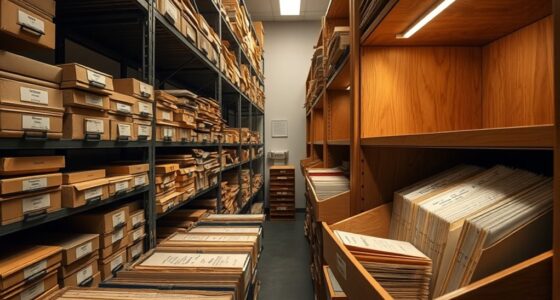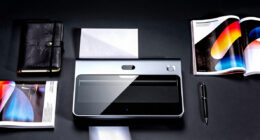
To effectively archive your work, organize it with clear folders and descriptive filenames, making retrieval easy. Capture your creative process with notes, sketches, and photos, while adding metadata tags for quick searches. Save high-resolution files for long-term preservation and regularly back up your collection to external drives or cloud services. By establishing a solid system, you guarantee your artistic legacy stays protected and accessible, and you’ll discover strategies to enhance your personal archive along the way.
Key Takeaways
- Organize digital files with clear folder structures, descriptive filenames, and consistent naming conventions for easy retrieval.
- Regularly back up artwork to external drives or cloud storage to prevent data loss.
- Document the creative process through notes, sketches, and metadata to preserve context and inspiration.
- Save high-resolution copies of work for long-term preservation and quality retention.
- Maintain a digital journal or log to track artistic growth, techniques, and project details over time.

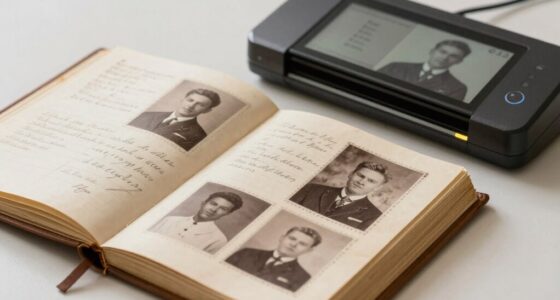
Have you ever wondered how to keep your creative work organized and accessible over time? As an artist or creative, your work is your legacy, and maintaining it requires more than just creating. It involves intentional steps to confirm your art, ideas, and projects are preserved for the future. Digital preservation plays an essential role here, allowing you to store high-quality digital copies of your work that won’t degrade over time. By digitizing your paintings, sketches, or recordings, you create a reliable backup that’s easy to access and share. This process not only protects your work from physical deterioration but also guarantees you can retrieve it swiftly whenever needed.
Digital preservation ensures your creative work remains accessible and safe for the future.
Creative documentation is fundamental to personal archiving. It’s about capturing the story behind each piece—your inspiration, techniques, date, and context—so your portfolio isn’t just a collection of images but a narrative of your artistic journey. Proper documentation helps you stay organized, making it easier to locate specific works and understand your growth as an artist. When you develop a consistent system for documenting your creative process, it becomes a powerful tool for reflection and future projects. It’s also invaluable if you ever want to showcase your work to galleries, clients, or collaborators.
To implement effective digital preservation and creative documentation, start by establishing a clear folder structure on your computer or cloud storage. Separate files by project, date, or medium, and always use descriptive filenames. Save your work in high-resolution formats for archival purposes, and consider creating backups on external drives or cloud services to prevent data loss. Make a habit of updating your archive regularly—immediately after completing a piece or at least weekly—so your collection remains thorough and current. Additionally, understanding food safety practices when handling raw materials or supplies can help maintain a healthy workspace and prevent contamination.
Document your creative process through notes, sketches, and photographs taken during your development stages. Keep a digital journal or project log where you can record ideas, challenges, and breakthroughs. Use metadata tags to add relevant keywords, dates, or locations, making future searches simple. Incorporating consistent naming conventions and detailed records ensures that your archive remains navigable, no matter how extensive it grows. Also, explore digital tools designed for creative documentation, such as dedicated art management apps, which streamline the process and keep everything organized in one accessible platform.
In the end, personal archiving isn’t just about storage; it’s about curating a meaningful record of your creative life. By prioritizing digital preservation and thorough documentation, you’ll safeguard your work’s integrity, facilitate future projects, and guarantee your artistic legacy endures over time.

Epson Workforce ES-580W Wireless Color Duplex Tax Receipt & Desktop Document Scanner for PC and Mac with 100-sheet Auto Feeder (ADF), Intuitive 4.3' Touchscreen
EFFORTLESS WIRELESS SCANNING – With a 4.3" touchscreen and wireless connectivity, this high-speed scanner sends scans straight to...
As an affiliate, we earn on qualifying purchases.
Frequently Asked Questions
How Often Should I Update My Digital Archive?
You should update your digital archive regularly, ideally monthly or after completing major projects. This helps maintain effective metadata management and guarantees your files stay organized. Follow archiving standards by including detailed descriptions, dates, and keywords to make future retrieval easier. Frequent updates prevent data loss and keep your archive current, allowing you to track your creative progress and access your work efficiently whenever needed.
What Are the Best Tools for Archiving Large Files?
Imagine losing your masterpiece because of poor storage. You need reliable tools like Dropbox or Google Drive, which support file versioning and metadata management for large files. These tools let you keep multiple versions, track edits, and organize details effortlessly. For artists, this means safeguarding your work while maintaining easy access and detailed records, ensuring your creative legacy remains intact and well-documented over time.
How Can I Protect My Archive From Data Loss?
To safeguard your archive from data loss, you should implement hardware redundancy and physical backups. Use multiple storage devices like external drives or NAS systems to make certain your data is duplicated across hardware. Regularly back up your files to physical media such as external hard drives or offline storage, and store these copies in different locations. This approach minimizes risks from hardware failure, theft, or natural disasters, keeping your archive safe.
Is Cloud Storage Secure for Sensitive Artwork?
Yes, cloud storage can be secure for sensitive artwork if you choose providers that prioritize security. Look for services with strong cloud encryption that protects your files during upload and storage. Also, review their privacy policies to ensure they don’t share your data without permission. By selecting reputable providers and understanding their security measures, you can confidently store your artwork in the cloud while maintaining privacy and safety.
How Do I Organize Archives for Easy Access?
To organize archives for easy access, start by sorting files systematically—consider categorizing by project, date, or medium. Use descriptive metadata management to tag each piece with relevant details, making retrieval simple. Combine digital organization with physical storage solutions like labeled boxes or portfolios. Regularly update your catalog, back up files, and keep everything in a consistent, accessible system so you can locate your artwork quickly and efficiently.
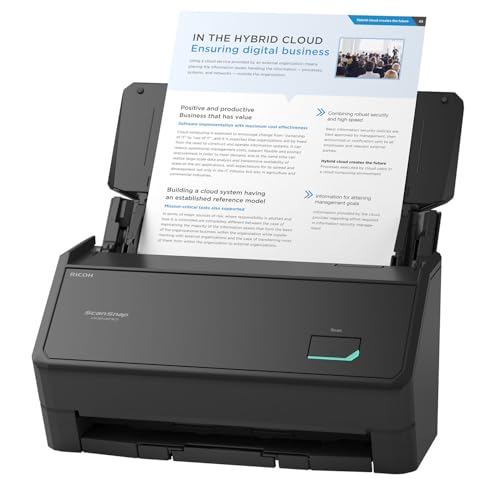
ScanSnap iX2400 High-Speed Simple One-Touch Button Color Document, Photo & Receipt Scanner with 100 Page Auto Document Feeder for Mac or PC, Black
SIMPLE, FAST ONE-TOUCH SCANNING. Press one button and documents are scanned, cleaned up, and organized at incredible speeds...
As an affiliate, we earn on qualifying purchases.
Conclusion
Remember, nearly 60% of artists report losing valuable work due to poor archiving. By implementing simple personal archiving practices, you protect your creative legacy and guarantee your work’s longevity. Staying organized might seem tedious, but it’s worth the peace of mind and future accessibility. Start today—your future self will thank you for it. Keep your art safe, accessible, and ready to inspire others for years to come.

Epson WorkForce ES-50 Portable Sheet-Fed Document Scanner for PC and Mac
Fastest and lightest mobile single sheet fed document scanner in its class(1) small, portable scanner ideal for easy,...
As an affiliate, we earn on qualifying purchases.

ScanSnap iX1300 Compact Wireless or USB Double-Sided Color Document, Photo & Receipt Scanner with Auto Document Feeder and Manual Feeder for Mac or PC, Black
FITS SMALL SPACES AND STAYS OUT OF THE WAY. Innovative space-saving design to free up desk space, even...
As an affiliate, we earn on qualifying purchases.