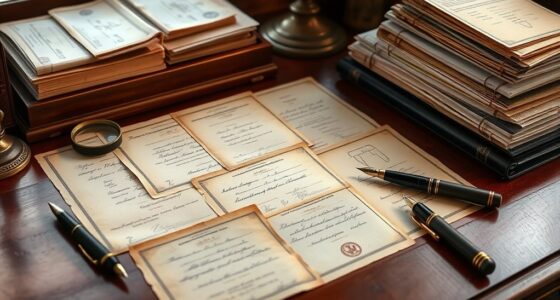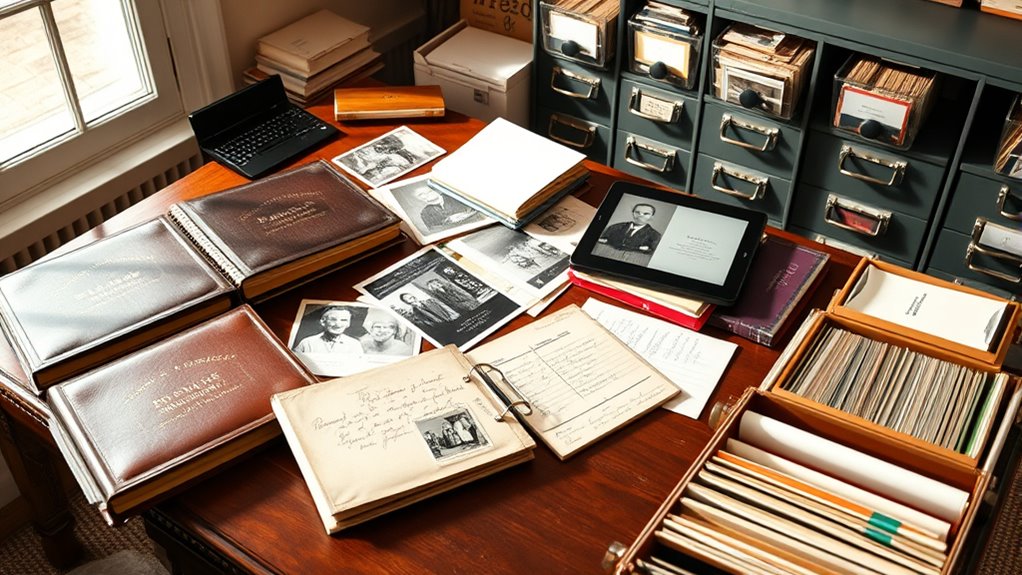

Labeling and cataloguing your family archives is essential for easy identification, efficient retrieval, and long-term preservation. You should use specific descriptions on labels, including dates, locations, and names, and create a digital inventory with detailed metadata for quick access. This organization helps prevent loss, damages, and confusion while ensuring that your family stories and treasures are preserved for future generations. If you keep going, you’ll discover more practical tips to enhance your collection’s care and accessibility.

Prime made for students and young adults
- Fast, free delivery for dorm and study essentials
- Prime Video and Amazon Music included
- Member-only deals
Key Takeaways
- Use specific, detailed labels with dates, names, and locations on physical items for easy identification.
- Create a digital inventory with metadata to track collection details, descriptions, and contextual stories.
- Maintain consistent labeling and cataloguing formats to ensure organization and clarity across all items.
- Proper labeling and cataloguing reduce loss, aid in preservation, and facilitate sharing with family members.
- An organized system preserves family memories, supports long-term safeguarding, and makes archives accessible for future generations.
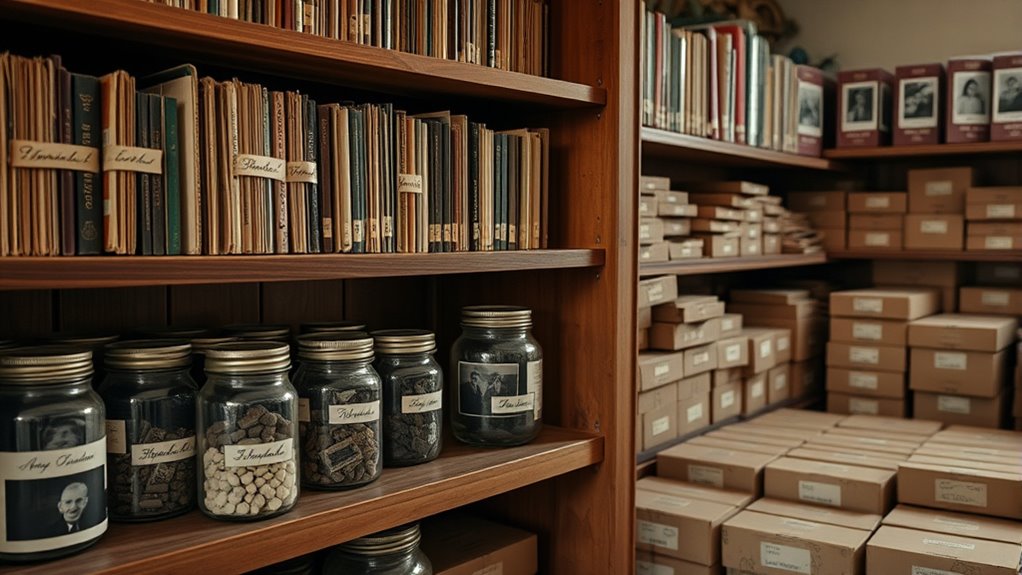
Creating an organized family archive begins with effective labeling and cataloguing. When you start, it’s essential to develop a system that clearly identifies each item, making it easier to find and preserve over time. Proper labeling is the backbone of archival preservation because it guarantees that important details—such as dates, names, and origins—are preserved alongside the items themselves. Instead of vague descriptions, be specific. For photographs, include the date, location, and people featured. For documents, note their significance and the year they were created. This way, when you or future family members want to access specific items, you won’t waste time guessing or rummaging through piles.
Once you’ve labeled your items, it’s vital to create a digital inventory. This acts as a thorough catalog that complements physical labels, especially for larger collections. A digital inventory allows you to keep track of what you have, where it’s stored, and its condition. You can use spreadsheets, specialized software, or apps designed for archival management. The key is to include metadata—details about each item—that provide context and facilitate searchability. For example, in your digital catalog, you might link a photograph to a detailed description, its physical location, and any relevant stories. This approach not only makes retrieval easier but also helps you monitor the state of your collection.
Labeling and cataloguing also play a vital role in safeguarding your family history. When items are properly labeled, they’re less likely to be misplaced or damaged due to mishandling. Furthermore, a well-maintained digital inventory becomes invaluable if your collection is ever damaged or lost, enabling you to reconstruct or verify what was there. It’s a proactive step toward long-term preservation, ensuring that your family’s stories and treasures endure across generations. Additionally, digital inventories make sharing your collection with relatives simpler—they can access details without risking the physical items.
Implementing a consistent organization system for your archives enhances overall preservation efforts and makes managing your collection more efficient.
In short, effective labeling paired with a detailed digital inventory forms the foundation of a well-preserved family archive. It transforms a collection of cherished items into an organized, accessible resource that tells your family’s story with clarity and care. This system not only preserves your history but also makes it easier to pass down meaningful memories, ensuring they remain vibrant and intact for years to come. By investing time in these steps now, you’re safeguarding your family’s legacy and making sure that future generations can enjoy and learn from it.
As an affiliate, we earn on qualifying purchases.
Frequently Asked Questions
How Do I Start Organizing a Large Family Archive?
To start organizing a large family archive, first gather all your materials, both digital and physical. Use digital storage solutions like cloud services to back up important documents and photos. Create a simple filing system, grouping items by family branches or time periods. This approach helps you easily access materials for genealogical research and guarantees your family history remains well-preserved and organized for future generations.
What Materials Are Best for Preserving Old Documents?
Did you know that paper can last over 500 years if properly preserved? To protect your old documents, choose materials like acid-free folders and archival adhesives to prevent deterioration. Use preservation techniques such as storing in a cool, dry environment and avoiding direct sunlight. These methods guarantee your family’s history remains intact for generations. Proper preservation is key to maintaining the integrity and longevity of your treasured documents.
How Often Should I Update My Archive Labels?
You should update your archive labels based on your archival frequency and label revision schedule, typically every 1-2 years or whenever you add new materials. Regular updates guarantee labels stay accurate and helpful. Check your labels periodically for wear or changes in content. Staying consistent with your schedule helps keep your archive organized and easy to navigate, preventing confusion and preserving the integrity of your collection over time.
Can Digital Cataloguing Replace Physical Labeling Effectively?
Digital cataloguing can effectively substitute physical labels if you use archive software with digital tagging features. This allows you to organize and search your family archives easily without relying on paper labels. By consistently updating your digital tags, you ensure quick access and better management. While physical labels provide tangible cues, a well-structured digital system streamlines storage, especially for large collections, making digital cataloguing a practical alternative.
What Legal Considerations Exist for Family Photograph Archives?
When managing your family photograph archives, you need to ensure privacy laws and copyright considerations. You must respect individuals’ privacy rights, especially if photos include minors or sensitive content. Additionally, copyright laws may restrict how you use or share images created by others, so you should verify ownership or licensing before reproducing or distributing photos. Staying informed about these legal aspects ensures you handle your archives responsibly and avoid potential legal issues.
digital inventory software for family archives
As an affiliate, we earn on qualifying purchases.
As an affiliate, we earn on qualifying purchases.
Conclusion
Think of your family archives as a treasured garden. Proper labeling and cataloguing are like tending to each plant, ensuring every memory blooms clearly and is easy to find. When you organize with care, you create a vibrant landscape of your family’s history that future generations can stroll through and cherish. Your efforts keep these stories alive and accessible, transforming chaos into a beautiful, enduring legacy. Take charge now, and watch your family history flourish.
As an affiliate, we earn on qualifying purchases.
archival storage boxes with labels
As an affiliate, we earn on qualifying purchases.
As an affiliate, we earn on qualifying purchases.
Halloween Picks
halloween
As an affiliate, we earn on qualifying purchases.