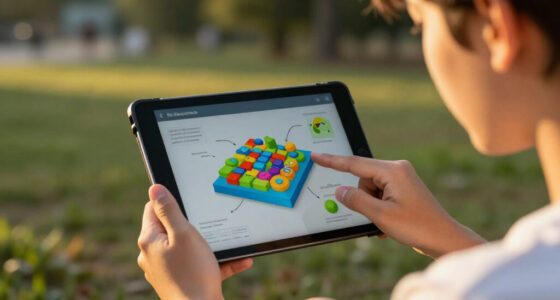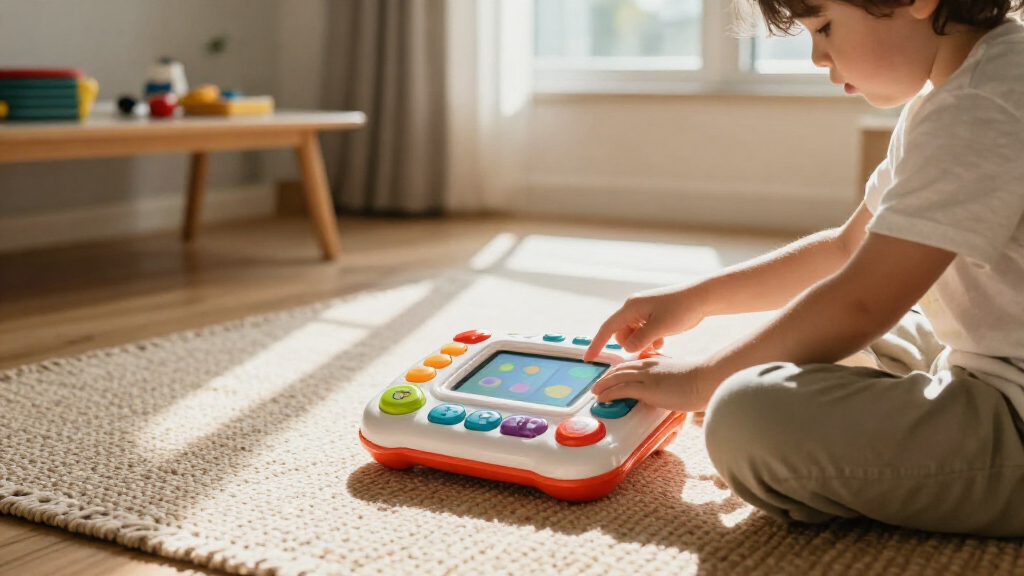
Interactive electronic learning toys range from screen-based tablets to talking books, writing tools, and movement games. My best overall pick is the LeapFrog LeapPad Academy for families seeking a broad, tablet-style learning experience, while the LeapFrog Magic Adventures Interactive Globe stands out for geography and shared exploration. For early letter and word practice without a conventional screen, the LeapFrog Learning Friends 100 Words Book is a strong alternative. The main tradeoffs are screen time versus hands-on play, focused practice versus variety, and portability versus room-based activities. Read on for the full breakdown and guidance on matching a toy to your child’s age, interests, and routine.

Prime made for students and young adults
- Fast, free delivery for dorm and study essentials
- Prime Video and Amazon Music included
- Member-only deals
Key Takeaways
- The LeapPad Academy is the broadest all-around choice: its tablet format suits families who want several kinds of digital learning in one device, but it asks for more screen time than books, charts, or writing toys.
- Learning is more focused on the smaller toys: LeapReader and Mr. Pencil center on early literacy and writing, while the LeapMove makes learning active rather than desk-based.
- The 100 Words Book and the wall chart favor quick, shared practice: both support short bursts of vocabulary or letter learning, though they offer less variety than a tablet or globe.
- Physical format predicts how often a toy fits daily routines: handheld and book-style options are easier to use in small spaces, while the LeapMove, globe, and learning desk need more room or setup.
- The list includes a duplicate: LeapFrog Learning Friends 100 Words Book appears twice, so it represents one distinct product rather than two different choices.
| LeapFrog LeapPad Academy Kids’ Learning Tablet, Green |  | Best Overall | Recommended age: 3–8 years | Screen: 7-inch shatter-safe screen | Operating system: Android 10 | VIEW LATEST PRICE | See Our Full Breakdown |
| LeapFrog LeapReader System Learn-to-Read 10 Book Mega Pack, Pink |  | Best for Early Reading | Included books: 10 early-reading books | Learning focus: Vowel sounds, sight words, word blending, and spelling | Page interaction: Three modes per page | VIEW LATEST PRICE | See Our Full Breakdown |
| LeapFrog Learning Friends 100 Words Book |  | Best for Bilingual Toddler Vocabulary | Recommended age: 18 months–4 years | Word count: More than 100 | Languages: English and Spanish | VIEW LATEST PRICE | See Our Full Breakdown |
| LeapFrog 2-in-1 LeapTop Touch Educational Toy |  | Best for Pretend Computer Play | Recommended age: 2–5 years | Learning modes: ABCs, numbers, games, music, and messages | Keyboard: Letters A–Z and numbers 1–10 | VIEW LATEST PRICE | See Our Full Breakdown |
| VTech ABC Learning Apple, Red |  | Best for Progressive Button-Based Learning | Recommended age: 2–5 years | Learning activities: 8 | Learning modes: 7 | VIEW LATEST PRICE | See Our Full Breakdown |
| GaHoo Interactive Alphabet and Numbers Wall Chart |  | Best for Shared Early Learning | Brand: GaHoo | Dimensions: 24 x 16 inches | Age range: 12 months to 5 years | VIEW LATEST PRICE | See Our Full Breakdown |
| LeapFrog LeapMove Active Learning Video Game System |  | Best for Active, Screen-Based Learning | Brand: LeapFrog | Recommended age: 4–7 years | Preloaded games: 25 | VIEW LATEST PRICE | See Our Full Breakdown |
| LeapFrog Learning Friends 100 Words Book |  | Best for Bilingual Beginners | Age range: 18 months and up | Languages: English and Spanish | Vocabulary: Over 100 words | VIEW LATEST PRICE | See Our Full Breakdown |
| LeapFrog Mr. Pencil Scribble, Write and Read, Green |  | Best for Early Writing Practice | Brand: LeapFrog | Age range: 3+ years | Power: 3 AA batteries | VIEW LATEST PRICE | See Our Full Breakdown |
| LeapFrog Magic Adventures Interactive Globe |  | Best for Geography Exploration | Recommended age: 5–12 years | Globe size: 10 inches | Screen size: 2.8 inches | VIEW LATEST PRICE | See Our Full Breakdown |
| VTech Little CEO Learning Desk Toddler Activity Center |  | Best for Pretend-Play Learning | Brand: VTech | Age range: 9–36 months | Educational objectives: Counting, first words, letters, number recognition, motor skills, and sing-along songs | VIEW LATEST PRICE | See Our Full Breakdown |
| Screen-Free Toddler Learning Tablet Toy with Music, Lights, and Speech Activities |  | Best for Multilingual Practice | Brand: Yeeammk | Age range: 12 months to 3 years | Activity modes: 4 | VIEW LATEST PRICE | See Our Full Breakdown |
| LeapFrog My First Gamer Preschool Handheld Video Game Toy |  | Best for Preschool Skill Variety | Brand: LeapFrog | Manufacturer: VTech | Age range: 3–5 years | VIEW LATEST PRICE | See Our Full Breakdown |
| VTech Touch and Teach Sea Turtle Interactive Learning Book, Green |  | Best for Early Reading Readiness | Brand: VTech | Model number: 80-533400 | Age range: 12–36 months | VIEW LATEST PRICE | See Our Full Breakdown |
| interactive electronic learning toy | Dimensions | Included components | Brand | Age range |
|---|---|---|---|---|
| LeapFrog LeapPad Academy Kids’ | 8.5 × 5.9 × 0.6 inches | — | — | — |
| LeapFrog LeapReader System Lea | — | — | — | — |
| LeapFrog Learning Friends 100 | 9.4 × 9.2 × 1.9 inches | — | — | — |
| LeapFrog 2-in-1 LeapTop Touch | 2.05 × 10.08 × 6 inches | — | — | — |
| VTech ABC Learning Apple | — | ABC Learning Apple and Parents’ Guide | — | — |
| GaHoo Interactive Alphabet and | 24 x 16 inches | — | GaHoo | 12 months to 5 years |
| LeapFrog LeapMove Active Learn | — | LeapMove system, USB power and data cable, HDMI cable, and quick start guide | LeapFrog | — |
| LeapFrog Learning Friends 100 | 9.4 × 9.4 × 1.9 inches | — | — | 18 months and up |
| LeapFrog Mr. Pencil Scribble | — | Mr. Pencil’s Scribble, Write and Read; Quick Start Guide | LeapFrog | 3+ years |
| LeapFrog Magic Adventures Inte | 11 × 10 × 14 inches | Globe, USB cord, and parent’s guide | — | — |
| VTech Little CEO Learning Desk | 14 x 12.4 x 8.7 inches | Learning desk and quick start guide | VTech | 9–36 months |
| Screen-Free Toddler Learning T | — | Learning tablet, gift box, and instruction manual | Yeeammk | 12 months to 3 years |
| LeapFrog My First Gamer Presch | 8.9 x 3.7 x 1.4 inches | — | LeapFrog | 3–5 years |
| VTech Touch and Teach Sea Turt | — | Interactive learning book and Parent’s Guide | VTech | 12–36 months |
More Details on Our Top Picks
LeapFrog LeapPad Academy Kids’ Learning Tablet, Green
For families who want a broad range of interactive learning in one device, the LeapPad Academy is the most versatile pick here. Its more than 20 educator-approved apps span reading, math, writing, coding, problem-solving, and creative play, while parental controls let adults manage screen time and content. That breadth gives it a wider learning scope than the LeapReader System Learn-to-Read 10 Book Mega Pack, which concentrates on early literacy without a tablet screen.
The tradeoff is that the included library is only a starting point: additional games and media are sold separately, and some Academy content requires a subscription. Its 7-inch screen, bumper, and kickstand make it better suited to seated tablet use than the compact, button-led VTech ABC Learning Apple. I’d choose it for varied, guided activities, but skip it if you want a fully screen-free toy or no ongoing content decisions.
Pros:- More than 20 educator-approved apps cover several learning areas
- Parental controls manage time limits, apps, and web content
- Shatter-safe screen and protective bumper with kickstand suit young users
- Includes a three-month LeapFrog Academy trial
Cons:- Additional games, videos, music, and eBooks are sold separately
- Some LeapFrog Academy content requires a subscription
- Requires Wi-Fi for connected content and is more screen-focused than the other picks
Best for: Families with children ages 3–8 who want varied learning activities, parental controls, and a tablet that can support several skill areas.
Not ideal for: Caregivers seeking screen-free play or a complete content library with no separately sold apps or subscription-based activities.
- Recommended age:3–8 years
- Screen:7-inch shatter-safe screen
- Operating system:Android 10
- Connectivity:Wi-Fi and USB
- Cameras:Rear 2 MP; front 0.3 MP
- Battery:Rechargeable lithium-ion
- Included accessories:Removable bumper with kickstand, stylus, USB Type-C cable, and wall adapter
- Dimensions:8.5 × 5.9 × 0.6 inches
- Warranty:2-year limited warranty
Our verdict“Choose the LeapPad Academy for the broadest mix of guided digital learning, but pick a screen-free option if limiting tablet use is your priority.”
LeapFrog LeapReader System Learn-to-Read 10 Book Mega Pack, Pink
The LeapReader 10 Book Mega Pack gives early reading practice a tactile, page-by-page format: children touch the books with the pen to hear letters and words, follow stories aloud, and try activities covering vowel sounds, sight words, blending, and spelling. The three modes on each page offer more ways to interact than simply listening to a story, while the ten-book bundle provides a focused starting library. Compared with the LeapPad Academy, this is far less broad, but it keeps the activity centered on printed books rather than a screen.
That focus is also its limit. The pen works with LeapReader books, and extending the reading path means buying more books separately; it won’t match the Learning Friends 100 Words Book for quick toddler vocabulary play. I’d favor it for children ready to practice decoding and early sight words, not for families wanting one toy to cover many subjects.
Pros:- Ten included books provide a substantial early-reading starting set
- Touch pen sounds out letters and words and reads stories aloud
- Three modes per page add variety to book-based practice
- Activities cover vowel sounds, sight words, blending, and spelling
Cons:- Additional LeapReader books are sold separately
- Its focus on reading offers less subject variety than the LeapPad Academy
- Requires two AAA batteries for the pen
Best for: Families of beginning readers who want interactive read-along practice with letter sounds, vowel patterns, sight words, and simple spelling.
Not ideal for: Buyers looking for broad subject coverage, a standalone electronic toy without books, or activities suited to very young toddlers.
- Included books:10 early-reading books
- Learning focus:Vowel sounds, sight words, word blending, and spelling
- Page interaction:Three modes per page
- Compatible system:LeapReader pen and LeapReader books
- Additional content:Downloadable through the LeapFrog app center
- Pen batteries:2 AAA batteries
- Pen dimensions:Approximately 6.6 × 1.3 × 1.2 inches
- Color:Pink
Our verdict“Pick this bundle when early literacy practice matters more than broad learning topics or screen-based activities.”
LeapFrog Learning Friends 100 Words Book
For toddlers just starting to connect pictures and spoken words, the Learning Friends 100 Words Book keeps interaction simple: touch an image to hear its word, sound effect, or a related fact, then explore songs across familiar themes such as animals, food, colors, and activities. English and Spanish options give it a distinctive language-learning role compared with the LeapReader System Learn-to-Read 10 Book Mega Pack, which targets decoding and early reading rather than broad vocabulary.
Its appeal is the low-pressure, picture-led format—not an expansive curriculum. The LeapPad Academy covers more skills and offers deeper app variety, but requires a screen and more content choices; this book is easier to hand to a toddler for short play sessions. The narrow age range and limited progression mean older preschoolers may outgrow it, and fresh batteries are recommended for regular use. I’d choose it for early word exposure, not sustained reading instruction.
Pros:- Introduces more than 100 age-appropriate words
- Offers English and Spanish language options
- Touch-activated words, sound effects, facts, and songs invite independent exploration
- Picture-based format suits short toddler play sessions
Cons:- Designed for a limited toddler and preschool age range
- New batteries are recommended for regular use
- Offers less structured reading progression than the LeapReader book bundle
Best for: Caregivers of children around 18 months to 4 years who want a simple, touch-activated introduction to everyday words in English and Spanish.
Not ideal for: Families seeking advanced reading practice, broad subject coverage, or a toy that will remain challenging well into elementary school.
- Recommended age:18 months–4 years
- Word count:More than 100
- Languages:English and Spanish
- Topics:Animals, food, colors, activities, and more
- Batteries:2 AA batteries; included for demonstration
- Dimensions:9.4 × 9.2 × 1.9 inches
- Weight:1.5 lb
- Warranty:90 days against manufacturer defects
Our verdict“Choose this book for early bilingual vocabulary play, but move to the LeapReader bundle when a child is ready for reading skills.”
LeapFrog 2-in-1 LeapTop Touch Educational Toy
The 2-in-1 LeapTop Touch uses a familiar laptop shape to make preschool learning feel like active play. Children can switch between keyboard and tablet modes, tap letters A–Z and numbers 1–10, and explore activities for ABCs, numbers, games, music, and messages. Its name-spelling customization gives it a personal hook that the VTech ABC Learning Apple does not emphasize, while the Apple offers more explicit activity progression and a larger set of learning activities.
This LeapTop is a better fit for children drawn to pretend work and hands-on buttons than for families wanting a broad digital curriculum like the LeapPad Academy. The take-along handle helps with portability, but this is a self-contained toy rather than an app-based system, and it needs three AA batteries. I’d choose it for playful keyboard familiarity; skip it if you expect deeper lessons or a rechargeable device.
Pros:- Converts between keyboard and tablet play modes
- Five modes cover ABCs, numbers, games, music, and messages
- Name-spelling activity adds a personal learning prompt
- Take-along handle supports portable play
Cons:- Requires three AA batteries
- Offers less subject breadth than the LeapPad Academy
- A 90-day defect warranty is shorter than the LeapPad Academy’s limited warranty
Best for: Preschoolers ages 2–5 who enjoy copying adults at a computer and benefit from buttons, pretend messages, and personalized name practice.
Not ideal for: Families seeking a wide-ranging app library, advanced learning progression, or a rechargeable toy.
- Recommended age:2–5 years
- Learning modes:ABCs, numbers, games, music, and messages
- Keyboard:Letters A–Z and numbers 1–10
- Display interaction:Touch screen
- Batteries:3 AA batteries
- Weight:1.3 lb
- Dimensions:2.05 × 10.08 × 6 inches
- Warranty:90 days against manufacturer defects
Our verdict“Choose the LeapTop Touch for preschoolers who want computer-style pretend play with basic letters and numbers, rather than a full learning platform.”
VTech ABC Learning Apple, Red
The VTech ABC Learning Apple packs several early-learning ideas into a compact button-led toy: 26 light-up letters and eight activities introduce phonics, spelling, counting, memory, music, and time concepts. Progressive levels give it more room to grow than the straightforward word-and-sound exploration of the Learning Friends 100 Words Book. It also avoids a screen, so children can respond directly to illuminated letter prompts instead of tapping through tablet apps like those on the LeapPad Academy.
The tradeoff is that its learning depends on the toy’s built-in activities, rather than books, open-ended apps, or a broad content library. The listed seven learning modes and eight activities add variety, but the product data does not describe a large set of adjustable lesson paths. It runs on two AA batteries, with new batteries recommended for regular use. I’d choose it for portable, structured practice, but not for bilingual word exploration or deeper reading lessons.
Pros:- 26 light-up letter buttons support hands-on letter practice
- Eight activities cover several early-learning skills
- Progressive levels can add challenge as a child develops
- Portable, screen-free format suits play away from a tablet
Cons:- Requires two AA batteries, with new batteries recommended for regular use
- Built-in activities provide less content flexibility than the LeapPad Academy
- Does not offer the English-Spanish vocabulary format of the Learning Friends 100 Words Book
Best for: Families with children ages 2–5 who want a portable, screen-free toy for repeated letter, phonics, counting, and memory activities.
Not ideal for: Caregivers seeking bilingual vocabulary, story-based reading practice, or a broad library of expandable digital content.
- Recommended age:2–5 years
- Learning activities:8
- Learning modes:7
- Letter buttons:26 light-up buttons
- Skills:Letters, phonics, spelling, counting, memory, music, and time concepts
- Batteries:2 AA batteries
- Included components:ABC Learning Apple and Parents’ Guide
- Color:Red
- Warranty:1 year against manufacturer defects
Our verdict“Choose the ABC Learning Apple for portable, structured button-based practice, but select a book or tablet for more varied content.”
GaHoo Interactive Alphabet and Numbers Wall Chart
A broad first-learning range is the main reason I’d choose this wall chart: children can touch through letters, numbers, shapes, colors, and animals without moving between separate toys. Its audio prompts, games, and included learning cards give caregivers several ways to use the same material, while volume control helps adapt it to a shared room. Compared with the LeapFrog Learning Friends 100 Words Book, this chart covers more topic categories and is easier to hang where several children can gather; the book is the stronger pick for focused English-and-Spanish vocabulary practice. The chart’s double-sided format adds a quiet visual side, but that reverse has no sound. It also needs three AAA batteries, which are not included, so it is less ready to use straight out of the box.
Pros:- Combines letters, numbers, shapes, colors, and animal learning in one chart
- Touch-activated audio, games, and cards offer more than passive poster viewing
- Volume control helps suit different rooms and listening preferences
- Portable format can be hung or moved between learning spaces
Cons:- Requires three AAA batteries, which are not included
- The reverse side has no audio, so interactive play is limited to one side
Best for: Caregivers of toddlers and preschoolers who want a wall-mounted, multi-topic learning activity for shared play.
Not ideal for: Families seeking bilingual audio or a fully sound-enabled two-sided toy; the reverse side is visual only, and the chart does not include batteries.
- Brand:GaHoo
- Dimensions:24 x 16 inches
- Age range:12 months to 5 years
- Power:3 AAA batteries (not included)
- Interactive features:Touch-activated audio and learning games
- Controls:Volume control and automatic shutoff
- Included learning materials:Learning cards
- Design:Double-sided; reverse side is visual with no sound
Our verdict“Choose this chart for broad, shared early-learning play, but pick the LeapFrog Learning Friends 100 Words Book for bilingual vocabulary listening.”
LeapFrog LeapMove Active Learning Video Game System
Movement is the learning interface here: children answer and play by moving in front of a TV, making this a different kind of interactive toy from the hands-on Mr. Pencil Scribble, Write and Read. LeapMove comes with 25 preloaded games across more than 20 school skills, including reading, phonics, math, and problem-solving, while three learning levels let activities adjust as skills develop. Saved progress for up to three players also makes it a better fit for siblings than a single-child practice toy. The tradeoff is that play depends on having a TV with HDMI and space to move; it is not a portable, screen-free activity. More games require downloads, so the included library is the main ready-to-play selection. Its USB power avoids battery replacement, but it still needs cables and a TV setup.
Pros:- Turns body movement into interaction across learning games
- Covers more than 20 school skills, including reading, phonics, math, and problem-solving
- Three learning levels support different stages of practice
- Stores progress for up to three players and runs from USB power
Cons:- Requires a TV with an HDMI connection and a suitable play area
- Additional games require downloads beyond the 25 preloaded activities
Best for: Families with children ages 4–7 who have an HDMI television, room for movement, and multiple children sharing learning activities.
Not ideal for: Buyers seeking a portable or screen-free toy, or households without an HDMI-equipped TV and a clear space for motion play.
- Brand:LeapFrog
- Recommended age:4–7 years
- Preloaded games:25
- School skills:More than 20
- Learning levels:3
- Players:Up to 3
- Connectivity:HDMI and USB Type-C
- Power and storage:USB powered; 4 GB storage
- Included components:LeapMove system, USB power and data cable, HDMI cable, and quick start guide
Our verdict“Pick LeapMove for children who learn well through active TV play, while Mr. Pencil is a better match for focused, hands-on writing practice.”
LeapFrog Learning Friends 100 Words Book
English-and-Spanish vocabulary practice gives this book a clear purpose among the roundup’s broader electronic learning toys. Children touch pictures to hear words, sounds, and facts, while the light-up star adds two songs; the format makes language listening feel like browsing a familiar picture book. Compared with the GaHoo Interactive Alphabet and Numbers Wall Chart, this option offers fewer subject areas but a more focused bilingual experience in a compact book form. Its 100-plus age-appropriate words suit early learners who are building everyday vocabulary, rather than children ready for writing practice or geography activities like those on Mr. Pencil or the Magic Adventures Globe. The main limits are its narrower scope and reliance on two AA batteries. The included batteries are for demonstration, so regular use calls for replacements.
Pros:- Introduces more than 100 age-appropriate words
- Offers both English and Spanish audio
- Touch-activated pictures pair words with sounds and fun facts
- Light-up star plays two songs
Cons:- Requires two AA batteries, and included batteries are for demonstration
- Focuses mainly on vocabulary rather than writing, counting, or broader school skills
Best for: Families with children 18 months and older who want touch-activated English-and-Spanish vocabulary and sound play.
Not ideal for: Buyers seeking writing practice, broad subject coverage, or a toy that avoids replacing AA batteries.
- Age range:18 months and up
- Languages:English and Spanish
- Vocabulary:Over 100 words
- Power:2 AA batteries
- Dimensions:9.4 × 9.4 × 1.9 inches
- Interactive features:Touch-activated words, sounds, and facts; light-up star with two songs
- Characters:Turtle, Tiger, and Monkey
- Warranty:90 days against manufacturer defects
Our verdict“Choose this book for early bilingual listening, while the GaHoo chart is a better fit for children who want several learning topics in one activity.”
LeapFrog Mr. Pencil Scribble, Write and Read, Green
Writing practice is the focus, setting Mr. Pencil apart from the listening-led Learning Friends 100 Words Book. A stylus guides children through uppercase and lowercase letters, numbers, and their name, while animated activities connect writing with letter sounds, spelling, and counting. That makes it a better fit for a preschooler ready to move from recognizing symbols to forming them, and personalized name practice gives the activity a familiar goal. Free drawing adds room for less structured play. The tradeoff is a narrower emphasis than LeapMove’s broad collection of school-skill games: this toy is mainly for early literacy and number practice, not full-body or group play. It also needs three AA batteries, and the included demonstration batteries are not intended for regular use.
Pros:- Practices uppercase and lowercase letters and numbers with a stylus
- Lets children work on writing their own name
- Connects writing with early spelling, letter sounds, and counting
- Includes free-drawing activities for less structured play
Cons:- Requires three AA batteries; demonstration batteries are not for regular use
- Its writing-centered activities cover a narrower range than LeapMove’s multi-skill game library
Best for: Families with children age 3 and up who are ready to practice letter formation, numbers, and writing their own name.
Not ideal for: Buyers who want bilingual vocabulary, group motion play, or a toy with a broader range of topics than early writing and related skills.
- Brand:LeapFrog
- Age range:3+ years
- Power:3 AA batteries
- Material:Plastic
- Practice areas:Uppercase and lowercase letters, numbers, name writing, spelling, letter sounds, and counting
- Play features:Stylus, animated activities, and free drawing
- Included components:Mr. Pencil’s Scribble, Write and Read; Quick Start Guide
- Model number:80-617000
- Manufacturer warranty:90 days
Our verdict“Choose Mr. Pencil for preschoolers ready to practice forming letters and numbers, rather than for broad or movement-based learning.”
LeapFrog Magic Adventures Interactive Globe
Geography and world knowledge give this globe a more specific learning role than the other toys here. Children use a stylus to explore places, cultures, animals, and habitats, with BBC videos and animations adding context beyond a location label. Three games support exploring, competing, and solving mysteries, so the globe offers more guided interaction than a conventional map. Compared with the GaHoo Interactive Alphabet and Numbers Wall Chart, it is better suited to older children ready for connected world topics, but it covers fewer foundational preschool subjects. The 2.8-inch screen is the main compromise: it keeps video viewing small, and the toy’s footprint and weight make it less portable than the Learning Friends book. It also needs four AA batteries for regular use, despite including a USB cord.
Pros:- Connects geography with cultures, animals, and habitats
- BBC videos and animations add context to globe exploration
- Includes three games for exploring, competing, and solving mysteries
- Stylus interaction encourages active exploration of locations
Cons:- The 2.8-inch screen is small for viewing videos and animations
- Requires four AA batteries for regular use, and the globe weighs 2.9 pounds
- Its geography focus is narrower than the multi-topic GaHoo wall chart
Best for: Families with children ages 5–12 who enjoy maps and want interactive lessons on places, cultures, animals, and habitats.
Not ideal for: Buyers looking for a lightweight travel toy, a large video display, or a broad set of early literacy and number activities.
- Recommended age:5–12 years
- Globe size:10 inches
- Screen size:2.8 inches
- Power:4 AA batteries
- Included components:Globe, USB cord, and parent’s guide
- Item weight:2.9 pounds
- Dimensions:11 × 10 × 14 inches
- Material:Plastic
- Warranty:90 days against manufacturer defects
Our verdict“Choose the Magic Adventures Globe for older children drawn to geography and world topics, but favor the Learning Friends book for a more portable, early-language activity.”
VTech Little CEO Learning Desk Toddler Activity Center
The Little CEO Learning Desk gives early learning a pretend-office setting: toddlers can type, answer a toy phone, turn a book page, and stir pretend coffee while encountering letters, numbers, and songs. That mix of actions gives it a different kind of engagement from the VTech Touch and Teach Sea Turtle, which centers learning around pages, buttons, and quizzes rather than role-play. At 14 x 12.4 x 8.7 inches, the desk is a more substantial play station, so it makes the most sense for a spot where a toddler can return to it. Its main limitation is the narrow age window of 9–36 months; older preschoolers may outgrow its activities. It also needs three AA batteries, and fresh batteries are recommended for regular play.
Pros:- Combines pretend office play with early letters, numbers, and counting
- Typing, page-turning, and other hands-on actions encourage fine-motor exploration
- Music and sing-along melodies add an auditory learning option
- Several play actions offer variety beyond a button-only toy
Cons:- Three AA batteries are needed, and new batteries are recommended for regular use
- The 9–36-month age range limits how long it may hold an older child’s interest
- Its desk format needs more dedicated play space than a handheld option
Best for: Families with children around 9–36 months who enjoy copying adult routines and benefit from hands-on pretend play alongside simple learning prompts.
Not ideal for: Caregivers seeking a compact toy for travel or a learning device that will remain challenging through the preschool years; this desk takes up play space and has a limited age range.
- Brand:VTech
- Age range:9–36 months
- Educational objectives:Counting, first words, letters, number recognition, motor skills, and sing-along songs
- Power:3 AA batteries
- Material:Plastic
- Dimensions:14 x 12.4 x 8.7 inches
- Weight:3 pounds
- Included components:Learning desk and quick start guide
Our verdict“Choose this desk for a toddler who likes imitation play and a stationary activity center, but pick a compact book or tablet-style toy for travel or longer-term preschool use.”
Screen-Free Toddler Learning Tablet Toy with Music, Lights, and Speech Activities
This screen-free learning tablet is the clearest fit for families who want a portable, button-led toy with several language options. Its four activity modes cover numbers, colors, animals, music, lights, and quizzes, while support for five languages gives caregivers a way to introduce or reinforce English, Spanish, German, French, or Italian vocabulary. Compared with the VTech Little CEO Learning Desk, it gives up the richer pretend-play actions in favor of a simpler format that is easier to pack and use on the go. It is also less book-centered than the VTech Touch and Teach Sea Turtle. The tradeoff is that the supplied details do not specify the number of activities or a screen size, so buyers should not assume it offers the depth of a full learning tablet. Three AA batteries are not included.
Pros:- Four activity modes provide more than one way to practice early concepts
- Five language options can support multilingual households
- Music, lights, quizzes, and animal sounds vary the interaction
- Compact screen-free format is convenient for travel
Cons:- Three AA batteries are not included
- The provided product details do not specify how many individual lessons or activities are available
- Offers less physical pretend play than the Little CEO Learning Desk
Best for: Families with toddlers aged 12 months to 3 years who want a compact, screen-free toy for language exposure and travel.
Not ideal for: Buyers who want hands-on pretend play, a physical book format, or a clearly stated large library of activities; this option is a button-based tablet toy with limited activity details.
- Brand:Yeeammk
- Age range:12 months to 3 years
- Activity modes:4
- Languages:English, Spanish, German, French, and Italian
- Power:3 AA batteries, not included
- Included components:Learning tablet, gift box, and instruction manual
- Model number:35236M
Our verdict“Pick this tablet toy for portable, multilingual button play, but choose the Little CEO desk or Sea Turtle book for more tactile pretend or page-based interaction.”
LeapFrog My First Gamer Preschool Handheld Video Game Toy
For children ready to move beyond toddler buttons, the LeapFrog My First Gamer offers the broadest stated range of structured activities in this group: 20 games covering letters, numbers, shapes, colors, music, and logic. The ABC keyboard ties letter names and sounds to play, while activities such as go-kart driving and color mixing make those lessons feel more like games than drills. Compared with the Yeeammk learning tablet, it is aimed at older children and spells out a larger set of game-based skill areas; unlike the VTech Touch and Teach Sea Turtle, it is not built around reading pages and songs. Its handheld console shape suits independent play, but the small plastic device is not the best match for rough handling. It needs four AA batteries, and the supplied batteries are for demonstration use.
Pros:- Twenty games cover literacy, math, shapes, colors, music, and logic
- Interactive ABC keyboard connects letters with their names and sounds
- Handheld retro-console form encourages game-like independent practice
- Activities such as go-kart play and color mixing vary the learning format
Cons:- Requires four AA batteries, and included batteries are for demonstration use
- Plastic construction may not withstand rough handling by younger children
- Its game-console format offers less book-based interaction than the Sea Turtle
Best for: Preschool families seeking a handheld, game-style toy for children aged 3–5 who are ready to practice early literacy, numeracy, and logic.
Not ideal for: Families shopping for infants or young toddlers, or for a sturdy toy suited to rough play; this is intended for ages 3–5 and has plastic construction.
- Brand:LeapFrog
- Manufacturer:VTech
- Age range:3–5 years
- Number of games:20
- Battery requirements:4 AA batteries
- Dimensions:8.9 x 3.7 x 1.4 inches
- Weight:10.4 ounces
- Educational focus:Literacy, math, logic, music, and cognitive skills
Our verdict“Choose this for a preschooler who enjoys handheld games and needs varied early-skill practice, but skip it for a younger toddler or a child who prefers tactile books.”
VTech Touch and Teach Sea Turtle Interactive Learning Book, Green
The Touch and Teach Sea Turtle makes the strongest case for book-style interaction: eight double-sided pages introduce letters, numbers, colors, sea animals, and early reading, while three learning modes and quiz questions invite children to respond rather than only listen. Its 225+ songs, melodies, sounds, and phrases add plenty of audio variety, and the light-up buttons and piano keys give small hands more ways to explore. Compared with the Little CEO Learning Desk, it is easier to carry and more focused on pages and early reading than pretend office play. The LeapFrog My First Gamer is a better fit for older preschoolers wanting a wider game-based skill mix; this book targets ages 12–36 months. It needs two AA batteries, with new batteries recommended for regular use, and its subject matter centers on early concepts rather than extended pretend play.
Pros:- Eight double-sided pages pair visual exploration with interactive responses
- Three learning modes and quiz questions provide varied ways to engage
- More than 225 songs, melodies, sounds, and phrases add substantial audio variety
- Light-up buttons, piano keys, and a carrying handle support tactile and portable play
Cons:- Requires two AA batteries, and new batteries are recommended for regular use
- Its toddler-focused lessons may not challenge children beyond the stated age range
- Page-based learning offers less pretend-play variety than the Little CEO Learning Desk
Best for: Caregivers of children aged 12–36 months who want a portable, interactive book for early reading exposure and basic concept practice.
Not ideal for: Families looking for pretend-play props or game challenges for older preschoolers; its book format and toddler age range are more focused on foundational learning.
- Brand:VTech
- Model number:80-533400
- Age range:12–36 months
- Pages:8 double-sided pages
- Learning modes:3
- Songs, melodies, sounds, and phrases:225+
- Batteries:2 AA batteries
- Included components:Interactive learning book and Parent’s Guide
Our verdict“Choose the Sea Turtle for a toddler who enjoys interactive books and sound-rich early learning, while older preschoolers are better matched to the My First Gamer.”
How We Picked
I compared these toys by how directly their interactive features support a child’s learning activity: practicing letters, hearing words, beginning to read, drawing and writing, exploring geography, or learning through movement. I also weighed ease of use for young children, the amount of adult help a toy may call for, portability, the variety of activities, and whether its format encourages focused play or repeated short sessions.
The ranking favors toys with a clear learning purpose and a format that suits everyday use, not simply the largest feature list. The LeapPad Academy leads for breadth, while more specialized picks rank higher for families with a specific goal, such as early reading or active play. I also account for tradeoffs such as screen reliance, limited subject range, and space needs. The two 100 Words Book entries are the same listed product, so the roundup contains 13 distinct products across 14 entries.
Factors to Consider When Choosing Interactive Electronic Learning Toys
Before choosing, I’d match the toy’s interaction style to the way a child likes to play. A feature-rich device can be a poor fit if it takes too much setup or competes with household screen rules; a simple toy can be more useful when it makes one skill easy to practice again and again.
Choose a learning goal before choosing a format
Start with the skill you want the toy to support: recognizing letters, hearing vocabulary, practicing early reading, writing, or learning through movement. A general-purpose tablet offers variety, but it may be less direct than a writing tool for pencil practice or a globe for geography. Broad activity menus can also make it harder for a young child to settle on one task without adult help. For a specific learning goal, a focused toy often makes practice easier to repeat. If your child’s interests change quickly, a wider range of activities may matter more than depth in one subject. Choose the format that makes the intended activity feel natural, rather than buying the toy with the most functions.
Set a screen boundary that works at home
Interactive toys span a wide range of screen involvement, from tablet-style play to buttons, audio, and printed pages. Decide whether you want a device that can serve as a dedicated digital activity or an option that limits visual screen use. Screen-free does not automatically mean independent: a book or chart may still work best when an adult joins in, especially at first. Conversely, a tablet may give a child more control over choosing an activity, while requiring family rules around when and where it is used. A common mistake is treating every electronic toy as equivalent simply because it uses sound or lights. Look at the actual interaction, and choose the level of screen use that fits your household.
Check age fit and the amount of adult help
A toy should be inviting at the child’s current skill level, with enough room to grow without making the first play session frustrating. Consider whether the child can understand its controls, follow its prompts, and stay with the activity without constant direction. Toys built around reading or writing may be more rewarding once a child is ready to engage with those tasks, while simpler word and letter activities can suit earlier exploration. Adult involvement can be a benefit if you want a shared activity, but it can become a drawback when the toy is intended for independent play. Check age guidance and activity descriptions, then think about your child’s patience and familiarity with similar toys. Avoid buying only for a future stage if the toy is likely to sit unused now.
Balance variety against repetition
More activities can keep a toy interesting, but variety does not always lead to better practice. A child learning one new skill may benefit from a simple activity that invites repeated attempts, while a child who tires quickly may prefer several ways to engage. Think about whether the toy’s modes reinforce the same skill or simply switch between unrelated activities. Repetition can help a child become comfortable with letters, words, or controls, but too little variety may shorten play sessions. A common buying mistake is assuming a long feature list means the toy will hold attention longer. Match the range of activities to how your child actually plays.
Account for space, storage, and portability
Where a toy will be used can matter as much as what it teaches. Handheld devices and book-style toys are easier to move between rooms or pack away, while an activity center, globe, or movement system may need a dedicated spot. Larger items can make play feel more immersive, but they may be less convenient in a shared or compact home. Check whether the toy needs a flat surface, room to move, or space to store parts between sessions. If it will travel, consider whether its controls and activities remain practical away from home. Buying for the play area you have helps prevent a good learning idea from becoming a storage problem.
Look beyond the initial activity to ongoing use
Before choosing a feature-heavy toy, check what keeps it useful after the first few sessions: varied built-in activities, repeatable practice, or a subject the child already loves. Also confirm any practical details that affect use, such as power needs, included materials, and whether extra content or accessories are required. A simpler toy can be a better fit if it is easy to pick up for a few minutes without setup. A premium, broader device makes more sense when its range will replace several separate activities rather than duplicate toys already at home. Do not assume that electronic interaction alone will hold attention. Think about the child’s existing interests and the routines where the toy could realistically be used.
Frequently Asked Questions
Which type is better for a child who is just starting to learn letters?
For early letter exposure, prioritize clear prompts, simple controls, and activities a child can repeat without needing to read instructions. A talking book, chart, or straightforward activity toy may feel more approachable than a device with many menus. If the child already enjoys tablets, a broader digital option can still work, provided an adult helps them get started. Think about whether you want the toy to teach letters through touch, listening, writing, or movement. The best starting point is the interaction your child will willingly return to, not the one with the longest activity list.
Should I choose a tablet-style learning toy or a screen-free electronic toy?
Choose based on your household’s screen habits and the kind of learning activity you want to encourage. A tablet-style toy can combine several activities and let a child move among them, but it may call for clearer limits on when it is used. Screen-free electronic toys often focus attention on physical pages, buttons, writing, or movement, though some have a narrower subject range. Neither format guarantees independent play or better learning by itself. Consider where the toy will be used, how much adult guidance you can provide, and whether the child responds better to visual or hands-on prompts.
Is a toy with many activities a better choice than one focused on a single skill?
Not always. A range of activities can help when a child’s interests shift or when you want one toy to cover different kinds of play. A focused toy can make more sense when the goal is to practice a particular skill, since the child can return to the same type of task without navigating unrelated options. Young children may also find a simple interface easier to use on their own. Consider whether variety would encourage longer engagement or make the toy harder to use. The right balance depends on the child’s attention span and what they are ready to learn.
What should I check before buying an electronic learning toy as a gift?
Check the child’s age and current interests, then confirm that the toy’s activities match their present skills rather than a distant next stage. Ask the family about screen preferences, available play space, and whether the child already owns a similar device. Practical details such as power requirements and any separate materials can affect how quickly the toy is ready to use. A compact book or handheld toy is often easier to fit into an existing routine than a larger activity center. If you cannot ask the family, a focused, easy-to-understand toy is generally a safer choice than one that relies on several setup steps.
Are the two LeapFrog Learning Friends 100 Words Book entries different products?
No; the list names the same LeapFrog Learning Friends 100 Words Book twice. It should be treated as one distinct option, not as two competing models or a reason to expect different features. If you are comparing choices, focus on how a talking word book fits your child’s vocabulary practice and play habits alongside alternatives such as a globe, tablet, or writing toy. Confirm the exact product name and included contents when selecting a listing, since the roundup does not identify a separate version. This duplicate also means the article covers 13 distinct products across 14 entries.
Conclusion
For the best overall fit, I’d choose the LeapFrog LeapPad Academy if you want one device with broad digital learning appeal. The best value in learning focus is the LeapFrog Learning Friends 100 Words Book for families seeking simple vocabulary practice without a tablet-style format. For a more feature-rich, subject-specific experience, the best premium-style pick is the LeapFrog Magic Adventures Interactive Globe, especially for children drawn to maps and exploration. Beginners may find the VTech ABC Learning Apple or a simple word-and-letter toy easier to approach than a multi-activity device. For specific needs, choose LeapReader or Mr. Pencil for early literacy and writing, LeapMove for active learning, and a compact handheld option when portability matters. Match the toy to your child’s current interests and your preferred level of screen use, and the choice becomes much clearer.