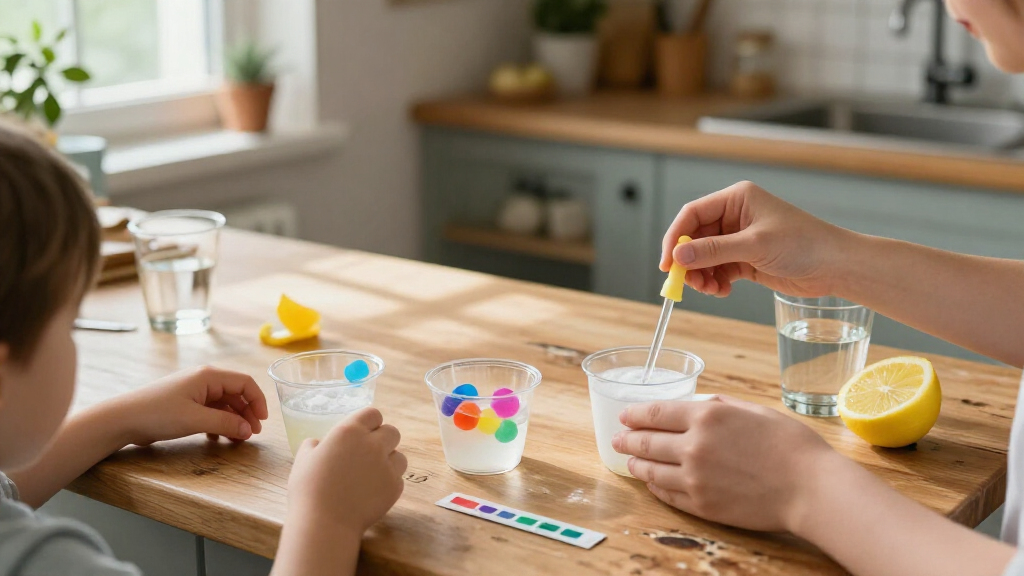
Educational kitchen science kits pair hands-on experiments with cooking concepts, but the best choice depends on whether a child wants to make candy, explore chemistry, or practice food preparation. I’d put the KiwiCo Science of Cooking Ice Cream STEM Kit first for its focused, approachable introduction to food science; Playz Edible Candy Making Science Kit stands out for variety, while the National Geographic Junior Chemistry Set offers broader experiment range. The main tradeoff is between edible, recipe-led fun and wider science exploration that may involve less cooking. Age fit, adult help, cleanup, and whether ingredients or kitchen tools are needed also shape the experience. Read on for all 15 picks and a guide to choosing the right kit for your household.

Prime made for students and young adults
- Fast, free delivery for dorm and study essentials
- Prime Video and Amazon Music included
- Member-only deals
Key Takeaways
- Focused ice-cream kits are easier to match to a young learner than broad chemistry sets, but they offer a narrower set of food-science activities.
- Playz’s 40+ experiments promise the widest activity range among the candy-focused options, while buyers should check how much preparation and adult help each activity calls for.
- National Geographic Junior Chemistry Set is the broad-experiment choice, not the closest match for shoppers who want every activity centered on edible cooking.
- Barbie’s candy-making and baking kits split by activity: choose candy-making for confectionery experiments and baking for recipe-led tool use.
- Age labels alone do not predict independence; small tools, heated steps, ingredient prep, and cleanup can all affect how much adult involvement a child needs.
| Barbie Candy Making Food Science Kit by Blue Marble |  | Best for Candy Variety | Brand: Blue Marble | Sub-brand: Barbie | Age range: 5 years and up | VIEW LATEST PRICE | See Our Full Breakdown |
| KiwiCo Science of Cooking Ice Cream STEM Kit for Kids Ages 5+ |  | Best for Guided Food Science | Brand: KiwiCo | Set name: Science of Cooking: Ice Cream | Age range: 5–12 years | VIEW LATEST PRICE | See Our Full Breakdown |
| Scientific Explorer Tasty Science Kit |  | Best for Edible Chemistry Experiments | Brand: Scientific Explorer | Recommended age: 8–15 years | Number of activities: 10 | VIEW LATEST PRICE | See Our Full Breakdown |
| Aizweb Kids Ice Cream Maker Science Kit |  | Best for a Dress-Up Cooking Session | Brand: Aizweb | Age range: 5–14 years | Educational objective: STEM | VIEW LATEST PRICE | See Our Full Breakdown |
| Rhode Island Novelty Edu-Stem Kitchen Science Lab Kit |  | Best for Preschool Introduction | Brand: Rhode Island Novelty | Model number: AM-EDKIT | Age range: 3 years and up | VIEW LATEST PRICE | See Our Full Breakdown |
| 4M Kitchen Science Kit for Kids |  | Best for Classic Kitchen Experiments | Brand: Toysmith | Experiments: 6 | Recommended age: 8–15 years | VIEW LATEST PRICE | See Our Full Breakdown |
| 4M Steam Powered Kids Kitchen Science Kit |  | Best for Experiment Variety | Brand: 4M | Experiments: Over 30 | Recommended age: 8 years and up | VIEW LATEST PRICE | See Our Full Breakdown |
| National Geographic Junior Chemistry Set with 50 Experiments for Kids |  | Best for Young Beginners | Brand: Blue Marble | Sub-brand: National Geographic | Age range: 4 years and up | VIEW LATEST PRICE | See Our Full Breakdown |
| Barbie Baking Science Activity Kit with 10 Tools and 15 Recipes |  | Best for Baking-Based Learning | Brand: Blue Marble | Sub-brand: Barbie | Age range: 6 years and up | VIEW LATEST PRICE | See Our Full Breakdown |
| MindWare Playful Chef Master Series Cooking Kit |  | Best for Creative Cooking Practice | Brand: MindWare | Age range: 8 years and up | Included utensils: 22 kid-sized cooking utensils | VIEW LATEST PRICE | See Our Full Breakdown |
| TOUHKAN Science Kits for Kids 3-5: Test Tube Droppers and Chemistry Set |  | Best for Preschool Beginners | Brand: TOUHKAN | Stated age range: 3–12 years | Number of items: 24 | VIEW LATEST PRICE | See Our Full Breakdown |
| MindWare Kitchen Science Academy Bubble Barista Kit |  | Best for Edible Chemistry | Brand: MindWare | Age range: 8 years and up | Educational objective: Imagination development, kitchen science, spherification | VIEW LATEST PRICE | See Our Full Breakdown |
| ATUERTE Ice Cream Science Kit for Kids (Ages 5+) |  | Best for Structured Dessert Experiments | Brand: ATUERTE | Age range: 5 years and up | Subject: STEM, science, cooking | VIEW LATEST PRICE | See Our Full Breakdown |
| Tovla Jr. Kids Ice Cream Science Maker Kit |  | Best for Reusable, Picture-Led Activities | Brand: TOVLA JR. | Age range: 5–12 years | Materials: Plastic, silicone | VIEW LATEST PRICE | See Our Full Breakdown |
| Playz Edible Candy Making Science Kit for Kids, 40+ Experiments |  | Best for Experiment Variety | Brand: Playz | Recommended age: 8–12 years and up | Experiments: 40+ | VIEW LATEST PRICE | See Our Full Breakdown |
| educational kitchen science kit | Brand | Age range | Dimensions |
|---|---|---|---|
| Barbie Candy Making Food Scien | Blue Marble | 5 years and up | 11 x 4 x 12.14 inches |
| KiwiCo Science of Cooking Ice | KiwiCo | 5–12 years | 11 x 8 x 6.1 inches |
| Scientific Explorer Tasty Scie | Scientific Explorer | — | 12.25 x 2.75 x 10 inches |
| Aizweb Kids Ice Cream Maker Sc | Aizweb | 5–14 years | 11 x 5 x 9 inches |
| Rhode Island Novelty Edu-Stem | Rhode Island Novelty | 3 years and up | — |
| 4M Kitchen Science Kit for Kid | Toysmith | — | 8.5 x 2.5 x 6.75 inches |
| 4M Steam Powered Kids Kitchen | 4M | — | 14.84 x 11.22 x 2.56 inches |
| National Geographic Junior Che | Blue Marble | 4 years and up | 11 x 4.22 x 9.64 inches |
| Barbie Baking Science Activity | Blue Marble | 6 years and up | 11 x 4 x 12.14 inches |
| MindWare Playful Chef Master S | MindWare | 8 years and up | — |
| TOUHKAN Science Kits for Kids | TOUHKAN | — | — |
| MindWare Kitchen Science Acade | MindWare | 8 years and up | — |
| ATUERTE Ice Cream Science Kit | ATUERTE | 5 years and up | — |
| Tovla Jr. Kids Ice Cream Scien | TOVLA JR. | 5–12 years | 6 × 7.99 × 11 inches |
| Playz Edible Candy Making Scie | Playz | — | 15 × 11.5 × 3.3 inches |
More Details on Our Top Picks
Barbie Candy Making Food Science Kit by Blue Marble
For kids who want to compare how different sweets come together, this kit offers more range than the ice-cream-focused KiwiCo Science of Cooking Ice Cream STEM Kit. Its five candy styles—gummies, chocolates, hard treats, rock candy, and fizzy treats—give the Learning Guide room to connect temperature, texture, and ingredients to visible results. Wrappers and gift boxes also turn finished batches into shareable projects, a useful extra for children motivated by making something for others. The main limitation is that food ingredients are sold separately, so the included equipment is not a ready-to-start edible experiment. The listed age guidance is also mixed: the specifications say 5+, while the product information suggests ages 8–12. I’d choose it for variety, not for a complete starter setup.
Pros:- Five candy styles let children compare different textures and preparation methods.
- Learning Guide connects candy making with temperature, texture, and ingredients.
- Includes 24 foil wrappers and three gift boxes for presenting finished treats.
- Candy projects offer more variety than the ice-cream-only focus of the KiwiCo kit.
Cons:- Food ingredients must be purchased separately.
- Age guidance is inconsistent between the listed 5+ recommendation and the suggested 8–12 range.
Best for: Families with children interested in making and sharing several kinds of candy, and who can supply the food ingredients.
Not ideal for: Buyers seeking a ready-to-use kit with ingredients included, or those who need one unambiguous age recommendation.
- Brand:Blue Marble
- Sub-brand:Barbie
- Age range:5 years and up
- Educational objective:STEM
- Included components:Candy-making accessories, 24 foil wrappers, 3 gift boxes, instructions, and Learning Guide
- Candy types:Gummies, chocolates, hard treats, rock candy, and fizzy treats
- Dimensions:11 x 4 x 12.14 inches
- Item weight:1.3 pounds
Our verdict“Choose this for a child who wants varied, giftable candy projects and has an adult ready to provide the ingredients.”
KiwiCo Science of Cooking Ice Cream STEM Kit for Kids Ages 5+
This is the strongest fit here for children who want a structured explanation alongside the cooking. The lab notebook and reusable tools support experiments about ice crystals, freezing, butterfat, air, and stabilizers, giving the activity more scientific framing than the recipe-led Aizweb Kids Ice Cream Maker Science Kit. Recipes for both ice cream and sorbet also let kids compare how ingredients affect the result. That focus is a tradeoff: unlike the Scientific Explorer Tasty Science Kit, which includes several kinds of edible experiments and some ingredients, KiwiCo centers on frozen desserts and requires ingredients from home. Its listed age range is 5–12, though product details are reported as inconsistent. I’d favor it for a child who enjoys repeating a recipe, recording observations, and changing one ingredient at a time.
Pros:- Lab notebook helps connect recipe changes with recorded observations.
- Explores ice crystals, freezing, butterfat, air, and stabilizers.
- Includes reusable tools and recipes for ice cream and sorbet.
- Offers a more focused food-science lesson than the broader but less ice-cream-specific Scientific Explorer kit.
Cons:- Food ingredients must be supplied from home.
- The age range is reported inconsistently across product details.
- Its frozen-dessert focus may offer less variety than kits with multiple experiment types.
Best for: Families with children who like following a guided experiment, recording observations, and comparing homemade ice cream with sorbet.
Not ideal for: Children who want many different types of kitchen experiments, or families who prefer a kit that includes food ingredients.
- Brand:KiwiCo
- Set name:Science of Cooking: Ice Cream
- Age range:5–12 years
- Included components:Scoop, whisk, large can, small cans, clear jar, towel, measuring cups, lab notebook, and ice cream recipes
- Materials:Plastic and steel
- Dimensions:11 x 8 x 6.1 inches
- Weight:0.99 kg
- Recipes:Homemade ice cream and sorbet
Our verdict“Pick KiwiCo for a guided, notebook-based study of frozen desserts rather than a broad assortment of kitchen experiments.”
Scientific Explorer Tasty Science Kit
Where the candy and ice-cream kits concentrate on one category of treat, Scientific Explorer Tasty Science puts several kinds of edible reactions in one box. Its ten activities include rising cakes, crystallized candy, and fizzy drinks, while test tubes, litmus paper, and a pipette make the chemistry feel more like a small laboratory. Another practical difference from the Barbie Candy Making Food Science Kit is that this set lists ingredients such as baking soda, citric acid, flavorings, and food coloring among its included components. It suits children ready for more involved instructions, with adult supervision recommended for those under 8. The supplies are finite, so repeated sessions may call for replenishment; it also has less emphasis on polished packaging or reusable cooking tools than the other picks.
Pros:- Ten activities cover several edible experiments, including rising cakes and fizzy drinks.
- Includes listed experiment ingredients as well as tools such as test tubes and litmus paper.
- Hands-on reactions help illustrate concepts such as fizzing and rising.
- Offers broader experiment variety than the single-theme ice-cream kits.
Cons:- Children under 8 need adult supervision.
- Consumable ingredients may need replenishment after the initial activities.
- Its laboratory-style components may be less useful for families seeking reusable cooking tools.
Best for: Children around 8–15 who want multiple edible experiments and hands-on chemistry tools in the same kit.
Not ideal for: Younger children seeking a simple, lightly supervised activity, or families wanting reusable equipment for ongoing cooking projects.
- Brand:Scientific Explorer
- Recommended age:8–15 years
- Number of activities:10
- Included components:Baking soda, citric acid, flavorings, food coloring, sprinkles, bouillon cube, measuring spoon, scoop, labels, litmus paper, baking cups, test tubes with stand, vial, pipette, and activity guide
- Dimensions:12.25 x 2.75 x 10 inches
- Item weight:1.1 pounds
- Listed materials:Baking soda, citric acid, flavoring, and plastic
- Model number:0SA248
Our verdict“Choose this for an older child who wants a varied set of edible chemistry activities and included experiment supplies.”
Aizweb Kids Ice Cream Maker Science Kit
The Aizweb kit makes the ice-cream activity feel like a complete play session, pairing reusable tools with a chef’s hat and apron. Its visual recipe and lab notebook add structure, while the stated chemistry and physics focus gives adults a starting point for discussing how the process works. Compared with the KiwiCo Science of Cooking Ice Cream STEM Kit, its standout extras are the dress-up accessories; KiwiCo’s description, by contrast, gives more detail about concepts such as ice crystals, butterfat, and stabilizers. Aizweb’s tools are intended for repeated use, but the experiments remain centered on ice cream, so it offers less subject variety than the Scientific Explorer Tasty Science Kit. Ingredient requirements are not specified in the supplied product details, so I would check what a recipe needs before planning a session. Younger children still need adult supervision.
Pros:- Includes reusable ice-cream tools along with a chef’s hat and apron.
- Visual recipe format can help children follow the activity step by step.
- Lab notebook encourages children to record or explore the experiment.
- Adds role-play elements that the KiwiCo ice-cream kit does not list.
Cons:- Focuses on ice cream, limiting variety compared with multi-topic kits such as Scientific Explorer Tasty Science.
- Younger children within the age range need adult supervision.
- The supplied product details do not specify whether food ingredients are included.
Best for: Families with children who enjoy role-play and want a reusable, visually guided ice-cream activity with a lab notebook.
Not ideal for: Buyers seeking a range of different kitchen science topics or a kit with clearly listed included food ingredients.
- Brand:Aizweb
- Age range:5–14 years
- Educational objective:STEM
- Materials:Aluminum and plastic
- Included components:Clear jar, large can, 2 small cans, scoop, whisk, measuring cups, towel, chef’s hat, apron, visual recipe, and lab notebook
- Dimensions:11 x 5 x 9 inches
- Experiment focus:Ice-cream making with chemistry and physics learning
- Manufacturer part number:BJL-01
Our verdict“Pick Aizweb when dress-up accessories and a guided ice-cream activity matter more than broad experiment variety.”
Rhode Island Novelty Edu-Stem Kitchen Science Lab Kit
This is the youngest-child entry in the group, with a stated starting age of 3 years and up—younger than the Scientific Explorer kit’s 8–15 recommendation and the two ice-cream kits’ 5+ starting points. Its 24 components are presented as a way to build spatial awareness and scientific curiosity, making it a possible introduction to handling kitchen-science materials rather than a recipe-focused food project. That distinction matters: the supplied details do not name specific edible experiments, recipes, or included food ingredients, so I would not choose it when a child is asking to make candy or ice cream. The very small listed dimensions also leave little evidence of substantial equipment, and the plastic construction may not suit rough or frequent use. Compared with the other picks, this is the simplest early-age option, but also the least specific about what children will investigate.
Pros:- Stated age range starts at 3 years, younger than the other kits in this batch.
- Includes 24 components for hands-on exploration.
- Designed to support spatial awareness and scientific curiosity.
- Lightweight build may be convenient to store or carry.
Cons:- Supplied details do not identify specific experiments, recipes, or edible activities.
- Listed item dimensions are unusually small and do not clarify the size of the individual components.
- Plastic construction may be less suited to heavy use.
Best for: Caregivers seeking a lightweight, introductory STEM activity set for a preschooler aged 3 or older.
Not ideal for: Families looking for named food experiments, recipe instructions, or robust equipment for repeated kitchen projects.
- Brand:Rhode Island Novelty
- Model number:AM-EDKIT
- Age range:3 years and up
- Number of items:24
- Material:Plastic
- Item weight:7.52 ounces
- Item dimensions:0.5 x 0.5 x 0.5 inches
- Educational objective:Spatial awareness
Our verdict“Choose this as a simple preschool STEM introduction, not as a clearly specified candy-making or cooking experiment kit.”
4M Kitchen Science Kit for Kids
Lemon-powered electricity and a vinegar rocket give this compact kit a clear kitchen-science focus, while invisible messages add a simple activity with a different kind of payoff. Its six experiments make it a smaller commitment than the 4M Steam Powered Kids Kitchen Science Kit, which offers over 30 activities and includes most parts. That shorter list can suit families who want a handful of demonstrations rather than a large project collection.
The tradeoff is preparation: vinegar, baking soda, measuring tools, and several other household items are not supplied, so an adult will need to gather materials before activities begin. At ages 8–15, children may enjoy the ideas, but younger participants are likely to need help following steps and handling setup. I’d choose this over a broad kit only when the specific kitchen experiments are the draw and sourcing ingredients is not a concern.
Pros:- Six activities include a lemon-powered electricity experiment and a vinegar rocket.
- Uses familiar kitchen ingredients for practical demonstrations of science concepts.
- Compact, lightweight kit is easy to store between activities.
- Combines hands-on experiments with STEM learning.
Cons:- Many ingredients and tools must be gathered separately.
- An adult may need to prepare materials and support setup.
- Offers fewer activities than the 4M Steam Powered Kids Kitchen Science Kit.
Best for: Families with children ages 8–15 who want a small set of recognizable kitchen experiments and already have common household supplies.
Not ideal for: Buyers looking for a ready-to-start kit or a large menu of activities; many ingredients and tools are not included, and only six experiments are provided.
- Brand:Toysmith
- Experiments:6
- Recommended age:8–15 years
- Dimensions:8.5 x 2.5 x 6.75 inches
- Weight:5.6 ounces
- Required items not included:Vinegar, baking soda, red food coloring, dishwashing liquid, measuring cup, sugar, clothespins, teaspoon, forks, cornstarch, grape juice, lemon
- Warranty:30 days against manufacturer defects
Our verdict“Choose this for a compact set of classic kitchen experiments if you are comfortable supplying the household materials.”
4M Steam Powered Kids Kitchen Science Kit
Over 30 hands-on experiments make this the broadest all-purpose science set among these five picks. Activities such as a fruit-powered clock, bottle fountain, and CD hovercraft move beyond food preparation, giving curious children a wider range of demonstrations than the six kitchen-focused projects in the 4M Kitchen Science Kit for Kids. Most parts are included, and the 24-page instruction book explains the principles behind each activity, helping adults and children connect the steps to the science.
That breadth is useful for households seeking repeat activity options, but it also means the kit is less centered on cooking than the Barbie Baking Science Activity Kit, which links recipes directly to food chemistry. Some projects still need extra household items, so it is not fully self-contained. I’d pick this for variety and explanation, not for a focused baking or edible-experiment experience.
Pros:- Offers over 30 hands-on experiments across a range of science activities.
- The 24-page instruction book explains the principles behind experiments.
- Most required experiment parts are included.
- Includes varied demonstrations such as a fruit-powered clock and bottle fountain.
Cons:- Some experiments still require additional household items.
- Many activities are general science rather than specifically about food or cooking.
- The larger activity collection may require more time to sort and prepare than a focused kit.
Best for: Families with children ages 8 and up who want a broad collection of explained science activities and prefer most experiment parts to be included.
Not ideal for: Young children seeking cooking or food-focused projects, or buyers who want every activity to use only supplied materials.
- Brand:4M
- Experiments:Over 30
- Recommended age:8 years and up
- Instruction book:24 pages
- Dimensions:14.84 x 11.22 x 2.56 inches
- Weight:0.23 kg
- Language:English
- Warranty:30 days against manufacturer defects
Our verdict“Pick this for a wide activity range and built-in science explanations, but choose the Barbie baking kit for food-centered learning.”
National Geographic Junior Chemistry Set with 50 Experiments for Kids
Fifty experiments and more than 20 lab tools give this set a strong starting point for children aged 4 and up. Its test tubes, goggles, and illustrated instructions make science feel like a guided activity, while common ingredients such as baking soda and vinegar connect experiments to familiar household materials. Compared with the 4M Kitchen Science Kit for Kids, this set offers far more activities and tools, with an age range that starts earlier.
The junior focus is also its limit: older children who want more demanding projects may outgrow the activities sooner, while the 4M Steam Powered Kids Kitchen Science Kit is aimed at ages 8 and up and includes a broader challenge set. Household ingredients are still needed, so the included tools do not make every experiment ready to start. I’d rank this for early learners who benefit from visual guidance, rather than families seeking advanced chemistry.
Pros:- Includes more than 20 durable, child-safe lab tools, including test tubes and goggles.
- Provides 50 experiments for repeated introductory science activities.
- Illustrated, step-by-step instructions are designed for young children.
- Uses common household items such as baking soda and vinegar.
Cons:- Common experiment ingredients are not included.
- The junior level may not challenge older children for long.
- Its emphasis is introductory chemistry rather than cooking or baking science.
Best for: Families introducing children ages 4 and up to simple experiments who want child-oriented lab tools and illustrated steps.
Not ideal for: Older children seeking more complex chemistry challenges or buyers who want all experiment ingredients included.
- Brand:Blue Marble
- Sub-brand:National Geographic
- Age range:4 years and up
- Experiments:50
- Lab tools:20+
- Dimensions:11 x 4.22 x 9.64 inches
- Weight:0.72 kg
- Battery required:No
Our verdict“Choose this for young beginners who want guided experiments and lab-style tools, but look elsewhere for older children or advanced activities.”
Barbie Baking Science Activity Kit with 10 Tools and 15 Recipes
Ten real baking tools, 15 recipes, and 10 bonus food-science experiments make this the most direct link between kitchen activity and food chemistry in this group. The learning guide gives children ages 6–12 a reason to connect baking steps with science, rather than treating each experiment as a separate demonstration. Compared with the National Geographic Junior Chemistry Set, this kit offers fewer experiments and lab tools but gives more attention to making actual baked food.
That practical focus comes with a different kind of preparation: ingredients are sold separately, and real kitchen tools and baking processes call for adult supervision. It is less self-contained than the 4M Steam Powered Kids Kitchen Science Kit, which includes most experiment parts, but it gives families recipes to revisit after the bonus experiments. I’d choose it for children who want to cook as they learn, not for buyers seeking a low-prep tabletop chemistry set.
Pros:- Includes 10 real baking tools for hands-on kitchen use.
- Provides 15 recipes plus 10 food-science experiments.
- Learning guide links baking activities to chemistry concepts.
- Step-by-step instructions are aimed at children ages 6–12.
Cons:- Food ingredients are not included.
- Real baking tools and kitchen processes require adult supervision.
- Its focus on baking is narrower than the general experiments in the 4M Steam Powered Kids kit.
Best for: Families with children ages 6–12 who want to combine baking practice, recipes, and food-science explanations.
Not ideal for: Buyers seeking experiments that can begin without shopping for ingredients, or families who prefer simple, low-supervision tabletop activities.
- Brand:Blue Marble
- Sub-brand:Barbie
- Age range:6 years and up
- Baking tools:10
- Recipes:15
- Bonus food-science experiments:10
- Dimensions:11 x 4 x 12.14 inches
- Weight:1.6 pounds
Our verdict“Pick this for children who want to learn food science through real baking, provided an adult can supervise and supply ingredients.”
MindWare Playful Chef Master Series Cooking Kit
Twenty-two kid-sized utensils and three cooking challenges make this kit better suited to practicing kitchen skills than running a series of science experiments. The recipes for playful foods such as monster-face pizzas and animal-shaped sandwiches encourage children ages 8 and up to handle steps themselves, while scoring cards give siblings or friends a way to compare creations. Compared with the Barbie Baking Science Activity Kit, it offers more tools but fewer recipes and does not include a stated set of food-science experiments or a chemistry guide.
That distinction matters for this roundup: it can support practical learning about preparing food, but it is a weaker choice for children who specifically want experiments explaining what happens during cooking. The limited three-recipe collection may also mean less variety over time than the Barbie kit’s recipe selection. I’d choose it for creative, social kitchen practice, not as a primary science-experiment set.
Pros:- Includes 22 kid-sized cooking utensils designed for small hands.
- Step-by-step challenges encourage practical kitchen skills and independence.
- Scoring activities support individual play or group cooking.
- Creative food projects include monster-face pizzas and animal-shaped sandwiches.
Cons:- Only three cooking challenges are included, limiting recipe variety.
- Adult supervision is still needed when children use kitchen tools.
- Offers less explicit science instruction than the Barbie Baking Science Activity Kit.
Best for: Families with children ages 8 and up who want kid-sized tools for creative cooking challenges and shared kitchen activities.
Not ideal for: Buyers prioritizing explicit food-science experiments, a chemistry learning guide, or a large recipe collection.
- Brand:MindWare
- Age range:8 years and up
- Included utensils:22 kid-sized cooking utensils
- Cooking challenges:3 with recipes
- Included guide:Instruction guide
- Players:Multiple
- Usage:Indoor
- Size:Child-size
Our verdict“Choose this for creative, social cooking practice, but pick the Barbie kit if food chemistry and a larger recipe collection are the priority.”
TOUHKAN Science Kits for Kids 3-5: Test Tube Droppers and Chemistry Set
For a first taste of kitchen-style science, I’d place the TOUHKAN test-tube set ahead of kits that depend on recipes or edible results. Its droppers, beakers, measuring spoons, and stand let young children practice transferring and observing liquids, while the lightweight BPA-free plastic tools suit small hands better than glass labware. The magnifying glass and goggles add a recognizable lab-play element, though the learning here is more about handling, measuring, and noticing than following a sequence of food experiments. Compared with the ATUERTE Ice Cream Science Kit, this set is easier to use for short, simple activities, but it offers less structured science content and no finished treat. Its broad stated age range may also overstate its appeal to older children, who may want more challenging experiments.
Pros:- BPA-free plastic tools with smooth edges are suited to small hands.
- Droppers, beakers, and measuring spoons support basic measuring and observation.
- Magnifying glass and goggles add variety to pretend and hands-on lab activities.
- A 24-piece set offers several kinds of tools for open-ended exploration.
Cons:- Plastic tools are less durable and lab-like than glass equipment.
- Activities are limited to simple exploration and may not hold older children’s interest.
- No guided experiment book or recipes are listed in the included components.
Best for: Families with preschoolers who want lightweight tools for supervised liquid-transfer, color, and observation activities.
Not ideal for: Older children seeking detailed chemistry challenges or kitchen experiments that produce an edible result.
- Brand:TOUHKAN
- Stated age range:3–12 years
- Number of items:24
- Material:BPA-free plastic
- Included tools:6 test tubes, tube stand, 6 liquid droppers, 4 beakers, goggles, magnifying glass, 5 measuring spoons
- Educational objectives:STEM, color recognition, creative and exploratory skills, hand-eye coordination, observation
- Model number:AMZ0305
Our verdict“Choose this for preschoolers learning basic tool use and observation, but pick a recipe-based kit for more structured kitchen science.”
MindWare Kitchen Science Academy Bubble Barista Kit
The Bubble Barista Kit makes the most sense for children who want kitchen science to end in a drink they can customize. Its focus on spherification gives the activity a more specific chemistry concept than the broad measuring and observation play in the TOUHKAN set, while the pitcher, cups, straws, and recipe book make the process feel like a small beverage lab. Kids can explore flavor and color combinations as they work through the instructions. The main catch is that the required sodium alginate and calcium lactate are sold separately, so the listed equipment alone is not enough to begin the central activity. Compared with Playz’s candy kit, this is narrower in scope and centers on drinks rather than several sweets; that focus may suit a child fascinated by bubbly beverages, but offers fewer kinds of projects.
Pros:- Centers activities on spherification, a distinct kitchen-chemistry concept.
- Recipe book and drink-making pieces give children a guided way to experiment.
- Custom flavors and colors encourage creative variations.
- Reusable cups, pitcher, and measuring tools support the drink-making format.
Cons:- Sodium alginate and calcium lactate, required for the core process, are sold separately.
- Younger users may need adult supervision when handling the additives and following the process.
- The drink-focused format provides less variety than a kit with multiple candy-making activities.
Best for: Children aged 8 and up who want to learn a specific food-science technique and enjoy making customized drinks with adult help.
Not ideal for: Families who want a ready-to-start kit with all essential ingredients included, or children who prefer a range of different recipes.
- Brand:MindWare
- Age range:8 years and up
- Educational objective:Imagination development, kitchen science, spherification
- Included components:Bubble Barista unit with bubble lid, pitcher, and base; measuring spoons, measuring cup, jar, 2 cups, 2 straws, recipe book
- Required ingredients:Sodium alginate and calcium lactate, sold separately
- Manufacturer part number:14122202
- UPC:195130386640
Our verdict“Pick this for an older child curious about edible chemistry and drink experiments, provided you can source the two required ingredients.”
ATUERTE Ice Cream Science Kit for Kids (Ages 5+)
I’d choose the ATUERTE Ice Cream Science Kit when the goal is more than making a treat: its lab notebook and visual recipe guide encourage children to follow a process, observe results, and record what happens. The activities connect ice cream, sorbet, and frozen treats with freezing points, ice crystals, and stabilizers, giving it a clearer learning structure than the more picture-card-oriented Tovla Jr. kit. Its cans, measuring cups, whisk, and serving pieces support a hands-on family activity, but the kit does not include the food ingredients, so planning and kitchen supplies still matter. The range of tools also takes storage space, and mixing frozen desserts can create cleanup and supervision work. Compared with the TOUHKAN set, ATUERTE produces an edible outcome and offers more guided learning, but it is less suited to quick, low-mess exploration.
Pros:- Lab notebook supports recording observations rather than only following a recipe.
- Visual guide gives children a structured route through the activities.
- Activities connect frozen treats with concepts such as freezing points and ice crystals.
- Includes tools for making ice cream, sorbet, and other frozen desserts.
Cons:- Milk, cream, sugar, and other recipe ingredients are not included.
- The many components need storage space.
- Dessert preparation can be messy and calls for adult supervision and cleanup.
Best for: Families with children five and older who want guided dessert-making activities that include observation and written lab notes.
Not ideal for: Households short on storage space or adults seeking a quick activity with minimal ingredient shopping and cleanup.
- Brand:ATUERTE
- Age range:5 years and up
- Subject:STEM, science, cooking
- Educational objectives:Creative skills, hand-eye coordination, observation, measurement, problem solving
- Included components:Visual guide recipe, lab notebook, ice cream scoop, whisk, large can, clear jar, towel, mini silicone ice cube tray, 2 small cans, 2 measuring cups, 2 silicone ice cream cups, 2 dessert spoons
- Language:English
- Model number:AT01
Our verdict“Choose ATUERTE for guided, notebook-based dessert science, and choose Tovla Jr. if picture-led recipes and reusable silicone tools matter more.”
Tovla Jr. Kids Ice Cream Science Maker Kit
The Tovla Jr. Ice Cream Science Maker Kit is a practical match for children who want to make a frozen treat without an ice cream machine. Its reusable silicone bags and containers, along with visual recipe cards, make the steps approachable for younger cooks who are not ready to work from dense written instructions. The recipe cards also set it apart from ATUERTE’s lab-notebook approach: Tovla Jr. puts more emphasis on accessible, repeatable making, while ATUERTE gives more room for recording observations. Tovla’s healthy-ingredient swap cards add a food-choice angle, though the central science remains focused on the freezing process rather than a broad range of chemistry topics. Families will need ice and salt for the shaker method, and the plastic and silicone pieces require care during cleaning. It is less suited to children seeking candy variety like Playz offers.
Pros:- Reusable silicone bags and containers support repeated activities.
- Visual recipe cards make the steps accessible to early readers.
- Tasty Trade-Up cards introduce lighter ingredient swaps.
- Includes tools for mixing, measuring, and serving the finished treat.
Cons:- Ice and salt are needed for the shaking method.
- Plastic and silicone components need careful cleaning.
- The activity range centers on ice cream rather than multiple food-science projects.
Best for: Families with children aged 5–12 who want repeatable ice-cream activities and picture-led instructions for young kitchen helpers.
Not ideal for: Children seeking a wide range of science topics or families without access to ice and salt for the shaker method.
- Brand:TOVLA JR.
- Age range:5–12 years
- Materials:Plastic, silicone
- Dimensions:6 × 7.99 × 11 inches
- Weight:0.82 kg
- Included components:Ice cream shaker, scoop, whisk, measuring tools, bowls, spoons, silicone bags, recipe cards, stickers
- Educational objective:Creative thinking
Our verdict“Pick Tovla Jr. for reusable, picture-guided ice-cream making, and choose ATUERTE for a more explicit lab-notebook learning format.”
Playz Edible Candy Making Science Kit for Kids, 40+ Experiments
For children who want to repeat kitchen science in different forms, Playz Edible Candy Making Science Kit offers the broadest stated activity range in this group: more than 40 experiments involving gummies, rock candy, chocolate, and lollipops. The illustrated 32-page guide gives those projects a learning framework, while the included tools and ingredients reduce the amount of setup compared with MindWare’s Bubble Barista Kit, which requires two separately purchased additives. That breadth can make Playz a better fit for curious children who like switching projects, though the activities may still call for household supplies beyond the box. Its age guidance starts at eight, so it is not the natural pick for preschoolers or young children who need very simple, short tasks. Compared with the focused ATUERTE ice-cream kit, Playz trades depth on one process for a wider menu of edible experiments.
Pros:- More than 40 stated experiments span several kinds of candy.
- Illustrated 32-page activity and lab guide gives children project instructions.
- More than 21 tools and ingredients are included.
- Edible results connect hands-on making with food-related STEM activities.
Cons:- Some experiments require additional household supplies.
- The number and variety of activities may call for more setup and cleanup than a focused ice-cream kit.
- The recommended age makes it less suitable for younger children without substantial adult help.
Best for: Children aged 8 and up who want to explore several candy-making methods and follow an illustrated activity guide.
Not ideal for: Preschoolers, families wanting a single focused dessert project, or buyers who need every supply for every experiment included.
- Brand:Playz
- Recommended age:8–12 years and up
- Experiments:40+
- Included guide:32-page illustrated activity and lab guide
- Tools and ingredients:21+
- Materials:Plastic, sugar, chocolate, gelatin
- Dimensions:15 × 11.5 × 3.3 inches
- Weight:1.5 pounds
- Model number:43227-307
Our verdict“Choose Playz for an older child who wants a varied candy-making project set, and choose a focused ice-cream kit for a simpler dessert activity.”
How We Picked
I compared the 15 kits by how directly they connect kitchen activities to science learning, how varied and understandable their experiments appear, and whether the stated age range gives families a useful starting point. I also weighed activity focus: an ice-cream maker kit may suit a child who wants one satisfying food-science project, while a broader lab kit may hold attention through different types of experiments.
The ranking favors a clear educational purpose, accessible activities, and a strong fit for the kitchen-science brief over sheer experiment count or themed packaging. I also considered practical tradeoffs—tools, preparation, adult assistance, edible results, and likely cleanup—because these shape whether a kit works for a particular home. Products with narrower uses or less direct cooking emphasis rank below options that offer a clearer match, even when they may suit a specific child well.
Factors to Consider When Choosing Educational Kitchen Science Kits
Use these factors to match a kit to the way your child wants to learn and the amount of help your household can provide. A bigger experiment count is not automatically a better fit.
Choose the kind of science your child wants to explore
Start with the activity, not the word “science” on the box. Ice-cream kits make a focused choice for children curious about how ingredients change, while candy-making kits center on sweets and food transformations. Broader chemistry sets can offer more varied experiments but may spend less time on cooking itself. A common mismatch is buying a general lab kit for a child who mainly wants to make something edible. Ask whether your child would rather repeat one food project or sample several kinds of experiments.
Match the kit to adult help and kitchen safety
Age guidance is a starting point, not a promise that a child can work alone. Look for activities involving heat, sharp utensils, small parts, or steps that need close timing, and decide who will supervise them. Younger children may get more from kits that emphasize simple measuring, mixing, and observing changes. Older children may prefer a kit with more steps or room to compare results. If you want an activity a child can set up independently, check each experiment’s directions rather than relying on the age label.
Check what is included—and what you must supply
A kit can include useful tools while still relying on ingredients or ordinary kitchen equipment from home. Before choosing, check whether recipes require food items, bowls, measuring spoons, refrigeration, or other supplies that are not in the package. That can affect both the real setup effort and whether you can start right away. A kit with fewer experiments may be a better household fit if its activities use materials you already have. For gifting, verify what the recipient needs before assuming the box contains everything.
Think about cleanup and repeat use
Food experiments can be memorable, but sticky mixtures, powders, and multiple tools may add cleanup to the activity. Consider whether your child can help reset the workspace and whether you have room to store reusable pieces. Recipe-based kits can invite repeat practice, though repeat use may depend on access to additional ingredients. A high experiment count matters most when the activities are distinct and practical to repeat, rather than variations that feel too similar. If cleanup is a concern, choose a small, clearly bounded project over a sprawling activity set.
Decide whether edible results are part of the goal
Some families want a treat at the end; others care more about observing a reaction or learning a process. Edible outcomes can motivate participation, but they do not automatically make an activity more educational. Check whether the kit’s experiments produce food meant to be eaten and whether ingredients or dietary needs affect the plan. For a child who enjoys making and sharing treats, candy or ice-cream themes may be a natural draw. For a learner more interested in testing and observing, a broader science set may be a better match even if the results are not a snack.
Pay for fit and variety, not just a large activity count
Experiment totals can make kits seem easy to compare, but they reveal little about activity length, repeatability, or how much guidance each one needs. Consider whether the child is likely to finish several short experiments or stay engaged with one substantial project. A focused kit can be a sensible choice for a first introduction, while a broader set may suit a child who already enjoys following experiment instructions. When paying more for a kit, look for a meaningful difference in tools, activity range, or learning depth—not only a larger number printed on the package. This approach helps avoid buying complexity a beginner will not use.
Frequently Asked Questions
Which kind of kitchen science kit is best for a child who wants to make edible results?
Start with a kit specifically built around candy, baking, or ice cream rather than a general chemistry set. The Barbie candy-making, Barbie baking, Playz candy-making, and ice-cream options all align more directly with edible activities, though their exact recipes and supply needs differ. Check whether ingredients are included and whether the results are intended to be eaten. If your child wants variety as well as treats, compare the activity range and preparation steps instead of choosing by theme alone.
Is an ice-cream kit a better first science kit than a broad chemistry set?
It can be, especially for a child drawn to food and a clear, single-project goal. A focused ice-cream activity gives families a straightforward way to connect making food with observing change, while a broad set may offer more kinds of experiments. The tradeoff is that a focused kit may have less variety for repeat play. Choose the ice-cream route for a strong food connection; choose broader chemistry if your child prefers sampling different experiments.
Do these kits usually include the ingredients and kitchen tools?
Do not assume that the box includes everything needed for every activity. Some kits provide activity-specific tools or materials but may still call for common kitchen items or ingredients from home. Check the included-items list and instructions before buying, especially if the kit is a gift or you want to begin immediately. Also look for whether supplies are consumed after one activity, since that can affect repeat use.
How much adult supervision should I expect?
Plan to supervise younger children, and review the instructions before deciding whether an older child can work more independently. Adult help may be needed for measuring, timing, ingredient preparation, heat, or cleanup even when the kit is labeled for kids. The TOUHKAN set is aimed at ages 3–5, but that age range does not remove the need for an adult to manage small parts and the activity space. Match the kit to the child’s practical skills as well as their age.
Should I choose a kit with the most experiments?
Only if the extra activities are a good fit for your child and household. A larger count can be useful for a child who likes variety, which makes Playz’s stated 40-plus experiments notable, but count alone does not show how distinct, involved, or repeatable those activities are. A focused kit may offer a more satisfying first project with less choice overload. Compare instructions, supplies, and the child’s interests before treating experiment count as the deciding factor.
Conclusion
For the strongest all-around fit, I’d start with the KiwiCo Science of Cooking Ice Cream STEM Kit: its focused food-science theme gives children a clear entry point. For a value-minded choice, compare the 4M Kitchen Science Kit and Scientific Explorer Tasty Science Kit by their included activities and materials, since household needs can change which one offers the better fit. The Playz Edible Candy Making Science Kit is my pick for buyers prioritizing a large candy-focused activity range, while the National Geographic Junior Chemistry Set suits children who want broader experiments over a kitchen-only focus. For beginners, choose a simple, focused ice-cream or candy activity; for younger children, consider the TOUHKAN set with close adult guidance. Match the final choice to the child’s preferred project, the supplies you have, and how much supervision you can offer.