For an adult who wants a genuine home-lab feel, I’d start with the Thames & Kosmos CHEM C3000: its real lab equipment, broad chemistry coverage, and long illustrated manual offer the widest project range here, though it requires ongoing adult supervision and some household supplies. The EUDAX Electricity and Magnetism Experiment Kit is a more approachable choice for building circuits and generators, while the National Geographic Hobby Rock Tumbler Kit turns geology into a slower, practical hobby with little day-to-day intervention.

Prime made for students and young adults
- Fast, free delivery for dorm and study essentials
- Prime Video and Amazon Music included
- Member-only deals
These kits suit different definitions of an adult science project. Chemistry and genetics emphasize guided experiments and explanations; EUDAX focuses on assembling and observing electrical systems; the tumbler produces polished stones over time. I rank them by how well their activities reward an adult learner, how much usable guidance and equipment they include, and how clearly their limitations fit their intended audience—not by treating the largest experiment count as automatically best.
Key Takeaways
- Choose CHEM C3000 for the broadest home-lab experience: it covers several chemistry fields and includes real lab glassware, but calls for supervision and may need extra household materials.
- Pick EUDAX if you want to build circuits, an electromagnet, an electric bell, and a hand-crank generator; its projects are tangible, though its age guidance skews younger and batteries are not included.
- Pick the rock tumbler for a relaxing geology hobby rather than a sequence of short experiments; its timer and automatic shutoff help, but polishing takes time and its body is plastic.
- Choose the Genetics & DNA Lab for focused activities on DNA, cells, and inheritance, including a DNA model; it has fewer experiments than the chemistry set and includes a bacteria-growing activity.
- For independent adult use, first match the kit to your preferred kind of work: chemistry has the most supervision demands, while tumbling is more passive and EUDAX is centered on assembly.
| Thames & Kosmos CHEM C3000 Chemistry Set, 333+ Experiments, Ages 12+ |  | Best Overall for a Home Chemistry Lab | Experiments: More than 333 | Topics: Inorganic, electrochemical, and organic chemistry | Manual: 192-page, full-color illustrated manual | VIEW LATEST PRICE | See Our Full Breakdown |
| EUDAX Electricity and Magnetism Experiment Kit |  | Best for Building and Understanding Circuits | Items: 79 | Electricity components: 56 items | Magnetism components: 21 items | VIEW LATEST PRICE | See Our Full Breakdown |
| Thames & Kosmos Genetics & DNA Lab Science Kit |  | Best for Focused Genetics and DNA Activities | Experiments: 20 | Topics: DNA, inheritance, cells, chromosomes, and genetic traits | Manual: 48-page, full-color | VIEW LATEST PRICE | See Our Full Breakdown |
| National Geographic Hobby Rock Tumbler Kit | 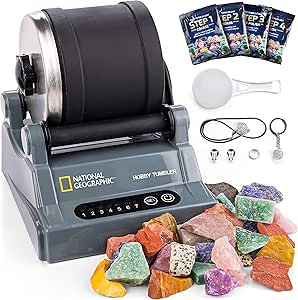 | Best for a Low-Intervention Geology Hobby | Included: Rock tumbler, four polishing grits, sifter, nine types of rough gemstones, and full-color learning guide | Controls: One-touch settings, timer, and automatic shutoff | Barrel: Leak-resistant rubber barrel | VIEW LATEST PRICE | See Our Full Breakdown |
| science experiment kits for adult | Recommended age | Experiments | Topics | Manual |
|---|---|---|---|---|
| Thames & Kosmos CHEM C3000 Che | — | More than 333 | Inorganic, electrochemical, and organic chemistry | 192-page, full-color illustrated manual |
| EUDAX Electricity and Magnetis | 8–18 years | — | — | — |
| Thames & Kosmos Genetics & DNA | 10–16 years | 20 | DNA, inheritance, cells, chromosomes, and genetic traits | 48-page, full-color |
| National Geographic Hobby Rock | 8 years and up | — | — | — |
More Details on Our Top Picks
Thames & Kosmos CHEM C3000 Chemistry Set, 333+ Experiments, Ages 12+
The CHEM C3000 is the strongest all-around match here for an adult who wants to work through a guided science curriculum rather than complete one isolated project. Its more than 333 experiments span inorganic, electrochemical, and organic chemistry, while a 192-page illustrated manual gives the activities structure and scientific context. That breadth is the clearest reason I rank it ahead of the other kits: EUDAX stays within electricity and magnetism, and the genetics set focuses on one branch of biology.
The included equipment supports a lab-style experience: glass test tubes, beakers, an Erlenmeyer flask, a tripod stand, an alcohol burner, and safety goggles are among the listed tools. The kit also supplies 16 or more chemicals, plus safety, first-aid, and disposal guidance. For an adult learner, the value is not simply having many procedures available; it is being able to move between chemistry topics while using a manual that explains what is happening.
That scope comes with more responsibility than the other picks. Adult supervision is required throughout, and some activities call for common household materials that are not included. Someone seeking a self-directed, low-preparation evening project may find EUDAX simpler, or the rock tumbler more hands-off. I’d choose the C3000 when the buyer is comfortable following procedures, maintaining a safe workspace, and treating the manual as part of the kit rather than an optional extra.
Pros:- Covers inorganic, electrochemical, and organic chemistry.
- Includes real lab tools and 16+ chemicals.
- The 192-page illustrated manual provides procedures and scientific explanations.
- Offers safety, first-aid, and waste-disposal guidance.
Cons:- Adult supervision is required throughout, which limits independent use.
- Some experiments need additional household materials.
- The broad curriculum calls for more setup and workspace than the other kits.
Best for: Adults who want a broad, manual-led chemistry program and can give experiments the required supervision and preparation.
Not ideal for: Buyers seeking a low-supervision activity, a compact project, or a kit that supplies every material needed for every experiment.
- Experiments:More than 333
- Topics:Inorganic, electrochemical, and organic chemistry
- Manual:192-page, full-color illustrated manual
- Chemicals:16+
- Equipment:Glass test tubes, beakers, Erlenmeyer flask, tripod stand, alcohol burner, safety goggles, and other tools
- Age recommendation:12+
- Safety standard:EN 71-4
- Supervision:Adult supervision required
Our verdict“I’d choose the C3000 for the most varied, lab-like learning experience, provided its supervision and setup demands suit the household.”
EUDAX Electricity and Magnetism Experiment Kit
The EUDAX Electricity and Magnetism Experiment Kit is my pick for adults who learn best by assembling a system and seeing what changes when they alter it. Its activities include series and parallel circuits, an electromagnet, an electric bell, and a hand-crank generator. That makes it more physically interactive than the genetics kit, whose activities focus on biology concepts, and less procedural than the C3000 chemistry set.
The 79-item package is divided between electrical and magnetic components, and it includes two repair tools, a color manual, and a storage bag. This is useful for an adult who wants a clear, contained project set without the chemical handling and broader workspace that CHEM C3000 demands. The hand-crank generator also gives the kit a satisfying demonstration angle: it connects mechanical input to electrical output rather than asking the learner to rely only on a written explanation.
The tradeoff is that the kit is pitched for ages 8–18, so an adult seeking advanced electronics or rigorous theory may find the activities introductory. It is also not ready to run straight from the package: three AA batteries are required and not included. Compared with the rock tumbler, EUDAX offers more direct building and short-cycle experimentation; compared with CHEM C3000, it trades subject breadth for a simpler, more focused entry into physical science.
Pros:- Supports experiments with circuits, electromagnets, an electric bell, and a hand-crank generator.
- Includes 79 items, a color manual, and a storage bag.
- Combines electricity and magnetism in one focused kit.
- Build-based activities make changes in circuit setup easy to observe.
Cons:- Requires three AA batteries, which are not included.
- The recommended age range of 8–18 may signal an introductory level for some adults.
- Its subject coverage is narrower than the chemistry set.
Best for: Adults new to circuits who want hands-on builds, visible cause and effect, and a contained introduction to electricity and magnetism.
Not ideal for: Experienced electronics hobbyists seeking advanced circuit design, or buyers who expect batteries and higher-level theory to be included.
- Items:79
- Electricity components:56 items
- Magnetism components:21 items
- Included:Color manual, storage bag, and two repair tools
- Example builds:Series and parallel circuits, electromagnet, electric bell, and hand-crank generator
- Required batteries:3 AA batteries, not included
- Recommended age:8–18 years
- Weight and size:1.43 kg; medium
Our verdict“I’d pick EUDAX for accessible, build-first electrical science, but not for advanced electronics or a broad adult-level curriculum.”
Thames & Kosmos Genetics & DNA Lab Science Kit
For an adult drawn to genetics, cells, and DNA, this Thames & Kosmos kit offers a more targeted route than the broad chemistry set. Its 20 experiments include isolating tomato DNA, investigating inheritance, and assembling a DNA model. The subject focus makes it easier to choose when the buyer already knows which branch of science interests them; CHEM C3000 covers more ground, but does not provide this kit’s dedicated genetics activities and learning aids.
The 48-page full-color manual is supported by equipment and teaching pieces such as a glass bottle, test tubes, funnel, filter paper, pipette, measuring cup, inheritance worksheet, cell poster, chromosome puzzle, and DNA model. Those components create several ways to approach the material: a learner can perform an activity, work through a visual model, or use the worksheet to connect observations to inheritance. Compared with EUDAX, this is less about constructing a working device and more about making biological processes easier to visualize.
Its limits are clear. Twenty experiments make for a smaller program than the C3000’s extensive chemistry curriculum, and the kit is recommended for ages 10–16, so its presentation may feel young to adults looking for technical depth. Some activities involve growing a bacteria colony, which may not suit every learner or household. I’d select it for a specific interest in genetics, not as the most versatile science set in this group.
Pros:- Includes 20 hands-on activities covering genetics and DNA.
- Combines DNA isolation and inheritance activities with a DNA model.
- The full-color manual, cell poster, and chromosome puzzle support different learning styles.
- Includes experiment vessels and materials such as test tubes, filter paper, and a pipette.
Cons:- The 20 experiments offer less breadth than CHEM C3000.
- The 10–16 age recommendation may make the instruction feel youth-oriented to some adults.
- Some experiments involve growing a bacteria colony.
Best for: Adults who want a guided introduction to DNA, inheritance, cells, and chromosomes, with both practical experiments and visual learning aids.
Not ideal for: Buyers who want a large, varied curriculum, adult-level molecular biology depth, or a kit without a bacteria-growing activity.
- Experiments:20
- Topics:DNA, inheritance, cells, chromosomes, and genetic traits
- Manual:48-page, full-color
- Included learning aids:DNA model, inheritance worksheet, cell poster, and chromosome puzzle
- Lab components:Glass bottle, two test tubes with stoppers, funnel, filter paper, pipette, measuring cup, and petri dish
- Recommended age:10–16 years
- Dimensions:10 x 2.5 x 11 inches
- Special activity note:Some experiments involve growing a bacteria colony
Our verdict“I’d choose this kit over the broader chemistry set when genetics is the goal, while accepting its narrower scope and youth-oriented framing.”
National Geographic Hobby Rock Tumbler Kit
The National Geographic Hobby Rock Tumbler Kit is the outlier in this lineup: it is less a sequence of experiments than a long-running geology project with a visible finished result. The kit includes a tumbler, four polishing grits, a sifter, nine types of rough gemstones, and a full-color learning guide. For an adult who enjoys sorting stones and learning how rough material changes through repeated polishing, this can be more rewarding than the manual-led chemistry or genetics kits.
Its one-touch controls, timer, automatic shutoff, and leak-resistant rubber barrel simplify operation. That makes it a more hands-off choice than CHEM C3000, which calls for supervision throughout, and a different kind of engagement from EUDAX’s component-by-component building. The tumbler’s appeal is patience: it keeps working over time rather than offering a succession of short activities to complete at a desk.
That same pace will not suit everyone. Polishing takes time, so it does not deliver the immediate feedback of assembling a circuit or following a chemistry procedure. The body is plastic, and no manufacturer warranty is listed; buyers who prioritize long-term support or a more durable-feeling build may prefer another option. I’d rank it fourth for an adult seeking varied science experiments, but first for someone who wants a straightforward, ongoing rock-polishing hobby.
Pros:- Includes nine types of rough gemstones, four polishing grits, a sifter, and a learning guide.
- Timer and automatic shutoff simplify operation.
- The leak-resistant rubber barrel is designed to reduce noise and contain the process.
- Offers a different, more ongoing kind of science activity than the other kits.
Cons:- Polishing takes time and provides less immediate feedback than circuit or lab experiments.
- The tumbler uses plastic construction.
- No manufacturer warranty is listed.
Best for: Adults interested in geology, gemstones, and a slow, low-intervention project with a tangible result.
Not ideal for: Learners who want many distinct experiments, quick outcomes, a metal-bodied appliance, or a listed manufacturer warranty.
- Included:Rock tumbler, four polishing grits, sifter, nine types of rough gemstones, and full-color learning guide
- Controls:One-touch settings, timer, and automatic shutoff
- Barrel:Leak-resistant rubber barrel
- Material:Plastic
- Recommended age:8 years and up
- Dimensions:13.81 x 4.88 x 8.06 inches
- Weight:5.1 pounds
- Warranty:No manufacturer warranty listed
Our verdict“I’d choose this tumbler for patient gemstone polishing and geology interest, not for the broadest or fastest experiment program.”
How We Picked
I compared these four kits as options for adult curiosity and hands-on learning, not as toys ranked by age range or by the number printed on a box. Their stated recommendations often target children or teens, so I looked at whether an adult could still find a satisfying project, useful explanations, and enough included material to get started.
My ranking gives weight to subject depth, activity variety, guidance, and practical setup. CHEM C3000 leads because it combines real laboratory tools, a broad selection of chemistry topics, and a substantial illustrated manual. EUDAX follows for its clear, build-and-observe approach to electricity and magnetism. The genetics kit is more focused but offers a distinctive set of biology activities and learning aids. The rock tumbler sits fourth for this particular adult-science roundup because it is better understood as a patient hobby machine than as a varied experiment curriculum, even though it may be the best match for a geology-minded buyer.
I also treated limitations as part of the choice. Supervision requirements, missing batteries, additional materials, long processing time, age-oriented presentation, and plastic construction all affect who is likely to enjoy a kit. I did not assume that an adult will want the most complex option: a compact set of well-explained activities can be a better fit than a large lab if the buyer values low setup or a single subject. The order reflects breadth and instructional value first, then ease of matching the kit to a specific adult interest.
| science experiment kits for adult | Topics | Included |
|---|---|---|
| Thames & Kosmos CHEM C3000 Che | Inorganic, electrochemical, and organic chemistry | — |
| EUDAX Electricity and Magnetis | — | Color manual, storage bag, and two repair tools |
| Thames & Kosmos Genetics & DNA | DNA, inheritance, cells, chromosomes, and genetic traits | — |
| National Geographic Hobby Rock | — | Rock tumbler, four polishing grits, sifter, nine types of rough gemstones, and full-color learning guide |
Factors to Consider When Choosing Science Experiment Kits For Adults
I’d choose an adult science kit by deciding what kind of involvement sounds enjoyable: following lab procedures, building a device, studying a biological topic, or running a project that changes over time. These four options differ more in working style and subject focus than in any simple measure of how much science they contain.
Choose a subject you will return to
A broad kit can be useful when you are still exploring, while a focused kit makes more sense when you already know your interest. CHEM C3000 offers the widest subject range in this group, crossing several areas of chemistry. EUDAX is a more focused pick for electricity and magnetism, and the genetics kit keeps its attention on DNA, inheritance, cells, and chromosomes. The tumbler is narrower still, centering on rock polishing and gemstone identification. I’d choose breadth when curiosity is open-ended; I’d choose a focused set when a particular topic is likely to hold your attention.
Also ask whether you want to learn concepts through written procedures, physical construction, visual models, or a repeated process. EUDAX makes the effects of changing a circuit setup visible. The genetics kit adds physical models and a chromosome puzzle. CHEM C3000 depends more heavily on following the manual and handling lab tools. The tumbler’s learning is tied to watching material change across a longer process.
Match complexity to the time and workspace available
Not all hands-on kits ask for the same kind of commitment. The chemistry set has the greatest setup burden: it includes chemicals and glassware, requires adult supervision throughout, and some activities call for additional household materials. That may be a fair trade for someone who wants a lab-style program, but it is a poor match for a buyer who wants to open a box and start without preparation.
EUDAX is more contained, although you need to provide three AA batteries. The genetics kit includes a variety of vessels and learning materials, and some experiments involve growing a bacteria colony. The rock tumbler is simpler to operate but runs as an ongoing project rather than a quick session. I’d think about where equipment will be stored, whether a suitable work surface is available, and whether you prefer scheduled experiment time or a process that continues between sessions.
Read age guidance as a clue to presentation
These kits are generally marketed for children or teenagers, but that does not automatically make them uninteresting to adults. The age range can hint at how the instructions and activities are framed. EUDAX is recommended for ages 8–18, and its projects are best seen as an introduction to circuits rather than advanced electronics. The genetics kit is listed for ages 10–16, with models and activity aids that support introductory learning. CHEM C3000 is labeled 12+ but requires adult supervision, while the tumbler is listed for ages 8 and up.
For an adult, I’d judge the kit by the type of learning it supports, not by age alone. A beginner may appreciate clear steps and basic explanations; a hobbyist with technical experience may want more theory, more control over variables, or open-ended project options than these kits supply. If you want a challenging curriculum, the chemistry set has the most stated activity breadth, but its count does not guarantee that every activity will feel advanced.
Compare quick feedback with slow results
How soon you can observe a result matters. Building a circuit or electromagnet gives relatively direct feedback, which is why EUDAX suits learners who like to adjust a setup and see what happens. Chemistry procedures and genetics activities are also guided, but their pace depends on the particular experiment and its instructions. The rock tumbler is the clear slow-burn option: its reward is polished stone after a longer process, not a rapid series of completed experiments.
That pace can be a benefit if you want a quiet hobby that continues in the background. It can feel unsatisfying if you want a fresh activity each time you sit down. Before choosing, decide whether your goal is a collection of short learning sessions or one project that unfolds over time. The number of listed activities is less useful than knowing which rhythm you will actually enjoy.
Check what is included—and what remains your responsibility
Included tools and instructions shape how much extra planning a kit needs. The C3000 supplies real lab equipment, chemicals, goggles, and safety guidance, yet it still notes that some common household materials are needed. EUDAX includes its components, repair tools, manual, and storage bag, but not the three required AA batteries. The genetics kit lists many components and learning aids, while the tumbler includes its grits, rough gemstones, sifter, and guide.
I’d also think about supervision, safety instructions, storage, and cleanup before buying. The chemistry set explicitly calls for adult supervision throughout, so it is not a hands-off choice. The genetics kit’s bacteria-growing activity may not be appealing to every household. For the tumbler, consider where it can run and whether a plastic-bodied appliance with no manufacturer warranty listed fits your expectations. A kit is a better match when its extra requirements feel manageable, not merely when its included parts look extensive.
Decide whether you want a curriculum or a hobby tool
The C3000 and genetics kit are most clearly curriculum-led: each pairs activities with an illustrated manual and topic-specific learning. EUDAX sits between curriculum and build kit, using a manual to guide construction and demonstrations. The rock tumbler is closer to a hobby tool with a learning guide; it supports a particular process more than a varied sequence of experiments. This difference explains the ranking: the chemistry set comes first for range, while the tumbler ranks lower as an experiment kit even though it may be the strongest choice for a gemstone hobby.
If you want a kit that can support many sessions across related topics, compare the chemistry set with the genetics kit. If you want to build and troubleshoot, choose EUDAX. If your priority is a tangible collection of polished stones and a gradual project, the tumbler is the more natural fit. I’d prioritize that working style over a headline experiment count.
Frequently Asked Questions
Which kit is the strongest choice for an adult who wants broad science coverage?
I’d choose the Thames & Kosmos CHEM C3000 for breadth because it covers inorganic, electrochemical, and organic chemistry and includes more than 333 experiments in a 192-page illustrated manual. Its range comes with a clear tradeoff: adult supervision is required throughout, and some activities need common household materials. If you want several science fields without chemistry’s setup and supervision demands, none of the other three matches its topic range, though each offers a more focused activity style.
Are these kits suitable for adults even though their age recommendations target younger learners?
They can suit adults who want an approachable introduction or a hands-on hobby, but the age labels suggest that some activities and explanations are introductory. EUDAX and the genetics kit may feel youth-oriented to adults seeking advanced theory. CHEM C3000 has the widest stated chemistry program, while the rock tumbler’s appeal comes more from the process than from an advanced curriculum. I’d compare the activity style and learning depth with your experience rather than using the age recommendation as the only test.
Which option is best for a beginner who wants to see results quickly?
EUDAX is the strongest match for direct, build-based feedback: circuit changes, an electromagnet, and a hand-crank generator make physical cause and effect easy to observe. The chemistry and genetics kits also offer guided activities, but their pace depends on each procedure. The tumbler is the least suitable for quick results because polishing is a longer process. Remember that EUDAX requires three AA batteries that are not included.
Do I need to supervise the CHEM C3000, and are all its experiment materials included?
Yes. The product information says adult supervision is required throughout, and some experiments need additional common household materials. The kit includes real lab equipment, 16 or more chemicals, goggles, and safety information, including first-aid and waste-disposal guidance, but buyers should not assume every activity is fully supplied by the box. I’d read the manual and plan the workspace and materials before starting a procedure.
How should I choose between the genetics kit and the rock tumbler?
Choose the Genetics & DNA Lab if you want structured activities about DNA, inheritance, cells, and chromosomes, supported by a manual, model, poster, and puzzle. Choose the National Geographic tumbler if you prefer a patient geology hobby that produces polished stones over time. The genetics kit offers more direct topic instruction but includes a bacteria-growing activity; the tumbler is easier to run but does not provide a varied curriculum and has plastic construction with no manufacturer warranty listed.
Conclusion
My overall recommendation is the Thames & Kosmos CHEM C3000 for adults who want the broadest guided science program and are comfortable with its supervision and setup requirements. For circuit beginners, I’d choose EUDAX instead: it narrows the subject matter but makes building and observing the main event. Adults specifically curious about DNA and inheritance should pick the Genetics & DNA Lab, accepting its introductory presentation and smaller activity set. For a relaxed, ongoing geology project rather than a varied experiment curriculum, the National Geographic Hobby Rock Tumbler is the better fit. I’d make the final choice by matching the kit’s pace and working style to the kind of science you want to practice.