To understand the Visa Waiver Program, you should know it allows citizens of approved countries to visit the U.S. for up to 90 days without a visa. Your country’s participation and your eligibility depend on meeting specific requirements, including completing an ESTA authorization online before travel. You’ll need a valid e-passport with an embedded chip, and your travel details and purpose should align with permitted activities like tourism or business. Continue exploring, and you’ll discover more about how to meet all the criteria confidently.
Key Takeaways
- Only citizens of approved countries are eligible for VWP travel, requiring an approved ESTA authorization.
- A valid e-passport with an embedded chip is mandatory for VWP travelers.
- ESTA must be completed online before departure; no entry without approved authorization.
- Travel purpose must be tourism or business; work or study require different visas.
- Final entry decisions are made by border officers, who may deny entry based on travel history or documentation.
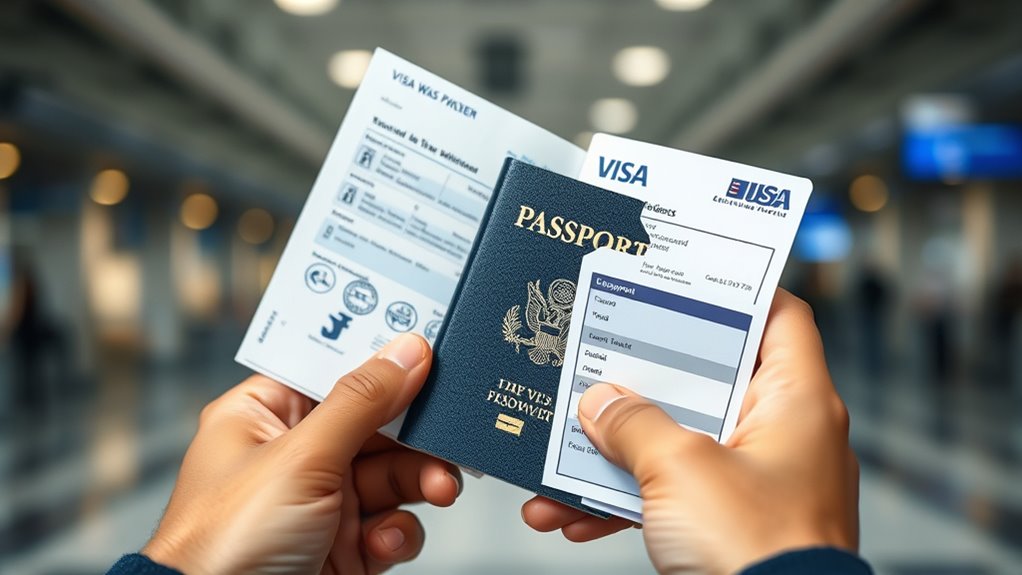
The Visa Waiver Program (VWP) allows travelers from participating countries to visit the United States for tourism or business purposes without obtaining a visa. However, even with this program, you need to be aware of certain travel restrictions and entry requirements to guarantee your trip goes smoothly. The U.S. government has set specific rules to regulate who can enter under the VWP, and understanding these is vital to avoiding delays or denied entry at the border.
First, your nationality plays a key role. Only citizens of countries approved for the VWP can travel without a visa, so you should verify your country’s status before planning your trip. Additionally, you must have an approved travel authorization through the Electronic System for Travel Authorization (ESTA). This online process is quick, but it’s essential to complete it before your departure. Without ESTA approval, your entry will be denied, regardless of your other eligibility factors.
Travel restrictions are also tied to your travel history and purpose. If you’ve previously overstayed a visa or violated U.S. immigration laws, you might face restrictions or outright denial. The U.S. authorities scrutinize your background to ensure you don’t pose a security risk or intend to stay longer than permitted. Furthermore, your intended activities matter—business travelers, tourists, and those attending conferences are generally permitted, but engaging in work or studying usually requires a different visa.
Travel history and purpose influence VWP eligibility; overstays and violations may lead to denial or restrictions.
Entry requirements extend beyond just ESTA approval. You need a valid passport from your home country, and it must be an e-passport with an embedded chip for security. Your passport should be valid for at least six months beyond your planned stay, although some countries have agreements that waive this requirement. When you arrive, U.S. Customs and Border Protection officers will review your documentation and ask questions about your trip. They may also request proof of your return or onward travel to confirm your intent to leave the U.S. before your authorized stay ends. Additionally, understanding the power requirements for your electronic devices can help prevent issues during your trip, especially if you plan to bring appliances or gadgets.
It’s important to note that even if you meet all the entry requirements, the final decision rests with the border officers. They have the authority to deny entry if they believe you don’t meet the criteria or if your circumstances change. So, always carry all relevant documents, including proof of your travel plans, accommodation, and ties to your home country.
Understanding the VWP, travel restrictions, and entry requirements guarantees you’re prepared for a smooth journey. Staying informed and compliant helps you avoid unexpected issues at the border, making your trip to the U.S. enjoyable and hassle-free.
U.S. ESTA travel authorization
As an affiliate, we earn on qualifying purchases.
As an affiliate, we earn on qualifying purchases.
Frequently Asked Questions
Can I Extend My Stay Under the Visa Waiver Program?
No, you can’t extend your stay under the Visa Waiver Program. The travel duration is limited to 90 days, and this period can’t be extended or renewed. If you wish to stay longer, you’ll need to apply for a different visa before your current period ends. Staying beyond the allowed travel duration can result in penalties or future visa issues, so plan accordingly.
What Happens if I Lose My Travel Authorization?
If you lose your travel authorization, you should contact emergency procedures immediately and obtain a replacement. Without valid authorization, you risk being denied entry or facing complications during your travel. Make sure to have travel insurance that covers emergencies, including lost documents, to protect yourself. Always carry digital and physical copies of your authorization and emergency contacts, so you’re prepared if you encounter issues.
Are There Any Restrictions Based on Nationality?
You might find that your nationality influences your eligibility criteria within the Visa Waiver Program. While most travelers from participating countries enjoy smooth entry, some nationalities face subtle restrictions or additional requirements. It’s wise to check the latest list of eligible countries before planning your trip, as these nationality restrictions help uphold the program’s integrity. Staying informed ensures your travel experience remains seamless and enjoyable.
How Often Do I Need to Reapply for ESTA?
You don’t need to reapply for ESTA every time you travel, but you should verify your travel authorization renewal status before each trip. Typically, the ESTA reapplication frequency is every two years or whenever your passport info changes. If your ESTA expires or your circumstances change, you’ll need to submit a new ESTA application to guarantee your travel authorization remains valid. It’s best to renew it proactively to avoid travel disruptions.
Can I Work or Study While on the Visa Waiver?
It’s a surprising coincidence, but while you’re on a visa waiver, you can’t work or study legally. The visa waiver limitations only allow for tourism, business, or transit. Your travel authorization is valid for up to 90 days and isn’t meant for employment or educational purposes. If you plan to work or study, you need to apply for a specific visa, as the waiver doesn’t cover those activities.
e-passport with embedded chip
As an affiliate, we earn on qualifying purchases.
As an affiliate, we earn on qualifying purchases.
Conclusion
Understanding the Visa Waiver Program and document eligibility helps you travel confidently. Did you know over 20 million travelers used the program in 2022 alone? This statistic shows how crucial it is to make sure your documents are in order. By staying informed and prepared, you can avoid delays and enjoy seamless entry into the U.S. Whether for business or leisure, knowing the rules keeps your journey smooth and stress-free.

2 Pack European Plug Adapter USB C, TESSAN US to Europe Adapter 4 Outlets 3 USB Charger, Type C International Power Adaptor to Italy Spain France Portugal Iceland Germany, Europe Travel Essentials
Adapter for Europe Plug: Europe plug adapter works in European countries such as Italy, Spain, France, Portugal, Greece,…
As an affiliate, we earn on qualifying purchases.
As an affiliate, we earn on qualifying purchases.

After the Last Border: Two Families and the Story of Refuge in America
As an affiliate, we earn on qualifying purchases.
As an affiliate, we earn on qualifying purchases.