
One common travel document mistake is using an expired or nearly expiring passport, which can cause security issues or denied entry. Double-check all your details for typos, including your name and birthdate, and verify your visa applications are complete and accurate. Rushing preparations can lead to missing documents or errors, so start early and stay organized. For more tips on avoiding these pitfalls, keep exploring how to make your travel plans smoother.
Key Takeaways
- Double-check that all personal details on passports and visas match exactly to prevent entry issues.
- Submit complete, accurate applications with all required supporting documents to avoid delays or rejections.
- Start the visa and passport renewal process early to allow sufficient time for corrections and processing.
- Ensure passports are valid for at least six months beyond your planned travel dates.
- Carefully review all instructions from official sources and keep multiple copies of important travel documents.

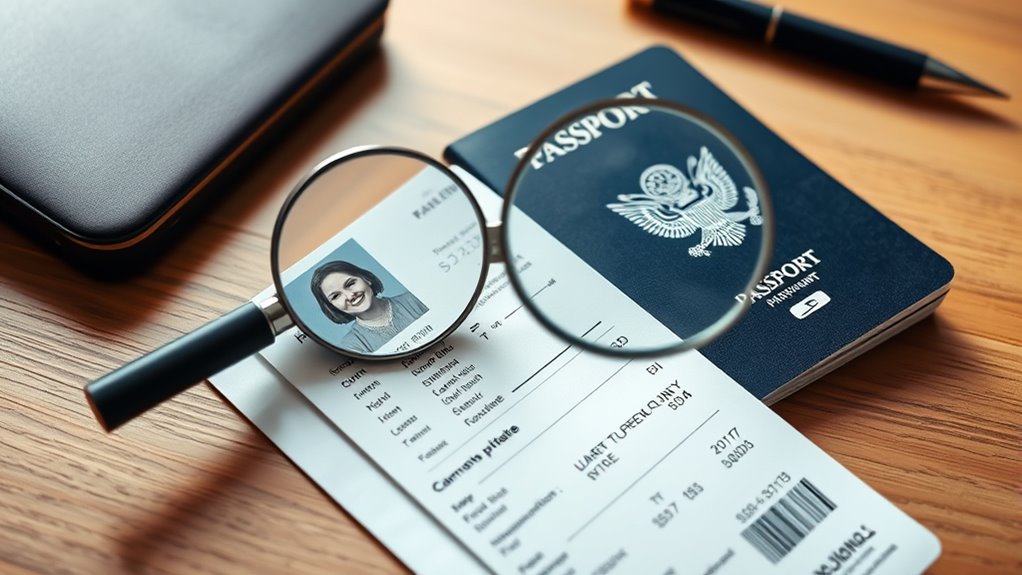
Have you ever wondered how a simple mistake on your travel documents can derail your entire trip? It’s a common concern because even minor errors can cause delays, refusals, or last-minute scrambling. One of the most critical aspects is making sure your passport is valid and up to date before you travel. When it’s time for passport renewal, double-check all the details, including your name, date of birth, and expiration date. Missing or incorrect information can lead to rejection at border controls or issues with airline check-ins. Remember, many countries require your passport to be valid for at least six months beyond your planned departure date, so don’t wait until the last minute to renew it. Additionally, some countries have strict entry requirements that demand specific visa types or documentation, making it essential to understand the visa application processes well in advance. Rushing through these steps can lead to errors, such as submitting incomplete forms, providing incorrect personal data, or missing supporting documents. These mistakes can cause delays, or worse, outright denial of your visa, forcing you to cancel or reschedule your trip. To avoid these pitfalls, carefully review all instructions provided by consulates or embassies, and consider seeking assistance if you’re unsure about the paperwork. It’s also helpful to start the visa application process early, so you have ample time to correct any mistakes or gather additional information. Many travelers overlook the importance of verifying the accuracy of their personal information on travel documents. Even a small typo—like a misspelled name or an incorrect birthdate—can create complications. Always cross-check your passport details against your official ID and ensure your visa matches your passport information precisely. Keep digital and printed copies of all important documents, so you can quickly access them if needed. Another common mistake is neglecting to update your travel documents after life changes—such as a legal name change or updating your passport photo. These oversights can cause issues at border controls or when applying for visas. Furthermore, understanding the role of contrast ratio in projectors can help you choose the right device for clear visuals. By staying proactive and meticulous, you minimize the risk of encountering surprises during your travels. To put it plainly, the key to avoiding travel document mistakes is preparation. Stay alert when renewing your passport and follow the correct visa application processes carefully. Double-check all data before submitting, and keep track of expiration dates and requirements. When you do this, you’ll ensure that your journey goes smoothly, letting you focus on enjoying your trip rather than fixing preventable problems at the last minute.

Cirecsiy Carburetor Gasket Kit with Choke Cable for C70 C 70 Passport 17mm (1980-1983), Fuel Seal Renewal
This carburetor gasket kit includes essential gaskets and choke cable for 17mm carburetor applications; verify carb size and…
As an affiliate, we earn on qualifying purchases.
As an affiliate, we earn on qualifying purchases.
Frequently Asked Questions
How Early Should I Renew My Travel Documents Before Expiry?
You should renew your passport at least six months before its expiry date. This gives you enough time to handle the passport renewal process without stress and guarantees you won’t face issues during travel. Set expiry reminders to stay updated, so you don’t forget to renew your travel documents. Renewing early helps avoid last-minute rushes and potential travel disruptions, giving you peace of mind for upcoming trips.
Can I Travel With a Damaged or Torn Passport?
You shouldn’t travel with a damaged or torn passport. It could cause serious issues at border control, as authorities may doubt its validity or refuse entry. If your passport has minor damage, consider passport repair or renewal before your trip. Remember, a valid passport with intact documents guarantees smooth travel. Don’t risk losing your journey’s excitement—check your passport’s condition and renew it if needed to guarantee your document’s validity.
What Are the Consequences of Incorrect Personal Information on a Visa?
If you provide incorrect personal information on a visa, you risk facing serious consequences like visa fraud accusations and potential identity theft issues. Authorities may deny your entry or revoke your visa, leading to delays and legal trouble. Always double-check your details, verify they match your official documents, and report any errors promptly. Staying accurate helps you avoid complications and ensures a smooth travel experience.
How Do I Get a Replacement for Lost Travel Documents Abroad?
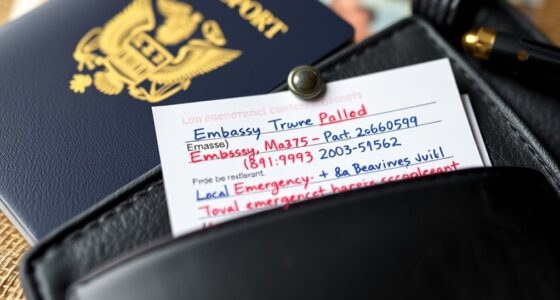
Losing your travel documents abroad is like a ship losing its compass; you need to find your way again. Report your lost documents immediately to local authorities and your embassy or consulate. They can guide you through the document retrieval process and issue replacement travel documents. Keep copies of your ID and passport, if possible, to speed up the process. Acting swiftly guarantees you’re not stranded in unfamiliar waters.
Are Digital or Electronic Travel Documents Accepted Universally?
Digital documentation and electronic passports are not accepted universally. While some countries accept electronic versions or digital copies of travel documents, many still require physical passports or visas. You should always carry your physical travel documents and check with airlines or border authorities beforehand to confirm their acceptance. Relying solely on digital documentation could cause delays or denied entry, so it’s safest to keep hard copies ready when traveling internationally.

Passport Holder Family RFID Travel Document Organizer for Women Waterproof Passport Wallet Men Portable Case for Cards, Boarding Pass, ID, Money, Tickets with Zipper
Efficient Organization: Our travel document holders are not only travel organizers but also family travel document organizers and…
As an affiliate, we earn on qualifying purchases.
As an affiliate, we earn on qualifying purchases.
Conclusion
To avoid travel document mistakes, stay organized and double-check everything before your trip. Think of your documents like the keys to a locked door—you don’t want to lose them or find them invalid at the last minute. By paying close attention and preparing ahead, you’ll navigate your journey smoothly, like a boat sailing on calm waters. Remember, a little extra effort now can save you from a big headache later. Safe travels!

Visa/MC/Amex/Discover Credit Card Decals, 4 Piece
Credit card decals
As an affiliate, we earn on qualifying purchases.
As an affiliate, we earn on qualifying purchases.

2 Pack Passport Cover With Card Slots RFID Blocking-White&Black
※【Multi-Purpose】:The passport holder with 2 fuction, vaccine card holder and passport holder, transparent pocket is for the vaccine…
As an affiliate, we earn on qualifying purchases.
As an affiliate, we earn on qualifying purchases.