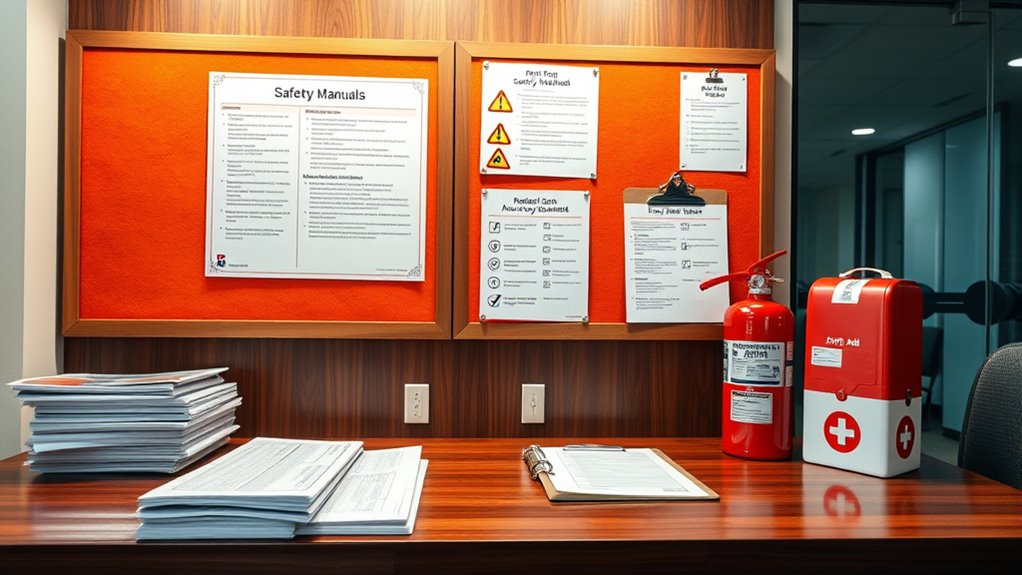

To guarantee workplace safety compliance, you need to maintain key documents like emergency procedures, safety training logs, signage standards, and incident reports. Policies should be clear, current, and accessible to all employees, with regular reviews and updates. Consistent recordkeeping and documentation demonstrate your commitment and help meet regulatory requirements. Properly implementing and enforcing these policies minimizes risks and prepares your team for emergencies. Keep going to discover practical tips for maintaining thorough safety documentation.
Key Takeaways
- Maintain up-to-date safety policies, emergency procedures, and hazard communication documents accessible to all employees.
- Keep detailed records of safety training sessions, drills, incident reports, and corrective actions taken.
- Post clear signage indicating emergency routes, safety protocols, and hazard warnings throughout the workplace.
- Conduct regular safety drills to test emergency response plans and identify areas for improvement.
- Ensure compliance with local, state, and federal safety regulations through documentation audits and policy reviews.

Ensuring workplace safety compliance is essential for protecting employees and maintaining a productive environment. One of the most critical aspects of this compliance involves having clear emergency procedures in place. These procedures guide everyone on how to respond swiftly and effectively during emergencies such as fires, medical incidents, or natural disasters. When employees know what to do and where to go, chaos is minimized, and safety is preserved. To achieve this, you need well-documented emergency procedures that are easily accessible and regularly reviewed. Incorporating these procedures into your safety policies ensures everyone understands their roles, reducing panic and confusion when emergencies occur. Additionally, fostering a safety-oriented mindset can be strengthened through consistent attention and mindfulness during safety practices. Alongside emergency procedures, safety training plays a vital role in workplace safety compliance. Providing comprehensive safety training helps employees recognize hazards, understand safety protocols, and respond appropriately to various situations. When you prioritize safety training, you empower your team to act confidently and responsibly, which can prevent accidents before they happen. The training should cover emergency procedures, proper use of safety equipment, and hazard identification. Conducting regular safety training sessions ensures that employees stay updated on any changes to policies or new risks that might emerge. This ongoing education creates a safety-conscious culture where everyone actively contributes to a secure work environment. Having written emergency procedures and a robust safety training program is only part of the equation. You also need to ensure that these policies are enforced consistently across your workplace. Posting clear signage about emergency routes and safety protocols helps reinforce training and keeps safety at the forefront of daily activities. Additionally, conducting periodic drills tests whether employees can follow emergency procedures correctly, helping to identify gaps or areas for improvement. These drills make safety procedures second nature, reducing hesitation during actual emergencies. Furthermore, keeping detailed records of safety training sessions, emergency drills, and incident reports is crucial for compliance. These documents serve as proof that you’re actively maintaining safety standards. They can also highlight trends or recurring issues that require attention, allowing you to adapt your policies accordingly. Ensuring that all safety-related documentation is up-to-date and accessible demonstrates your organization’s commitment to a safe working environment.
Top picks for "workplace safety compliance"
Open Amazon search results for this keyword.
As an affiliate, we earn on qualifying purchases.
Frequently Asked Questions
How Often Should Safety Policies Be Reviewed and Updated?
You should review your safety policies at least annually to make certain they’re current and effective. Regular policy review helps identify safety updates needed to address new hazards or regulations. However, if there are significant changes in your workplace, like new equipment or processes, you should update policies immediately. Staying proactive with safety updates demonstrates your commitment to a safe work environment and helps prevent accidents or violations.
Are There Specific Training Requirements for New Employees?
Yes, there are specific training requirements for new employees. During employee onboarding, you should guarantee they complete thorough safety training programs tailored to their roles. These programs cover essential safety procedures, hazard identification, and emergency protocols. By doing so, you help new hires understand workplace safety expectations from the start, reducing risks and fostering a culture of safety. Regular refresher courses should also be scheduled to maintain their safety awareness.
What Are the Penalties for Non-Compliance?
You face significant legal repercussions if you don’t conform with workplace safety regulations; penalties can escalate quickly, with fines reaching thousands of dollars per violation. Non-compliance also risks increased penalty escalation and potential lawsuits, affecting your reputation and finances. Nearly 30% of organizations have faced fines or sanctions due to safety violations. Staying compliant helps you avoid these costly consequences and ensures a safer, more productive work environment.
How Can Small Businesses Ensure OSHA Compliance Effectively?
To guarantee OSHA compliance effectively, you should foster a strong safety culture where hazard identification is a priority. Regular training helps your team recognize risks early, and keeping detailed records of safety procedures keeps you prepared for inspections. Engage employees in safety discussions, implement clear policies, and perform routine audits. This proactive approach not only meets OSHA standards but also creates a safer, more productive workplace.
What Are the Latest Changes in Workplace Safety Regulations?
You should stay updated on the latest workplace safety regulations by regularly reviewing OSHA updates and industry notices. Focus on hazard identification and fostering a strong safety culture, as these are central to recent changes. Implement training programs that emphasize new safety protocols, encourage open communication about hazards, and continuously improve safety practices. Staying proactive helps you maintain compliance and protect your team effectively amidst evolving safety regulations.
Conclusion
By staying on top of workplace safety compliance, you’re not just ticking boxes—you’re building an unbreakable fortress of security that protects everyone inside. Keep your required documents and policies up-to-date, and you’ll prevent accidents before they even occur. Think of your compliance efforts as the backbone of a safer, more productive work environment—so strong, it could withstand even a hurricane! Stay vigilant, stay compliant, and make safety your top priority every single day.