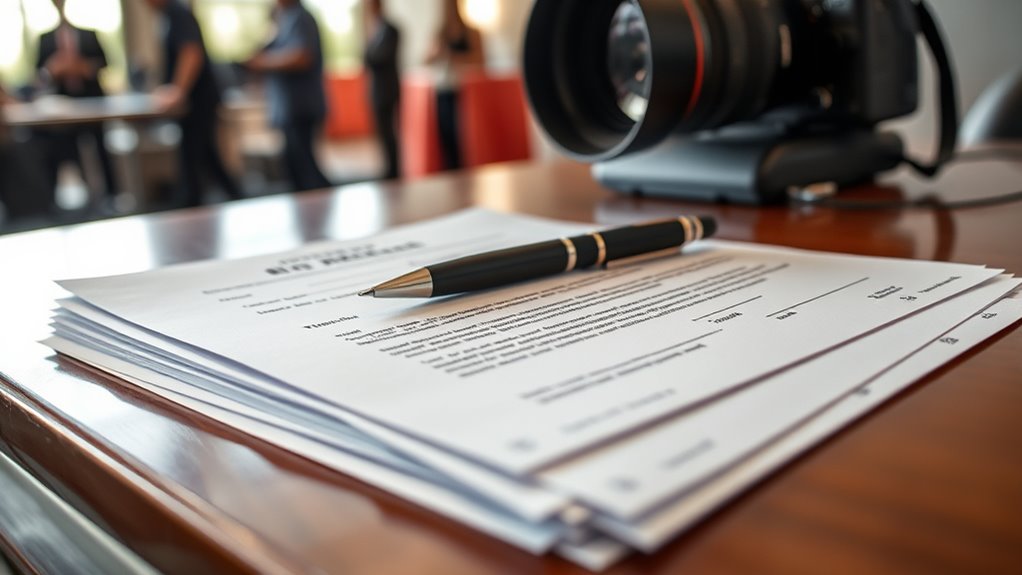

Event photography rights and release forms are crucial tools that help you get clear consent from your subjects, outlining how their images will be used for commercial, promotional, or editorial purposes. They protect both your legal interests and your subjects’ privacy rights, reducing the risk of disputes. By including clear language about image use, storage, and rights to modify photos, these forms ensure professional and ethical photography. To learn more about creating effective releases, keep exploring the details below.
Key Takeaways
- Model release forms serve as written consent for individuals appearing in event photographs, clarifying permitted uses.
- Clear disclosures specify how images will be stored, shared, and used in print, online, or promotional materials.
- When securing permissions, communicate purpose and rights transparently, using simple forms to ensure understanding.
- Legal considerations include privacy laws, restrictions on minors, and property rights, which must be documented alongside releases.
- Proper permissions protect against legal disputes, respect privacy, and demonstrate professionalism in event photography.
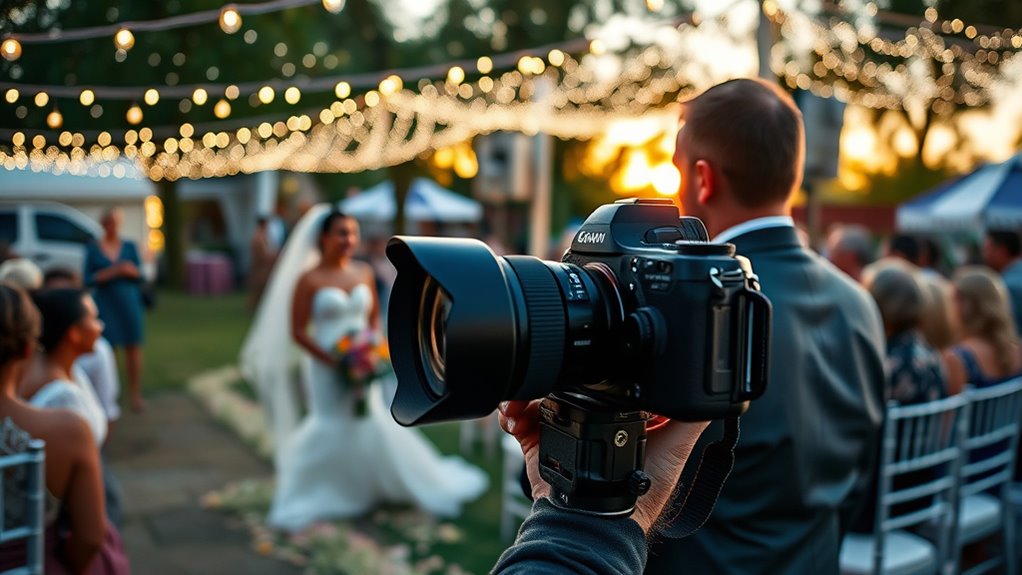
When you’re capturing moments at an event, understanding your rights and the importance of release forms is essential to protect both your interests and the privacy of your subjects. As a photographer, securing proper model permissions is a fundamental step to ensure you’re legally covered. These permissions serve as written consent from individuals who appear in your photographs, allowing you to use their images for various purposes, whether for commercial, promotional, or editorial use. Without clear model permissions, you risk legal disputes, especially if someone feels their privacy has been compromised or if they object to how their image is being used.
Securing proper model permissions protects your work and respects subjects’ privacy at events.
Legal disclosures are also a critical part of this process. They provide transparency about how the photographs will be used, stored, and shared. When you obtain model permissions, be sure to clearly communicate the scope of use, whether it’s for online galleries, print publications, advertising, or social media. This clarity helps prevent misunderstandings and potential legal issues down the line. It’s also wise to include a statement about the rights to modify or edit images and whether the subject will receive any compensation or recognition.
When you approach individuals for model permissions, be respectful and straightforward. Explain why you’re taking their photos and how you plan to use them. Providing a simple, easy-to-understand release form can streamline this process, making it clear what rights they’re granting and what they’re withholding. Remember, a well-drafted release form should specify that the subject understands their rights, including the right to revoke permission later if necessary.
In addition to the model permissions, legal disclosures should include any relevant information about privacy laws or regulations that might impact your photography. For instance, certain events may have restrictions on photographing minors or private property, which you should be aware of before shooting. By documenting these disclosures along with model permissions, you create a thorough record that demonstrates your professionalism and respect for legal boundaries.
Moreover, understanding the key traits of successful event photographers, such as attention to detail and effective communication, can significantly improve your ability to obtain the necessary permissions smoothly. Taking these steps not only protects you legally but also fosters trust with your subjects. When people know you’re transparent and respectful about their rights, they’re more likely to cooperate and feel comfortable being photographed. Ultimately, understanding and implementing proper model permissions and legal disclosures is a critical part of responsible event photography, ensuring that everyone’s rights are respected and that your work remains legally sound.
Frequently Asked Questions
Can I Use Event Photos Commercially Without Consent?
You generally can’t use event photos commercially without consent because of privacy concerns and the need for model releases. If the subjects haven’t signed a release, you’re risking legal issues, especially if they object or are minors. Always get explicit permission to avoid infringing on privacy rights. This guarantees you’re legally protected and respectful of individuals’ privacy, making your commercial use lawful and ethical.
What Rights Do Photographers Have Over Event Images?
You have rights over your event images, including model rights and image ownership. As a photographer, you typically hold the rights unless you’ve transferred them through a contract or release form. This means you can control how the images are used, shared, or sold. However, if you’ve signed away your rights, others may have the legal authority to use the photos commercially. Always clarify rights before sharing or licensing your images.
How Long Does a Release Form Remain Valid?
You might think release forms last forever, but their legal validity actually depends on the contract duration. Generally, a release remains valid for as long as specified in the agreement, often ranging from a few years to indefinite. To guarantee ongoing protection, revisit and renew the form if the event’s relevance extends beyond its initial validity period. Always check the specific terms to understand the precise duration and legal enforceability.
Are Verbal Agreements Enough for Photo Releases?
Verbal agreements aren’t usually enough for photo release validity, especially in legal or commercial situations. You should get written consent to protect your rights and avoid disputes. Verbal agreements can be misunderstood or forgotten, making them unreliable. Always ask for a signed release form to ensure clear, enforceable consent. This way, you have solid proof that the subject agreed to the use of their images, safeguarding both parties’ interests.
What Are the Legal Consequences of Unauthorized Photography?
If you take unauthorized photos, you risk legal consequences like lawsuits for invading privacy and violating consent requirements. People have privacy concerns and can pursue actions if their images are taken without permission, especially in private settings. Courts may order you to pay damages or stop further photography. To avoid this, always get clear consent and respect privacy laws, ensuring you’re compliant with legal standards when capturing images.
Conclusion
Think of event photography rights and release forms as the sturdy bridge connecting you and your audience. Just like a well-built bridge ensures safe passage over turbulent waters, these forms safeguard your creative journey while respecting others’ boundaries. When you use them wisely, you create a clear path where memories flow freely, and everyone feels secure. So, build your bridge with care, and let your images tell their story with confidence and respect.