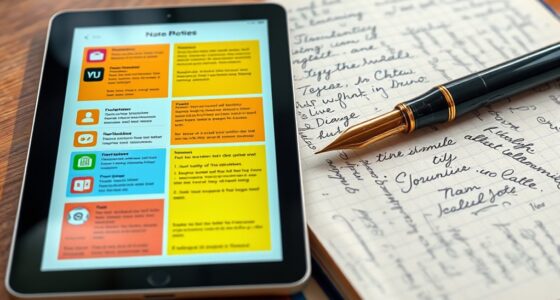
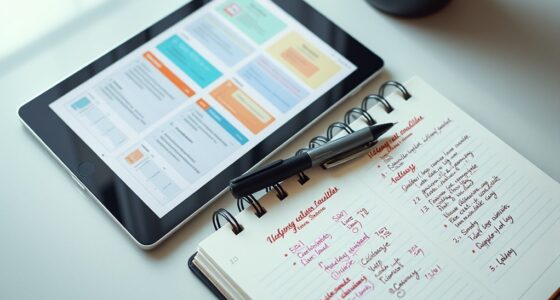
To build an effective e-portfolio to showcase your academic work, organize your key achievements, adding digital credentials like certificates and badges to prove your skills. Include reflective notes to explain each piece’s significance, and keep your layout clean and easy to navigate. Regular updates help demonstrate your growth over time. By blending your accomplishments with thoughtful reflections, you create a compelling story of your learning journey — and there’s more to explore ahead.
Key Takeaways
- Select and organize significant academic work that highlights your skills and knowledge effectively.
- Incorporate digital credentials like certificates and badges to verify your accomplishments.
- Add reflective notes explaining the relevance and lessons learned from each piece.
- Use a clean, intuitive layout for easy navigation and ongoing updates to demonstrate growth.
- Showcase a narrative of your learning journey by combining evidence with self-reflection and future goals.

Have you ever wondered how to effectively showcase your academic achievements and skills? An e-portfolio offers a dynamic way to do just that. It’s more than just a collection of your work; it’s a digital space where you can present your accomplishments, reflect on your learning journey, and demonstrate your growth over time. To maximize its impact, focus on integrating digital credentials that validate your skills and achievements. These credentials—such as certificates, badges, or digital badges—provide credible proof of your competencies and make your portfolio stand out. When you include digital credentials, you give potential employers, educators, or collaborators clear, verifiable evidence of what you’ve accomplished. It’s a strategic move that enhances your credibility and showcases your commitment to ongoing learning.
Alongside digital credentials, reflective practice plays a *key* role in creating a compelling e-portfolio. Reflective practice involves regularly thinking about what you’ve learned, how you’ve applied it, and what you can improve. When you incorporate reflections into your portfolio, you demonstrate self-awareness and a proactive attitude toward your development. Instead of just listing achievements, you explain the context behind your work, the challenges you faced, and the lessons learned. This not only enriches your portfolio but also gives viewers insight into your thought process and your capacity for critical thinking. Highlighting reflective practice helps you connect your academic work to real-world applications, showing that you’re more than just a list of skills—you’re an engaged, thoughtful learner. Incorporating high-quality presentation techniques can also significantly increase the effectiveness of your e-portfolio by making it more engaging and accessible to viewers.
Building an effective e-portfolio requires intentional organization. Start by selecting your most significant work—papers, projects, presentations, or research—that best showcase your skills and knowledge. Incorporate digital credentials where applicable to verify your expertise. As you add each item, include reflective notes that explain the significance of each piece and what you learned from the experience. Keep your layout clean and easy to navigate, ensuring viewers can quickly find key information. Regularly updating your e-portfolio is *essential*, as it reflects your ongoing development and keeps your digital credentials current. The process of maintaining your portfolio also encourages continuous reflective practice, helping you identify areas for growth and new skills to acquire.
Ultimately, an e-portfolio is a living document of your academic journey. By thoughtfully combining digital credentials with reflective practice, you create a powerful tool that not only displays your achievements but also tells the story of your learning process. It’s a way to present yourself confidently to potential employers or academic programs, showing them not just what you’ve done, but how you’ve grown and what you’re capable of achieving next.
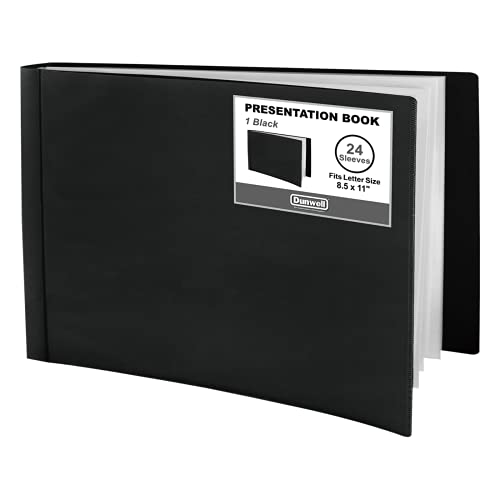
Dunwell 8.5×11 Portfolio Binder (Horizontal), Plastic Presentation Book, 24 Pockets Displays 48 Pages of Letter Size Documents, Certificates, Keepsakes, Art Portfolio Folder, Acid-Free Poly
1 Black Plastic Binder Folder: 24 bound (non-refillable) side loading plastic binder sleeves, Displays 48 viewable 8.5 x…
As an affiliate, we earn on qualifying purchases.
As an affiliate, we earn on qualifying purchases.
Frequently Asked Questions
How Often Should I Update My E-Portfolio?
You should update your e-portfolio regularly, ideally every few months, to keep the content fresh and relevant. Frequent updates guarantee it reflects your latest achievements and skills, making it more appealing to potential employers or educators. A content refresh every 3 to 6 months helps you stay current and showcase ongoing growth. Remember, consistent updates demonstrate your commitment to professional development and keep your portfolio engaging.
What Platforms Are Best for Creating E-Portfolios?
Like a skilled architect choosing blueprints, you should pick platforms with robust features and design customization options. Wix, WordPress, and Behance stand out, offering flexible templates and easy-to-use tools. These platforms let you personalize your e-portfolio, showcase your work professionally, and adapt as your skills grow. Focus on platforms that are intuitive, visually appealing, and allow for seamless updates, ensuring your portfolio remains a true reflection of your evolving talents.
Can I Include Non-Academic Work in My Portfolio?
Yes, you can include non-academic work like creative projects and volunteer work in your e-portfolio. Showcasing these experiences highlights your diverse skills and passions, making your portfolio more engaging. Be sure to present them professionally, with clear descriptions and visuals if possible. Including such work demonstrates your initiative and well-roundedness, helping you stand out to potential employers or academic programs.
How Do I Tailor My E-Portfolio for Different Audiences?
You tailor your e-portfolio for different audiences by conducting audience analysis to understand their needs and interests. Then, customize your content accordingly—highlight relevant skills, projects, or achievements that resonate with each group. Use clear language and visuals suited to your audience’s expectations. Regularly update your portfolio to reflect changes and guarantee it remains engaging, professional, and aligned with your goals for each specific audience.
What Are the Privacy Considerations for Sharing My E-Portfolio?
Privacy concerns and sharing restrictions matter when you share your e-portfolio. You need to contemplate who can access your work and what personal information is visible. Use privacy settings to limit access and avoid sharing sensitive data. Think about the audience and your goals, ensuring you don’t disclose anything that could compromise your privacy or violate restrictions. Protect your work while showcasing your accomplishments responsibly.

Hodges Badge Student of The Month Award Ribbon (25)
Pack Size: 25
As an affiliate, we earn on qualifying purchases.
As an affiliate, we earn on qualifying purchases.
Conclusion
Your e-portfolio is like a key that open your future, revealing the treasures of your academic journey. Every project, skill, and achievement you add becomes a shining star guiding others to see your true potential. By building this digital garden, you cultivate your growth and inspire others to follow your path. Remember, your e-portfolio isn’t just a collection—it’s a lighthouse illuminating your unique brilliance for the world to see.
reflective practice journal
As an affiliate, we earn on qualifying purchases.
As an affiliate, we earn on qualifying purchases.

Dunwell 12-Pocket Presentation Binder with Plastic Sleeves (24 Viewable Pages), 8.5×11 Portfolio Folder, Top-Loading Sheet Protectors, Customizable Cover, Organizer for Photos, Recipes (Black)
PRESENTATION READY: 12 bound sleeves display 24 pages, Perfect for client meetings, business presentations, job interviews. Make a…
As an affiliate, we earn on qualifying purchases.
As an affiliate, we earn on qualifying purchases.