
Editorial update log
November 25, 2026:
Deal update: RoundupForge price history now flags ASIN B0876F6STP on amazon.com as below its typical tracked range. RF labels the deal as typical.
Exact pricing remains intentionally gated through the live Grimfaste price module in the article.
When choosing a science kit for a child, the real question is whether you want a guided project matched to a particular age or a standalone kit selected around a topic, activity or budget. KiwiCo is known for age-banded project boxes and subscriptions, while National Geographic sells a broad assortment of kits through retailers and its own channels. Both can make hands-on science more appealing than a worksheet, but the experience depends on the specific kit: neither brand’s name alone guarantees the right difficulty, materials or lasting play.

Prime made for students and young adults
- Fast, free delivery for dorm and study essentials
- Prime Video and Amazon Music included
- Member-only deals
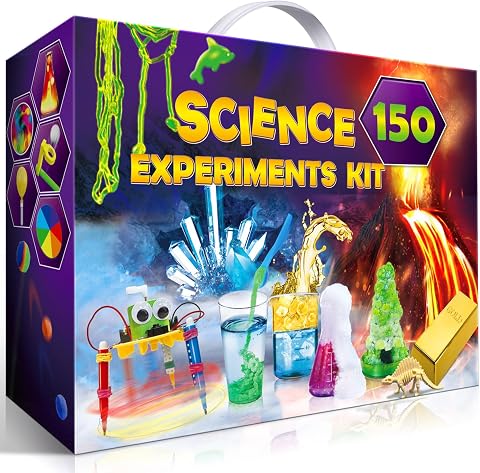
UNGLINGA 150 Experiments Science Kit for Kids
- ✔ Brand: UNGLINGA
- ✔ Experiments: 150 listed
- ✔ Recommended age: 8 years and up
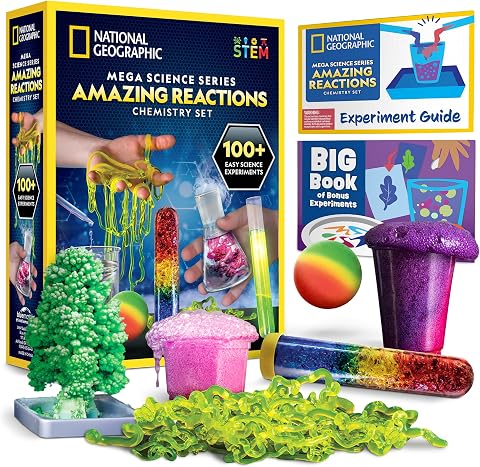
National Geographic Amazing Chemistry Set, 100+ Experiments for Ages 8+
- ✔ Brand: Blue Marble
- ✔ Age range: 8 years and up
- ✔ Experiments: 15 with included materials, plus 85 bonus activities

National Geographic Science Magic Kit for Kids, Ages 8+
- ✔ Brand: Blue Marble
- ✔ Age range: 8 years and up
- ✔ Experiments: 20 included, plus 85+ bonus activities
KiwiCo is the stronger starting point for families who value a planned, polished activity and help choosing by age. National Geographic may suit shoppers who already know the subject their child wants to explore, or who want to compare individual kits across price points. The comparison below focuses on typical buying differences; exact contents, instructions, age guidance and prices vary by product and retailer.
At a Glance
| Criteria | KiwiCo science kits | National Geographic science kits | Winner |
|---|---|---|---|
| Choosing by age and interest | Age-banded collections and themed subscriptions make guided selection straightforward. | Wide variety of individual kits; age suitability should be checked product by product. | A |
| Instruction and project structure | Often built around a defined project, with instructions and supporting materials. | Instructions and included activities vary across the assortment. | A |
| Topic selection | Collections commonly connect science with engineering, art and design. | Broad subject range can include topics such as chemistry, geology, crystals and experiments. | B |
| Hands-on learning | Strong fit for a complete build or activity with a visible outcome. | Can be a good match for a child’s specific science interest. | Depends |
| Repeat use and open-ended play | Some projects have a clear endpoint; reuse depends on the materials and project. | Some experiment sets invite repeated activities; others rely on consumable materials. | Depends |
| Buying flexibility | Subscriptions and individual kits are available, with the subscription offering a planned sequence. | Standalone kits are widely sold through retailers, so shoppers can compare individual products. | B |
| Value for money | Can justify a higher per-box cost when age fit, curation and convenience matter. | Often offers accessible entry points, though contents and value vary by kit. | Depends |
UNGLINGA 150 Experiments Science Kit for Kids
UNGLINGA earns the top spot because it offers the broadest stated mix of science topics in this group. With activities covering chemistry, physics, Earth science, and surface tension, it gives curious children more ways to find a subject that grabs them than either National Geographic option. The illustrated, step-by-step manual also makes the kit feel suited to following a project through, rather than relying on a collection of intriguing demonstrations alone.The 150-experiment count is its strongest selling point, but families should read it as a menu of activities, not a promise that every project is ready to start straight from the box. Some experiments call for common household items, and the description says not all materials are included. Compared with the Amazing Chemistry Set, UNGLINGA spans more fields but is less specifically framed around chemistry tools such as test tubes, beakers, and pipettes. Compared with the Science Magic Kit, it favors exploration over performing tricks. That makes it the most flexible choice here, but not necessarily the best for a child who wants a tightly focused chemistry experience or a show-and-tell angle.For families comfortable checking instructions and gathering supplies before an activity, UNGLINGA offers the lineup’s most varied starting point. Its eight-and-up age recommendation and illustrated guidance provide a clear intended audience, though the supplied details do not establish how much adult help any particular experiment needs. Its breadth is the advantage; preparation is the tradeoff.
Pros:
- Lists 150 experiments across several science topics.
- Illustrated, step-by-step manual supports following activities.
- Includes lab tools and kid-friendly materials.
- Some projects use common household items.
Cons:
- Some experiments require supplies from home.
- The description says not all materials are included.
Best for: Children aged eight and up who want to explore several areas of science and families willing to gather some household supplies.
Not ideal for: Shoppers who want every experiment’s materials included or children looking for chemistry-only activities or science magic performances.
Bottom line: We recommend UNGLINGA for the broadest science exploration in this comparison, provided families are prepared to source some activity materials.
“We recommend UNGLINGA for the broadest science exploration in this comparison, provided families are prepared to source some activity materials.”
National Geographic Amazing Chemistry Set, 100+ Experiments for Ages 8+
For a child whose curiosity already leans toward reactions, crystals, and color changes, this National Geographic set has the clearest subject focus. It includes materials for 15 chemistry experiments, with examples such as growing crystals and making color-changing solutions. Test tubes, beakers, and pipettes add a recognizable lab feel, giving the activities a different character from UNGLINGA’s wider mix of science topics.The larger total includes an important qualification: the illustrated guide adds 85 activities that use common household items. So while the listing says 100-plus experiments, the description identifies materials for 15. That makes this set less immediately broad in ready-to-go supplied activities than its headline may suggest, and families should plan for extra gathering if they want to try the bonus ideas. Against the UNGLINGA kit, it trades cross-topic variety for a more coherent chemistry introduction. Against the Science Magic Kit, it puts the emphasis on chemistry activities rather than presenting science as tricks.This is a sensible pick when the child is specifically interested in chemistry and the included lab tools are part of the appeal. Its guided chemistry focus can help narrow the choice for a beginner, but it is not the most versatile option for children who want to move between physics, Earth science, and other topics. The 1.8-pound listing and compact dimensions describe a relatively small package, though they do not tell us how much activity time or adult support each project requires.
Pros:
- Materials are included for 15 chemistry experiments.
- Examples include growing crystals and color-changing solutions.
- Includes test tubes, beakers, and pipettes.
- Illustrated guide adds 85 activities using household items.
Cons:
- The supplied materials cover 15 experiments, not the full listed activity count.
- Bonus activities require common household items.
Best for: Children aged eight and up who are especially interested in chemistry demonstrations, crystals, and simple lab tools.
Not ideal for: Families seeking the widest range of science subjects or expecting materials for all 100-plus listed activities to come in the box.
Bottom line: Choose this set when chemistry is the main draw and a focused collection of lab-style tools matters more than broad subject coverage.
“Choose this set when chemistry is the main draw and a focused collection of lab-style tools matters more than broad subject coverage.”
National Geographic Science Magic Kit for Kids, Ages 8+
The Science Magic Kit is the most performance-oriented option in the lineup. Its 20 hands-on experiments pair demonstrations involving items such as metal, water, test tubes, and coins with illustrated instructions that explain the science behind the tricks. A magic wand and white gloves reinforce the presentation angle, which can give a child a reason to practice an activity and share it with family or friends.That role distinguishes it from both alternatives: UNGLINGA offers more varied subject exploration, while the Amazing Chemistry Set is the more direct choice for a child who wants chemistry experiments and lab tools. The magic kit’s main set includes 20 experiments, with a bonus guide for more than 85 activities that use common household items. As with the chemistry set, the bonus count shouldn’t be mistaken for a box containing everything needed for every experiment. Its stated kit of 20 included experiments is smaller than UNGLINGA’s 150 listed activities, and the performance framing may be less appealing to children who simply want to investigate topics without staging a trick.This pick makes sense when the child enjoys surprises, demonstrations, and explaining how an effect works. Its strongest educational hook is the combination of showmanship and explanation, not breadth. The supplied dimension is incomplete, so we cannot offer a reliable full size comparison with the other kits. Families who want a clear, multi-topic science collection should look first at UNGLINGA; children drawn to chemistry as a subject may prefer the Amazing Chemistry Set.
Pros:
- Combines hands-on experiments with magic-trick demonstrations.
- Illustrated instructions explain the science behind activities.
- Includes a magic wand, white gloves, and experiment guide.
- Bonus booklet adds more than 85 household-item experiments.
Cons:
- The main kit includes 20 experiments.
- Many bonus activities require common household items.
Best for: Children aged eight and up who enjoy performing demonstrations and want explanations of the science behind the tricks.
Not ideal for: Children who prefer open-ended exploration across science topics or families expecting all bonus activity materials in the package.
Bottom line: Pick this kit for a child who learns through presenting and explaining demonstrations, rather than for the broadest experiment selection.
“Pick this kit for a child who learns through presenting and explaining demonstrations, rather than for the broadest experiment selection.”
As an Amazon Associate we earn from qualifying purchases.
Key Differences
The clearest difference is how the purchase is organized. KiwiCo’s age-banded lines and project format help a parent choose a guided experience without first deciding on a specific scientific subject. That structure is useful when the goal is a reliable activity for a particular age or a recurring gift. National Geographic’s assortment is easier to shop as a set of individual topic-led products: a child fascinated by crystals, rocks or chemistry can get a kit centered on that interest. Its broader catalog creates choice, but also makes checking the exact age range, contents and instructions more important.
Neither approach guarantees greater learning or more play. A well-matched National Geographic kit can be more engaging than a KiwiCo project that misses a child’s interests; a carefully guided KiwiCo build can be more satisfying than a topic kit whose activities are too brief. Reusability also depends on the particular experiment: some kits consume ingredients, while others leave a model or equipment for later use. Compare what the box actually contains and how many activities it supports before treating the number of listed experiments as a measure of value.
For most families who want help selecting an age-appropriate, structured project, KiwiCo has the edge. For a specific subject, a one-time purchase or the ability to compare retailer prices, National Geographic is often the more practical route. The price premium for KiwiCo makes sense when its curation and guided format remove work for the buyer; it is harder to justify if the child mainly wants one particular experiment or will use the kit once.
Detailed Comparison
Choosing by age and interest (KiwiCo science kits wins — moderate)
Winner: KiwiCo, a moderate advantage. Its age-banded product lines give parents a clearer first filter and can reduce the chance of picking a project that is far too easy or demanding. National Geographic has many choices, but recommendations and difficulty can differ across individual kits. Check the age label and activity details rather than assuming every product suits the same child.
In practice, choose KiwiCo when you want a guided age range to narrow the field. Choose a National Geographic kit when the child has a clear topic interest and you are willing to inspect the specific product before buying.
Instruction and project structure (KiwiCo science kits wins — moderate)
Winner: KiwiCo, usually a moderate advantage. Its boxes are generally positioned as complete projects, with materials and direction intended to carry the child through a build or activity. National Geographic kits also include instructions, but the level of structure and the number of activities differ across products.
A more guided sequence can help a child work with less adult improvisation, though younger children may still need help. Families who enjoy supplying extra materials or adapting experiments may not need the added structure.
Topic selection (National Geographic science kits wins — moderate)
Winner: National Geographic, a moderate advantage. Its broad assortment of standalone kits makes it easier to search for a particular subject, from rocks and crystals to chemistry-oriented experiments. KiwiCo also spans science and engineering themes, but its ranges are organized around a broader project and age experience rather than always matching a narrowly defined interest.
This matters most for a child who already knows what they want to explore. If the child is simply ready for a hands-on activity and has no fixed preference, KiwiCo’s curation can be more helpful than a very large catalog.
Hands-on learning (minor difference)
Winner: Depends on the kit; the difference is minor at brand level. Either brand can give children a chance to build, observe, test or handle materials. A KiwiCo construction project may suit a child who learns by making a finished object; a National Geographic experiment set may be a better fit for a child who wants to test a particular phenomenon.
Look at the actual actions the child will perform, not just the words “science” or “STEM” on the package. The more relevant activity is usually the one that holds the child’s attention long enough for them to ask questions and try again.
Repeat use and open-ended play (moderate difference)
Winner: Depends on the kit; the difference is moderate for frequent use. Some kits use up ingredients or lead to one completed build, while others include equipment or experiments that can be repeated. The brand alone does not tell you how much play follows the first activity. Read the contents and activity count, and check whether replacement supplies are needed.
If your child likes to repeat an experiment, favor kits with reusable tools and enough materials for multiple attempts. If finishing a single project is the appeal, a defined endpoint may be a benefit rather than a drawback.
Buying flexibility (National Geographic science kits wins — moderate)
Winner: National Geographic, a moderate advantage for one-off shopping. Individual kits are sold through a range of retailers, giving shoppers more opportunity to find a particular product or compare current offers. KiwiCo also sells individual boxes, but its subscription format is especially relevant when the buyer wants a planned series of activities.
For a birthday gift or a child’s current interest, the standalone purchase is easier to control. A subscription may suit a family that wants regular projects and has checked its terms, delivery schedule and cancellation rules.
Value for money (moderate difference)
Winner: Depends on priorities and the exact box; the difference is moderate. National Geographic can offer good value when a lower-priced kit matches the child’s interest and provides enough activities to justify the purchase. KiwiCo may cost more per project, but the added curation and structured materials can save a parent time and make a gift feel complete.
Compare the number of usable activities, reusable equipment, consumable supplies and shipping or subscription costs. Paying more makes sense for a guided experience the child will use; it does not make sense solely for the brand if a simpler kit meets the same need.
KiwiCo science kits: Pros and Cons
Pros:
- Age-banded collections make initial selection easier.
- Project format typically gives the activity a clear structure.
- Subscription option can provide a regular sequence of projects.
Cons:
- A recurring box may be unnecessary for families seeking one activity.
- A structured project may not match a child’s specific subject interest.
- Some projects have a defined endpoint, so repeated play depends on the kit.
National Geographic science kits: Pros and Cons
Pros:
- Broad topic range helps match a child’s existing interest.
- Standalone kits suit one-time gifts and controlled spending.
- Retail availability gives shoppers room to compare products and offers.
Cons:
- Age guidance, instructions and activity depth vary by product.
- A large assortment can take more work to evaluate.
- Some kits rely on consumable materials or offer limited repeat use.
Who Should Choose What
Choose KiwiCo science kits if:
- You want an age-matched, guided project and a simpler way to narrow choices.
- You value a planned sequence of activities and will use the subscription format.
- You are buying for a child who enjoys building toward a finished project.
Choose National Geographic science kits if:
- Your child already has a specific interest, such as crystals, rocks or chemistry.
- You want a single kit and prefer to compare retailer prices.
- You are comfortable checking the age range and activity details for each product.
Skip both if: Skip both if your child prefers unscripted outdoor exploration, already has the equipment and supplies for the activity, or needs accessibility features that the chosen kit does not provide. Choose based on the individual product’s instructions and materials.
Value for Money
National Geographic is often the better value for a one-time purchase when a specific kit fits the child’s interests and its materials support enough activities. Its lower-cost options are not automatically better value: a short activity with mostly consumable supplies may see little use after the first session.
Paying more for KiwiCo can be worthwhile for families who want a curated, age-targeted project with a clear plan and materials together. That convenience has real value when it saves time or gives a child a better-matched activity. It is less compelling if the child wants one narrow topic, if a parent is happy to assemble supplies, or if the subscription would continue beyond the family’s interest. Compare the exact contents and total cost, including delivery or recurring charges, before deciding.
Final Verdict
Choose KiwiCo for the safer starting point when you want an age-guided, structured project and value having the activity curated for you. Choose National Geographic when the child has a distinct science interest, you want one standalone kit, or price comparison across retailers matters more than a planned project sequence. For most parents buying without a specific topic in mind, KiwiCo is the clearer fit; its premium is justified when its structure and age guidance will be used. The deciding factor is whether you are buying a guided project or a subject-specific experiment.
Frequently Asked Questions
Are KiwiCo science kits better than National Geographic kits?
Neither brand is better for every child. KiwiCo generally makes it easier to choose a guided project by age, while National Geographic offers a broad selection of topic-led standalone kits. The particular kit’s age range, contents and activities matter more than the brand in close decisions.
Which brand is better for a child who already loves one science topic?
National Geographic is often easier to shop when a child has a specific interest, since its standalone assortment covers many recognizable subjects. Check the exact product to confirm it has hands-on activities suited to the child’s age and experience.
Is a KiwiCo subscription worth the extra cost?
It can be worth paying more when you want a regular supply of guided, age-targeted projects and appreciate having choices curated. If you only need one activity or the child wants a particular subject, compare standalone kits and the subscription’s total cost before committing.
Which kits offer more repeat play?
That depends on the individual kit. Look for reusable tools, multiple experiments and enough supplies for repeat attempts; a kit centered on consumable materials or one finished build may offer less repeat use regardless of brand.