Editorial update log
November 25, 2026:
Deal update: RoundupForge price history now flags ASIN B0876F6STP on amazon.com as below its typical tracked range. RF labels the deal as typical.
Exact pricing remains intentionally gated through the live Grimfaste price module in the article.
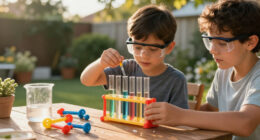
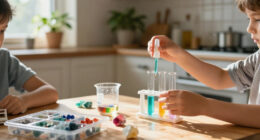
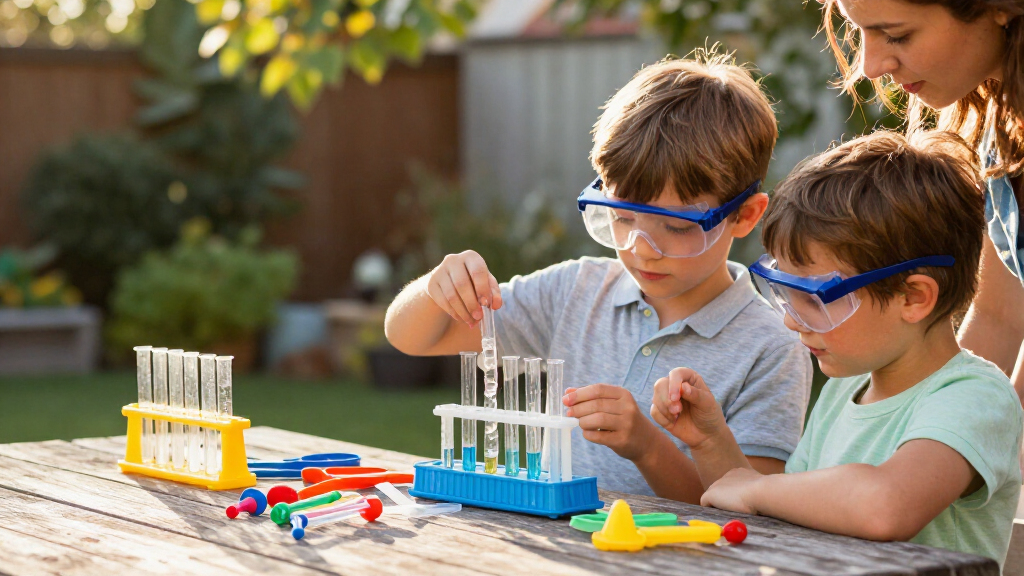
Use this guide to select a science kit for a child, prepare the materials, and complete one experiment together. It is for a parent, caregiver, or teacher supporting a beginner. Allow 30-60 minutes for choosing a kit and running a simple activity; projects with growing, drying, or repeated observations may take longer.

Prime made for students and young adults
- Fast, free delivery for dorm and study essentials
- Prime Video and Amazon Music included
- Member-only deals
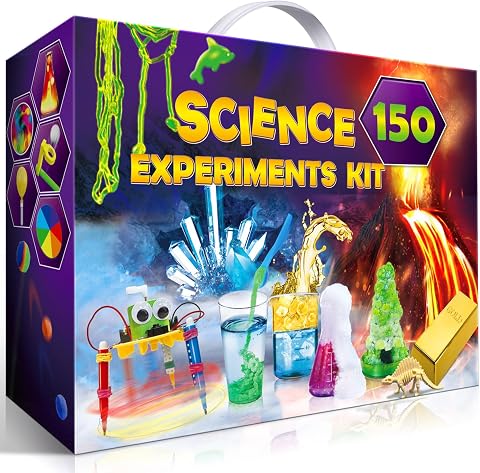
UNGLINGA 150 Experiments Science Kits for Kids Chemistry Lab S.T.E.MToys
- ✔ Experiment count: 150 stated experiments
- ✔ Topics: Earth science, surface tension, chemistry, physics, and more
- ✔ Guide: Illustrated, step-by-step scientific manual
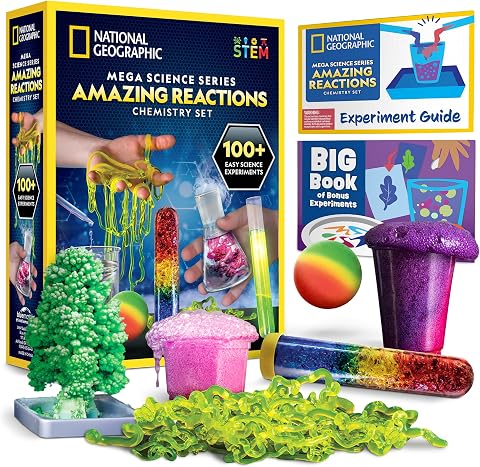
National Geographic Amazing Chemistry Set with 100+ Experiments Ages 8-12
- ✔ Experiment count: 100+ total: 15 with included materials and 85 bonus activities
- ✔ Age description: 8 years and up; title specifies ages 8–12
- ✔ Focus: Chemistry, reactions, and crystal growing

National Geographic Science Magic Kit with 100+ Experiments for Kids 8-12
- ✔ Experiment count: 20 included-material magic experiments plus 85+ bonus activities
- ✔ Age description: 8 years and up; title specifies ages 8–12
- ✔ Format: Science demonstrations presented as magic tricks
Difficulty: Beginner | Time: 30-60 minutes
What You’ll Need
Tools & Materials:
- A science kit labeled for the child’s age range
- The kit’s instruction booklet and all listed components
- A stable, well-lit work surface
- Paper towels and a tray or washable mat
- A timer, pencil, and notebook for observations
Knowledge:
- Read and follow the kit instructions before starting
- Stay with the child and handle any step marked for adult use
Check the package for age guidance, warnings, and required household materials. Avoid kits with missing safety information or damaged containers. Do not substitute food or kitchen utensils for lab materials unless the instructions specifically allow it.
UNGLINGA 150 Experiments Science Kits for Kids Chemistry Lab S.T.E.MToys
For families who want one kit to move between different science topics, UNGLINGA offers the broadest stated range in this lineup. Its 150 experiments cover chemistry, physics, earth science, and surface tension, so kids can sample more than the reaction-centered activities of the National Geographic chemistry set. That variety makes it a flexible choice for siblings or a child whose interests change from week to week.The illustrated, step-by-step manual and included lab-style tools, including goggles, give activities a more structured feel than a collection of ideas alone. Still, the experiment count needs context: the description says many projects use common household items but does not say how many can be completed using only the kit contents. Compared with the National Geographic kits, which separate their supplied-material activities from bonus projects, that makes planning less predictable. Choose UNGLINGA for breadth; look to the chemistry set for a clearer chemistry focus, or to the magic kit for more showmanship.We would skip this pick if a child wants a tightly defined chemistry course or if a caregiver needs a precise list of included materials before each activity. The supplied details also do not give an age range, so we cannot match it to a specific age as confidently as we can the two National Geographic options.
Pros:
- 150 experiments spanning several science topics
- Illustrated step-by-step manual
- Includes lab-style tools and goggles
- Many activities can use common household items
Cons:
- The supplied information does not break down how many experiments use included materials
- No age range is specified in the provided product details
- Broad subject coverage may offer less chemistry focus than the National Geographic chemistry set
Best for: Families seeking a varied activity set for children interested in trying chemistry, physics, earth science, and surface tension.
Not ideal for: Buyers who need an explicitly stated age range, a detailed breakdown of included versus household materials, or a chemistry-only focus.
Bottom line: We recommend UNGLINGA for families who value variety across science topics and can check activity requirements as they go.
“We recommend UNGLINGA for families who value variety across science topics and can check activity requirements as they go.”
National Geographic Amazing Chemistry Set with 100+ Experiments Ages 8-12
When a child is especially drawn to bubbling mixtures, color changes, and crystals, this set gives the science-kit choice a clearer center of gravity. Its core is hands-on chemistry: the described activities include a crystal tree, color-changing liquid, glowing test tubes, and a bouncy ball. Compared with UNGLINGA’s broader mix, this is the more direct route into chemical reactions and lab-style equipment.The “100+” total combines two different kinds of activity. The box includes materials for 15 experiments; a bonus guide adds 85 activities that use common household items. That distinction helps set expectations: kids get a defined set of supplied-material projects, then a longer list of ideas that may require checking cupboards and preparing materials. Beakers, test tubes, and pipettes support the lab theme, while the age description of 8 years and up gives buyers a clearer starting point than UNGLINGA’s supplied details do.This is a better fit than the Science Magic Kit when a child wants the experiment itself to take center stage. The magic set makes performance part of the activity, but offers fewer supplied-material experiments. On the other hand, families wanting science beyond chemistry may prefer UNGLINGA, and those seeking a large collection of ready-to-run kit experiments should note the 15-project included-material limit.
Pros:
- Chemistry-focused activities include crystals and color-changing reactions
- Materials provided for 15 experiments
- Includes test tubes, beakers, and pipettes
- Bonus guide extends the activity list with household-item projects
Cons:
- Only 15 experiments are specified as having all required materials included
- The 85 bonus activities depend on common household items
- Narrower subject range than the UNGLINGA kit
Best for: Children described as ages 8 and up who are curious about chemical reactions, crystals, and using familiar lab tools.
Not ideal for: Families looking for a wide range of science subjects or a large number of experiments with all materials supplied in the box.
Bottom line: We favor this set for kids who want recognizable chemistry experiments and tools, provided the household-material bonus activities are understood as a separate part of the offer.
“We favor this set for kids who want recognizable chemistry experiments and tools, provided the household-material bonus activities are understood as a separate part of the offer.”
National Geographic Science Magic Kit with 100+ Experiments for Kids 8-12
This kit is for the child who would rather reveal a scientific surprise to an audience than simply follow a lab activity. Its 20 included experiments are designed as magic tricks: examples include making a coin float, bending metal with water, and making a test tube appear to vanish. A wand and white gloves help turn the sequence into a small performance, making this a distinct choice alongside the chemistry set’s more conventional lab format.The guide aims to keep the science visible behind the illusion. It includes illustrated instructions, explanations of the effects, techniques used by scientists, and related facts. That gives kids material to share after the trick, not just a moment of surprise. The kit also lists more than 85 bonus experiments using common household items, but buyers should separate those from the 20 supplied-material tricks when judging how much is ready to start.Compared with UNGLINGA, the magic set is less varied in its central theme; its strength is the performance structure, not coverage across several branches of science. It also has fewer included-material experiments than the chemistry set’s 15? Actually it includes materials for 20 magic experiments, making the included activity count higher, but each is framed around a trick. We would choose the chemistry set instead when a child wants chemistry as the main subject, and skip this one if they dislike performing or prefer open-ended experiments.
Pros:
- 20 trick-style experiments with materials included
- Wand and white gloves support a show-and-tell format
- Illustrated guide explains the science behind effects
- More than 85 bonus activities use common household items
Cons:
- The main activities center on magic-style demonstrations rather than broad science exploration
- Bonus experiments require household items
- Performance framing may not appeal to children who want conventional lab projects
Best for: Children described as ages 8 and up who enjoy demonstrations, magic tricks, and explaining how an effect works.
Not ideal for: Kids who prefer a conventional chemistry lab, broad science topics, or experiments without a performance element.
Bottom line: We recommend the Science Magic Kit for kids who learn by demonstrating and explaining surprising effects, rather than for those seeking a broad science sampler.
“We recommend the Science Magic Kit for kids who learn by demonstrating and explaining surprising effects, rather than for those seeking a broad science sampler.”
As an Amazon Associate we earn from qualifying purchases.
Before You Start
Choose a time when you can supervise the activity from setup through cleanup. Keep food and drinks away from the work area. Ask about allergies or sensitivities if the kit includes powders, plant materials, or other substances that could irritate skin or breathing. Follow the kit’s protective equipment instructions, and keep materials away from younger children and pets.
Read the full experiment once before opening anything. Check whether it needs extra supplies, a waiting period, outdoor space, or adult preparation. Set aside enough time to finish safely; do not leave an active experiment unattended.
Step-by-Step Instructions
Step 1: Choose a kit that fits the child
Match the kit’s age range to the child’s age and ability to follow directions. Pick a subject the child is curious about, such as magnets, plants, rocks, or simple circuits. Read the package description and check how many experiments it supports, what supplies it includes, and whether any household items are needed.
For a first kit, choose one with clear instructions and a short activity that produces an observable result. If the child is younger than the listed age, select a simpler kit rather than relying on extra supervision to make an advanced activity suitable.
Tip: Treat age guidance as a safety and skill cue. Small parts, batteries, heat, or chemicals may make a kit unsuitable for younger children.
Check: The kit matches the child’s age, interests, available supervision, and the time and space you have.
Step 2: Check the contents and instructions
Place the closed kit on the work surface and read the safety notes and the instructions for the experiment you plan to do. Compare the listed components with what is in the box. Gather only the additional materials the instructions request, and confirm that nothing is expired, leaking, or damaged.
If a safety label is missing, a container is leaking, or a required part is absent, stop and contact the seller or manufacturer for guidance. Do not guess what a mystery substance is or proceed with an incomplete setup.
Tip: Keep the instruction booklet open to the current experiment so steps and measurements stay in order.
Check: You can account for the required kit components and household supplies, and the instructions give clear safety directions.
Step 3: Prepare a safe work area
Clear a stable table near good lighting and cover it with a washable mat or tray. Move food, drinks, unrelated items, and anything that could be knocked over. Set out the kit materials, paper towels, and any protective equipment named in the instructions.
Have the child wash their hands before beginning. Explain which materials they may handle and which steps you will do. Keep the kit’s substances in their original, labeled containers, and do not taste or deliberately smell any material.
Tip: Use eye protection, gloves, or outdoor space when the kit directions call for them. Supervise closely around glass, sharp tools, heat, or small parts.
Check: The workspace is uncluttered, the required protection is ready, and the child knows the basic safety rules.
Step 4: Pick one experiment and make a prediction
Select an experiment the child can finish in the time available. Read all its steps together before beginning. Ask the child what they think will happen and record the prediction in a notebook, along with the date and the experiment’s name.
Point out any step that requires careful measuring or adult handling. Agree on who will do each action, and set a timer if the instructions specify a wait. Keep the activity focused on following the procedure and noticing results, rather than rushing to finish.
Tip: A prediction is a guess to compare with the result; there is no need for the child to get it right.
Check: You both understand the sequence, know who handles each part, and have recorded a prediction.
Step 5: Follow the procedure in order
Complete one instruction at a time. Measure the amounts with the tools provided, use the specified containers, and wait for the stated duration before moving on. Let the child do the age-appropriate tasks while you supervise and take over any step marked for an adult.
Do not combine extra materials, change quantities, or repeat a step unless the instructions say to. If the result looks different from the picture, pause and reread the directions before making changes. Never mix leftover substances from separate activities.
Tip: If a spill occurs, stop the activity and follow the kit’s cleanup directions. Ask an adult to manage any spill involving a substance with a warning label.
Check: Each step has been completed in order, using the stated amounts and safety measures.
Step 6: Observe and record what happens
Ask the child to describe what they can see, hear, or measure, and write down the observations. Compare the result with the original prediction. For activities that change over time, note the time of each observation and follow the kit’s schedule.
Use questions such as “What changed?” or “What stayed the same?” Encourage specific descriptions, such as color, movement, size, or a number shown by a measuring tool. Avoid touching, tasting, or smelling the result unless the instructions explicitly say a particular action is safe.
Tip: A result that does not match the picture can still be useful. Record what actually happened before checking for possible setup errors.
Check: The child can describe at least one observation, and you have recorded the result for comparison.
Step 7: Clean up and put the kit away
Follow the booklet’s disposal and cleaning directions for each material. Do not pour substances down a drain or place them in household trash unless the instructions say to. Close and label containers, wipe the work surface, and wash reusable tools as directed.
Have the child wash their hands after cleanup. Return dry components and the instruction booklet to the box, and store the kit where young children and pets cannot reach it.
Tip: Keep any disposal instructions with the kit so they are available before the next experiment.
Check: The work area is clean, materials are stored or discarded as directed, and everyone has washed their hands.
Step 8: Review the result together
Review the notes with the child and ask how the result compared with the prediction. Invite them to explain what they think caused the result, using clues they observed. If something went wrong, identify the step where the procedure may have differed and discuss how to follow it next time.
Write down one question the experiment raised. Use the kit’s next activity or a library book to explore that question, while keeping the same safety and supervision rules.
Tip: Praise careful observation and following directions, even when the experiment does not produce the expected outcome.
Check: The child can share an observation and one idea or question about what happened.
Common Mistakes to Avoid
- Choosing a kit based only on its pictures or title. — Check the age range, safety warnings, included parts, required supplies, and adult preparation before buying or opening it.
- Skipping ahead or changing measurements. — Read all the steps first, then follow them in order and use the stated quantities.
- Leaving the child alone with materials that need supervision. — Stay present throughout the activity and personally handle any step the instructions reserve for adults.
- Throwing away or storing leftovers without checking the directions. — Read the disposal and storage instructions before starting, and follow them during cleanup.
Troubleshooting
Problem: A required component or household supply is missing.
Solution: Pause before starting. Check the supply list and packaging, then obtain the specified item or contact the manufacturer. Do not substitute an unapproved material.
Problem: The experiment produces no visible result.
Solution: Reread the steps and check the amounts, order, and waiting time. Confirm that materials are suitable and within any stated use-by date. Record what happened; contact the manufacturer if the directions are unclear.
Problem: A container leaks or a material gets on skin or in eyes.
Solution: Stop the activity and follow the package’s first-aid and cleanup directions. Get adult help immediately and contact local poison control or emergency services if the label directs it or symptoms occur.
Problem: The child loses interest before the activity is complete.
Solution: Pause only if the instructions say the materials can be left safely. Otherwise, complete the safe shutdown or cleanup steps together, then choose a shorter activity next time.
What Success Looks Like
The child completed an age-appropriate experiment with supervision, followed the kit’s directions, and observed or recorded a result. The work area and materials are cleaned up according to the instructions, and the child can describe what happened or ask a question about it.
Next Steps
Store the kit with its booklet, safety notes, and any remaining components in a dry, secure place. Check the instructions again before each activity, since preparation and disposal needs can differ. Build on the child’s question with another experiment from the kit or a suitable book, and repeat an experiment only when the directions permit it.
Frequently Asked Questions
How do I know if a science kit is right for my child?
Start with the package age range and safety notes. Then consider whether the child can follow the directions, handle the required tools with supervision, and stay interested in the subject. Choose a simpler kit if the activity includes steps or materials beyond the child’s abilities.
Do I need to buy extra materials?
Check the experiment’s supply list before opening the kit. Some activities need common household items, while others include everything. Gather only the listed materials and avoid substitutions unless the instructions approve them.
Should I help with every step?
Stay nearby and follow the age guidance and safety notes. Let the child do suitable tasks, such as measuring or recording observations, and handle steps labeled for adults. Increase help if the child cannot follow the directions safely.
What should I do if the experiment does not work?
Check the procedure, measurements, order, and waiting time, then record the outcome. Do not add extra materials to force a result. If the instructions remain unclear or a kit part seems faulty, contact the manufacturer.
Can we keep the experiment result or reuse the materials?
Follow the kit’s storage and disposal directions. Some results are temporary, and some materials must be discarded after use. Reuse components only when the instructions say they are reusable and explain how to clean or store them.