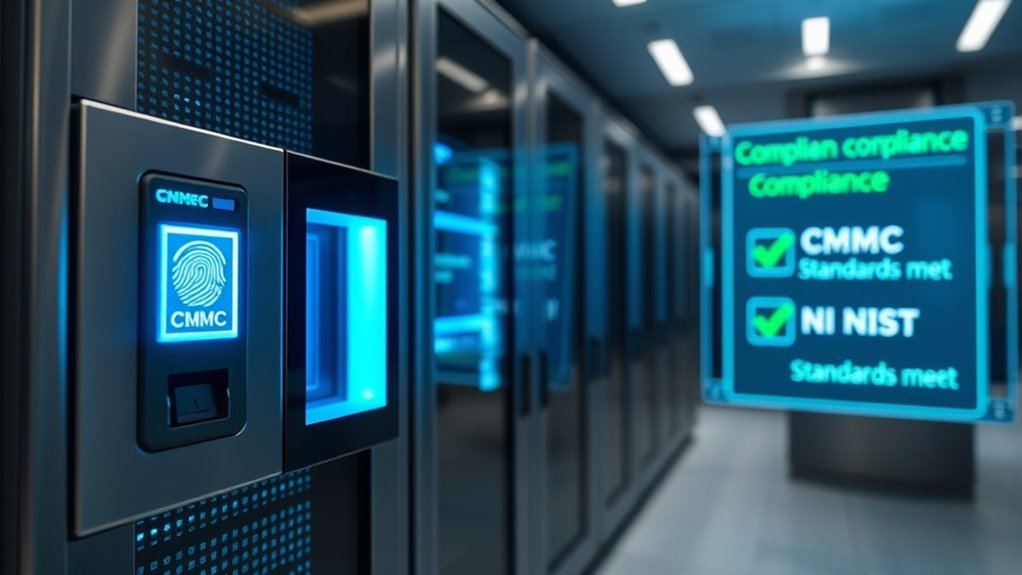

To meet CMMC and NIST standards for document security, you should implement strong encryption protocols like AES and TLS to protect data both in transit and at rest. Establish strict access controls using role-based permissions and multi-factor authentication, regularly reviewing who has access. Educate your staff on security best practices and conduct routine assessments to identify vulnerabilities. If you want to bolster your security practices further, there’s more to explore to ensure full compliance.
Key Takeaways
- Implement encryption protocols like AES and TLS to secure data both in transit and at rest.
- Establish strict access controls, including role-based permissions and multi-factor authentication, to limit document access.
- Regularly review and update security policies and privileges to prevent unauthorized access.
- Conduct ongoing staff training to raise awareness of security best practices and threat recognition.
- Perform regular security assessments and audits to identify vulnerabilities and ensure compliance with standards.

Ensuring your organization meets CMMC and NIST standards for document security is crucial in protecting sensitive information from cyber threats. These standards emphasize the importance of implementing strong encryption protocols and effective access controls to safeguard data at all levels. Encryption protocols act as a first line of defense, converting readable information into coded formats that unauthorized users cannot decipher. By employing industry-standard encryption algorithms, you guarantee that even if data is intercepted, it remains unintelligible to malicious actors. NIST guidelines recommend using robust encryption methods such as AES (Advanced Encryption Standard) and TLS (Transport Layer Security) to secure data both in transit and at rest. This consistent application of encryption protocols helps maintain data integrity and confidentiality, aligning your organization with federal security mandates. Additionally, regularly updating encryption protocols ensures compliance with evolving standards and mitigates vulnerabilities.
Alongside encryption, access controls form a critical pillar of document security. You need to establish clear, strict policies that determine who can access, modify, or share sensitive information. Implementing role-based access control (RBAC) allows you to assign permissions based on job functions, reducing the risk of insider threats and accidental data leaks. Multi-factor authentication (MFA) adds an additional layer of security by requiring users to verify their identities through multiple methods before gaining access. This prevents unauthorized individuals from entering your secure systems, even if their login credentials are compromised. Regularly reviewing access permissions and removing unnecessary privileges also plays an indispensable role in minimizing vulnerabilities. When you tightly control access, you limit the attack surface and ensure that only authorized personnel can handle sensitive documents.
Furthermore, combining encryption protocols with access controls creates a thorough security framework that aligns with CMMC and NIST standards. For instance, encrypting documents stored on company servers ensures that even if someone gains physical or remote access, the data remains protected. Simultaneously, access controls restrict who can decrypt or view those documents, adding a necessary layer of security. Educating your staff about security best practices, such as recognizing phishing attempts and maintaining strong passwords, complements these technical measures. Regular audits and security assessments help identify potential weaknesses before they can be exploited. Incorporating vetted security practices into your overall approach further strengthens your document protection efforts.

Epson Workforce ES-580W Wireless Color Duplex Tax Receipt & Desktop Document Scanner for PC and Mac with 100-sheet Auto Feeder (ADF), Intuitive 4.3' Touchscreen
EFFORTLESS WIRELESS SCANNING – With a 4.3" touchscreen and wireless connectivity, this high-speed scanner sends scans straight to...
As an affiliate, we earn on qualifying purchases.
Frequently Asked Questions
How Often Should Security Audits Be Conducted for Compliance?
You should conduct security audits at least annually to guarantee compliance with standards like CMMC and NIST. However, audit frequency may vary based on your organization’s size, data sensitivity, and recent changes. Regular compliance scheduling, such as quarterly or bi-annual audits, helps identify vulnerabilities early and maintain ongoing adherence. Staying proactive with audits demonstrates your commitment to security and keeps your documentation compliant with evolving standards.
What Are the Penalties for Non-Compliance With CMMC Standards?
If you don’t comply with CMMC standards, penalty enforcement can lead to serious compliance consequences, including loss of government contracts and financial penalties. Non-compliance might also damage your reputation and hinder future business opportunities. It’s essential to stay updated on requirements and conduct regular security audits to avoid these penalties. Ensuring your organization meets all standards minimizes risks and keeps your operations aligned with federal cybersecurity regulations.
How Can Small Businesses Meet These Security Requirements Effectively?
To meet these requirements effectively, you should conduct thorough risk assessments to identify vulnerabilities and prioritize security measures. You also need to invest in employee training, ensuring your team understands security protocols and best practices. By combining regular risk evaluations with ongoing training, you improve your organization’s ability to maintain compliance, protect sensitive information, and avoid penalties. This proactive approach keeps your small business secure and aligned with CMMC and NIST standards.
What Tools Are Recommended for Automated Document Security Management?
You should consider tools that automate document encryption and access control to meet security standards. Look for solutions like Vera, which encrypts files and manages permissions automatically, or Microsoft Information Protection, offering robust access controls and encryption features. These tools streamline compliance by protecting sensitive data, preventing unauthorized access, and ensuring your documents stay secure, helping you meet CMMC and NIST requirements efficiently and effectively.
How Does NIST Compliance Impact Overall Organizational Cybersecurity Strategy?
NIST compliance shapes your cybersecurity strategy by emphasizing thorough risk assessments and precise asset classification. It helps you identify vulnerabilities and prioritize protections, ensuring critical assets are secure. Following NIST standards encourages you to develop extensive policies, adopt best practices, and implement controls that reduce risks. This proactive approach not only aligns with regulations but also strengthens your overall security posture, making your organization more resilient against cyber threats.

Epson WorkForce ES-50 Portable Sheet-Fed Document Scanner for PC and Mac
Fastest and lightest mobile single sheet fed document scanner in its class(1) small, portable scanner ideal for easy,...
As an affiliate, we earn on qualifying purchases.
Conclusion
By meeting CMMC and NIST standards, you build a fortress around your documents, guarding your sensitive information with unwavering strength. It’s not just about compliance; it’s about forging a resilient shield that withstands evolving threats. When you prioritize these standards, you’re planting seeds for lasting security and trust. Remember, in the landscape of cybersecurity, your diligence today plants the roots for a safer, more secure tomorrow.

Epson Workforce ES-400 II Color Duplex Desktop Document Scanner for PC and Mac with Auto Doc Feeder (ADF), Image Adjustment Tools
FAST DOCUMENT SCANNING – Speed through stacks with the 50-sheet Auto Document Feeder, perfect for office scanning and...
As an affiliate, we earn on qualifying purchases.

ScanSnap iX2500 Wireless or USB High-Speed Cloud Enabled Document, Photo & Receipt Scanner with Large 5" Touchscreen and 100 Page Auto Document Feeder for Mac or PC, Black
OUR MOST ADVANCED SCANSNAP. Large touchscreen, fast 45ppm double-sided scanning, 100-sheet document feeder, Wi-Fi and USB connectivity, automatic...
As an affiliate, we earn on qualifying purchases.