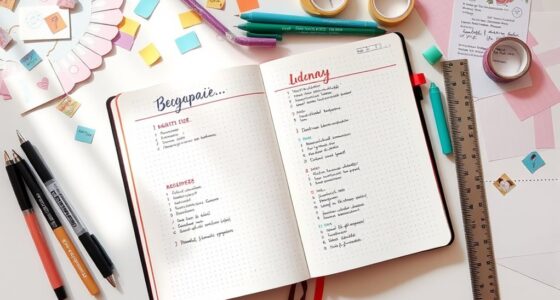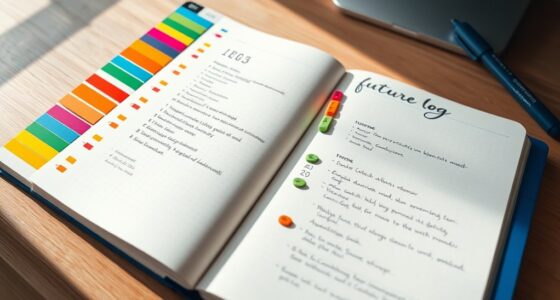
To create beautiful journal pages, focus on mastering brush pen techniques by varying pressure to produce dynamic strokes and using guidelines for consistent spacing and alignment. Practice controlling pressure to add depth and contrast, and use faint pencil lines or grids to keep your lettering uniform. Take your time with each stroke to develop muscle memory and avoid rushing. Keep experimenting with styles and sizes—if you keep practicing, you’ll discover even more tips for stunning results.
Key Takeaways
- Use guidelines and grid paper to maintain consistent alignment and spacing throughout your journal pages.
- Practice varying pressure with brush pens to create dynamic, expressive strokes and contrast.
- Draw light pencil guidelines before inking to ensure uniformity and accurate letter placement.
- Experiment with different lettering styles inspired by popular fonts for visual interest.
- Take your time with each stroke, emphasizing patience and precision to achieve a polished, professional look.

Are you ready to elevate your handwriting skills? When it comes to creating stunning journal pages, mastering brush pen techniques is essential. These pens allow you to achieve beautiful strokes, from bold downstrokes to delicate upstrokes, giving your lettering depth and character. To start, practice applying varying pressure to your brush pen to produce thick and thin lines effortlessly. This control adds a dynamic quality to your writing, making each word stand out. Consistent practice will help you develop muscle memory, so your strokes become smoother and more natural over time.
Master brush pen pressure to create dynamic, expressive lettering with smooth, natural strokes.
Equally important is paying attention to spacing and alignment. Proper spacing ensures your letters don’t appear crowded or uneven, which can disrupt the flow of your journal pages. Keep your spacing consistent between letters within words to create harmony, and leave enough space between words for clarity. When working on larger headlines or decorative titles, don’t be afraid to increase the spacing slightly for emphasis. Alignment is another key factor; aligning your text along a straight baseline keeps your pages looking neat and professional. Use light pencil guidelines initially to mark where your lines will go, then trace over them with your brush pen once you’re satisfied with the placement. This technique helps maintain uniformity across multiple lines of text.
To improve your spacing and alignment, try drawing faint horizontal lines with a ruler or using grid paper. This provides a visual guide that helps you stay consistent as you write. Remember, even if your hand isn’t perfectly steady, these guidelines will keep your lettering aligned and evenly spaced. As you become more comfortable with your brush pen, experiment with different letter sizes and styles, but always keep an eye on how they relate to each other within the composition. This balance between size, spacing, and alignment creates a cohesive look that enhances your journal pages.
Additionally, exploring hand lettering styles inspired by popular fonts can give your pages a fresh and professional look. Finally, take your time and don’t rush the process. Hand lettering is an art, and patience is key to achieving beautiful results. Incorporate these brush pen techniques along with mindful spacing and alignment, and you’ll notice your journal pages transforming into works of art. With consistent effort, your lettering will become more refined, adding a personal touch that makes your journal truly special. Remember, every stroke you make is a step toward developing your unique style, so enjoy the journey!
Top picks for "hand letter tips"
Open Amazon search results for this keyword.
As an affiliate, we earn on qualifying purchases.
Frequently Asked Questions
What Are the Best Tools for Beginners in Hand Lettering?
You should start with simple tools like brush pens and a good sketchbook. Brush pens are perfect because they offer control and versatility for different lettering styles. A sketchbook provides a portable space to practice without pressure. Look for beginner-friendly options that are affordable and easy to use. With these tools, you’ll build confidence and develop your unique hand lettering style quickly.
How Can I Improve My Lettering Consistency?
Practice makes perfect, and that’s especially true for improving your lettering consistency. Dedicate time to regular lettering practice, focusing on maintaining your style across different letters. Use guidelines to keep your letters uniform in size and shape, and slow down to enhance precision. Consistent practice helps you develop muscle memory, making your style more reliable. Keep this up, and you’ll see your lettering become more polished and cohesive over time.
Are There Specific Fonts to Mimic for Journaling?
You can mimic font styles like cursive, serif, or sans-serif for journaling by finding lettering inspiration in existing fonts or calligraphy styles. Look for specific fonts that match your desired mood, such as elegant script or playful block letters, and practice replicating them. Experimenting with different font styles helps you develop your own unique lettering, making your journal pages more personalized and visually appealing.
How Do I Fix Mistakes in Hand Lettering?
Imagine your journal page as a delicate tapestry; mistakes are just minor tears you can mend. To correct ink smudges, gently use a correction pen or a white gel pen to hide errors. If needed, carefully adjust letter spacing by using a fine-tipped eraser or repositioning your letters. Patience turns imperfections into part of your unique style, making your journal truly yours, full of character and charm.
What Paper Types Work Best for Hand Lettering?
You should choose smooth, heavyweight paper with minimal texture for hand lettering, as paper textures can affect your ink flow and line quality. Look for papers specifically designed for ink compatibility, like Bristol or marker paper, which prevent bleeding and feathering. These options guarantee your ink stays crisp and your lettering looks professional. Avoid thin or rough papers, as they can cause smudging and make your work less precise.
Conclusion
Now that you’ve uncovered these hand lettering secrets, your journal pages will dance with personality and charm. Think of each stroke as a brushstroke on a canvas, bringing your unique story to life. With patience and practice, your words will bloom like a garden in full bloom—vibrant and full of life. So pick up your pen, release your creativity, and watch your pages transform into a beautiful tapestry of self-expression. Your journey has just begun.