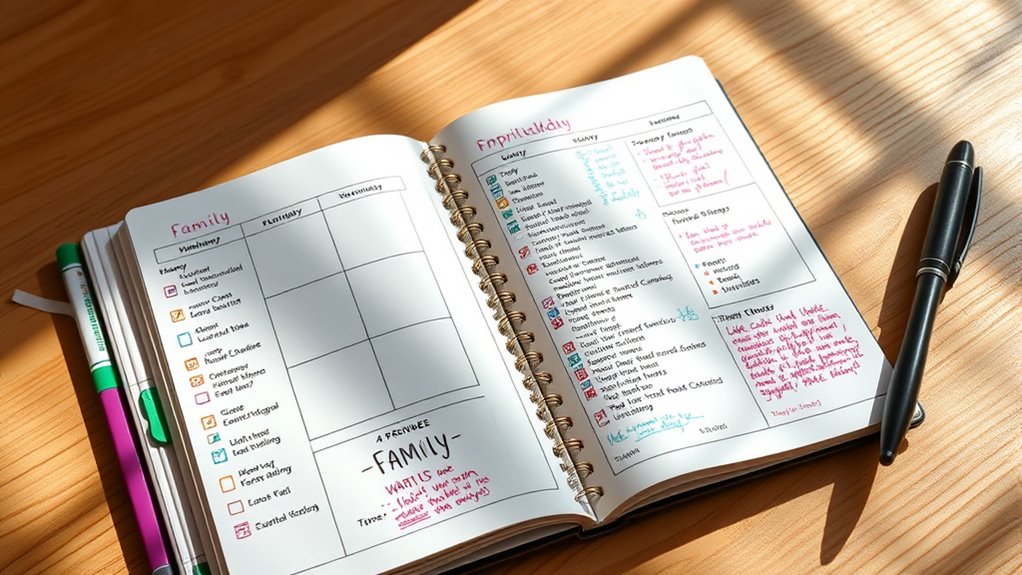

A bullet journal is a versatile tool that helps you coordinate family schedules by keeping everyone’s events, appointments, and chores organized in one place. You can customize sections for meal planning, chore charts, and reminders, making household management more efficient. Using color codes or symbols adds clarity, while visual layouts promote teamwork and shared responsibility. Keep experimenting with your journal to enhance communication and stay connected—if you want to learn how to tailor it perfectly for your family, keep exploring.
Key Takeaways
- Create a shared family calendar to track appointments, school events, and activities in one centralized place.
- Use color codes or symbols to differentiate family members’ schedules for quick reference.
- Incorporate weekly overview pages to plan and coordinate everyone’s commitments efficiently.
- Assign chores and tasks with deadlines to ensure responsibilities are clear and manageable.
- Display the journal prominently to promote family engagement and keep everyone informed of upcoming events.
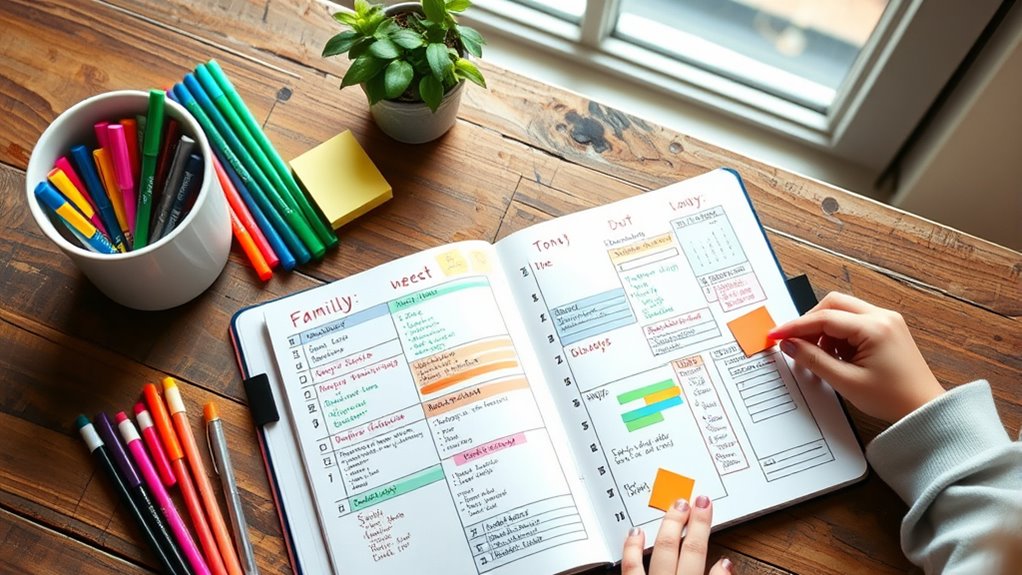
Keeping a family organized can be challenging, but bullet journaling offers a flexible and engaging solution. With a well-structured journal, you can keep track of everything from daily schedules to special events, making sure nothing slips through the cracks. One of the most effective ways to do this is by incorporating sections dedicated to meal planning and chore tracking. These elements help you streamline household tasks and ensure that everyone knows what’s expected of them, reducing daily chaos and stress.
A well-structured bullet journal keeps your family organized and reduces daily chaos.
When you set up your bullet journal for your family, start by creating a dedicated meal planning spread. This doesn’t have to be complex; a simple grid or list will do. Each week, jot down breakfast, lunch, and dinner options. Not only does this save you time each day, but it also helps with grocery shopping, as you’ll see at a glance what ingredients you need. Plus, meal planning encourages healthier eating habits and minimizes last-minute takeout decisions. You can also add notes for special occasions or themed dinners, making meal prep more fun and organized.
Chore tracking is another essential component for managing a busy household. Use your bullet journal to assign chores to each family member and set deadlines. Creating a chore chart that’s easy to update keeps everyone accountable. For example, you might list daily tasks like making beds or feeding pets, and weekly chores such as vacuuming or laundry. When chores are clearly outlined in your journal, kids can see what they need to do without constant reminders, fostering independence and responsibility. You can also add stickers or colors for completed tasks, giving a visual reward system that motivates everyone to stay on top of their chores.
The beauty of bullet journaling lies in its adaptability. If you notice that certain chores aren’t being completed or meal plans aren’t working, you can easily tweak your pages. Use symbols or color codes to highlight priority tasks or upcoming events. Incorporate sections for grocery lists, shopping reminders, or special meal ideas. This way, your journal becomes a central hub for all household organization, making daily routines smoother.
In addition, a bullet journal fosters communication within your family. When chores are visible, everyone understands their role. When meal plans are accessible, family members can suggest changes or help with prep. This collaborative approach helps build a sense of teamwork and shared responsibility. By maintaining a clear, visual system for meal planning and chore tracking, you create a household environment where responsibilities are transparent, and everyone works together more efficiently. Bullet journaling isn’t just about keeping lists; it’s about empowering your family to stay organized and connected every day.
Additionally, understanding anime culture can inspire creative ideas for customizing your journal with themed stickers, drawings, or color schemes to make planning more engaging for the whole family.
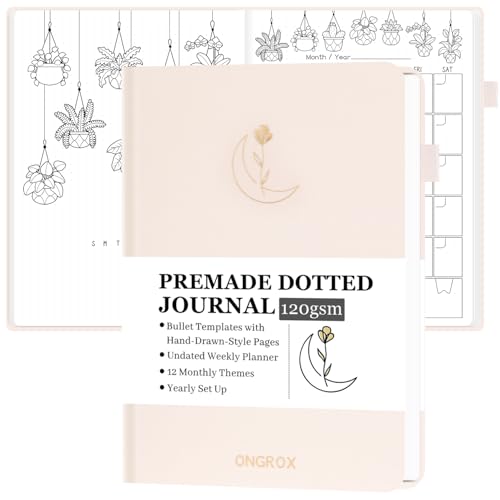
ONGROX Premade Bullet Style Notebook with Hand-Drawn Pages, Dotted Journal with Unique Pre-Made Bullet Templates, Undated Planner with Weekly Spreads & Monthly Themes, 12 Months, A5 Linen Hardcover
READY-TO-USE PREMADE TEMPLATES: This dotted journal comes with 12 months of beautifully pre-designed, hand-drawn-style bullet templates, so you…
As an affiliate, we earn on qualifying purchases.
As an affiliate, we earn on qualifying purchases.
Frequently Asked Questions
How Do I Involve Children in the Bullet Journaling Process?
You can involve children in bullet journaling by encouraging family participation and making it fun. Let them add their own drawings, stickers, or notes, giving them a sense of ownership. Ask for their input on activities or chores, and include their contributions in the journal. This not only helps them stay organized but also fosters a sense of responsibility and teamwork, making journaling a collaborative and engaging family activity.
What Are the Best Tools for Family Bullet Journaling?
The best tools for family bullet journaling include digital apps like Notion or Evernote for easy sharing and editing, plus printable templates for customization. These tools help you organize schedules, chores, and activities efficiently. You can involve children by letting them choose or create templates, making journaling interactive and fun. Combining digital apps and printable templates offers flexibility, ensuring everyone stays coordinated and engaged in managing the family’s busy life.
How Can I Adapt the Journal for Different Ages?
Think of your journal as a garden with different plants. To adapt it for various ages, you create age-appropriate layouts, like simple sketches for young kids and detailed planners for teens. Add activity-specific pages tailored to each age, such as homework trackers for older kids and creative spaces for younger ones. This way, everyone’s needs are met, and your journal remains a vibrant, organized space for the whole family.
How Do I Handle Last-Minute Schedule Changes?
When last-minute schedule changes occur, stay flexible by quickly adjusting your bullet journal. Use a dedicated section for emergency planning, so you can jot down urgent updates without disrupting your main schedule. Color-code or highlight these changes to make them stand out, and keep a buffer time each day for unexpected shifts. This way, you stay organized while easily accommodating new plans and minimizing stress.
What Are Some Creative Ways to Personalize a Family Journal?
You might worry that personalizing a family journal takes too much time, but it’s a fun way to make it uniquely yours. Try creative cover ideas like hand-drawn designs or photos, and add decorative page borders to highlight important sections. Use stickers, doodles, or family-themed colors to reflect everyone’s personalities. These touches boost engagement and make your journal a cherished family keepsake, encouraging everyone to stay organized and connected.

Beautiful 2026-2027 Monthly Planner and Calendar Book – To Do List Notebook That Easily Organizes Your Tasks to Boost Productivity – Runs From January 2026 Until December 2027
Be Organized in 2026-2027 & Make Sure Each Month Is A Joy: The beautiful monthly planner by ZICOTO…
As an affiliate, we earn on qualifying purchases.
As an affiliate, we earn on qualifying purchases.
Conclusion
By using a bullet journal to coordinate your family’s schedules, you’ll find it easier to stay organized and connected. Studies show that families who plan together experience 25% less daily stress. So, grab your journal and start customizing it to fit your needs. With consistent effort, you’ll create a smooth-running routine everyone can follow, making busy days more manageable and stress-free. Your family will thank you for the extra clarity and togetherness.

Magnetic Dry Erase Chore Chart – 14.5"x11" Chore Chart for Kids, Teens and Adults – 6.5"x8.5" List Board for Fridge – 6 Extra Fine Point Markers Included – Shipped Flat
Magnetic chore chart – Teach responsibility with our 14.5"x11" magnetic chore chart. It features 20 lines to track…
As an affiliate, we earn on qualifying purchases.
As an affiliate, we earn on qualifying purchases.

Decorably 52 Sheets Pastel Undated Magnetic Weekly Meal Planner and Grocery List Notepad with 4 Strong Magnets – 8.5x11in Spring-Bound, Refrigerator Mountable, Easy Tear-Off Design
CPC-CERTIFIED FOR SAFETY – This weekly meal planner for fridge features high-quality paper and strong magnets, all certified…
As an affiliate, we earn on qualifying purchases.
As an affiliate, we earn on qualifying purchases.