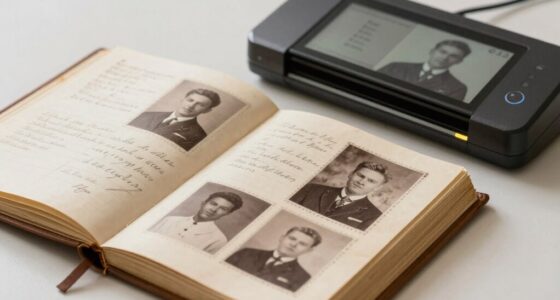
To archive emails and social media for future generations, you should organize your messages with consistent metadata like timestamps, sender info, and content descriptions. Use open, long-lasting formats such as PDF/A or plain text to guarantee compatibility later on, and keep backups to protect data integrity. Employ established techniques and tools designed for digital preservation to maintain the meaning and accessibility of your digital footprint over time. If you keep exploring, you’ll find ways to make your digital legacy truly enduring.
Key Takeaways
- Use standardized metadata to document context, sender, timestamps, and content details for effective future retrieval.
- Save social media and email data in open, non-proprietary formats like PDF/A or plain text to ensure long-term accessibility.
- Implement consistent archiving tools and techniques that preserve multimedia elements, hyperlinks, and message integrity.
- Regularly verify data integrity through backups and integrity checks to prevent corruption or loss over time.
- Follow established digital preservation standards to organize, store, and document messages for cultural and historical continuity.

Have you ever wondered how to effectively preserve your digital communications? In today’s world, emails and social media messages are more than just fleeting exchanges; they’re valuable records of personal experiences, professional milestones, and cultural moments. To guarantee these digital footprints survive for future generations, you need to focus on proper digital preservation techniques. One key aspect is understanding how to organize and safeguard your data, which involves adhering to metadata standards. Metadata acts like a digital fingerprint for each message or post, providing essential context such as timestamps, sender information, and content descriptions. By standardizing this metadata, you make it easier to locate, interpret, and authenticate your archived communications later on.
Proper digital preservation ensures your messages remain accessible and meaningful for future generations.
When archiving emails and social media, it’s essential to create a detailed system that captures all relevant metadata. This might mean using specific formats or tools designed to record details consistently, so nothing gets lost or misinterpreted over time. Digital preservation isn’t just about saving files; it’s about maintaining their integrity and usability long-term. Choosing the right file formats ensures your messages remain accessible, even as technology evolves. For example, saving emails in open, non-proprietary formats like PDF/A or plain text helps prevent future incompatibility issues. Similarly, social media content should be stored in formats that preserve multimedia elements and hyperlinks, so your digital story remains complete.
Implementing metadata standards also means sticking to established guidelines recognized within digital archiving communities. These standards help you create a uniform approach, making it easier to organize, search, and retrieve your data later. This consistency is essential when handling large volumes of digital communications, especially if you want to pass them down to future generations or institutions. Additionally, regular backups and checks for data integrity are fundamental components of digital preservation. They prevent data corruption and ensure your messages remain intact over decades. Understanding digital preservation techniques is crucial for ensuring the longevity and accessibility of your digital records.
In essence, effective digital preservation of your emails and social media involves more than just saving files. It requires thoughtful organization through metadata standards, choosing appropriate formats, and maintaining the integrity of your digital archive. By doing so, you’re not only safeguarding your personal history but also contributing to the cultural record that future generations can learn from and appreciate. With a deliberate approach, your digital communications can transcend fleeting moments and stand as enduring legacies.

PDF Converter Ultimate – Convert PDF files into Word, Excel, PowerPoint and others – PDF converter software with OCR recognition compatible with Windows 11 / 10 / 8.1 / 8 / 7
Convert your PDF files into Word, Excel & Co. the easy way
As an affiliate, we earn on qualifying purchases.
As an affiliate, we earn on qualifying purchases.
Frequently Asked Questions
How Can I Ensure My Archived Data Remains Accessible Long-Term?
To guarantee your archived data remains accessible long-term, you should regularly update your storage formats through format migration, preventing obsolescence. Additionally, prioritize proper metadata management to keep track of your files’ context and structure. By combining these strategies, you maintain data usability and discoverability over time, making it easier for future generations to access and understand your archived information without technical hurdles.
What Legal Considerations Exist When Archiving Social Media Content?
You need to take into account privacy concerns, making certain you have permission to archive social media content, especially if it involves personal data. Respect intellectual property rights by crediting original creators and avoiding copyright violations. Be aware of platform policies and applicable laws that govern data retention. By following these legal considerations, you help protect yourself from potential liabilities and ensure your archiving practices remain compliant with relevant regulations.
How Do Different File Formats Affect Future Readability?
Different file formats impact future readability because some may not be compatible with evolving technology. You should prioritize using widely recognized formats like PDF or TIFF that meet digital preservation standards. Ensuring file format compatibility helps preserve your content over time and prevents data loss. Regularly updating and migrating files to current formats is essential for maintaining access and adhering to best practices in digital preservation.
Can Archived Emails and Social Media Be Securely Shared?
Think of archived emails and social media as treasure chests—you can share them securely, but only if you lock them tight. You need strong access control to guard against prying eyes and address privacy concerns. By implementing encryption and strict permissions, you ensure that only authorized people can open the chest. This way, you safeguard sensitive information while sharing valuable digital history with confidence and care.
What Are the Costs Associated With Large-Scale Digital Archiving?
You’ll face significant costs with large-scale digital archiving, mainly from storage costs and preservation expenses. Storage costs vary depending on whether you choose cloud or physical storage, and they can increase with data volume. Preservation expenses include maintaining hardware, updating software, and guaranteeing data integrity over time. These costs can add up quickly, so planning your budget carefully helps ensure your digital archives stay accessible and secure for future generations.

Music Software Bundle for Recording, Editing, Beat Making & Production – DAW, VST Audio Plugins, Sounds for Mac & Windows PC
No Demos, No Subscriptions, it's All Yours for Life. Music Creator has all the tools you need to…
As an affiliate, we earn on qualifying purchases.
As an affiliate, we earn on qualifying purchases.
Conclusion
Think of your digital life as a treasure chest, filled with stories, memories, and moments. By archiving your emails and social media, you’re carefully placing each gem into a secure vault, ensuring future generations can access and explore your world. Just as a lighthouse guides ships safely home, your archives illuminate the past for those who come after. Preserve your digital legacy now, so your story continues to shine brightly through time.

Data Engineering for Cybersecurity: Build Secure Data Pipelines with Free and Open-Source Tools
As an affiliate, we earn on qualifying purchases.
As an affiliate, we earn on qualifying purchases.

Interdisciplinary Digital Preservation Tools and Technologies
As an affiliate, we earn on qualifying purchases.
As an affiliate, we earn on qualifying purchases.