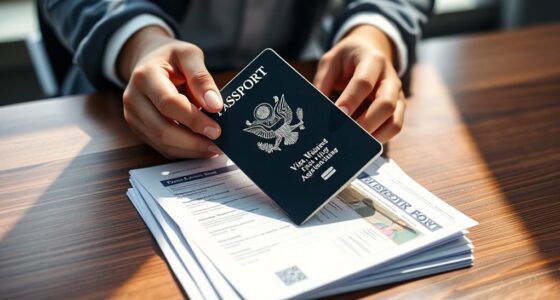
To keep your travel insurance policies and claims organized, store all documents in a dedicated digital folder or physical file, making certain everything is easily accessible. Keep copies of your policy, claim forms, receipts, and reports, and note important contact details for quick reference during emergencies. Regularly review your policies and ensure you follow the insurer’s claim procedures to avoid delays. Continuing with this guide will provide you with best practices to simplify your insurance management abroad.
Key Takeaways
- Store all policy documents digitally and physically in a designated, easily accessible location for quick reference.
- Create a checklist of essential documents like policy numbers, receipts, and medical reports before traveling.
- Keep contact information for the insurer’s claims department readily available for prompt communication.
- Familiarize yourself with claim procedures and required documentation to ensure timely and accurate submissions.
- Regularly review and update your organized files to prevent losing important documents during travel.

When planning your trip, understanding the necessary travel insurance documents is essential to guarantee smooth coverage and quick assistance if needed. Having your policies organized ensures that, in case of an emergency, you can navigate the claims process efficiently and avoid unnecessary delays. One key aspect is familiarizing yourself with claim procedures. Knowing what steps to take when filing a claim will save you time and frustration. Typically, you’ll need to gather supporting documents such as medical reports, receipts, or police reports, depending on the situation. Being prepared means keeping copies of these documents both digitally and physically. When the need arises, you’ll want to submit your claim promptly, following the insurer’s specific guidelines. This usually involves filling out claim forms accurately and providing all required evidence to support your case. The more organized your documentation, the smoother the process will be. Additionally, it’s wise to keep a record of your policy details, including policy numbers, coverage limits, and contact information for your insurer’s claims department. This can be especially helpful if you need to escalate your claim or clarify coverage details later on. When comparing policies, pay close attention to claim procedures outlined by each provider. Some insurers offer online claim submission portals that expedite the process, while others might require mailing physical documents. Knowing these differences allows you to choose a policy that aligns with your preferred method of handling claims, reducing stress during an already stressful situation. Conducting policy comparisons before your trip helps you understand what’s covered and how claims are processed, so you aren’t caught off guard if something goes wrong. It’s also important to familiarize yourself with portable camping toilets and other outdoor gear that might be essential during your trip, ensuring you’re prepared for all scenarios. It’s also a good idea to keep all your policy documents in one easily accessible location. Whether that’s a digital folder on your device or a physical folder in your luggage, having everything organized ensures quick access. During your trip, avoid letting these documents get lost or misplaced. Having a checklist of necessary documents for claims can help you verify that you have everything before you need to submit a claim. Remember, the more prepared you are, the faster your insurer can process your claim and provide assistance. Ultimately, keeping your policies and claims documentation organized not only guarantees peace of mind but also expedites the entire process, allowing you to focus on enjoying your trip without unnecessary worries.

Epson Workforce ES-580W Wireless Color Duplex Tax Receipt & Desktop Document Scanner for PC and Mac with 100-sheet Auto Feeder (ADF), Intuitive 4.3' Touchscreen
EFFORTLESS WIRELESS SCANNING – With a 4.3" touchscreen and wireless connectivity, this high-speed scanner sends scans straight to...
As an affiliate, we earn on qualifying purchases.
Frequently Asked Questions
How Often Should I Review My Travel Insurance Policy?
You should review your travel insurance policy annually or before each trip. This helps you stay aware of coverage for pre-existing conditions and policy exclusions that might change. Regular reviews guarantee you’re updated on any new restrictions or benefits, so you’re not caught off guard if unexpected issues arise. Keeping your policy current gives you peace of mind, knowing you’re protected against potential travel mishaps related to pre-existing conditions or exclusions.
Can I Update My Policy After Purchasing It?
Sure, you can update your policy after buying it—think of it as giving your travel plans a fresh coat of paint. Just contact your insurer for a policy renewal or coverage adjustments, and they’ll usually accommodate your needs. Don’t wait until you’re at the airport to realize you missed that essential coverage. Updating ensures your policy matches your current travel plans, giving you peace of mind wherever you go.
What Should I Do if My Policy Details Change?
If your policy details change, you should contact your insurance provider promptly for policy amendments. Make sure to request document updates to reflect the new information precisely. Keep copies of all correspondence and updated documents for your records. This guarantees your coverage remains current and helps avoid issues if you need to file a claim later. Regularly reviewing and updating your policies safeguards your travel plans and peace of mind.
Are Digital Copies of Documents Accepted During Claims?
Yes, digital copies of documents are generally accepted during the claim process. Most insurers support digital document acceptance, making it easier for you to submit evidence quickly. During the electronic claim process, verify your digital documents are clear, legible, and in the required format. Always check your insurer’s specific guidelines, but in most cases, submitting digital copies streamlines your claim and speeds up the approval process.
How Long Should I Keep Travel Insurance Records?
Think of your travel insurance records as a sturdy lighthouse guiding you through stormy claims. Keep these records for at least three to five years, especially during policy renewal periods, to guarantee you have proof if needed. Store digital copies securely, like treasures in a vault, and organize them well. This way, your documentation stays accessible and reliable, ready to illuminate your path when claims need clarity.

Epson WorkForce ES-50 Portable Sheet-Fed Document Scanner for PC and Mac
Fastest and lightest mobile single sheet fed document scanner in its class(1) small, portable scanner ideal for easy,...
As an affiliate, we earn on qualifying purchases.
Conclusion
Keeping your travel insurance documents organized isn’t just a task—it’s your safety net in disguise. Imagine your files as a trusty lighthouse guiding you through stormy waters; without them, you risk losing your way when you need help most. Stay proactive, file everything neatly, and review your policies regularly. Remember, in the chaos of travel, a well-organized folder is your secret weapon, turning potential chaos into calm and confidence.

Epson Workforce ES-400 II Color Duplex Desktop Document Scanner for PC and Mac with Auto Doc Feeder (ADF), Image Adjustment Tools
FAST DOCUMENT SCANNING – Speed through stacks with the 50-sheet Auto Document Feeder, perfect for office scanning and...
As an affiliate, we earn on qualifying purchases.

ScanSnap iX2500 Wireless or USB High-Speed Cloud Enabled Document, Photo & Receipt Scanner with Large 5" Touchscreen and 100 Page Auto Document Feeder for Mac or PC, Black
OUR MOST ADVANCED SCANSNAP. Large touchscreen, fast 45ppm double-sided scanning, 100-sheet document feeder, Wi-Fi and USB connectivity, automatic...
As an affiliate, we earn on qualifying purchases.