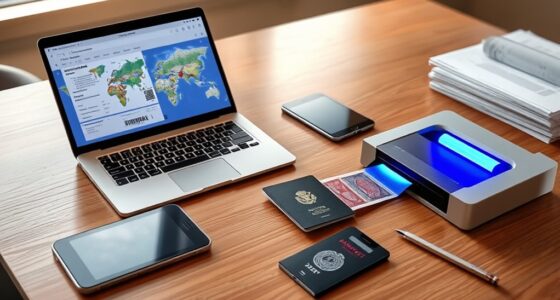
To effectively document your travel history for visa applications, keep detailed records like passports, stamps, itineraries, and receipts organized in a digital or physical file. Use a travel journal or spreadsheet to note important details such as dates, destinations, and trip purposes. Securely store all supporting documents to guarantee easy access during interviews. Proper documentation shows your credibility and planning skills, making the process smoother. Continue exploring to learn more about creating an organized travel record.
Key Takeaways
- Keep a detailed travel record including dates, destinations, purposes, and supporting documents like receipts and itineraries.
- Use digital tools such as spreadsheets or travel apps to organize and store your travel history securely.
- Scan and save copies of passport stamps, visas, and relevant documents for easy access during the application process.
- Maintain a chronological log of trips to prevent confusion and ensure accurate recall of travel details.
- Prepare clear explanations of your travel history to support consistency and credibility during visa interviews.

Keeping track of your travel history is essential for many reasons, from applying for visas to recalling memorable trips. When you’re preparing to submit a visa application, thorough travel documentation can make the process smoother and increase your chances of approval. Consistently recording details of your trips—such as dates, destinations, durations, and purposes—helps you present a clear, organized picture of your travel activities. This information is often required during visa interviews, and having it readily available demonstrates transparency and preparedness.
Having detailed records of your previous travels not only expedites the visa process but also showcases your credibility as a traveler. When the consular officer asks about your travel history, you want to provide accurate and exhaustive answers. Well-maintained travel documentation ensures you don’t forget important details like the exact dates of visits, places stayed, and the reasons for your trips. This can be particularly helpful if you’ve traveled multiple times or to several countries, as it prevents confusion and potential misunderstandings.
To keep your travel history organized, consider maintaining a dedicated travel journal or digital spreadsheet. Include essential information such as passport stamps, hotel receipts, flight itineraries, and entry/exit dates. Scanning and storing copies of these documents in a secure folder on your computer or cloud storage can help you access them easily whenever needed. This organized approach not only saves time but also minimizes errors that might arise from relying solely on memory. Additionally, having a comprehensive record of your travel activities can serve as valuable evidence if your travel history is ever questioned or needs to be verified.
When preparing for your visa interview, remember that interview tips often emphasize honesty, consistency, and clarity. Presenting your travel documentation confidently supports these qualities. Be prepared to explain the purpose of your trips, your ties to your home country, and your travel plans. Having detailed records can help you answer these questions convincingly and avoid discrepancies that could raise red flags with immigration officials.
In essence, maintaining meticulous travel documentation is a simple yet effective strategy for steering the visa application process confidently. It provides a solid foundation of evidence to support your claims and showcases your planning and organization skills. As you prepare for your next trip, make it a habit to document your travels thoroughly—this will serve you well when it’s time to apply for visas or attend interviews, ensuring a smoother, less stressful experience.

Passport Holder Family RFID Travel Document Organizer for Women Waterproof Passport Wallet Men Portable Case for Cards, Boarding Pass, ID, Money, Tickets with Zipper
Efficient Organization: Our travel document holders are not only travel organizers but also family travel document organizers and…
As an affiliate, we earn on qualifying purchases.
As an affiliate, we earn on qualifying purchases.
Frequently Asked Questions
How Far Back Should My Travel History Go for Visa Documentation?
You should include your entire recent travel history, typically covering the past 5 to 10 years, to guarantee a thorough travel history timeline. This helps maintain your visa record completeness, showing consistent travel patterns and compliance with visa regulations. Providing a detailed and accurate record demonstrates your reliability and helps smooth the application process. Be thorough, honest, and precise about your travel dates and destinations to avoid issues later.
Can I Include Digital Travel Records Instead of Physical Documents?
Think of digital travel records like a well-organized library—easy to access and reliable. You can include digital records instead of physical documents, as they’re generally accepted if they’re valid and clear. Make sure to organize your travel record neatly, with dates and details, to avoid confusion. Digital records can be just as trustworthy, providing a convenient way to demonstrate your travel history during visa applications.
What if I Lost Some of My Travel Stamps or Visas?
If you’ve lost some of your travel stamps or visas, don’t worry. You can try travel document retrieval services or contact the relevant embassies to obtain copies. During the visa application process, explain the situation clearly and provide any supporting evidence you have, like flight itineraries or electronic records. Be honest and proactive; this helps immigration authorities understand your travel history despite missing physical documents.
Are Unofficial Travel Entries Acceptable for Visa Documentation?
A picture is worth a thousand words, and in your case, digital recordkeeping can help. Unofficial documents may be accepted if they clearly verify your travel history, but always verify with the embassy beforehand. Relying solely on unofficial entries isn’t advisable, as official records carry more weight. Keep digital copies of receipts, itineraries, or emails to support your application, demonstrating that preparation is key to avoiding surprises.
How Should I Explain Travel Gaps or Irregularities in My History?
You should clearly explain travel gaps or irregular travel patterns in your application by providing honest, concise travel gap explanations. Mention any reasons such as work, studies, or personal issues that caused the gaps. Attach supporting documents if possible, like employment letters or medical records. Being transparent helps visa officers understand your travel history, reducing doubts about irregular travel patterns and demonstrating your credibility and compliance with visa requirements.

Portable ID & Passport Scanner for Bars, Clubs & Retail | Verifies Age & Expired IDs | Optional Fake ID Detection (Intellicheck) | Works in All 50 States | 2026 Model
Unlimited Standard ID Scanning — Always Free – Instantly verifies age and expiration on every scan and automatically…
As an affiliate, we earn on qualifying purchases.
As an affiliate, we earn on qualifying purchases.
Conclusion
Keeping an accurate travel record may seem simple, but it’s your key to uncovering new opportunities. While a well-documented history can open doors, neglecting it can close them unexpectedly. Your travel story is more than dates and stamps—it’s a reflection of your journey and credibility. By carefully documenting your travels, you build trust and pave the way for future adventures. In the end, your past travels aren’t just memories—they’re the foundation for your next chapter.

JUBTIC Travel Journal, Vacation Planner with Budget Tracker and Checklist, A5 Size Trip Planner, Diary Notebook for 6 Trips, Travel Gifts Accessories for Women, Men & Couples (Aquamarine)
MAKE YOUR TRIPS MORE EFFICIENT, ORGANIZED AND ENJOYABLE: A travel notebook will help you to plan your itinerary…
As an affiliate, we earn on qualifying purchases.
As an affiliate, we earn on qualifying purchases.

Page-A-Day Artisan Travel Journal (Diary, Vegan Leather Notebook)
Compact travel journal provides 176 crisp writing pages.
As an affiliate, we earn on qualifying purchases.
As an affiliate, we earn on qualifying purchases.