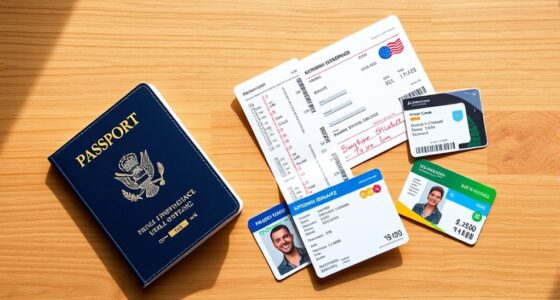

To organize your travel insurance policies and claims, keep digital and physical copies of all documents, including your policy, ID, and emergency contacts. Carry a printed insurance card or summary for quick access. Familiarize yourself with filing procedures, required paperwork, and how to contact your insurer in emergencies. Regularly check that your policy remains valid for your trip dates. Staying prepared helps make sure you can handle any issues smoothly—continue ahead to learn detailed tips for staying organized.
Key Takeaways
- Keep digital and physical copies of your policy, including coverage summaries, emergency contacts, and your insurance card.
- Organize documents in a dedicated folder for quick access during emergencies or claims.
- Familiarize yourself with the claims process, required paperwork, and submission procedures before travel.
- Save 24/7 emergency assistance contact numbers and ensure they are accessible both digitally and physically.
- Regularly verify your policy’s validity and coverage expiration dates to maintain continuous protection during your trip.

Are you prepared with the right travel insurance documents before your trip? Ensuring that you have all the necessary paperwork in order is essential for a smooth travel experience. When it comes to travel insurance, your primary focus should be on verifying your medical coverage and understanding how emergency assistance is provided. These two components are critical because medical emergencies can happen unexpectedly, and having proper documentation can make a significant difference in getting timely help without unnecessary delays or expenses.
Start by reviewing your policy documentation carefully. Your insurance provider should give you a clear, detailed document that outlines your medical coverage, including what kinds of treatments are covered, the limits of your coverage, and any exclusions. It’s important to know whether your policy covers hospital stays, surgeries, doctor visits, or prescription medications abroad. If your medical coverage has limitations or specific requirements, make sure you understand them beforehand. That way, if you need medical attention, you won’t be caught off guard. Additionally, your policy should specify how emergency assistance works, including contact numbers, procedures for getting help, and what to do in case of a serious incident.
Carefully review your policy details, coverage limits, and emergency procedures before traveling.
Keep digital and physical copies of your insurance documents. Digital copies are convenient, especially if you lose your original paperwork, but physical copies can be useful if you don’t have internet access. When organizing these documents, ensure they include your policy number, emergency contact numbers, and a summary of your coverage. It’s also wise to carry a card or printed summary of your insurance details in your wallet or travel bag, so you can quickly access or share this information if needed.
Familiarize yourself with the claims process before departure. Know the steps to take if you need to file a claim, including what documentation will be required—such as receipts, medical reports, or police reports in cases of theft or accidents. Having these documents ready can streamline the process and help you get reimbursements faster. It’s equally important to know how to contact your insurer quickly, especially in an emergency. Many policies include 24/7 assistance lines, so keep those numbers handy and save them in your phone. Being aware of the expiration of your policy and how it affects your coverage can prevent gaps in protection during your trip.
Top picks for "travel insurance document"
Open Amazon search results for this keyword.
As an affiliate, we earn on qualifying purchases.
Frequently Asked Questions
How Do I Choose the Right Travel Insurance Policy?
To choose the right travel insurance policy, consider your specific needs, like coverage for pre-existing conditions. Look for policies that offer upgrades, so you can customize your protection. Compare plans based on coverage limits, exclusions, and costs. Make sure the policy covers medical emergencies, trip cancellations, and lost baggage. Don’t forget to read the fine print and verify if pre-existing conditions are included or require an upgrade for full coverage.
What Are Common Exclusions in Travel Insurance Coverage?
You might worry about exclusions, but understanding them helps you prevent surprises. Common exclusions include coverage for pre-existing conditions, so if you have health issues, check if they’re covered. Adventure sports like skiing or scuba diving often aren’t included unless you purchase extra coverage. Being aware of these exclusions ensures you select a policy that aligns with your plans, keeping your trip smooth and stress-free.
How Can I Extend My Travel Insurance Coverage?
You can extend your travel insurance coverage by contacting your provider before your current policy expires. This helps guarantee you stay protected during your trip, especially for travel safety and packing essentials. Ask about options like policy extensions or upgrades, and verify any additional costs. Doing this early ensures continuous coverage, giving you peace of mind and allowing you to enjoy your travel without worries about unforeseen events.
What Should I Do if My Claim Is Denied?
If your claim is denied, review the denial letter carefully and gather all claim documentation. Contact your insurer to understand why it was denied; sometimes, a simple mistake or missing info can be rectified. If needed, appeal the decision, providing additional evidence. Also, consider policy renewal options to guarantee coverage continues. Staying proactive and organized helps improve your chances of a successful claim or renewal.
Are Digital Copies of Policies Accepted for Claims?
Like carrying a trusty pocket-sized dictionary in your back pocket, digital copies of policies are often accepted for claims today. You should verify with your insurer if they accept digital copies, as many do, especially if the images are clear and legible. Always keep backups and confirm your digital policies meet their requirements to avoid delays, so you’re ready to prove your coverage when needed.
Conclusion
Staying organized with your travel insurance documents guarantees you’re prepared for any unexpected twists in your journey. Keep your policies, claims, and receipts in order, and review them before you travel. Remember, “A stitch in time saves nine”—being proactive can save you headaches later. With everything in place, you can truly enjoy your trip, knowing you’re protected. Travel confidently, knowing you’re ready for whatever comes your way.