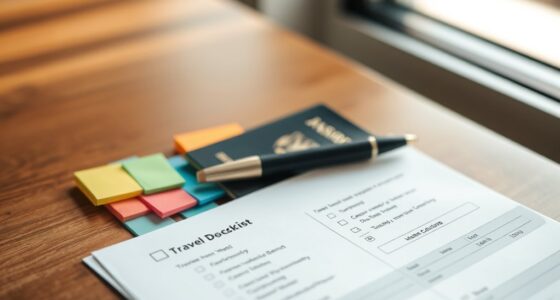
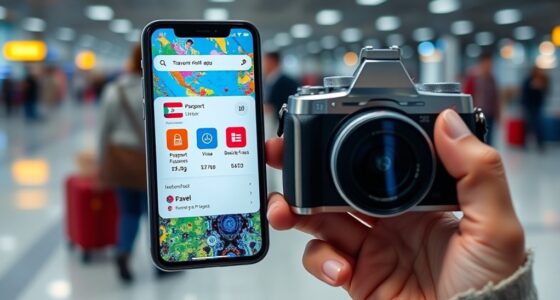
To effectively document emergency contacts and embassy info, compile essential numbers like local police, medical facilities, and your country’s embassy or consulate. Store these securely on your device and keep printed copies nearby. Use apps to organize contacts for quick access and guarantee all info is current. Embedding embassy details in your travel documents helps in crises. Keep practicing these steps to be fully prepared for any situation abroad.
Key Takeaways
- Compile a comprehensive list including local emergency services, police, medical facilities, and your embassy or consulate contacts.
- Store emergency contact information securely both digitally (via apps or cloud storage) and physically in accessible locations.
- Embed embassy details—phone, email, address—in travel documents and register your trip with the embassy if possible.
- Use contact management apps to categorize and quickly access emergency numbers, ensuring information is regularly updated.
- Keep printed copies of all critical contacts accessible in case of device failure or battery issues during emergencies.
Having emergency contacts and embassy information readily available can make all the difference during unexpected situations abroad. When you’re traveling, ensuring your contact management system is complete and accessible is key to maintaining your travel safety. Knowing exactly who to reach out to—whether it’s local authorities, your country’s embassy, or trusted contacts—can help you respond quickly to crises, reducing stress and confusion. Proper documentation of these contacts means you won’t waste precious time searching through emails or scattered notes if an emergency arises. Instead, you’ll have everything organized and at your fingertips, ready to assist you in critical moments.
To start, create a dedicated list of emergency contacts that includes local emergency services, police, medical facilities, your country’s embassy or consulate, and any local contacts you trust. Keep this list in a secure, easily accessible place—both digitally and physically. Save the contacts in your phone with clear labels, and print a copy to carry with you, especially if your devices malfunction or run out of battery. This dual approach ensures you’re covered no matter what situation presents itself. When managing these contacts, consider using a contact management app that allows you to categorize and quickly find essential numbers. This way, your emergency contacts are always organized, and you won’t have to sift through long lists in stressful moments. Additionally, automation in business has shown that digital organization tools can improve efficiency and accessibility when time is critical.
Embedding embassy information into your travel documents can dramatically improve your response time in emergencies. Note down the contact details of your country’s embassy or consulate in the countries you’re visiting, including phone numbers, email addresses, and physical addresses. Familiarize yourself with their office hours and any specific procedures for emergencies. This knowledge can be invaluable if you find yourself in legal trouble, losing your passport, or facing other serious issues. Additionally, register your trip with your embassy if they offer a registration service. This step can facilitate assistance and help them locate you quickly if needed.

Visfresh Daily Contact Lens Organizer Dispenser with R & L Labels – 4-Drawer Contact Lens Holder Storage – Multifunctional Clear Box Case for Color Contact Lenses, Glasses, Makeup, & More
LEFT & RIGHT LABELS FOR EASY ORGANIZATION – Includes R & L stickers for effortless sorting of lenses,…
As an affiliate, we earn on qualifying purchases.
As an affiliate, we earn on qualifying purchases.
Frequently Asked Questions
How Often Should I Update My Emergency Contacts?
You should update your emergency contacts at least once a year to guarantee contact update frequency stays current. Whenever you experience a significant life change like changing jobs, moving, or updating your phone number, review and improve your emergency contact accuracy. Regular updates help ensure that your contacts are reliable and available when needed, giving you peace of mind knowing your emergency information remains accurate and up-to-date.
What Should I Do if My Embassy Is Closed?
If your embassy is closed, you should follow embassy closure procedures by contacting alternative emergency contacts, such as local police, your country’s consulate, or trusted local contacts. Keep a list of these contacts handy, and stay informed through embassy updates or social media. Remember, having a plan with multiple emergency contacts guarantees you’re prepared for any unexpected closure, so don’t hesitate to seek help from these reliable sources when needed.
How Can I Verify the Authenticity of Embassy Contact Info?
You might think verifying embassy contact info is as simple as trusting the first link, but nope. To confirm contact authenticity, visit the official government website directly—avoid third-party sources. Check for up-to-date info, official email addresses, and legitimate phone numbers. Reach out via verified channels, and don’t rely on outdated or suspicious info. Embassy verification guarantees you get accurate help, not misinformation, especially when it truly counts.
Is It Necessary to Include International Emergency Numbers?
Yes, including international emergency numbers is essential for emergency preparedness. When you document contacts, guarantee you list international dialing codes for local emergency services, embassy assistance, and medical help. This way, you can quickly access help during emergencies abroad. Always verify these numbers through official embassy websites or government sources to ensure accuracy. Being prepared with correct international emergency contacts helps you respond swiftly and confidently in urgent situations.
How Should I Store Digital Copies of Embassy Documents?
Think of digital storage as a vault for your embassy documents. You should store digital copies securely in encrypted cloud services or password-protected drives. Regularly back them up on multiple platforms to prevent loss. Guarantee document security by using strong passwords, enabling two-factor authentication, and keeping software updated. This way, your embassy information stays safe, accessible when needed, and protected from unauthorized access during emergencies.

Emergency Medical Information ID Card Pack of 5 Emergency Contact ID Cards for Wallet Phone Pocket Handbags
✅EMERGENCY MEDICAL INFORMATION: Wallet-sized ID cards designed to store critical health information including allergies, medications, medical conditions, and…
As an affiliate, we earn on qualifying purchases.
As an affiliate, we earn on qualifying purchases.
Conclusion
Think of your emergency contacts and embassy details as a safety net woven beneath you, ready to catch you if you fall. By documenting this crucial information, you create a guiding lighthouse shining through the fog of uncertainty. Keep it close, like a trusted map in your pocket, so when storms arise, you can navigate with confidence. Remember, preparedness is your anchor in the unpredictable seas of life, keeping you steady and secure.

Mini First Aid Kit – 150 Piece Small Waterproof Hard Shell Medical Kit for Home, Car, Travel, Camping, Truck, Hiking, Sports, Office, Vehicle & Outdoor Emergencies- Small First Aid Medical Kit (Red)
ESSENTIALS FOR EMERGENCY: Everything you need is in this first aid kit! Our kit includes over 150 professional-grade…
As an affiliate, we earn on qualifying purchases.
As an affiliate, we earn on qualifying purchases.

Emergency Medical Information Kit for Fridge – “File of Life” Style Magnet Packet with In Case of Emergency Forms, Medication List & Contact Cards – For Seniors, Elderly, EMTs & First Responders
✅ EMERGENCY INFORMATION WHERE EMTs EXPECT IT Place this Emergency Medical Information Kit on your refrigerator—the first place…
As an affiliate, we earn on qualifying purchases.
As an affiliate, we earn on qualifying purchases.