
To effectively manage document revisions and feedback loops, you should organize versions systematically and use collaborative tools that track changes. This helps prevent confusion, guarantee everyone works on the latest draft, and makes it easy to compare or revert to previous versions. Setting clear review guidelines and permissions encourages accountability and smooth collaboration. If you want to discover strategies for streamlining your workflow and maintaining document integrity, keep exploring these tips.
Key Takeaways
- Implement a version control system to track changes, identify contributors, and maintain document history.
- Use collaborative editing tools with real-time updates and comment features for efficient feedback.
- Establish clear review procedures and permissions to manage editing rights and prevent conflicts.
- Save regular snapshots of the document to facilitate easy rollback and comparison of different versions.
- Encourage structured feedback loops by assigning reviewers, setting deadlines, and documenting decisions.
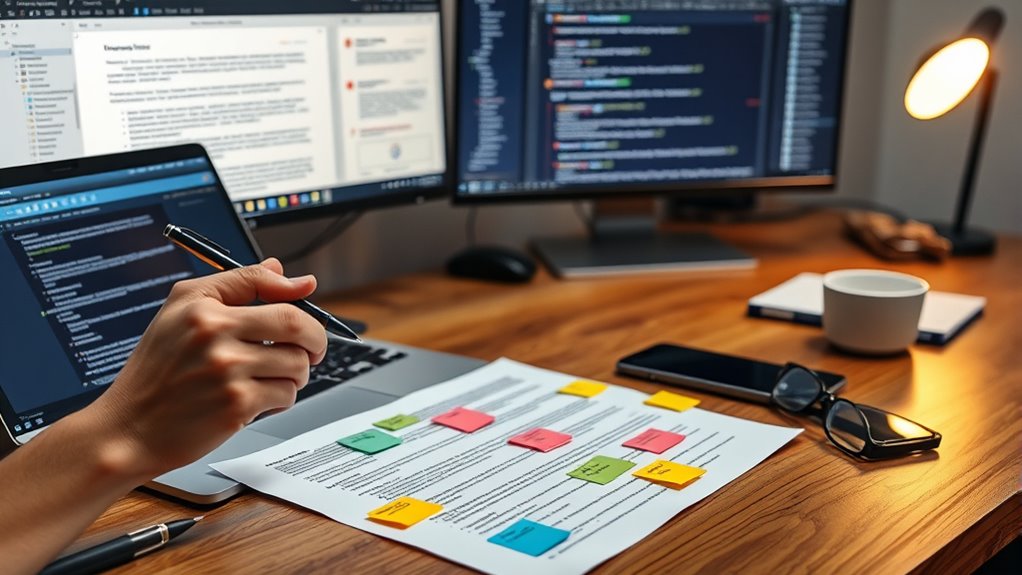
Have you ever struggled to keep track of multiple versions of the same document? If so, you’re not alone. Managing document revisions can quickly become chaos without the right tools and strategies. When collaborating with others, it’s easy for different team members to make edits that clash or get lost in the shuffle. That’s where effective version control comes into play. It helps you organize changes systematically, guaranteeing everyone works on the latest version without overwriting each other’s work. With version control, you can save snapshots at key points, compare different versions side by side, and revert to earlier drafts if needed. This process keeps the entire editing cycle transparent and manageable, especially in fast-paced environments.
Collaborative editing is another vital aspect of managing document revisions. When multiple people work on a document simultaneously, it’s essential to have a clear system for tracking who made what changes and when. Many modern tools facilitate real-time collaborative editing, allowing team members to see each other’s updates instantly. This immediate feedback loop accelerates the revision process, helping you identify issues early and gather input from all stakeholders. It also encourages accountability because everyone can see their contributions and how they fit into the overall project. To optimize collaborative editing, establish guidelines for comments, suggestions, and change approvals. This clarity minimizes confusion and streamlines the review process.
By integrating version control with collaborative editing, you create a seamless workflow that reduces errors and enhances productivity. For example, cloud-based platforms like Google Docs or Microsoft 365 automatically track versions and allow multiple users to edit at once. These tools provide revision histories, so you can always go back to previous versions if needed, and show who made specific changes. You can also set permissions to restrict editing rights, guaranteeing that only authorized team members can make critical modifications. This balance of flexibility and control makes managing revisions more efficient, especially when dealing with complex or lengthy documents.
Ultimately, mastering version control and collaborative editing means you spend less time sorting through conflicting changes and more time focusing on the content. It keeps everyone on the same page, maintains document integrity, and speeds up feedback loops. When you adopt these practices, managing document revisions becomes less of a chore and more of a streamlined, collaborative process. Whether you’re working solo or with a team, implementing these strategies ensures your documents stay organized, accurate, and up-to-date throughout the entire revision cycle. Proper documentation and tracking are essential components in maintaining clarity and accountability during the revision process.
version control software for documents
As an affiliate, we earn on qualifying purchases.
As an affiliate, we earn on qualifying purchases.
Frequently Asked Questions
How Can I Track Who Made Specific Revisions?
You can track who made specific revisions by checking the document’s audit trails and revision history. Most collaboration tools automatically record each change along with the editor’s name, timestamp, and notes. By reviewing the revision history, you’ll see a detailed log of all modifications, making it easy to identify who made each change. This helps maintain accountability and makes certain you stay organized throughout the editing process.
What Tools Are Best for Collaborative Editing?
For collaborative editing, you want tools that excel in real-time synchronization and cloud-based collaboration. Google Docs leads the way with seamless live editing, automatic version history, and easy sharing. Microsoft 365 offers similar features, combining real-time updates and robust integration with other apps. Dropbox Paper and Quip also deliver real-time collaboration, enabling you to work simultaneously with team members across devices. Choose these tools to streamline teamwork and boost productivity effortlessly.
How Do I Handle Conflicting Feedback From Multiple Reviewers?
When facing conflicting feedback from multiple reviewers, you should analyze each piece of input carefully. Clarify reviewer disagreements by asking for specific examples and prioritize feedback based on project goals. Communicate openly with reviewers, explaining your reasoning behind decisions, and seek consensus when possible. This approach helps you resolve conflicting feedback effectively, ensuring the final document reflects a balanced synthesis of reviewer perspectives while maintaining clarity and coherence.
What Is the Ideal Frequency for Review Cycles?
Think of your review schedule as a steady drumbeat; it keeps everyone in sync. Ideally, set a revision frequency of every one to two weeks, depending on project complexity. This regular rhythm guarantees feedback stays fresh and manageable, preventing revisions from piling up. Adjust your revision frequency based on project milestones, team availability, and feedback volume, so your review process remains smooth and productive.
How to Prevent Version Control Issues in Large Teams?
To prevent version control issues in large teams, you should implement clear version control strategies, such as using centralized document management systems. Guarantee everyone follows consistent naming conventions and regularly updates revision audit trails. Lock documents during critical edits to avoid conflicts, and communicate changes promptly. These practices help maintain clarity, prevent overwriting, and keep track of all revisions, fostering smooth collaboration and reducing errors across your team.
collaborative document editing tools
As an affiliate, we earn on qualifying purchases.
As an affiliate, we earn on qualifying purchases.
Conclusion
As you manage document revisions, remember that each change brings clarity, yet too many can cause confusion. Embrace feedback loops as opportunities for growth, even when they challenge your initial ideas. Balance is key—strive for progress without losing your original vision. In this dance of edits and suggestions, you find strength not just in finality, but in the journey of refinement itself. Ultimately, it’s the harmony between revision and feedback that creates a truly polished masterpiece.
document revision tracking software
As an affiliate, we earn on qualifying purchases.
As an affiliate, we earn on qualifying purchases.
cloud-based document management system
As an affiliate, we earn on qualifying purchases.
As an affiliate, we earn on qualifying purchases.