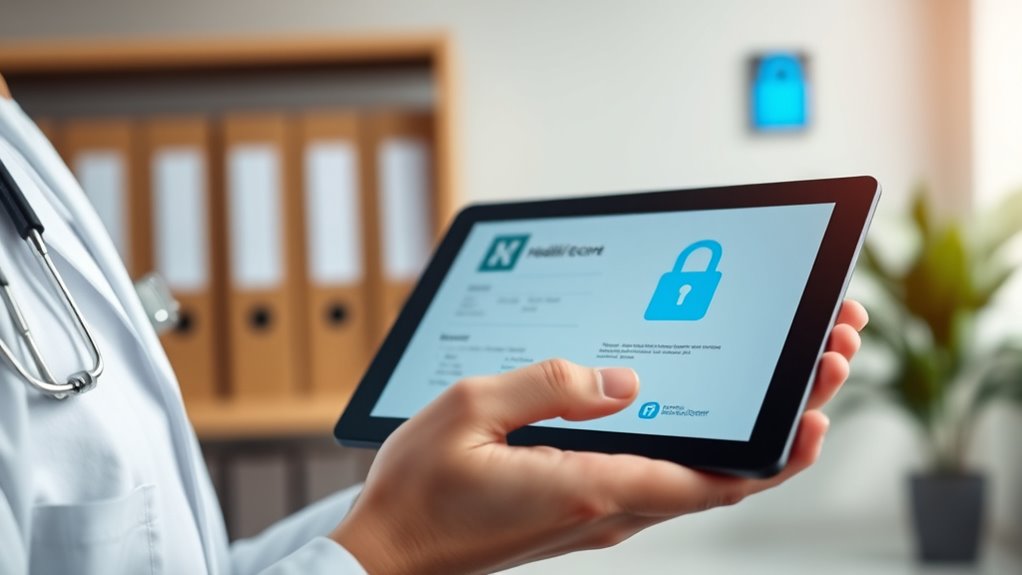

HIPAA sets the basic privacy and security rules protecting your medical records from unauthorized access and disclosure. Beyond HIPAA, laws like the HITECH Act strengthen data breach notifications and cybersecurity standards, while state laws may add extra protections. These regulations regulate how healthcare providers, insurers, and others handle your health information, especially with electronic sharing. If you want to understand how these laws keep your data safe and what additional protections exist, keep exploring more details.

Prime made for students and young adults
- Fast, free delivery for dorm and study essentials
- Prime Video and Amazon Music included
- Member-only deals
Key Takeaways
- The HIPAA Privacy Rule sets national standards for protecting individuals’ health information in medical records.
- HIPAA regulates electronic disclosures, requiring encryption and secure access to prevent unauthorized data sharing.
- Additional laws like state-specific privacy regulations may complement HIPAA protections for medical records.
- Breach notification requirements under HIPAA mandate informing affected individuals and authorities of data breaches.
- Healthcare organizations implement policies and technologies beyond HIPAA to enhance privacy and security of medical data.

Have you ever wondered how healthcare providers protect your sensitive information? It’s a good question, especially given the increasing reliance on electronic disclosures and the constant threat of data breaches. Medical records contain some of your most personal details, and safeguarding that information is a top priority for healthcare providers and lawmakers alike. That’s where HIPAA, the Health Insurance Portability and Accountability Act, comes into play. Enacted in 1996, HIPAA sets national standards for protecting your health information, ensuring that your medical data remains private and secure.
HIPAA’s Privacy Rule explicitly governs how healthcare providers, health plans, and clearinghouses handle your protected health information (PHI). It limits the ways they can share your data, requiring explicit consent or a valid reason for disclosures. When it comes to electronic disclosures—such as transmitting data via email, online portals, or electronic health records—the rules are especially strict. Healthcare entities must implement safeguards to prevent unauthorized access during these electronic exchanges. These safeguards include encryption, secure login protocols, and regular security assessments. These measures help minimize the risk of your information being intercepted or accessed by unauthorized individuals during transmission. Additionally, the importance of data security in healthcare cannot be overstated, as it underpins the effectiveness of these protective measures.
HIPAA restricts electronic data sharing and requires safeguards like encryption and secure logins to protect your health information.
Despite these precautions, data breaches still pose a significant threat. Data breaches happen when cybercriminals or even accidental insiders gain unauthorized access to protected health information. According to recent reports, healthcare remains one of the most targeted industries for cyberattacks, largely due to the high value of medical data on the black market. When a breach occurs, your sensitive information could be exposed, leading to identity theft, fraud, or other malicious activities. HIPAA mandates that healthcare providers notify affected individuals, the Department of Health and Human Services, and sometimes the media, depending on the scope of the breach. These breach notifications are designed to keep you informed and enable you to take appropriate actions if your data has been compromised.
To combat these threats, healthcare organizations continually update their security policies and invest in advanced cybersecurity tools. They conduct staff training to prevent phishing attacks and other social engineering tactics that could lead to data breaches. As a patient, you also have a role in protecting your information by being cautious with your login credentials and reporting suspicious activities. The combination of strict regulations, technological safeguards, and personal vigilance helps create a layered defense against unauthorized disclosures and cyber threats.
Ultimately, while HIPAA provides a solid foundation for privacy, ongoing efforts beyond the law are essential to keep your health information safe in an evolving digital landscape. The goal is to ensure your data remains confidential and secure, no matter how it’s shared or stored.
HIPAA compliant electronic health record system
As an affiliate, we earn on qualifying purchases.
As an affiliate, we earn on qualifying purchases.
Frequently Asked Questions
How Do State Laws Differ From HIPAA Regulations?
State laws differ from HIPAA regulations through state-specific legal variances that can offer more or sometimes less protection. You’ll find that some states have stricter rules on who can access your medical records, while others may allow disclosures not permitted under HIPAA. These variances reflect local priorities and policies, so it is crucial to understand your state’s specific laws to know how your medical information is protected and shared.
Are There International Privacy Laws Affecting Medical Records?
International privacy laws do affect your medical records, especially with the rise of global standards like GDPR in Europe. While HIPAA governs U.S. healthcare, global standards emphasize data sovereignty, meaning your health data is protected under local laws even when shared across borders. This creates a complex landscape, requiring you to stay informed about international regulations that might impact how your medical records are stored, accessed, and shared worldwide.
What Rights Do Patients Have to Access Their Records?
You have the right to access your medical records, ensuring transparency and control over your health information. Healthcare providers require your consent before sharing records, maintaining record confidentiality. You can request copies of your records and review them to verify accuracy. Your rights also include requesting amendments if needed. Always remember, safeguarding your health data is a priority, and providers must respect your access rights under privacy laws.
How Are Medical Records Protected During Electronic Transmission?
When transmitting medical records electronically, you’re protected by encryption protocols that secure your data from unauthorized access. These protocols scramble the information, making it unreadable to hackers. Additionally, healthcare providers implement data breach prevention measures, such as firewalls and secure networks, to safeguard your records during transfer. This way, your sensitive health information stays private and protected from potential threats throughout the electronic transmission process.
What Penalties Exist for Violating Medical Privacy Laws?
If you violate medical privacy laws, enforcement actions can lead to significant penalties. Penalty structures vary, including hefty fines and even criminal charges in severe cases. Regulatory agencies actively monitor compliance and can impose corrective measures or sanctions. You might face fines ranging from thousands to millions of dollars, depending on the violation’s severity. Staying compliant helps you avoid these penalties and protects patient privacy effectively.
medical data encryption software
As an affiliate, we earn on qualifying purchases.
As an affiliate, we earn on qualifying purchases.
Conclusion
As you navigate the maze of medical records, remember that privacy laws are your guiding stars, shining brightly to protect your personal information. HIPAA is just the beginning—like a sturdy fence guarding your treasures. Beyond it, new laws act as vigilant guardians, ensuring your health secrets stay safe in a digital age. Stay informed and vigilant; your privacy is the precious map leading you through this complex landscape. Guard it well, and it will guard you in return.
personal health information privacy protection
As an affiliate, we earn on qualifying purchases.
As an affiliate, we earn on qualifying purchases.
cybersecurity tools for healthcare providers
As an affiliate, we earn on qualifying purchases.
As an affiliate, we earn on qualifying purchases.
Halloween Picks
halloween
As an affiliate, we earn on qualifying purchases.