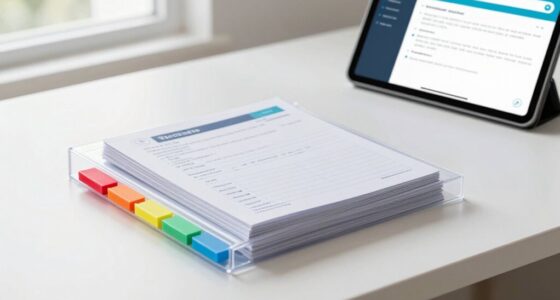

To keep your immunization records up to date and accessible, regularly verify them with your healthcare provider and update after each vaccination. Store digital copies securely on cloud services or password-protected devices, and keep physical records in durable, safe locations. Organize your records clearly with labels, and keep multiple copies for backup. Staying on top of your records ensures easy access during emergencies, travel, or health appointments, and if you stay proactive, you’ll discover more ways to manage your immunization history effectively.

Prime made for students and young adults
- Fast, free delivery for dorm and study essentials
- Prime Video and Amazon Music included
- Member-only deals
Key Takeaways
- Regularly review and verify your immunization records with healthcare providers to ensure accuracy.
- Digitize records by scanning and storing them securely on password-protected devices or cloud services.
- Keep multiple copies (digital and physical) in a safe, organized, and easily accessible location.
- Update records promptly after each vaccination, noting vaccine type, date, and provider details.
- Use electronic registries or apps that automatically update your immunization history for easy access.
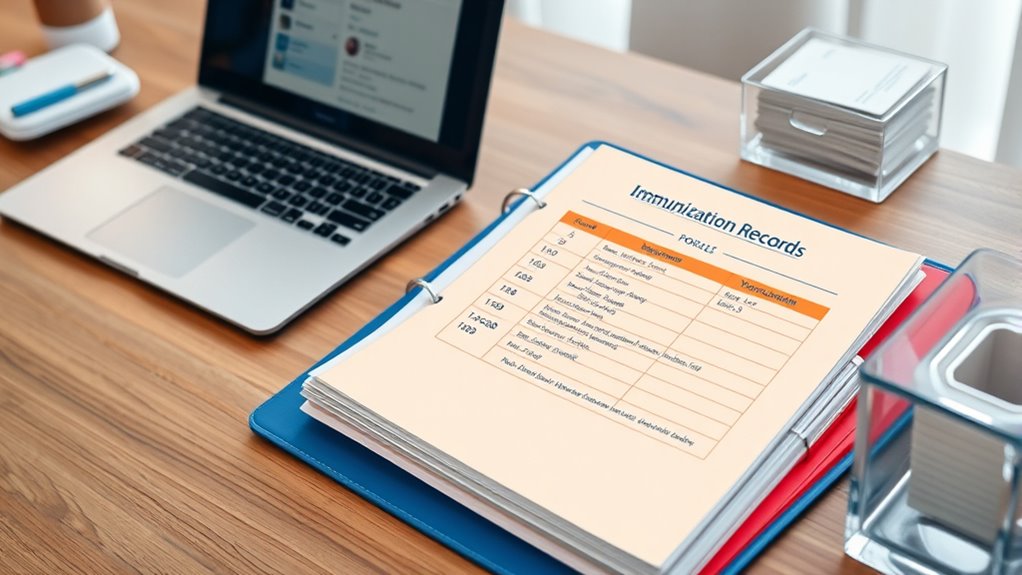
Immunization records are essential documents that track the vaccines you’ve received, ensuring you stay protected and meet health requirements. Keeping these records accurate and accessible is crucial, especially when traveling, applying for jobs, or attending school. One of the first steps is understanding the importance of vaccine safety, which means verifying that your records correctly reflect the vaccines administered and that there are no discrepancies. When reviewing your immunization history, check for consistency with your healthcare provider’s notes. If you notice any gaps or errors, consult your healthcare professional to update or correct your records. Ensuring vaccine safety is vital to prevent unnecessary vaccinations or missed doses, which could compromise your immunity.
Record storage techniques play a significant role in maintaining your immunization information. You want your records to stay safe, intact, and easy to access whenever needed. Digital storage methods are increasingly popular because they reduce the risk of physical damage or loss. Scanning your immunization records and saving them securely on a password-protected device or cloud service allows you to access them quickly in emergencies or while traveling. It’s wise to create multiple copies—both electronic and physical—to prevent loss. For physical records, use a durable, waterproof folder or binder, and store it in a safe, easily accessible location like a home safe or a secure file cabinet. Label the folder clearly with your name and the date range covered by the records for quick identification.
Additionally, understanding how record security measures protect your sensitive health information is essential to prevent unauthorized access. Regularly updating your immunization records is equally important. Whenever you receive new vaccines, make sure to add the details immediately and confirm that the information entered is correct. Some clinics and health departments now offer electronic immunization registries, which can automatically update your records when vaccines are administered. If you prefer paper records, keep a detailed log of each vaccination, including the date, type of vaccine, and provider’s details. This habit ensures that you’re always aware of your immunization status and can provide proof when needed.
digital immunization record storage device
As an affiliate, we earn on qualifying purchases.
As an affiliate, we earn on qualifying purchases.
Frequently Asked Questions
How Often Should I Review My Immunization Records?
You should review your immunization records at least once a year to stay current with vaccine schedules. Regularly checking your immunization history helps guarantee you’re protected and identifies any missed or overdue vaccines. If you experience health changes or travel plans, review your records again. Staying proactive guarantees your immunization history is accurate and accessible, so you can quickly provide proof when needed and maintain ideal health.
Can I Access My Records Online Securely?
Yes, you can access your immunization records online securely through trusted health portals or your healthcare provider’s website. These platforms use secure vaccine storage protocols to safeguard your data. Regularly check your records for accuracy and use them to stay on top of immunization scheduling. Accessing your records online makes it easy to keep track of your vaccines and guarantee your immunizations are up to date.
What Should I Do if Records Are Lost?
Losing your records feels like searching for a needle in a haystack, but don’t fret. First, contact your healthcare provider or local health department to request duplicates. Consider digital record storage to bypass future mishaps, but always stay mindful of privacy concerns. Keep copies in secure locations, both online and offline. Staying proactive guarantees your immunization history remains within reach, safeguarding your health with a simple act of organization.
Are Digital Records Accepted by All Healthcare Providers?
Most healthcare providers accept digital records, but it’s best to confirm first. Using electronic storage makes it easy to access and share your immunization data quickly. Just make certain your records are stored securely to protect your data privacy. You might want to keep a backup and update your digital files regularly, so your records are always current and accessible when you need them.
How Do I Update Immunization Records After Vaccination?
After vaccination, you should contact your healthcare provider or use their online portal to update your immunization records. During your vaccine appointment scheduling, ask if they can update your immunization history tracking system directly. Keep digital or paper records handy and verify that your new vaccination details are accurately entered. Regularly check your records to ensure they’re current and accessible whenever you need proof of immunization.
password protected cloud storage for health records
As an affiliate, we earn on qualifying purchases.
As an affiliate, we earn on qualifying purchases.
Conclusion
Keeping your immunization records current and accessible isn’t just a small task—it’s the key to safeguarding your health and peace of mind. Imagine facing a health emergency without your records; it’s like trying to find a needle in a haystack. Stay organized, update them regularly, and keep them handy. This simple habit can save you hours, stress, and potentially your health. Don’t let your records become a forgotten relic—make them your ultimate health shield.
waterproof document folder for medical records
As an affiliate, we earn on qualifying purchases.
As an affiliate, we earn on qualifying purchases.
immunization record organizer binder
As an affiliate, we earn on qualifying purchases.
As an affiliate, we earn on qualifying purchases.
Halloween Picks
halloween
As an affiliate, we earn on qualifying purchases.