TL;DR

Prime made for students and young adults
- Fast, free delivery for dorm and study essentials
- Prime Video and Amazon Music included
- Member-only deals
India’s earthquake warning system can detect early signs of seismic activity and issue alerts seconds before shaking begins, but it cannot predict earthquakes beforehand. This distinction is crucial for understanding its capabilities and limitations.
India’s earthquake warning system is capable of providing early alerts seconds before shaking occurs, but it cannot predict earthquakes in advance. This system, developed by the Indian Meteorological Department and other agencies, aims to mitigate damage and save lives by issuing timely warnings based on real-time seismic detection, not prediction. This clarification is important for understanding what the system can and cannot do in earthquake preparedness.
The Indian earthquake warning system relies on a network of seismic sensors that detect initial seismic waves, known as P-waves, which travel faster than the destructive S-waves. When these P-waves are detected, alerts can be issued seconds before the more damaging waves reach populated areas, giving people and infrastructure limited time to respond. According to officials from the Indian Meteorological Department, the system can provide warnings typically ranging from a few seconds to a minute, depending on the distance from the earthquake epicenter.
It is important to note that this system does not predict earthquakes beforehand, as prediction would require identifying precursors or patterns that reliably indicate an impending quake, which current science has not achieved. Instead, it functions as an early warning mechanism that detects seismic activity as it happens, offering a critical but limited window for action. The system has been tested in various regions and is integrated with emergency response protocols to alert authorities and the public.
Experts emphasize that while the system enhances earthquake preparedness, it cannot eliminate the risk of damage or casualties, especially in regions with high seismic activity. Its effectiveness depends on the density of sensors, rapid communication infrastructure, and public awareness of alerts.
Why India’s Earthquake Warning System Matters for Public Safety
This system improves emergency response times, potentially saving lives and reducing injuries during earthquakes. While it cannot prevent earthquakes or predict them in advance, the ability to issue alerts seconds before shaking begins is a valuable tool in disaster management. It also helps authorities activate safety protocols, shut down critical infrastructure, and inform the public to seek immediate shelter.
Understanding its limitations is crucial for policymakers and residents alike. Overestimating its predictive capabilities could lead to complacency, while recognizing its role as an early detection system encourages more comprehensive preparedness measures. The system’s success depends on continued technological improvements, public education, and integration with broader disaster risk reduction strategies.
As an affiliate, we earn on qualifying purchases.
Development and Deployment of India’s Earthquake Detection Technology
India is located in a seismically active zone, with frequent minor tremors and occasional major earthquakes. Historically, the country has faced devastating quakes, such as the 2001 Gujarat earthquake. In response, India has invested in seismic monitoring infrastructure over the past decade, establishing a network of sensors across vulnerable regions. The Indian Meteorological Department, along with the Indian Institute of Technology and other agencies, has developed an early warning system that leverages real-time seismic data to detect initial P-waves.
Prior efforts focused on post-earthquake assessment and response, but recent advancements aim to provide real-time alerts. The system has been tested in select regions and is gradually expanding. While the technology is promising, experts acknowledge that it is not a predictive tool but a detection-based early warning mechanism.
Internationally, countries like Japan and Mexico have similar systems, but India’s system is tailored to its specific seismic profile and infrastructure capabilities.
“Our system detects seismic waves seconds before the destructive waves arrive, giving us a critical window to alert the public and authorities.”
— Dr. S. K. Singh, Indian Meteorological Department
As an affiliate, we earn on qualifying purchases.
Limitations and Uncertainties in Earthquake Prediction
While the system can detect seismic waves seconds before shaking, it cannot predict earthquakes in advance. The science of earthquake prediction remains inconclusive, with no reliable method to forecast when and where a quake will occur. The system’s effectiveness depends on sensor coverage and communication infrastructure, which vary across regions. There is also ongoing debate about how much warning time can realistically be provided in different scenarios, especially for distant or deep earthquakes. Researchers continue to explore potential precursors, but no definitive indicators have been established.
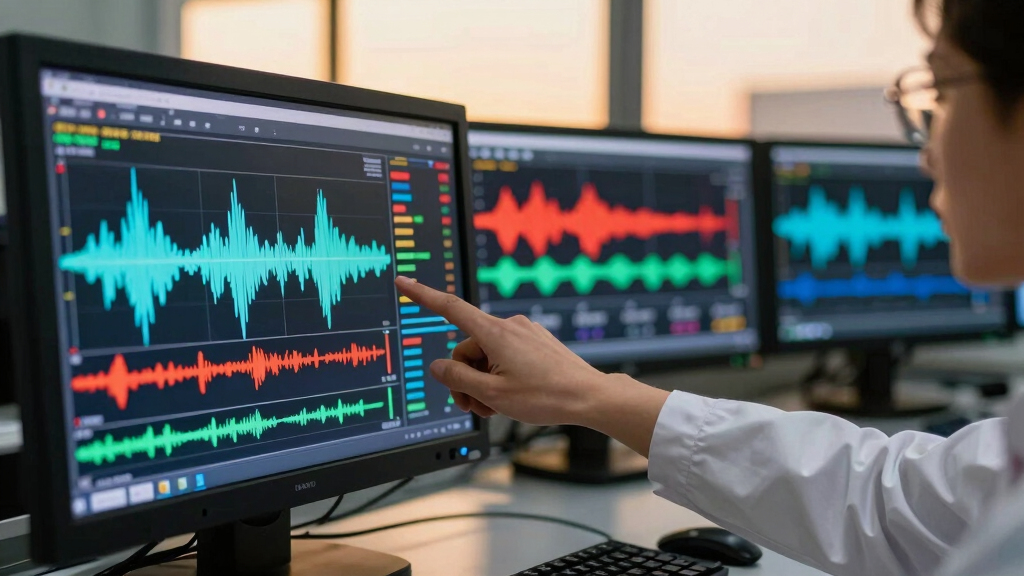
seismic sensors for earthquake detection
As an affiliate, we earn on qualifying purchases.
As an affiliate, we earn on qualifying purchases.
Future Improvements and Policy Implications
India plans to expand its seismic sensor network to improve detection accuracy and reduce false alarms. Efforts are underway to integrate the warning system more closely with emergency services, transportation, and public alert platforms. Policymakers are also considering public education campaigns to ensure residents understand the system’s capabilities and limitations. Advances in seismic technology and data analysis may enhance warning times and reliability in the future, but earthquake prediction remains a scientific challenge.
As an affiliate, we earn on qualifying purchases.
Key Questions
Can India’s earthquake warning system predict earthquakes before they happen?
No, the system cannot predict earthquakes in advance. It detects seismic waves seconds before the shaking begins, providing early alerts based on real-time detection.
How much warning time does the system typically provide?
The warning time ranges from a few seconds up to a minute, depending on the distance from the earthquake epicenter and sensor coverage.
Is this system effective in preventing damage?
While it can help reduce injuries and damage by enabling quick response, it cannot prevent earthquakes or fully eliminate risks.
Will this system be able to predict earthquakes in the future?
Currently, earthquake prediction remains scientifically unfeasible. The system is designed for detection and early warning, not prediction.
What are the main limitations of India’s earthquake warning system?
Limitations include incomplete sensor coverage, reliance on real-time detection rather than prediction, and the challenge of providing sufficient warning time for distant or deep earthquakes.
Source: google-trends
Halloween Picks
halloween
As an affiliate, we earn on qualifying purchases.