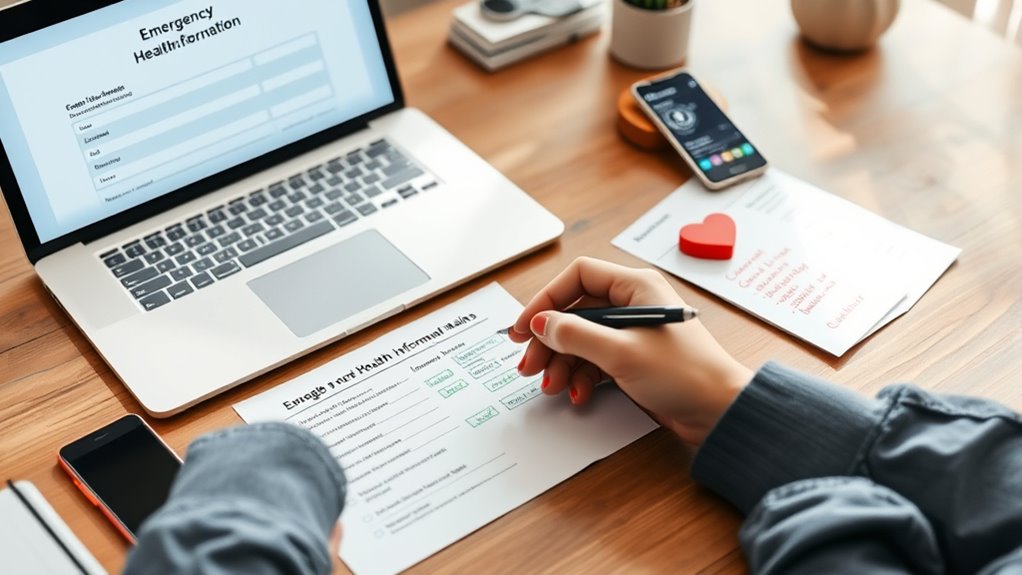

To update your family’s emergency health information, gather current details on allergies, medications, health conditions, and emergency contacts. Review and verify this info regularly, especially after changes. Keep it accessible in digital or physical formats, and share updates with caregivers and family. Using reliable tools or apps makes it easier to maintain accurate records. Staying current helps responders act quickly and confidently—discover more tips to guarantee everyone’s safety during emergencies.

Prime made for students and young adults
- Fast, free delivery for dorm and study essentials
- Prime Video and Amazon Music included
- Member-only deals
Key Takeaways
- Regularly review and update health records to reflect current medications, allergies, and emergency contacts.
- Collect comprehensive medical details for each family member, including reactions and ongoing conditions.
- Keep emergency contact lists accurate and confirm contacts are aware of their roles.
- Use digital tools or portable records for quick access and sharing during emergencies.
- Share updated information with caregivers and family members to ensure everyone has current data.

Keeping your emergency health information current is essential for ensuring quick and effective care when it matters most. When someone faces a medical crisis, emergency responders and healthcare professionals need accurate details about medication allergies and emergency contacts immediately. If your family members’ information isn’t up to date, it can lead to delays in treatment or even dangerous mistakes. Regularly reviewing and updating this data ensures that everyone’s health records reflect their current medications, allergies, and contact details, allowing responders to act swiftly and confidently.
Keeping emergency health info current ensures quick, safe care during crises.
Start by gathering all relevant medical information for each family member. This includes noting any medication allergies—such as allergies to penicillin or sulfa drugs—and documenting reactions, like hives or difficulty breathing. These allergies are critical for emergency personnel to know so they can avoid administering harmful medications. Also, compile a list of current medications, dosages, and any ongoing health conditions that might influence treatment decisions. Keeping this information organized and accessible, whether in a digital format or a physical file, allows you to quickly share it during emergencies.
Equally important are emergency contacts. Make sure the contact list is current, including phone numbers, email addresses, and alternate contacts if primary ones are unavailable. Confirm that each family member’s emergency contacts are aware they’re listed and know how to respond if contacted. This step helps emergency responders reach loved ones swiftly and provides reassurance that someone can provide additional health history or decision-making support if needed. Regularly verify the accuracy of these contacts, especially if numbers change or contacts move away.
You should also review and update your family’s health information at least once a year or whenever there’s a significant change—like a new allergy, medication, or a change in emergency contacts. Keep a dedicated file or digital record that’s easy to access and share with emergency responders, healthcare providers, or caregivers. Consider using a health app or online portal to keep this data current and readily available on your phone or computer. This way, you can provide essential details instantly if an emergency arises, saving precious time and reducing risks. Additionally, utilizing vetted portable health record tools can help ensure your information remains accurate and secure.
digital family emergency health record app
As an affiliate, we earn on qualifying purchases.
As an affiliate, we earn on qualifying purchases.
Frequently Asked Questions
How Often Should I Review and Update Emergency Health Information?
You should review and update your family’s medical record updates and health info reviews at least every six months. Regular check-ins guarantee all information, like allergies, medications, and emergency contacts, remains current. Life changes, such as new health conditions or medications, warrant immediate updates. Staying proactive helps responders in emergencies and ensures your loved ones get the right care quickly. Make it a routine to keep everything accurate and up-to-date.
Can I Include Sensitive Medical Details in Emergency Contacts?
Is sharing sensitive medical details in emergency contacts a good idea? While it can be helpful for quick access, you should prioritize medical privacy and data security. Only include essential information that emergency responders might need, and consider encrypting or securing digital records. Remember, oversharing can jeopardize privacy; ask yourself if the details are truly necessary for emergency situations before including them.
How Do I Share Updates Securely With Family Members?
You should use secure messaging apps that offer encrypted sharing to update family members. These tools protect sensitive medical details from unauthorized access. Always verify that the platform you choose uses end-to-end encryption, ensuring only you and your family can view the information. Regularly update your shared data and avoid sending updates through unsecure channels like regular email or plain text messages, which could compromise privacy.
What Should I Do if My Emergency Info Changes Frequently?
If your emergency info changes frequently, you should use a secure medical record management system that allows easy updates and guarantees privacy concerns are addressed. Regularly review and update the information, then notify your family members through secure channels. This way, you keep everyone informed with the latest details while maintaining control over sensitive data, reducing risks, and ensuring quick access during emergencies.
Are There Apps That Can Automatically Update Emergency Health Info?
Yes, there are digital apps that offer automatic updates for emergency health information. These apps sync with your medical data, ensuring your family’s info stays current without manual input. You can set preferences for automatic updates, so your loved ones always have access to the latest details. Using these apps reduces the risk of outdated info during emergencies and makes managing health records more convenient and reliable.
As an affiliate, we earn on qualifying purchases.
Conclusion
Keeping emergency health information up to date guarantees your loved ones get quick, accurate care when it matters most. For example, imagine your sibling has a severe allergy; if their information isn’t current, responders might miss crucial details. Regularly review and update this info—name, allergies, medications—so you’re prepared for any unexpected situation. Staying proactive can make all the difference, giving your family peace of mind and ensuring they’re protected during emergencies.
emergency contact organizer for families
As an affiliate, we earn on qualifying purchases.
As an affiliate, we earn on qualifying purchases.
medical information storage device
As an affiliate, we earn on qualifying purchases.
As an affiliate, we earn on qualifying purchases.
Halloween Picks
halloween
As an affiliate, we earn on qualifying purchases.