When designing an effective study planner, choose between digital and paper based on your habits and needs. Digital planners offer features like reminders, timers, and easy rescheduling, ideal for flexible students. Paper planners provide tactile control, color coding, and the ability to personalize notes, perfect for visual learners. Both can help you manage time, set goals, and track progress. Keep exploring to find the best way to make your study sessions more organized and productive.

Prime made for students and young adults
- Fast, free delivery for dorm and study essentials
- Prime Video and Amazon Music included
- Member-only deals
Key Takeaways
- Choose a format aligning with personal habits, such as tactile, color-coded paper or flexible, integrated digital tools.
- Incorporate time management features like reminders, timers, or customizable schedules to enhance efficiency.
- Regularly review and update the planner to adapt to evolving academic goals and deadlines.
- Break down large objectives into smaller tasks for better prioritization and motivation.
- Personalize the planner with visual cues or notes to increase engagement and make planning more effective.
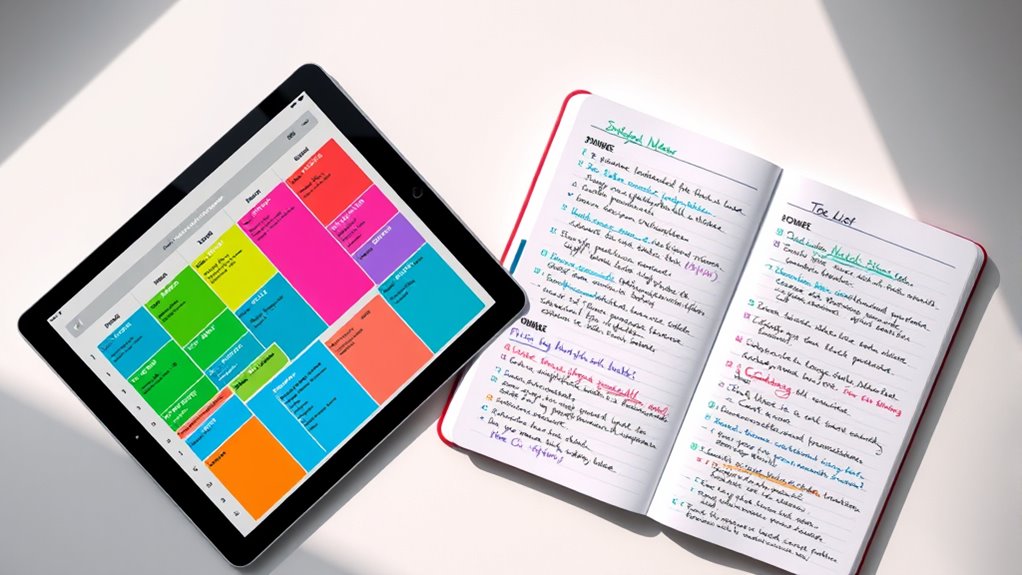
Creating an effective study planner can substantially boost your productivity and help you stay on track with your academic goals. When it comes to designing your planner, whether digital or paper, focusing on key elements like time management and goal setting is essential. Your planner isn’t just a calendar; it’s a tool to structure your study sessions, prioritize tasks, and visualize your progress. By setting clear, achievable goals, you ensure that your efforts are directed toward what truly matters, reducing the feeling of being overwhelmed. Good goal setting involves breaking down larger objectives into smaller, manageable tasks, which makes your study plan more actionable and less intimidating.
Time management plays a huge role in how effective your study planner will be. You need to allocate specific blocks of time for different subjects or tasks, and your planner should facilitate this process seamlessly. Digital planners often come with features like reminders, timers, and easy rescheduling, allowing you to adapt quickly if your priorities shift. Paper planners, on the other hand, give you a tactile sense of your schedule and can be customized with handwritten notes and color coding. Whichever you choose, the key is consistency—regularly updating and reviewing your planner helps you stay aware of upcoming deadlines and prevents procrastination.
When designing your planner, consider your personal habits and preferences. If you’re someone who likes visual cues and enjoys the tactile experience, a paper planner might be your best option. For those who value flexibility and integration with other apps, digital planners could serve you better. Regardless of the format, structure your planner around your most productive times of the day. For example, if mornings are when you’re most alert, prioritize your most challenging tasks then. Use your planner to set daily or weekly goals, and check off completed items to create a sense of achievement. This reinforces positive habits and keeps motivation high.
Finally, remember that an effective study planner is a dynamic tool. It should evolve with your needs and academic calendar. Regularly review what’s working and what’s not, adjusting your time management strategies and goal setting methods accordingly. This ongoing process helps you develop discipline and ensures that your planner remains a useful instrument for academic success. Whether digital or paper, your planner’s ultimate purpose is to make your study sessions more intentional, organized, and productive—bringing clarity to your goals and giving you control over your time. Incorporating traffic generation techniques such as SEO strategies can also help you discover new methods to improve your planning efficiency.
digital study planner with reminders
As an affiliate, we earn on qualifying purchases.
As an affiliate, we earn on qualifying purchases.
Frequently Asked Questions
Can Digital Planners Improve Long-Term Memory Retention?
Digital planners can improve long-term memory retention by supporting memory reinforcement through features like reminders and review prompts. They help reduce cognitive load by organizing information clearly and minimizing clutter, making it easier for you to focus on key concepts. By actively engaging with your planner, you reinforce learning and retention over time. So, yes, digital planners can boost your memory retention if you use them consistently and strategically.
How Do Paper Planners Impact Handwriting Skills?
Did you know that students who use paper planners tend to develop better handwriting skills? When you write manually, you actively engage your motor skills and support handwriting development. This hands-on practice strengthens fine motor skills, making your handwriting clearer and more consistent over time. Using paper planners encourages you to focus on forming letters correctly, which can boost your overall writing ability and enhance your cognitive connection to the material.
Are There Hybrid Planner Options Combining Digital and Paper Features?
Yes, hybrid planner options exist that combine digital and paper features. You can enjoy hybrid customization by integrating digital tools with traditional paper planning, giving you flexibility. These planners often include integrated scheduling, allowing you to jot down notes on paper while syncing appointments and reminders digitally. This way, you get the tactile benefits of writing and the convenience of digital organization, making your study planning more efficient and personalized.
What Are Common Pitfalls When Transitioning Between Planner Types?
When shifting between planner types, you might face digital distractions that pull you away from focus, or formatting challenges that make organization harder. You could also struggle with adapting to new layouts or losing the tactile satisfaction of paper. To avoid these pitfalls, set clear boundaries for digital use, customize formats to suit your needs, and give yourself time to adjust. Consistency helps you stay organized regardless of the planner type.
How Do Planners Influence Overall Academic Motivation?
Planners boost your academic motivation by reinforcing your commitment, inspiring confidence, and fostering consistency. They serve as visual reminders to utilize motivational strategies and apply goal-setting techniques, making progress tangible. When you see your goals clearly outlined and milestones marked, you stay motivated, stay focused, and stay driven. Whether digital or paper, your planner becomes a powerful tool that encourages discipline, nurtures perseverance, and ultimately enhances your academic success.
As an affiliate, we earn on qualifying purchases.
Conclusion
Whether you choose a digital or paper study planner, the key is consistency and personalization. Remember, your planner isn’t just a tool; it’s the compass guiding your academic journey. With the right system, you can conquer mountains of assignments and deadlines effortlessly—almost like having a secret weapon in your back pocket. So, pick what works best for you, stay committed, and watch your productivity skyrocket beyond even your wildest expectations.
customizable student planner notebook
As an affiliate, we earn on qualifying purchases.
As an affiliate, we earn on qualifying purchases.
As an affiliate, we earn on qualifying purchases.
Halloween Picks
halloween
As an affiliate, we earn on qualifying purchases.