
To manage passwords effectively for document security, use password managers that encrypt your data with strong algorithms, ensuring your passwords stay safe from theft. Combine this with biometric features like fingerprint or facial recognition for quick, secure access. Always create complex, unique passwords for each account and update them regularly. Combining these strategies offers layered protection—so, stay tuned to discover more ways to strengthen your security approach.
Key Takeaways
- Use strong, unique passwords for each document and account to prevent unauthorized access.
- Encrypt stored and transmitted passwords to protect them from interception and theft.
- Implement biometric authentication for quick, secure access to sensitive documents and password managers.
- Regularly update your security software and password credentials to stay protected against emerging threats.
- Utilize reputable password managers to generate, store, and manage complex passwords efficiently.

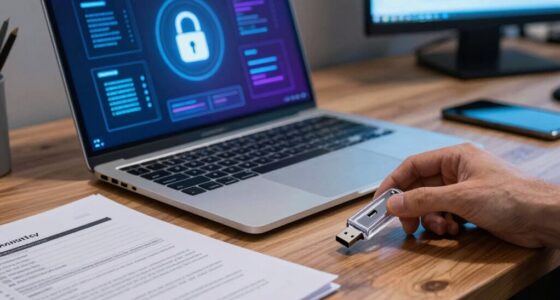
Have you ever wondered how secure your passwords really are? In today’s digital world, protecting your sensitive documents requires more than just a simple password. It’s crucial to understand how modern security measures like biometric authentication and password encryption can strengthen your defenses. Biometric authentication, which uses unique biological traits such as fingerprints or facial recognition, offers a convenient yet highly secure way to access your files. Unlike traditional passwords that can be guessed or stolen, biometric data is incredibly difficult to replicate or forge, making it an excellent layer of security for your documents. When you set up biometric authentication, you’re fundamentally tying access to your unique physical characteristics, reducing the risk of unauthorized entry. However, it’s important to remember that biometrics should complement, not replace, other security measures.
Password encryption is another critical component of effective document security. When you encrypt a password, you transform it into a coded format that cannot be easily deciphered without the correct decryption key. This means even if someone intercepts your password or gains access to your storage, they won’t be able to read or use it without the necessary key. Encryption acts as a shield, ensuring that your passwords and the documents they protect stay confidential. Many password managers incorporate strong encryption algorithms to safeguard your login credentials, so you don’t have to remember complex passwords for every account. Relying solely on weak or reused passwords puts your documents at risk, but encrypting these passwords adds an extra layer of security that keeps your data safe from cybercriminals. Additionally, understanding the importance of AI-driven solutions in cybersecurity can help you stay ahead of emerging threats.
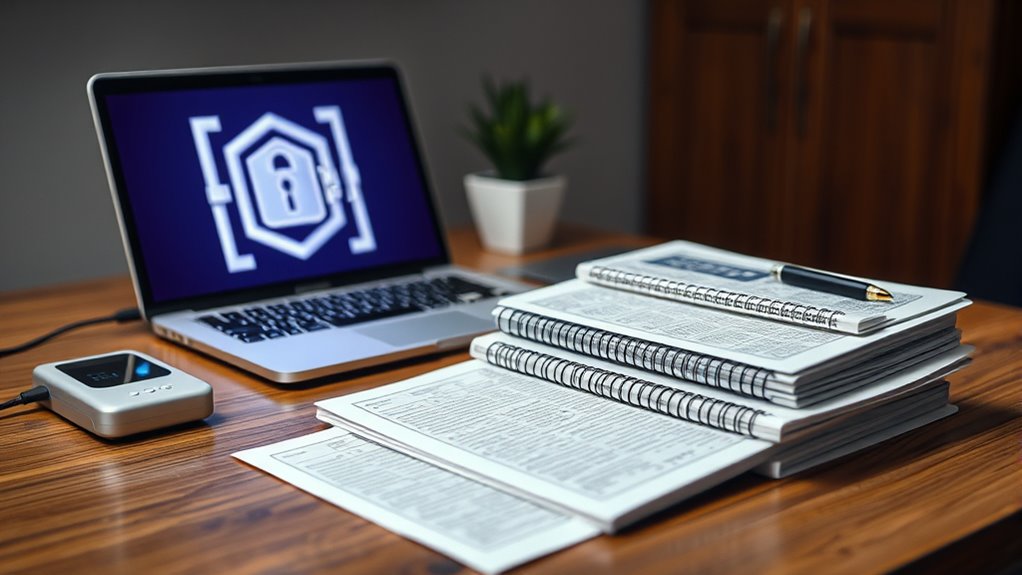
When managing your passwords for document security, it’s crucial to combine these technologies effectively. Use biometric authentication for quick, secure access on devices that support it, like smartphones or biometric-enabled laptops. At the same time, make sure your passwords are encrypted, especially when stored or transmitted online. This dual approach minimizes vulnerabilities—biometrics reduce the chances of password theft through physical traits, while encryption prevents hackers from deciphering your stored credentials. Keep your software updated, choose strong, unique passwords, and consider using a reputable password manager to automate these practices. By understanding and implementing these techniques, you considerably improve your ability to protect sensitive documents from unauthorized access and potential breaches.

Epson Workforce ES-580W Wireless Color Duplex Tax Receipt & Desktop Document Scanner for PC and Mac with 100-sheet Auto Feeder (ADF), Intuitive 4.3' Touchscreen
EFFORTLESS WIRELESS SCANNING – With a 4.3" touchscreen and wireless connectivity, this high-speed scanner sends scans straight to...
As an affiliate, we earn on qualifying purchases.
Frequently Asked Questions
How Often Should I Change My Document Passwords?
You should change your document passwords regularly, ideally every 60 to 90 days, to guarantee strong security. This practice aligns with recommended password expiration policies and enhances your protection. Updating your passwords frequently reduces the risk of unauthorized access if your credentials are compromised. Make it a habit to review and update your passwords periodically, especially for sensitive or critical documents, to keep your information safe and secure.
Can I Use the Same Password for Multiple Documents?
You shouldn’t reuse passwords across multiple documents, as it increases your risk of password reuse vulnerabilities. Unique passwords help guarantee each document remains secure, especially when combined with proper document encryption. Using different passwords minimizes the chances of unauthorized access if one password gets compromised. Always create strong, distinct passwords for each document to enhance your overall security and protect sensitive information effectively.
What Are the Best Practices for Creating Strong Passwords?
Think of your password as the lock on a treasure chest—you want it tough enough to keep thieves out. To create strong passwords, focus on password complexity by mixing uppercase, lowercase, numbers, and symbols. Avoid common words or patterns. Using a password manager helps generate and store unique passwords securely, so you don’t have to remember them all. This way, your documents stay safe from cyber pirates.
Are There Any Risks in Sharing Passwords With Colleagues?
Sharing passwords with colleagues can pose risks to your company’s confidentiality and security. Even if you trust them, it’s vital to follow password sharing ethics and adhere to confidentiality agreements. Doing so helps prevent accidental leaks or misuse of sensitive information. Always use secure methods to share passwords if necessary, and consider using password managers to maintain control. Remember, safeguarding access protects both your data and your organization’s integrity.
How Do I Securely Store Backup Copies of Passwords?
To securely store backup copies of passwords, you should use password encryption and trusted secure storage methods. Consider using a reputable password manager that encrypts your data, ensuring only you can access it. Avoid saving passwords in plain text files or unprotected locations. Instead, opt for encrypted cloud storage or offline encrypted drives. Regularly update your backups and keep your encryption keys safe to prevent unauthorized access.

Epson Workforce ES-400 II Color Duplex Desktop Document Scanner for PC and Mac with Auto Doc Feeder (ADF), Image Adjustment Tools
FAST DOCUMENT SCANNING – Speed through stacks with the 50-sheet Auto Document Feeder, perfect for office scanning and...
As an affiliate, we earn on qualifying purchases.
Conclusion
Remember, using strong, unique passwords isn’t just a habit—it’s a safeguard for your documents. Some believe that a complex password alone can’t guarantee security, but in truth, it’s about layering protections. Just like a sturdy lock deters theft, good password management keeps your sensitive info safe. Embrace this practice consistently; it’s your best defense. Ultimately, the theory suggests that even the strongest lock is useless without a proper key—so, choose your passwords wisely.

Epson WorkForce ES-50 Portable Sheet-Fed Document Scanner for PC and Mac
Fastest and lightest mobile single sheet fed document scanner in its class(1) small, portable scanner ideal for easy,...
As an affiliate, we earn on qualifying purchases.

ScanSnap iX2500 Wireless or USB High-Speed Cloud Enabled Document, Photo & Receipt Scanner with Large 5" Touchscreen and 100 Page Auto Document Feeder for Mac or PC, Black
OUR MOST ADVANCED SCANSNAP. Large touchscreen, fast 45ppm double-sided scanning, 100-sheet document feeder, Wi-Fi and USB connectivity, automatic...
As an affiliate, we earn on qualifying purchases.