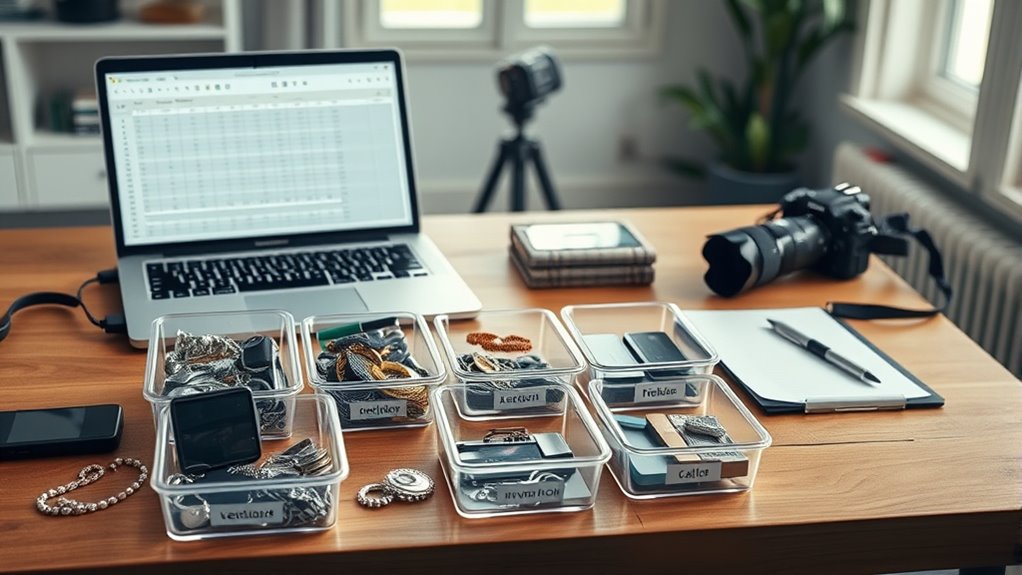

To effectively record your belongings for insurance, start by creating a detailed digital catalog. Take clear photos or videos of each item, including valuables, and note key details like serial numbers, purchase dates, and receipts. Organize your inventory by room, updating it regularly to reflect new purchases or changes. Proper documentation guarantees accurate coverage and speeds up claims. If you continue exploring, you’ll find essential tips to make your home inventory even more exhaustive.
Key Takeaways
- Take clear photos or videos of each item, focusing on high-value and sentimental belongings.
- Record detailed descriptions, serial numbers, purchase dates, and receipts for accurate documentation.
- Organize digital records securely online or on external drives for quick access during claims.
- Regularly update your inventory to include new purchases or home improvements.
- Include valuations and appraisals for high-value items to ensure proper coverage and claim accuracy.

Creating a detailed home inventory is one of the most effective ways to protect your belongings and simplify insurance claims. When you know exactly what you have, it’s easier to provide accurate information to your insurance company if something happens. To start, focus on documenting your valuables thoroughly. A valuables appraisal can help determine the true worth of high-value items like jewelry, artwork, or collectibles. Having professional appraisals ensures you’re adequately covered and can get the most accurate valuation in case of loss or theft. It’s a smart step that adds credibility to your inventory and can prevent disputes with your insurer.
Creating a home inventory with valuables appraisals ensures accurate coverage and simplifies insurance claims.
Digital cataloging is an excellent way to organize your home inventory efficiently. Instead of relying on paper lists, use your smartphone or computer to create a digital record. Take clear photos or videos of each item, especially your valuables, and store these files securely online or on an external drive. Digital catalogs make updating your inventory easier over time and allow you to access your records quickly when needed. Plus, they help you capture details like serial numbers, purchase dates, and receipts, which are invaluable during insurance claims. This approach reduces the risk of losing important information and ensures your inventory stays current. Incorporating detailed descriptions and documentation can further enhance the accuracy of your records.
As you build your home inventory, be systematic. Start with high-value or sentimental items, and move through each room methodically. Include descriptions, purchase prices, dates, and any relevant documentation like receipts or appraisals. For valuables, note their appraised value and keep a copy of the appraisal report in your digital catalog. This thorough approach will give you a detailed record that can be invaluable if you need to file a claim. Remember to update your inventory regularly, especially after purchasing new items or making significant upgrades to your home. Consistency is key to maintaining an accurate record.
Having a well-documented home inventory with valuables appraisal details and a digital catalog can save you considerable time and stress during emergencies. It provides peace of mind knowing you’re prepared and that your insurer has precise information about your belongings. When it’s time to file a claim, you’ll have everything organized and ready, which can speed up the process and increase your chances of receiving full compensation. So, invest a little time now—creating an extensive, easily accessible inventory will pay off in the long run, ensuring your home and possessions are protected when you need it most.

MyHome Lite: Home Inventory
Organize with Room and Category tags
As an affiliate, we earn on qualifying purchases.
As an affiliate, we earn on qualifying purchases.
Frequently Asked Questions
How Often Should I Update My Home Inventory List?
You should update your home inventory list at least once a year, ideally during seasonal updates. Regular documentation frequency guarantees your list stays accurate, reflecting any new purchases or changes. Whenever you buy valuable items or experience significant life events, like moving or renovations, update your inventory immediately. This proactive approach helps you maintain an exhaustive record, making insurance claims smoother and providing better protection for your belongings.
What Items Are Most Important to Include in My Inventory?
You should include valuable collectibles and essential appliances in your inventory to guarantee full coverage. Focus on high-value jewelry, artwork, electronics, and kitchen appliances like refrigerators and washers. Don’t forget sentimental items, such as heirlooms or family photos, and any items with unique features or high replacement costs. By documenting these, you protect yourself financially and make insurance claims smoother if disaster strikes.
Can I Use Photos or Videos Instead of Written Descriptions?
Think of visual documentation as a photo album that tells your home’s story. Yes, you can use photos or videos instead of written descriptions, and they often serve as powerful multimedia evidence during claims. I once used a video tour to document my entire collection, making insurance claims smoother. Visual documentation captures details better than words alone, ensuring your belongings are accurately represented when needed.
How Do I Organize My Inventory for Easy Access During Claims?
You should organize your inventory using clear storage solutions like labeled folders or digital apps. Implement labeling strategies that categorize items by room or type, making it easy to locate during claims. Keep physical copies in a safe, accessible place and back up digital records securely. Regularly update your inventory to reflect new belongings, ensuring quick access and accurate documentation when you need it most.
What Are the Best Tools or Apps for Creating a Home Inventory?
You might find that a digital inventory app like Sortly or Encircle works best, especially since they sync seamlessly with cloud storage. These tools let you photograph, categorize, and access your belongings anytime, anywhere. Coincidentally, having your inventory in the cloud means it’s always backed up and ready for quick reference during claims. Choose one that’s user-friendly and fits your needs, making your home inventory easy to update and secure.

QRganiz Smart QR Code Labels for Storage & Organization | Color-Coded Inventory Tracking Stickers with Free App | 12 Unique Scannable Labels for Moving, Home & Office | Digital Inventory System
FIND ANYTHING INSTANTLY: Stop box diving forever! QRganiz Smart QR Code stickers create a digital inventory of your…
As an affiliate, we earn on qualifying purchases.
As an affiliate, we earn on qualifying purchases.
Conclusion
Creating a detailed home inventory is like building a safety net that catches you when unexpected events occur. By documenting your belongings carefully, you guarantee that your insurance claims process becomes smoother and less stressful. Think of it as planting seeds now so they can grow into a sturdy tree of security later. Stay diligent and update your records regularly—your future self will thank you for the peace of mind it brings.

US ERROR COINS GUIDE 2026 (MINT MASTERS): The Official Price Guide to Find, Identify, and Value Rare Mint Errors in Your Pocket Change
As an affiliate, we earn on qualifying purchases.
As an affiliate, we earn on qualifying purchases.

QR Code Storage Labels – 48 Color Coded Moving & Storage Box Stickers with AI Photo Inventory, Smart Home Organization & Inventory Management System, No App Required, iOS & Android Compatible
TURN ANY BOX INTO A SEARCHABLE INVENTORY SYSTEM – Stick a label, scan with your phone, and instantly…
As an affiliate, we earn on qualifying purchases.
As an affiliate, we earn on qualifying purchases.