
To safeguard your home documents from fire, flood, or theft, create digital backups by scanning or photographing essential papers and store them securely in the cloud or on external drives kept in waterproof, fireproof containers. Maintain physical copies in a safe, easily accessible spot near exits and regularly update both digital and physical files. Developing and practicing a disaster plan ensures you can act swiftly. Keep learning about effective strategies to keep your documents safe during emergencies.
Key Takeaways
- Digitize important documents and store backups securely in the cloud or external drives, protected from fire, flood, or theft.
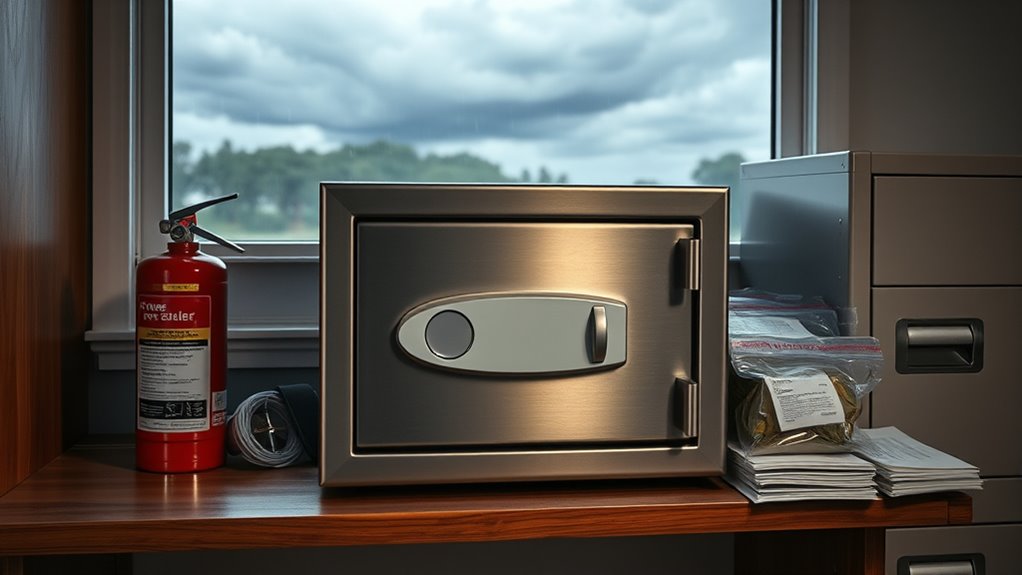
- Keep physical copies in waterproof, fireproof safes or containers, stored in accessible yet secure locations.
- Develop a disaster plan that includes specific procedures for protecting and retrieving documents during emergencies.
- Include copies of essential documents in your emergency kit, stored in waterproof, portable containers for quick access.
- Regularly update, check, and practice your disaster preparedness plan and document storage to ensure readiness.
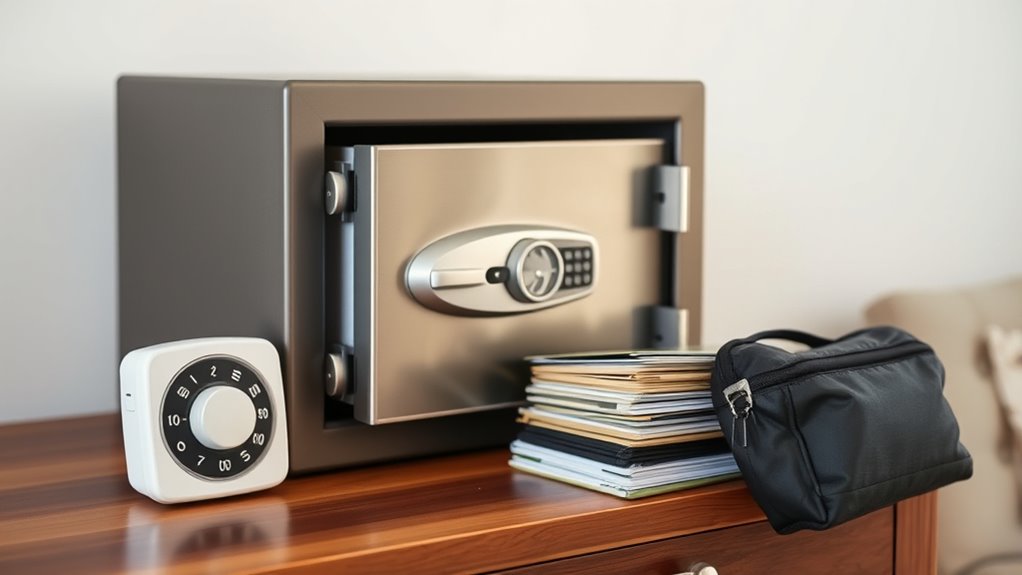
Disasters can strike unexpectedly, and when they do, your important home documents are at risk of being lost or damaged. Whether it’s a fire, flood, or theft, having a solid plan in place can make all the difference. One of the most effective steps you can take is creating digital backups of your essential documents. Instead of relying solely on physical copies stored at home, scan or photograph essential papers like birth certificates, passports, insurance policies, and bank information. Store these digital backups securely in the cloud or on an external drive kept in a safe, waterproof, and fireproof location. This way, even if your physical documents are destroyed, you’ll still have access to critical information. Maintaining mental clarity about your disaster plan ensures you can act swiftly and efficiently during emergencies.
Another key part of your disaster preparedness involves assembling an emergency kit. Your kit should include copies of your important documents, both physical and digital, along with other essentials like first-aid supplies, bottled water, non-perishable food, flashlights, batteries, and any necessary medications. Keep a copy of your emergency kit in an easily accessible location, ideally near an exit or in a designated safe spot. Consider also having a portable, waterproof container for your physical documents that can be quickly grabbed during an evacuation. Regularly check and update your emergency kit to ensure all supplies and documents are current and in working order.
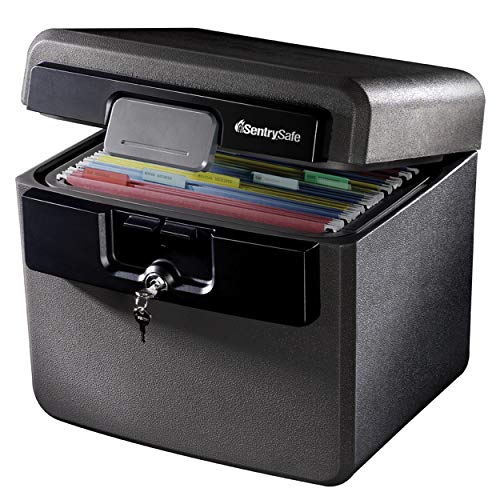
SentrySafe Black Fireproof and Waterproof Safe, File Folder and Document Box with Key Lock, Ex. 14.3 x 15.5 x 13.5 inches, HD4100
FIREPROOF: Safe is UL Classified to endure 1/2 hour at 1550°F and keep interior temperatures safe for irreplaceable…
As an affiliate, we earn on qualifying purchases.
As an affiliate, we earn on qualifying purchases.
Frequently Asked Questions
How Often Should I Review My Document Disaster Plan?
You should review your document disaster plan at least once a year to stay prepared. During your review, check your emergency kit and update any expired supplies. Also, test and refine your evacuation plan to guarantee everyone knows what to do. Regular reviews help you spot potential issues early, so you can keep your home documents safe and accessible in case of a disaster.
What Digital Backups Should I Consider Alongside Physical Copies?
You should consider using cloud storage for your digital backups, as it offers easy access and automatic updates. Make certain to choose reputable services with strong encryption methods to protect your sensitive information. Additionally, keep encrypted copies on external drives or USBs stored securely off-site. Regularly updating and testing these backups ensures you can quickly recover your documents during emergencies, keeping your information safe and accessible.
How Can I Securely Store Sensitive Documents During a Disaster?
You should store sensitive documents securely by encrypting digital copies and keeping them in a password-protected file or cloud service. For physical documents, place them in a fireproof and waterproof safe or a safe deposit box at your bank. This way, your documents stay protected during a disaster, ensuring only you can access them. Always remember to update your encryption and safe deposit access information regularly.
Are There Recommended Insurance Policies for Document Loss?
You might think your standard insurance covers your precious documents, but often, it doesn’t. To truly protect yourself, look into specialized policies that include document loss coverage. Policy recommendations like riders or add-ons for valuable paperwork guarantee you’re covered during disasters. Don’t wait until it’s too late—verify your insurance coverage now, so your important documents aren’t just paper casualties of fire, flood, or theft.
What Community Resources Assist With Document Recovery After Disasters?
You can turn to community centers and government programs for help with document recovery after disasters. Local community centers often offer resources or guidance for replacing lost records, while government programs like FEMA or state agencies provide assistance, grants, or support services. Reach out early, gather necessary documentation, and stay informed about available aid to speed up your recovery process. These resources are there to help you rebuild and restore your essential documents.

Upgraded Two Pockets Fireproof Document Bag (2000℉), andyer 15”x 11”Waterproof Fireproof Money Bag for Cash with Zipper, Important Document Storage Organizer for Valuables, Legal Documents Safe
100% Fireproof & Water Resistant: This UL certified upgraded fireproof bag is constructed primarily of fire-resistant, heat-insulating functional…
As an affiliate, we earn on qualifying purchases.
As an affiliate, we earn on qualifying purchases.
Conclusion
Remember, a stitch in time saves nine. By taking simple steps to protect your home documents from fire, flood, and theft, you guarantee your essential papers are safe no matter what disaster strikes. Store copies securely, use waterproof and fireproof containers, and keep digital backups. Preparing today means peace of mind tomorrow. Don’t wait for a crisis—be proactive and safeguard your valuable documents now. Your future self will thank you.

Epson WorkForce ES-50 Portable Sheet-Fed Document Scanner for PC and Mac
Fastest and lightest mobile single sheet fed document scanner in its class(1) small, portable scanner ideal for easy,…
As an affiliate, we earn on qualifying purchases.
As an affiliate, we earn on qualifying purchases.

Emergency Medical Information Kit for Fridge – “File of Life” Style Magnet Packet with In Case of Emergency Forms, Medication List & Contact Cards – For Seniors, Elderly, EMTs & First Responders
✅ EMERGENCY INFORMATION WHERE EMTs EXPECT IT Place this Emergency Medical Information Kit on your refrigerator—the first place…
As an affiliate, we earn on qualifying purchases.
As an affiliate, we earn on qualifying purchases.