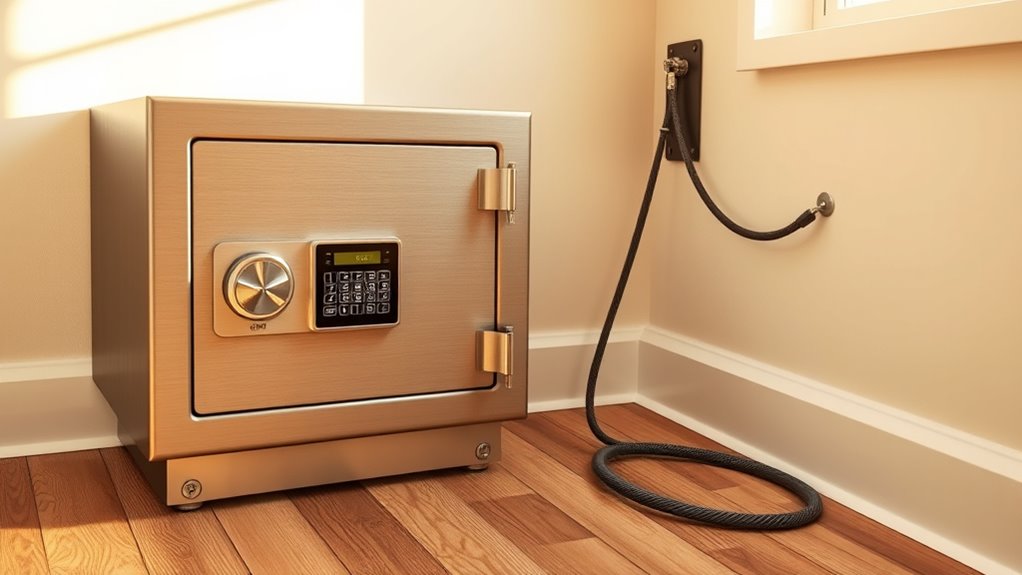

To prevent theft and tipping, you should securely anchor your home safe to a sturdy surface like the floor or wall. Use heavy-duty anchors or bolts, especially if the safe has pre-drilled holes, to make theft more difficult and keep it stable during earthquakes or accidental bumps. Proper placement and installation are vital for safety and security. Keep watching to discover effective tips that guarantee your safe stays protected at all times.
Key Takeaways
- Properly anchoring safes prevents tipping during earthquakes or accidental bumps, ensuring safety and stability.
- Securing safes to the floor or wall deters burglars by making theft more difficult.
- Use appropriate hardware like heavy-duty anchors or lag bolts for effective installation.
- Choosing discreet, stable locations away from heat and moisture enhances safety and security.
- Anchoring safeguards valuables from damage and helps the safe withstand fire, water, or forced entry.

Have you ever considered how vulnerable your home safe might be if it’s not properly anchored? Many homeowners overlook this critical step, thinking that the safe’s weight alone will keep it secure. But in reality, an unanchored safe can be a tempting target for burglars or may tip over during an earthquake or accidental bump, risking damage to your valuables. Proper anchoring is essential to guarantee your safe stays in place and provides the protection you need. When it comes to fire safety, a secure safe placement becomes even more important. If your safe isn’t anchored, it might shift or fall, potentially exposing its contents to fire or water damage. Securing your safe against these hazards means choosing the right spot—preferably a discreet, stable area away from heat sources and moisture—and then anchoring it firmly.
The first step is to identify a safe placement that minimizes risks. You want a location that’s not easily discovered by intruders, yet accessible enough for regular use. A closet corner, behind furniture, or a hidden spot in a basement works well. Avoid placing the safe near heat vents, radiators, or in damp areas, as these can compromise its integrity over time. Once you’ve chosen the ideal spot, consider the type of anchoring system suitable for your safe’s design. Most safes come with pre-drilled holes for bolts or anchors, making installation straightforward. Use heavy-duty anchors, like concrete anchors or lag bolts, to secure the safe to the floor or wall. This prevents it from tipping over if someone attempts to move or break into it, and also guards against accidental tipping during natural events like earthquakes.
Securing your safe isn’t just about theft prevention; it’s a key part of fire safety. In the event of a fire, an unanchored safe could be knocked over or displaced, risking damage to your most important documents and valuables. Properly anchored safes stay put, ensuring your contents remain protected from both theft and fire hazards. Additionally, incorporating farmhouse-style decor elements like natural materials and vintage fixtures can create a discreet hiding spot that blends seamlessly with your interior. Remember, the goal is to make it as difficult as possible for intruders to access your valuables and to prevent accidents that could damage them. When you invest in anchoring your safe, you’re taking a proactive step towards holistic home security and safety. It’s a simple, effective measure that provides peace of mind, knowing your valuables are both secure from theft and protected from unforeseen disasters.

Liberty Safe – Heavy Duty Concrete Gun Safe Anchoring Kit Including Drill Bit
ANCHORED DOWN – Keep your safe solid and secure to Concrete & Wood flooring
As an affiliate, we earn on qualifying purchases.
As an affiliate, we earn on qualifying purchases.
Frequently Asked Questions
What Tools Are Needed to Anchor a Safe Securely?
To anchor your safe securely, you’ll need a drill, a wrench, and appropriate hardware. Use bolt securing tools like a wrench to tighten the bolts once you’ve drilled holes into the safe and the mounting surface. Depending on the wall type, you might also need drywall anchors to guarantee a strong hold, especially in drywall. Make sure to select the right size and type of anchors for a safe, secure installation.
How Often Should I Check the Anchoring Points?
Think of your safe like a vintage radio needing regular tuning. You should check the anchoring points at least once every six months to guarantee safe maintenance. This anchoring frequency helps prevent theft and tipping by catching loose bolts or worn anchors early. Regular inspections keep your safe secure and in top shape, giving you peace of mind that it’s always properly anchored and protected.
Can Anchoring Be Done on Any Type of Flooring?
You can anchor your safe on most types of flooring, but flooring compatibility varies. For concrete or cement, you’ll typically use masonry anchors or bolts, while wood floors may need different anchoring methods like lag screws or brackets. Always check the manufacturer’s guidelines and select the appropriate anchoring methods for your specific flooring to guarantee your safe remains secure and stable.
What Are Signs of a Poorly Anchored Safe?
Your safe’s like a fragile ship in a storm—if it’s poorly anchored, it’ll sway or tip with the slightest push. Signs include wobbly movement, visible looseness, or a safe that shifts under a gentle nudge. If the safe isn’t heavy enough or the anchoring strength isn’t secure, it’s vulnerable. Trust your instincts—without proper anchoring, your valuables remain at risk, vulnerable to theft and accidental tipping.
Is Professional Installation Recommended for Anchoring Safes?
Yes, professional installation is highly recommended for anchoring safes. Skilled technicians ensure the safe is anchored correctly, which improves anchoring safety and minimizes the risk of theft or tipping. They understand the appropriate materials and techniques needed for your specific safe and surface type. By choosing professional installation, you guarantee your safe is securely anchored, providing peace of mind and maximum protection for your valuables.
Liberty Safe – Heavy Duty Concrete Gun Safe Anchoring Kit Including Drill Bit
ANCHORED DOWN – Keep your safe solid and secure to Concrete & Wood flooring
As an affiliate, we earn on qualifying purchases.
As an affiliate, we earn on qualifying purchases.
Conclusion
Anchoring your home safe isn’t just about security—it’s about peace of mind. Did you know that unanchored safes are over 50% more likely to be stolen or tipped over? By taking a few simple steps to secure your safe properly, you drastically reduce the risk of theft and accidents. Don’t wait until it’s too late—anchor your safe today and protect what matters most. Your safety and valuables depend on it.

VEVOR 25.59" High Concealed Wall Safe, Keypad Access 3-Level Security Safe, Includes 3 Adjustable Shelves & 6 Hooks, Made of Durable Q235 Steel, Features LED Lighting & Alert System for Valuables
VEVOR Wall Safe offers comprehensive protection with its high-quality alloy steel construction and 2.35 mm thick steel door….
As an affiliate, we earn on qualifying purchases.
As an affiliate, we earn on qualifying purchases.

Protex Safe Electronic Keypad Wall Safe (PWS-1814E), Burglary Resistant wall safe, digital electronic locking system, velvet interior, automatic door opening, 2 Removable shelves
Burglary resistant wall safe with digital Electronic locking system
As an affiliate, we earn on qualifying purchases.
As an affiliate, we earn on qualifying purchases.