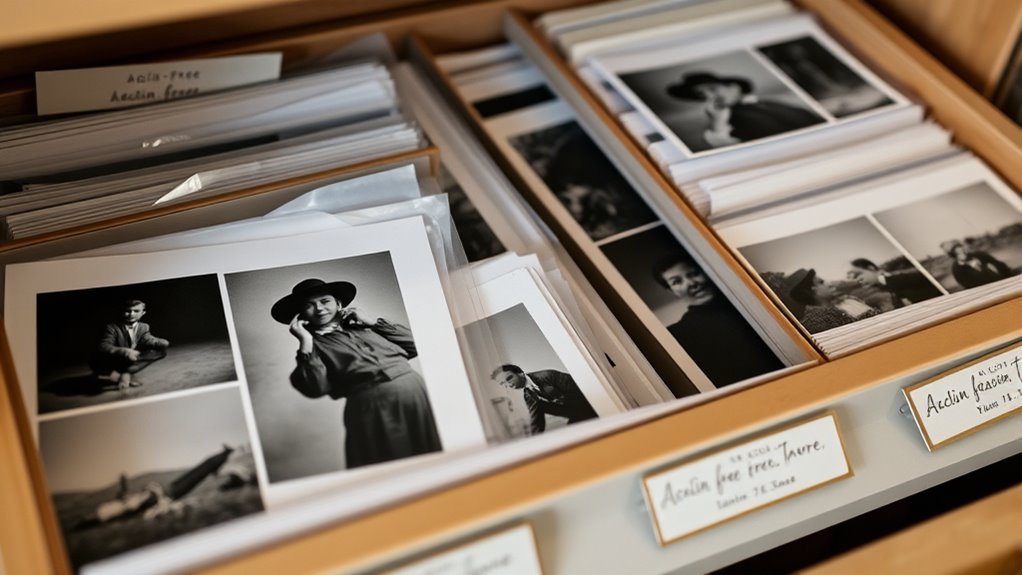

To protect your sentimental photos, use acid-free, lignin-free storage materials like albums, boxes, and interleaving paper. Store them flat in a climate-controlled environment with steady temperatures around 65-70°F and humidity levels of 30-40%. Handle photos carefully with clean hands or gloves, and inspect them regularly for signs of damage. Proper storage and materials prevent deterioration and preserve your memories longer. Keep exploring to learn effective techniques for long-term preservation.

Prime made for students and young adults
- Fast, free delivery for dorm and study essentials
- Prime Video and Amazon Music included
- Member-only deals
Key Takeaways
- Store photos in acid-free, lignin-free albums or boxes to prevent deterioration.
- Use acid-free paper as interleaving material to protect photos from sticking and chemical damage.
- Maintain a stable environment with 65-70°F temperature and 30-40% humidity for optimal preservation.
- Handle photos with clean hands or cotton gloves to avoid oils and dirt causing damage.
- Regularly inspect and promptly address signs of deterioration like discoloration or mold.
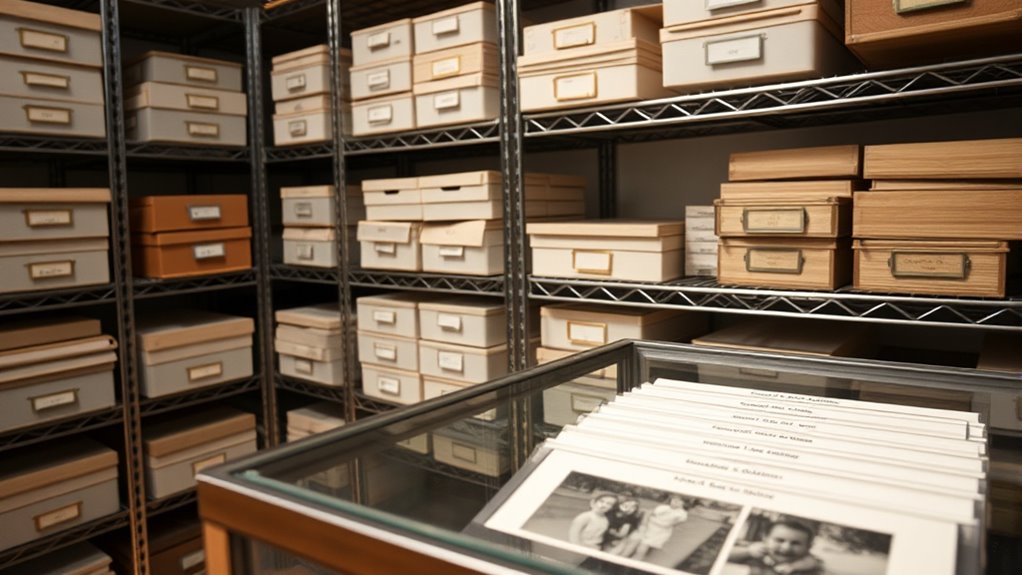
Proper storage of archival materials is vital to preserving their integrity over time. When it comes to protecting your sentimental photos, using the right materials and environment can make all the difference. One of the most effective ways to safeguard your precious images is by placing them on acid free paper. Acid free paper has a neutral pH that prevents the deterioration caused by acidic materials, which can cause photos to become brittle, discolored, or develop stains over the years. By using acid free paper as a backing or interleaving layer, you create a buffer that shields your photos from harmful acids present in everyday paper or storage containers.
Using acid free paper protects photos from deterioration and preserves their beauty over time.
In addition to choosing acid free paper, you need to focus on the environment where your photos are stored. A climate controlled environment is vital for maintaining the long-term health of your sentimental collection. Fluctuations in temperature and humidity accelerate deterioration, causing photos to warp, stick, or develop mold. Ideally, you want a space where temperature is consistent—around 65 to 70 degrees Fahrenheit—and humidity levels stay steady at around 30 to 40 percent. Avoid places prone to extreme temperature swings, such as attics, basements, or garages, where conditions can quickly become damaging. Kia Tuning can be a helpful reminder to keep your storage environment optimized for preservation.
Proper storage also involves selecting the right containers. Acid-free, lignin-free photo albums or boxes are best because they prevent chemical reactions that can harm your photos over time. When storing multiple photos, interleave each one with acid free paper to prevent them from sticking together or scratching each other. Keep your photos flat and avoid folding or bending them, which can cause permanent creases. If you’re storing negatives or slides, use archival-quality sleeves made from inert materials to ensure they stay in pristine condition.
Handling your photos carefully is equally important. Always wash your hands before touching them, or wear cotton gloves to avoid transferring oils or dirt. When removing or viewing your photos, do so gently to prevent tears or other damage. Regularly inspect your collection to catch any early signs of deterioration, such as discoloration or mold, so you can take immediate action to address issues.
As an affiliate, we earn on qualifying purchases.
Frequently Asked Questions
How Often Should I Inspect My Stored Photos for Damage?
You should inspect your stored photos every 6 to 12 months to catch any signs of photo deterioration early. Regular inspections help you identify issues like fading, mold, or warping caused by the storage environment. By monitoring your photos often, you can take prompt steps to improve storage conditions, such as adjusting humidity or temperature, ensuring your sentimental memories stay preserved and in good condition for years to come.
Can Digital Backups Replace Physical Archival Methods Effectively?
Digital backups can serve as a safety net, but they shouldn’t substitute physical backups entirely. Think of digital formats as a mirror reflecting your memories, while physical backups are the sturdy vault protecting them from time’s wear. You need both to ensure long-term preservation. Regularly update digital copies and keep physical backups in a cool, dry place. This layered approach keeps your sentimental photos safe from loss or damage.
Are There Eco-Friendly Options for Archival Storage Materials?
Yes, eco-friendly options exist for archival storage materials. You can choose biodegradable storage solutions that break down naturally over time, reducing environmental impact. Additionally, look for storage containers made from recycled materials, which help conserve resources and lessen waste. These options keep your photos safe while supporting sustainability. Switching to biodegradable and recycled materials guarantees your sentimental photos are preserved responsibly for future generations.
What Are Common Mistakes to Avoid in Photo Preservation?
You should avoid neglecting proper photo labeling and choosing low-quality storage containers. Mislabeling can cause confusion, while cheap containers may damage photos over time. Always use acid-free materials and clearly label each photo with relevant details. Don’t store photos in areas prone to temperature fluctuations or humidity, which accelerate deterioration. By paying attention to these details, you’ll preserve your memories beautifully and prevent common preservation mistakes.
How Does Climate Control Impact Long-Term Photo Storage?
Climate control is vital for long-term photo storage. You should focus on humidity control and maintaining temperature stability, as fluctuations can cause photos to warp, fade, or develop mold. Keep your photos in a cool, dry environment with consistent temperature levels. Avoid attics or basements prone to extreme changes. Proper climate control guarantees your sentimental photos stay vibrant and intact for years to come, preserving your memories effectively.
archival quality photo storage boxes
As an affiliate, we earn on qualifying purchases.
As an affiliate, we earn on qualifying purchases.
Conclusion
By choosing the right archival materials and storing your photos carefully, you’re creating a sanctuary for your precious memories. Imagine each image safely nestled in acid-free folders, protected from fading sunlight and fluctuating temperatures. With every thoughtful step, you’re safeguarding your stories—frozen in time—so future generations can marvel at your life’s beautiful moments. Your dedication transforms fragile snapshots into enduring treasures, ensuring they’ll shine brightly for years to come, like stars in a well-preserved night sky.
acid free interleaving paper for photos
As an affiliate, we earn on qualifying purchases.
As an affiliate, we earn on qualifying purchases.
climate controlled photo storage container
As an affiliate, we earn on qualifying purchases.
As an affiliate, we earn on qualifying purchases.
Halloween Picks
halloween
As an affiliate, we earn on qualifying purchases.