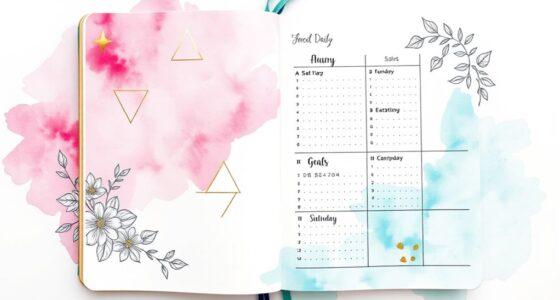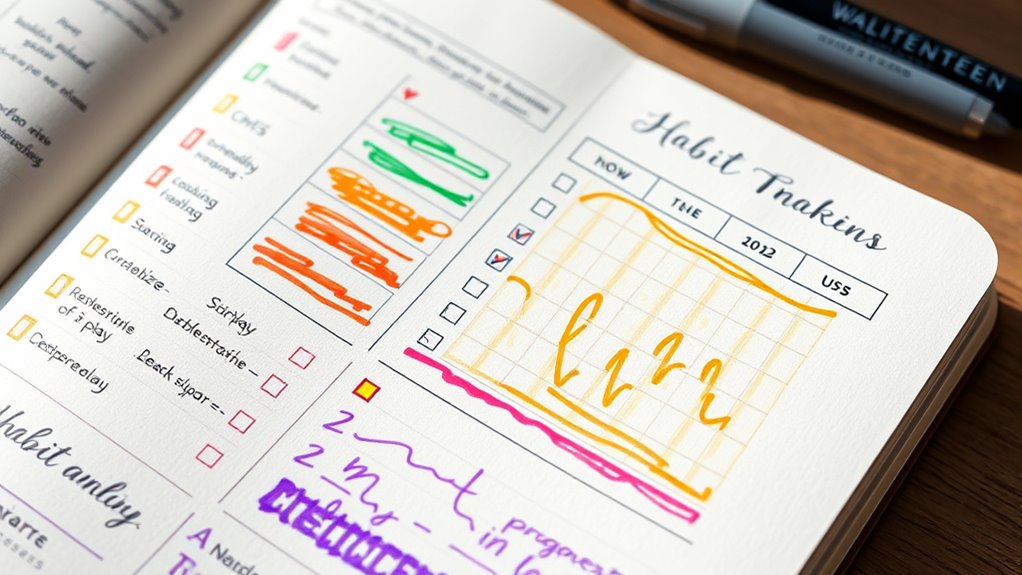

Using a habit tracker in your bullet journal is a great way to monitor your progress and stay motivated. You can customize your trackers with colors, doodles, or quotes to make the process enjoyable. Crossing off or coloring in boxes creates a satisfying sense of achievement. Whether you prefer simple layouts or detailed designs, keeping consistent with your tracker can boost your chances of forming new habits. Keep exploring to uncover tips that make tracking even easier.
Key Takeaways
- Bullet journals offer a customizable, tactile way to track habits, fostering mindfulness and personal engagement.
- Using stickers, doodles, or quotes can make habit tracking in a bujo more motivating and enjoyable.
- Regularly crossing off or coloring in habit boxes reinforces positive behavior and visual progress.
- Incorporating reflective sections in your bujo helps analyze patterns and adjust habits effectively.
- Combining digital reminders with your bujo can enhance consistency and accountability in habit monitoring.
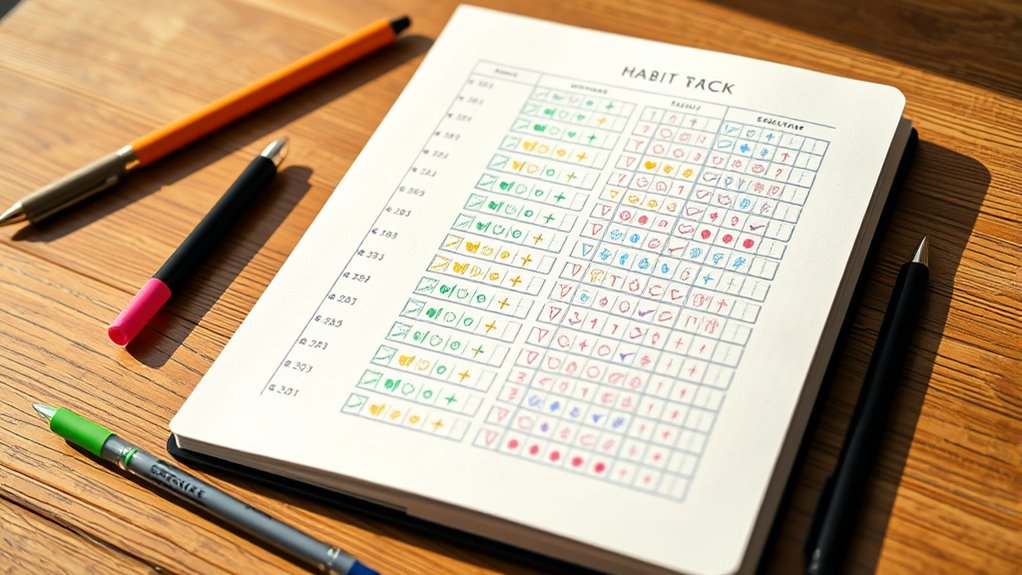
Habit trackers are simple tools that can substantially boost your ability to develop and maintain good habits. They serve as visual reminders of your progress, helping you stay motivated and accountable. When choosing a habit tracker, you may consider different motivational strategies to keep yourself engaged. Some people find that tracking habits in a digital format offers convenience and instant updates, while others prefer paper trackers for their tactile engagement. The digital vs. paper debate ultimately depends on your personal preferences and what encourages you to stick with your habits consistently.
Digital habit trackers, such as app-based tools, provide real-time notifications and easy editing options. They often come with features like streak counters, reminders, and data analysis, which can enhance your motivation by providing immediate feedback. If you respond well to tech-driven motivation, a digital tracker can make your progress feel more tangible and accessible wherever you are. On the other hand, paper habit trackers, like a bullet journal (bujo), offer a tangible, hands-on experience that many find more satisfying. Writing down your habits each day can create a sense of ritual, making the act of tracking itself a motivational strategy. The physical act of crossing off or coloring in a box can trigger a sense of achievement, reinforcing positive behavior.
Digital trackers offer instant feedback and customization, while paper journals provide a satisfying, hands-on ritual that boosts motivation.
When it comes to motivational strategies, consistency is key. Whether you opt for digital or paper, the primary goal is to make tracking habits an effortless part of your routine. Digital trackers often come with customizable features that allow you to set specific goals and alerts, which can serve as regular prompts to keep you on track. Conversely, a paper bujo allows for more creative expression, which can boost your motivation through personalization. You might decorate your habit tracker with stickers, doodles, or inspiring quotes, turning it into an enjoyable daily ritual. Additionally, understanding the influence of technology on artistic expression and creativity can inspire you to incorporate innovative elements into your tracking system.
Both formats have their advantages, but the best choice is the one that feels most natural to you. If you thrive on technological convenience, a digital app might be your best bet. If you prefer a mindful, tactile approach, a paper tracker like a bujo can be more motivating. Whichever method you choose, remember that the goal is to create a system that encourages consistency and makes it easier to see your progress. By integrating these motivational strategies into your habit-tracking routine, you’ll find it easier to stay committed, celebrate your achievements, and ultimately build lasting habits that improve your daily life.
Top picks for "habit tracker monitor"
Open Amazon search results for this keyword.
As an affiliate, we earn on qualifying purchases.
Frequently Asked Questions
How Do I Stay Motivated to Use My Habit Tracker Daily?
To stay motivated to use your habit tracker daily, focus on staying consistent and celebrating small wins. When setbacks occur, don’t get discouraged; instead, view them as opportunities to learn and grow. Keep your tracker visible and set realistic goals to maintain momentum. Reminding yourself of your progress and the benefits of habit tracking helps you overcome setbacks and stay committed to your routine.
Can Habit Trackers Help Improve Mental Health?
Yes, habit trackers can improve your mental health by promoting stress reduction and emotional awareness. When you track positive habits, you gain clarity on your emotions and routines, helping you identify stress triggers. This awareness allows you to make mindful changes, reducing anxiety and improving overall well-being. Consistently monitoring your progress makes you more attuned to your mental state, empowering you to foster healthier habits and better manage stress.
What Are Creative Ways to Customize My Habit Tracker?
Imagine your habit tracker as a vibrant garden, bursting with color and life. You can customize it with bright color schemes that evoke energy or calmness, and add sticker embellishments like stars or fruits to make tracking fun. Use doodles or washi tape to create borders, turning each page into a visual delight. These creative touches make your habit tracker a personal, inspiring space that keeps you motivated daily.
How Do I Track Multiple Habits Effectively?
You can track multiple habits effectively by using habit stacking, which links new habits to existing ones for easier integration. Additionally, involve accountability partners to keep you motivated and provide regular check-ins. Use color-coding or symbols to distinguish habits at a glance, and review your progress weekly. This combination helps you stay consistent, motivated, and organized as you work toward multiple goals simultaneously.
Should I Review My Progress Weekly or Monthly?
You should review your progress weekly rather than monthly for more effective habit reflection and progress assessment. Weekly reviews let you catch setbacks early, celebrate small wins, and adjust your approach promptly. This consistent check-in keeps you motivated and aware of your habits’ patterns. By comparing your weekly progress, you stay accountable and motivated, making it easier to stay on track and build lasting habits.
Conclusion
Think of your habit tracker as the compass guiding your journey. Each checkmark is a step forward, a sign that you’re steering closer to your goals. When you stay consistent, your habits become the steady sails propelling you through life’s waves. Remember, progress might be slow at times, but every small victory adds up. Keep tracking, stay committed, and watch your habits steer you toward success like a skilled captain charting a course.