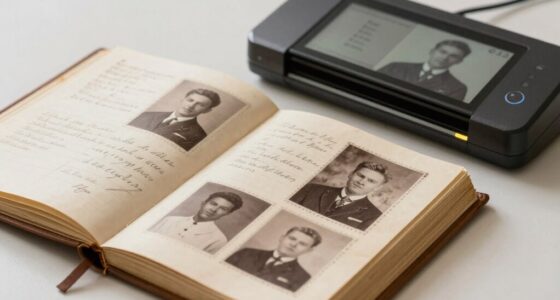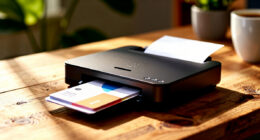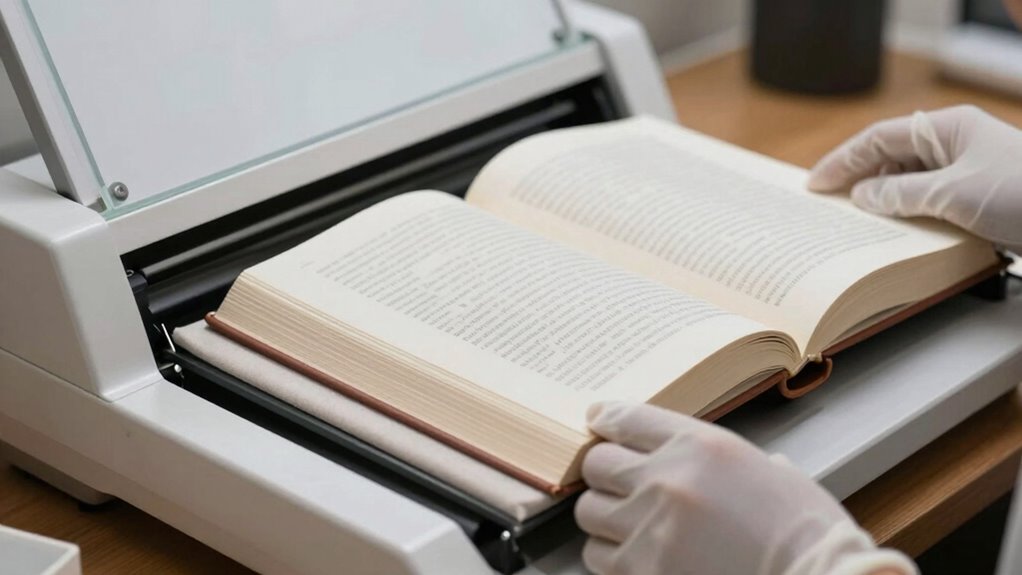
To scan fragile books without damaging the spine, handle books gently, supporting the entire spine during page turns and using specialized equipment like book cradles or V-shaped stands. Use soft tools for cleaning, avoid force, and turn pages carefully from edges. Keep equipment clean, adjust lighting, and back up digital files regularly. Following these careful steps guarantees your books stay in good shape—continue exploring for detailed techniques and tips for a safe, effective workflow.
Key Takeaways
- Support the entire book with a sturdy, padded cradle or V-shaped stand to prevent stress on the spine during scanning.
- Turn pages slowly from the edges or corners, avoiding force or creasing that could damage the binding.
- Use gentle, even pressure on the pages and support the spine with appropriate tools to minimize stress.
- Employ non-invasive supports like soft cushions or adjustable supports to keep pages open without forcing.
- Handle books with clean hands, support the spine during turning, and avoid excessive force to preserve structural integrity.

PUERSI Open Display Stand, Wooden Large Book Holder, Coffee Table Stand, Wood Easel for Magazine, Art, Cook Book, Bible, Quran – Black
ELEGANT BOOK STAND – The unique crossover structure, light wood grain, and solid black color give this book…
As an affiliate, we earn on qualifying purchases.
As an affiliate, we earn on qualifying purchases.
Why Safe Book Scanning Matters for Fragile Books
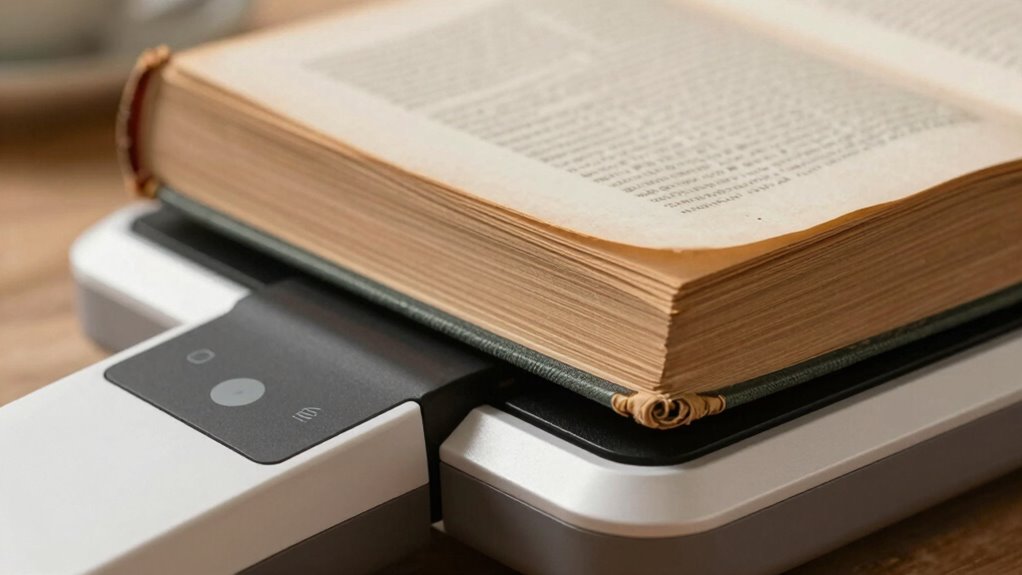
When handling fragile books, safe scanning isn’t just a precaution—it’s essential. If you ignore proper techniques, you risk damaging the binding, worsening deterioration, or losing valuable content. Proper handling helps preserve the book’s original condition, especially when considering binding restoration needs. Using gentle methods prevents additional strain on fragile spines and pages. Additionally, after scanning, storing the book in archival storage ensures long-term protection, reducing exposure to light, humidity, and pollutants that accelerate decay. Safe scanning practices protect your collection’s integrity, allowing you to digitize without compromising its physical state. Ultimately, taking care during the process extends the lifespan of your books and maintains their historical value for future generations. Furthermore, understanding color accuracy can enhance the quality of your scanned images, ensuring they reflect the true colors of the original material. Employing effective management techniques during this process can also streamline workflows, making it easier to maintain the integrity of your collection. Moreover, utilizing digital content formats can help in efficiently organizing and presenting your scanned materials for better accessibility. Additionally, incorporating eco-friendly practices in your workflow minimizes environmental impact while preserving your books.

Acrylic Desktop Book Stand, Clear Angled Book Holder Display for Cookbooks, Magazines & Art Books, 12×7×5 in Slim Transparent Reading Stand for Desk & Coffee Table
Stable Cross Structure Design:Angled cross-base structure provides balanced support to keep books standing upright and steady on your…
As an affiliate, we earn on qualifying purchases.
As an affiliate, we earn on qualifying purchases.
How to Prepare Your Old Books for Digitization
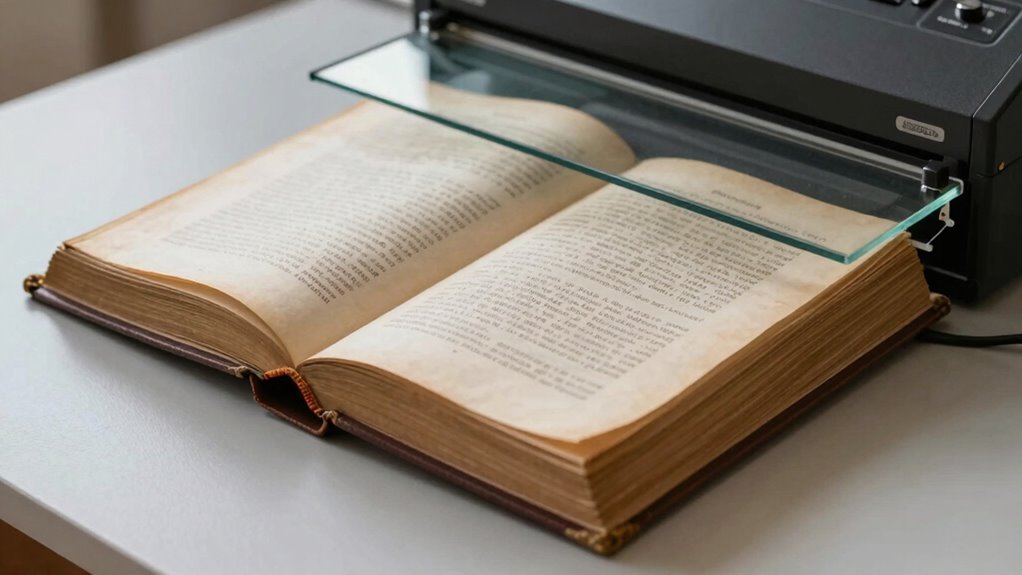
Before digitizing your old books, handle them gently to avoid further damage. Make certain to clean the pages and cover to remove dust and dirt, which can interfere with scanning quality. Proper preparation helps protect fragile materials and ensures clearer digital copies. Additionally, consider creating a bug out bag for essential tools that may assist in preserving your books during the scanning process.
Handle Books Carefully
Handling old books carefully is essential to prevent damage during the digitization process. Support the book’s spine and avoid forcing it open too wide, which can harm the binding. Use clean hands or gloves to minimize dirt and oils that can degrade paper over time. Proper handling preserves both the book binding and paper integrity. To emphasize key points:
| Tip | Why it Matters | How to Do It |
|---|---|---|
| Support the spine | Prevents spine stress | Use a book cradle or hands |
| Handle gently | Avoid tearing or bending | Turn pages slowly and carefully |
| Keep clean hands | Protects paper from oils and dirt | Wash hands before handling |
| Use proper tools | Reduces direct contact | Tweezers or book supports |
Following these precautions safeguards your old books’ longevity.
Clean Before Scanning
Cleaning your old books prior to scanning helps guarantee high-quality digital copies and protects the materials from further deterioration. Start with gentle book cleaning, using a soft brush or a dry cloth to remove dust and dirt from the cover and pages. Avoid using liquids that could damage the paper. Pay special attention to the spine; if it’s fragile or cracked, reinforce it with archival tape or a similar method to prevent further damage during handling. Proper spine reinforcement ensures the book remains intact during the scanning process and reduces the risk of tears. Taking these precautions preserves your books’ integrity, making the digitization process smoother and safer. Clean books not only produce clearer scans but also help extend their lifespan. Additionally, understanding nail biology can help when handling books with fragile spines, as it emphasizes the importance of gentle care to avoid further wear. Knowledge of golf heritage can also inspire patience and care during this meticulous process, ensuring each book receives the attention it deserves. Regularly engaging in simple exercises can also improve your overall dexterity and confidence when managing delicate items like old books. Furthermore, using mineral-based sunscreens can protect your skin while handling dusty books, ensuring you maintain healthy skin during the process.
archival book support cushions
As an affiliate, we earn on qualifying purchases.
As an affiliate, we earn on qualifying purchases.
Choosing the Right Equipment to Protect Your Book Spines

Choosing the right equipment is essential to guarantee your book spines remain undamaged during the scanning process. Select a high-quality book cradle or V-shaped stand that gently supports the spine and prevents unnecessary pressure. When handling fragile books, consider equipment that facilitates binding repairs or stabilizes loose pages. For best results, use tools that promote page flattening without forcing the book open, reducing stress on the spine. Avoid equipment that requires excessive force or tight clamps, as these can cause irreversible damage. Instead, opt for adjustable supports and soft materials that adapt to your book’s condition. Proper equipment ensures you can scan efficiently while preserving the integrity of your book’s spine and structure.

2 PCS Loop Turner Hook with Latch, 10.4" & 7" Stainless Steel Sewing Loop Turner Hook with Latch, Sewing Accessories and Tools, DIY Knitting Accessories, Sewing Concepts
Package Includes: two sewing loop hooks of different lengths (long+short)
As an affiliate, we earn on qualifying purchases.
As an affiliate, we earn on qualifying purchases.
Gentle Handling Techniques for Old and Fragile Books
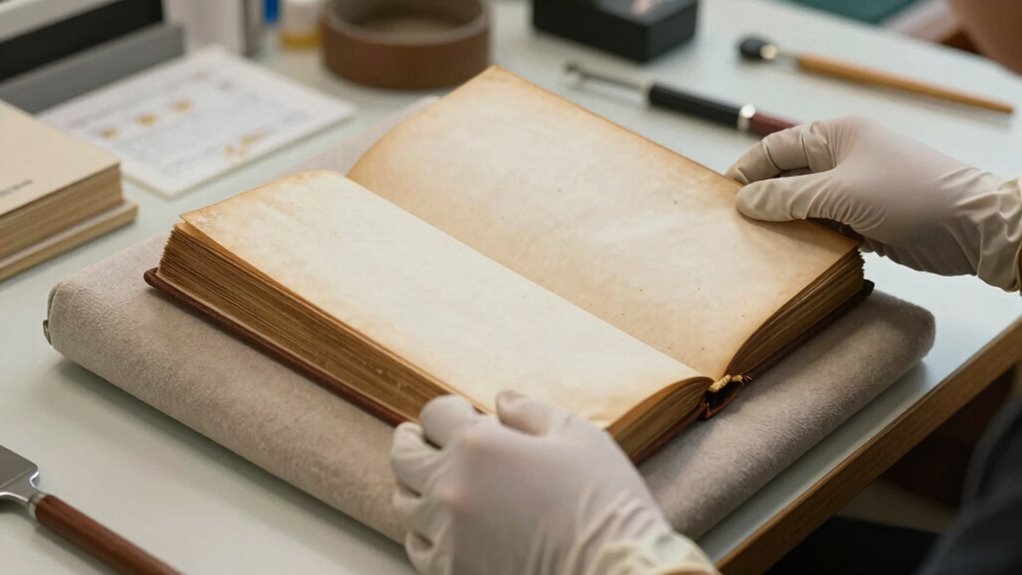
When working with old and fragile books, you need to be especially careful to prevent further damage. Handle pages gently, supporting the entire book to avoid stress on the spine. Use slow, deliberate page turning to minimize tearing or rips. When flipping pages, lift each one carefully from the corner or edge, avoiding forceful movements. Regular dust removal is essential; gently wipe pages with a soft brush or microfiber cloth to prevent dirt buildup that could weaken paper over time. Keep the book on a stable surface and avoid unnecessary handling. If a page sticks, don’t force it—moisten slightly or use a thin spatula to loosen it. These careful techniques help preserve your old book’s integrity during scanning.
A Step-by-Step Guide to Safe Book Scanning
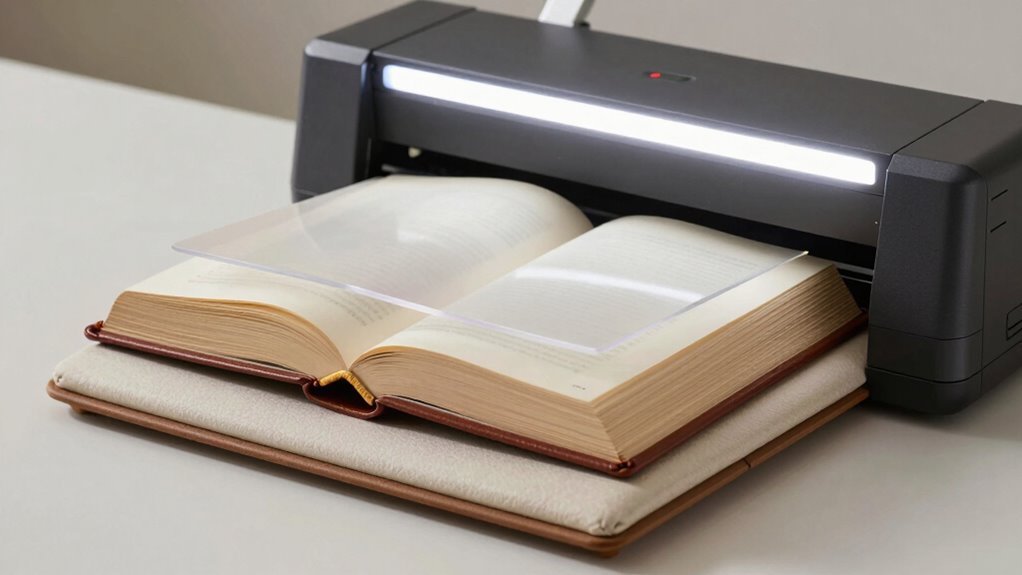
To scan books safely, you need to follow proper handling techniques that prevent stress on the spine. Using the right equipment and adjusting settings guarantees you don’t damage delicate pages or binding. Additionally, calibration techniques can help ensure that the scanning process captures accurate images of each page. Ensuring that your scanning setup includes proper support structures can further safeguard the book’s spine during the scanning process. Carefully following each scanning step helps preserve your books while capturing high-quality digital copies. Additionally, understanding career change strategies can provide insights into how to manage your time effectively during this process. Investing in quality scanning gear ensures that you achieve the best results without compromising your books. Proper DIY tools can enhance your scanning setup, making the process smoother and safer for your valuable texts.
Proper Handling Techniques
Proper handling is essential to prevent damage while scanning books. You want to minimize stress on the spine and pages, guaranteeing longevity. Use gentle binding techniques, such as supporting the spine with your hand or a soft cloth, to avoid strain. When turning pages, follow proper page turning methods: lift pages gently from the corner or edge, rather than forcing or creasing them. Keep the book flat on a surface, avoiding unnecessary bending.
To improve your technique:
- Support the binding with your hand or a padded tool during page turns
- Turn pages slowly, avoiding quick or rough movements
- Always lift pages by the corner or edge, not the center or middle
These steps help maintain the book’s integrity and ensure safe scanning. Additionally, understanding media literacy can enhance your ability to discern the quality of digital resources you might use for scanning.
Appropriate Equipment Usage
Using the right equipment is key to scanning books safely and efficiently. Select a flatbed scanner or a specialized book scanner designed for gentle handling, minimizing spine stress. Use appropriate supports, like cradles, to keep the book open without forcing it, which aids in digital preservation. Guarantee your camera or scanner has high resolution to capture details accurately, facilitating effective metadata management. Keep the equipment clean and aligned to avoid distortions or damage during scanning. Invest in adjustable lighting to prevent glare and shadows, ensuring clear images. Proper equipment not only protects your books but also streamlines the digitization process, preserving their condition for future access. Accurate digital preservation depends on the right tools, making equipment choice fundamental to a safe, efficient workflow.
Careful Scanning Procedures
Before you start scanning, carefully prepare your workspace and tools to guarantee a smooth process. Follow proper reading room etiquette by keeping noise minimal and handling books gently. When positioning your book, support the spine and avoid forcing pages open, reducing the risk of damage. To assure digital storage security, double-check your files are backed up and stored in secure locations. During scanning:
- Keep the book flat without pressing down on the spine.
- Use gentle, even pressure to avoid stress on the binding.
- Regularly clean your equipment to prevent dust and debris from affecting image quality.
Additionally, consider the importance of user privacy to ensure that any digital files you create are handled securely. These steps help protect your book’s integrity while maintaining efficiency. Staying mindful of reading room etiquette and digital security guarantees a safe, respectful, and effective scanning process.
Post-Scan Care: How to Keep Your Book in Great Shape

Sure! Here’s your revised article content with the requested modifications:
—
Once you’ve successfully scanned your book without damaging the spine, taking steps to care for it afterward is essential to guarantee it stays in great shape. Proper post-scan care includes using gentle bookbinding techniques and storing it in archival storage conditions. Additionally, be mindful of your cookie preferences to ensure a seamless experience when accessing helpful resources. Handle your book with clean hands and support the spine to prevent stress. Store it upright in a cool, dry environment, away from direct sunlight. Consider using protective covers or sleeves. Using eco-friendly disposal methods for damaged books can also help reduce waste. Use the following table to guide your care:
| Do’s | Don’ts |
|---|---|
| Use gentle handling | Force open or bend pages |
| Store upright in cool | Expose to humidity or heat |
| Support the spine | Use adhesive tapes or glue |
| Use archival storage | Stack heavily or overcrowd |
| Regularly inspect | Ignore signs of deterioration |
Implementing these measures helps preserve your book’s integrity over time.
—
Let me know if you need anything else!
Troubleshooting Common Book Scanning Challenges
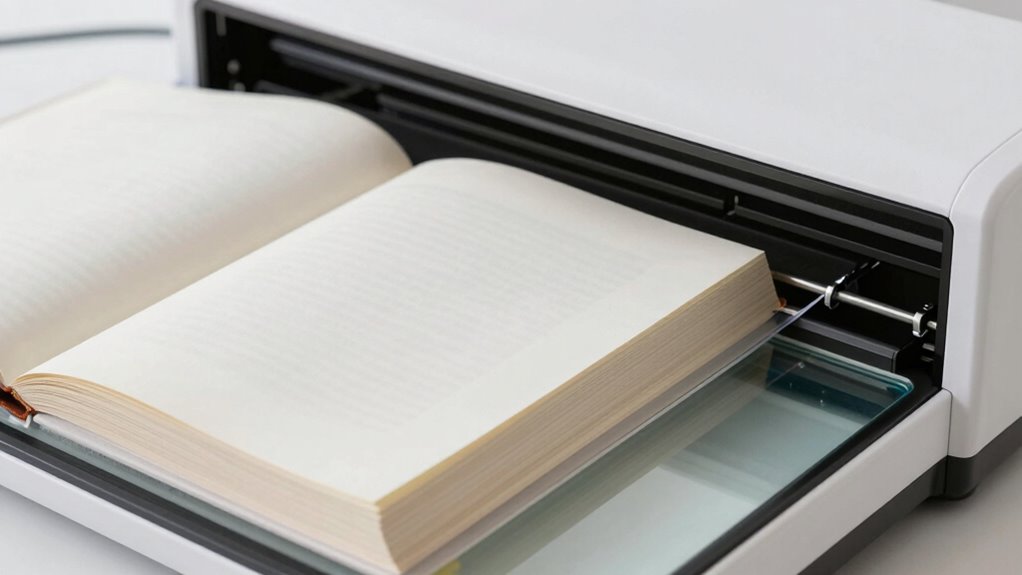
Book scanning can present several common challenges, but many of these issues are manageable with the right troubleshooting strategies. If you encounter problems like blurry images or misaligned pages, start by checking your scanner’s calibration and guaranteeing proper book positioning. Poor image quality can also be improved by adjusting lighting and focus settings. When it comes to digital storage, regularly back up your files to prevent data loss, and organize your digital library with consistent naming conventions. Effective metadata management is essential for easy retrieval and long-term access. For example, tagging files with detailed information helps in sorting and searching. Troubleshooting these issues early ensures your digitized collection remains intact and accessible, avoiding unnecessary re-scanning or data corruption. Additionally, understanding dream symbolism related to time can enhance your workflow by providing a unique perspective on the importance of preserving moments through digitization. Choosing the right equipment, including standby generators, can also help maintain optimal scanning conditions during power outages. Investing in luxury lifestyle products can further elevate your scanning setup, ensuring a seamless and efficient process.
Tips for Long-Term Preservation of Digitized Books

To guarantee your digitized books remain accessible for years to come, it’s essential to implement effective long-term preservation strategies. Focus on digital archiving by storing copies in multiple, secure locations and using widely supported file formats like TIFF or PDF/A. Regularly verify file integrity through checksum checks to detect corruption early. For physical copies, consider book restoration techniques to stabilize fragile materials and prevent further deterioration. Proper handling and storage in climate-controlled environments also extend the lifespan of original books. When digitizing, choose high-quality scans to assure clear, detailed images that support future preservation efforts. By combining digital archiving practices with careful book restoration, you secure both the digital and physical integrity of your collections, assuring they remain accessible for decades. Additionally, a well-organized digital archive can enhance the efficiency of accessing and managing your collection over time.
Frequently Asked Questions
Can I Scan Books Without Any Specialized Equipment?
Yes, you can scan books without specialized equipment by using gentle scanning techniques to safeguard the spine. Opt for a flatbed scanner or a camera setup that minimizes pressure on the binding, and avoid forcing pages open. Handle the book with care to guarantee proper book preservation. While professional tools offer better results, careful manual methods can still produce quality digital copies without damaging the book’s spine or pages.
How Long Does a Typical Book Scanning Session Take?
A typical book scanning session lasts about 30 minutes to an hour, depending on the book’s size and your scanning speed. To maintain good scanning ergonomics, take regular breaks and adjust your workspace. Keep your equipment well-maintained to prevent delays or damage. Staying mindful of your posture and equipment care helps guarantee efficient sessions without risking spine damage or fatigue, making your workflow smoother and safer.
Are There Digital Formats Best Suited for Fragile Books?
Think of digital formats as the safekeeping vaults for your fragile books. For delicate items, PDF/A is ideal because it guarantees digital preservation and maintains document integrity over time. TIFF files are also excellent, offering high quality for detailed scans. Choosing the right format boils down to file compatibility and long-term stability, so your precious pages stay preserved and accessible without risking damage during the scanning process.
What Are the Signs of Damage Caused by Improper Scanning?
You’ll notice damage like book binding issues or page tearing after improper scanning. If the spine appears cracked, loose, or warped, it’s a sign of stress from aggressive handling. Similarly, pages might tear or fray near the edges if you force them during scanning. These damages indicate that the book wasn’t supported or handled carefully, emphasizing the need for a gentle, spine-friendly workflow to preserve the book’s integrity.
Is Professional Assistance Recommended for Very Delicate Books?
Yes, for very delicate books, professional assistance is highly recommended. They use proper handling techniques to avoid further damage and employ preservation methods that protect fragile materials. Professionals understand how to carefully support the spine and pages, minimizing stress during scanning. By entrusting experts, you guarantee your precious books are preserved and scanned safely, preventing accidental tears or deterioration that could happen with untrained handling.
Conclusion
By following these safe scanning practices, you’ll protect your fragile books and guarantee their preservation for years to come. Did you know that over 60% of old books suffer damage during improper handling? With gentle techniques and the right equipment, you can avoid this statistic and keep your treasured collection intact. So, take your time, stay cautious, and enjoy the process of digitizing your books without risking their spine health.