
When parents shop for a science kit that will actually get used past the first weekend, two names dominate the shortlist: National Geographic’s Mega Science Kits (covering chemistry, crystals, volcanoes, and geology) and Snap Circuits (the snap-together electronics kits from Elenco). At first glance they occupy the same shelf — boxed STEM activities for roughly the same ages — but they are built on opposite philosophies, and choosing between them is really choosing between two kinds of kid and two kinds of learning.

Prime made for students and young adults
- Fast, free delivery for dorm and study essentials
- Prime Video and Amazon Music included
- Member-only deals
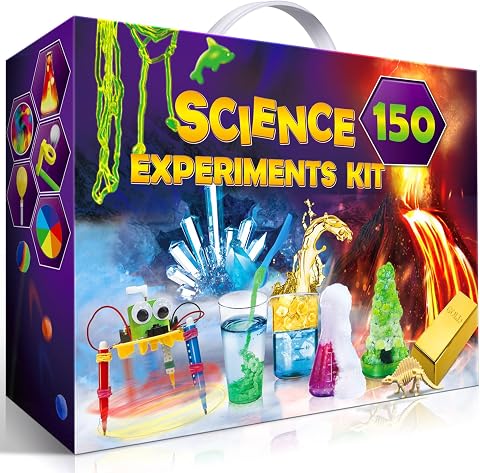
UNGLINGA 150 Experiments Science Kit for Kids – Chemistry Lab STEM Toys
- ✔ Brand: UNGLINGA
- ✔ Number of Experiments: 150
- ✔ Recommended Age: 8 years and up
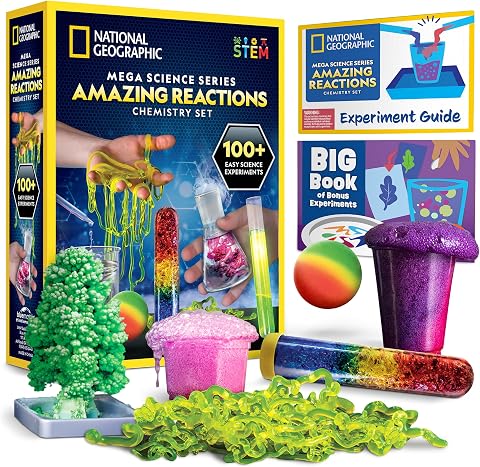
National Geographic Amazing Chemistry Set – 100+ Experiments for Kids Ages 8-12
- ✔ Brand: Blue Marble
- ✔ Sub Brand: National Geographic
- ✔ Age Range: 8 years and up

National Geographic Science Magic Kit with 100+ Experiments for Kids
- ✔ Brand: Blue Marble / National Geographic
- ✔ Age Range: 8 years and up (best for 8-12)
- ✔ Educational Objective: STEM through magic tricks
National Geographic kits are variety-first. A single Mega Science box might contain fifteen to forty-five small experiments: fizzing reactions, growing crystals, digging out gemstones, erupting a volcano. The appeal is excitement and breadth — a new activity every sitting — but the depth of any single experiment is limited, and most experiments are consumable. Once the powder is used and the crystals are grown, the kit is done.
Snap Circuits is the inverse. There is one subject — electrical circuits — but the kit is a reusable building system: color-coded snap-together components on a plastic grid, with project manuals that walk kids from a simple light circuit to alarms, flying fans, AM radios, and programmable experiments in the larger sets. Nothing is consumed. A kit bought at age eight can still be in use at twelve.
This guide compares them side by side across the criteria that actually drive the purchase decision — age fit, educational depth, replay value, supervision required, mess, durability, and cost per hour of use — so you can match the kit to your child rather than to the box art.
At a Glance
| Criteria | National Geographic Mega Science Kits | Snap Circuits Electronics Kits | Winner |
|---|---|---|---|
| Age fit | Best roughly 5–10; wide appeal but outgrown by ~11 | Best roughly 8–14; grows with the child | Depends |
| Subject breadth | Chemistry, geology, earth science — many topics in one box | One discipline only: electricity and circuits | A |
| Depth of learning | Shallow per experiment; concept introductions, not mastery | Deep and cumulative; genuine circuit literacy by the end | B |
| Replay value | Low — most experiments are one-time consumables | Excellent — hundreds of rebuildable projects, nothing consumed | B |
| Independence and supervision | Needs active adult help for most chemistry experiments | High independence after initial setup; low mess means minimal oversight | B |
| Mess and cleanup | High — fizzing, dyeing, digging, erupting | Essentially none — table-top clean | B |
| Durability and component quality | Mixed; tools are basic, some accessories feel flimsy | Very good; robust snap components and long warranty support | B |
| Cost per hour of use | Poor to fair — typically finished within a few weeks | Excellent — a $45–70 kit can last years | B |
UNGLINGA 150 Experiments Science Kit for Kids – Chemistry Lab STEM Toys
This option stands out for sheer variety: 150 experiments covering earth science, surface tension, chemistry, and physics, which means it keeps working long after a single-theme kit would be exhausted. Compared with the National Geographic chemistry set, UNGLINGA trades depth in one discipline for breadth across many, which matters if your child hasn’t yet discovered which branch of science excites them most. The illustrated step-by-step manual is a genuine strength here — it lowers the barrier for kids to work semi-independently, while the included safety goggles and lab tools give the experience an authentic scientist feel that younger kids in particular respond to.The tradeoff is that some experiments call for additional household items not in the box, and the 8-and-up age floor means younger siblings will need close adult supervision rather than independent play. Still, for a birthday or holiday gift that keeps producing new activities for months, this pick makes the most sense for families who want one kit to cover a broad introduction to STEM.
Pros:
- 150 experiments across chemistry, physics, earth science, and surface tension
- Well-illustrated step-by-step manual kids can follow with limited help
- Includes safety goggles and quality lab tools for an authentic experience
- Excellent long-term value as a gift with months of activities
Cons:
- Some experiments require additional household items
- Ages 8 and up; younger children need adult supervision
Best for: Kids ages 8 and up who want maximum variety and months of ongoing experiments across multiple science topics
Not ideal for: Parents who want every single experiment fully supplied in the box, or households with children under 8
Bottom line: The strongest all-around choice for kids who want to explore many branches of science from a single box.
“The strongest all-around choice for kids who want to explore many branches of science from a single box.”
National Geographic Amazing Chemistry Set – 100+ Experiments for Kids Ages 8-12
If your child already knows they love chemistry, this is the kit we’d point to first. What separates it from the UNGLINGA set is the inclusion of real scientific tools — test tubes, beakers, and pipettes — which turn the experience from arts-and-crafts-adjacent into something that genuinely feels like a lab bench. The 15 fully supplied core experiments include genuinely memorable moments: bubbling color-changing solutions, glowing test tubes, crystal growing, and making a bouncy ball. The bonus guide adds 85 more experiments using common household items.Be clear-eyed about the math, though: only 15 experiments come with provided materials, so the headline 100+ figure assumes a pantry stocked with vinegar, baking soda, and food coloring. Compared with the Science Magic Kit from the same brand family, this set is more educationally rigorous but less instantly gratifying. Chemical reactions also require adult supervision, so this is a kit a caregiver needs to participate in rather than hand off. For a child who is serious about science, that involvement is a feature, not a bug.
Pros:
- Over 100 experiments provide lasting educational value
- Real scientific tools: test tubes, beakers, and pipettes
- Bonus guide with 85 extra experiments using household items
- Award-winning brand with U.S.-based customer support
Cons:
- Only 15 experiments include provided materials
- Requires adult supervision for chemical reactions
Best for: Kids ages 8-12 who want authentic chemistry experiences with real lab equipment and a parent willing to supervise
Not ideal for: Families who want most experiments fully supplied in the box without extra shopping
Bottom line: The most authentic lab experience of the three, best for kids already hooked on chemistry.
“The most authentic lab experience of the three, best for kids already hooked on chemistry.”
National Geographic Science Magic Kit with 100+ Experiments for Kids
This model is better suited to the child who hasn’t yet shown independent interest in science. By framing experiments as magic tricks, it gives kids a performance-based reason to engage — and then reveals the science behind the illusion. Where the chemistry set asks a child to be curious about reactions, this kit builds the curiosity itself, which is why we rank it as the best entry point despite it being the least technically ambitious of the three.Its biggest practical advantage is completeness: everything needed for the 20 core magic experiments is in the box, making it the only pick here that works immediately on gift day with zero pantry scavenging. That compares favorably with both the UNGLINGA kit and the chemistry set, which lean on household items to varying degrees. The tradeoffs are real, however. The 20 supplied experiments run out faster than UNGLINGA’s 150 activities, and the 8-12 age window limits its appeal for older kids who may find the magic framing babyish. The bonus booklet with 85+ additional experiments softens the shelf-life problem, but those extras again require household supplies.
Pros:
- Over 100 experiments and magic tricks total
- Everything needed for the 20 core experiments is included
- Combines entertainment with genuine STEM learning
- Award-winning Toy of the Year brand
Cons:
- Only 20 magic experiments are fully supplied
- Ages 8-12 framing limits appeal for older kids
Best for: Beginners ages 8-12 who need an entertaining hook to spark interest in STEM
Not ideal for: Kids older than 12 or those already confident in their interest in science
Bottom line: The easiest kit to open and enjoy immediately, and the smartest way to hook a reluctant scientist.
“The easiest kit to open and enjoy immediately, and the smartest way to hook a reluctant scientist.”
As an Amazon Associate we earn from qualifying purchases.
Key Differences
The core tradeoff is breadth versus depth. National Geographic wins on spectacle and variety: a child gets to erupt a volcano, grow a crystal garden, and dig out real gemstones within the same week, which makes it superb for sparking initial curiosity — especially in younger children who need novelty to stay engaged. But nearly every experiment is a single-use event. Once the citric acid runs out and the crystal powder is spent, the kit’s useful life is over, and the science learned from each activity is a brief introduction rather than a skill built over time.
Snap Circuits sacrifices novelty-of-the-week for cumulative competence. A child who works through the project manual doesn’t just watch a reaction — they progressively learn what a resistor does, why a circuit needs a complete loop, how switches, capacitors, and transistors behave, and eventually how to design their own projects. The kits are non-consumable and modular, so a bored afternoon in month eight is solved by rebuilding the AM radio or inventing something new, not by buying refill packs. The tradeoff is that a child uninterested in electricity will find it narrow, and the early projects are less visually dramatic than a bubbling volcano.
The second major difference is parental involvement. National Geographic chemistry experiments typically require an adult to measure, pour, and supervise — which can be a feature (a shared activity) or a burden depending on your household. Snap Circuits is largely self-directed after a ten-minute orientation: no liquids, no heat, no mess, and the low-voltage design makes it genuinely safe for unsupervised play. For a parent buying a kit to occupy a curious child independently, this difference alone can decide the purchase.
Detailed Comparison
Age fit (major difference)
National Geographic kits generally target ages 5–10, and the sweet spot is around 6–8. Younger children love the visual payoff of fizzing and erupting experiments but need an adult to run them; children over about 10 often find the individual experiments too simple and the explanations too thin. Snap Circuits starts around age 8 and realistically extends to 13 or 14, because the larger sets (SC-300, SC-500, SC-750) include projects complex enough to challenge middle schoolers. If you are buying for a 6-year-old, National Geographic is the clear choice; for a 9-year-old or older, Snap Circuits will grow with them for years. Winner: Snap Circuits for longevity of fit, National Geographic for the youngest scientists. Because the age windows barely overlap at the edges, this is a major factor — it should be the first thing you check.
Subject breadth (National Geographic Mega Science Kits wins — major)
This is National Geographic’s clearest victory. A single Mega Science box can span chemical reactions, crystal growth, geology digs, volcanology, and sometimes weather or slime modules, exposing a child to several branches of science in one purchase. Snap Circuits covers exactly one domain — electricity and basic electronics — and covers nothing outside it. If your goal is to help a child discover which science they like, breadth genuinely matters, and no Snap Circuits set can substitute for it. The gap is major in National Geographic’s favor, with the caveat that breadth without depth fades quickly.
Depth of learning (Snap Circuits Electronics Kits wins — major)
National Geographic experiments each teach one idea — acids react with bases, saturated solutions form crystals — with a short explanatory booklet. It is real science but at introduction level, and the manual explanations are inconsistent across kits. Snap Circuits teaches cumulatively: project 1 is a lit lamp, project 60 combines switches and resistors, project 300 involves integrated circuits, and each project builds vocabulary and intuition the next one uses. A child who completes a large Snap Circuits manual has genuine, transferable circuit literacy — the kind that supports later physics classes, robotics clubs, and hobby electronics. For sustained learning, Snap Circuits wins decisively; the gap is major.
Replay value (Snap Circuits Electronics Kits wins — major)
Most National Geographic experiments are consumable: powder kits, dig blocks, and reaction chemicals get used once. Some kits include refill-friendly activities (crystal growing can be repeated with household materials), but the typical kit is substantially exhausted within two to six weeks of regular use. Snap Circuits is fully reusable — the same components build hundreds of documented projects and unlimited invented ones, and Elenco sells expansion modules that add functionality to existing base kits. A Snap Circuits set routinely stays in rotation for two or more years. This is a major gap in Snap Circuits’ favor and the single most common complaint in negative reviews of consumable science kits.
Independence and supervision (Snap Circuits Electronics Kits wins — major)
National Geographic chemistry experiments involve powders, water, sometimes heat, and small measuring steps that young children cannot reliably perform alone — plan on co-running most sessions for under-8s. Snap Circuits uses low-voltage battery power with snap-together parts that cannot be miswired dangerously; after a short orientation, most children aged 8+ work through the manual independently. If you want a shared parent-child activity, National Geographic’s supervision requirement becomes a feature. If you need an independent-play product, Snap Circuits wins outright. Practical difference: major.
Mess and cleanup (Snap Circuits Electronics Kits wins — moderate)
National Geographic kits range from tidy (gemstone digs, which still scatter plaster dust) to genuinely messy (volcanoes, fizzing towers, dye-based crystal gardens). Expect newspaper on the table and a sink trip after most sessions. Snap Circuits produces essentially zero mess — parts snap to a grid and store in the box. If your tolerance for kitchen-table chaos is low, this criterion alone justifies Snap Circuits. The gap is moderate: mess is an inconvenience, not a dealbreaker, but it does affect how often the kit gets taken out.
Durability and component quality (Snap Circuits Electronics Kits wins — moderate)
National Geographic kit contents are variable: real rock and mineral specimens are typically good, but plastic tools, magnifiers, and stands are basic and occasionally flimsy. Snap Circuits components are engineered for repeated assembly and disassembly, with a long track record of surviving years of child handling; broken individual parts are cheap to replace. For a product meant to last, Snap Circuits is clearly better built. The gap is moderate — quality matters more for a reusable kit, which is exactly what Snap Circuits is.
Cost per hour of use (Snap Circuits Electronics Kits wins — major)
Both lines are affordable: National Geographic kits commonly run $20–45, Snap Circuits sets from $25 for starter kits to $70–100 for the large sets. But the economics diverge sharply. A $35 National Geographic kit that delivers perhaps 8–15 hours of activity costs $2–4 per hour and then becomes shelf clutter. A $60 Snap Circuits SC-300 that delivers 100+ hours over several years costs well under $1 per hour. Snap Circuits is the better raw value for any child old enough to use it. Winner: Snap Circuits, by a major margin.
National Geographic Mega Science Kits: Pros and Cons
Pros:
- Broad exposure to chemistry, geology, and earth science in one box
- High visual excitement — volcanoes, crystals, fizzing reactions
- Genuinely good for ages 5–8, where Snap Circuits is too advanced
- Includes real specimens (gemstones, fossils) kids keep
- Lower entry price for most kits
- Excellent as a shared parent-child activity
Cons:
- Most experiments are one-time consumables — kit is quickly exhausted
- Requires adult supervision for nearly all chemistry activities
- Messy: dyes, powders, water, plaster dust
- Shallow learning depth; explanations are brief
- Outgrown by around age 10–11
- Plastic tools and accessories feel cheap in some kits
Snap Circuits Electronics Kits: Pros and Cons
Pros:
- Deep, cumulative learning that builds real circuit literacy
- Fully reusable — hundreds of projects, nothing consumed
- Kids can use it independently after brief orientation
- Zero mess; safe low-voltage design
- Grows with the child from ~8 to 13–14
- Expandable with add-on modules; excellent cost per hour
- Durable components built for repeated assembly
Cons:
- One subject only — no chemistry, biology, or geology content
- Early projects are less visually dramatic than a volcano
- Too advanced for most children under 8
- Requires a child who will actually read/follow a project manual
- Larger sets cost more upfront
Who Should Choose What
Choose National Geographic Mega Science Kits if:
- Your child is 5–8 years old — too young for independent circuit work
- You want a shared parent-child activity rather than independent play
- Your child hasn’t yet discovered which science topics excite them and needs variety
- Spectacle matters — you’re buying a birthday gift that needs a big wow factor
- You want real keepsakes like gemstones or fossils, not just an activity
Choose Snap Circuits Electronics Kits if:
- Your child is 8 or older and you want a kit that lasts years, not weeks
- Your child shows any interest in electricity, gadgets, robots, or how things work
- You need independent, mess-free play — Snap Circuits is a solo-friendly kit
- You’re prioritizing genuine STEM skill-building over one-time excitement
- You want the best long-run value per dollar spent
Skip both if: Your child has no interest in hands-on science at all — a forcing purchase ends up unused regardless of brand. Also, if your child is specifically obsessed with coding rather than circuits, a beginner programmable robotics kit is a better-targeted gift than either option.
Value for Money
On sticker price, National Geographic looks cheaper — most of its kits sit in the $20–45 range, while the worthwhile Snap Circuits sets (SC-300 and up) run $60–100. That comparison is misleading. National Geographic kits are consumable: the money buys a fixed number of experiments, after which you either buy refills or another kit. Snap Circuits buys a durable building system with effectively unlimited reuse plus a modular upgrade path, so its cost per hour of engagement is a fraction of the consumable alternative’s.
Paying more for a larger Snap Circuits set is worth it only if your child will actually work through the manual — a child who builds five projects and stops gets poor value from a 750-project set. A sensible middle path: start with the SC-100 or SC-300, and upgrade or add modules only after sustained use. On the National Geographic side, value is best captured by choosing kits with the most non-consumable content — gemstone digs and crystal-growing kits with real specimens outlast pure chemistry sets. For most families with a child aged 8+, Snap Circuits is the better value purchase; for younger children, the National Geographic kit’s lower price is justified by the age-appropriate excitement it delivers, even if it is short-lived.
Final Verdict
These kits serve different children, and the age of your child is the deciding factor. For ages 5–8, choose a National Geographic Mega Science Kit. It is age-appropriate, visually exciting, broad enough to spark curiosity, and the required adult involvement is reasonable at that age — just accept that it is a short-lived product, not a keepsake system.
For ages 8 and up, choose Snap Circuits — this is the stronger product for most kids in the overlapping range. It wins on learning depth, replay value, independence, mess, durability, and cost per hour of use; its only real weaknesses are narrow subject coverage and a less dramatic first impression. A child who works through the projects gains an actual skill, and the kit stays relevant for years.
If you are choosing one gift for a child around the crossover age of 8, Snap Circuits is the better bet: a child old enough for it can grow into it, whereas an 8-year-old is already aging out of National Geographic’s content. The ideal outcome for a science-loving household, of course, is both — National Geographic at 6 to light the fire, Snap Circuits at 8 to teach it something.
Frequently Asked Questions
Can a 6-year-old use Snap Circuits instead of a National Geographic kit?
Most 6-year-olds are too young for it. The junior-branded Snap Circuits sets (ages 5–8 style kits) exist, but the standard sets assume reading skills and the patience to follow a numbered project manual. A 6-year-old typically gets more joy — and more learning — from a National Geographic volcano or crystal kit run with a parent. Wait on standard Snap Circuits until age 8.
Are National Geographic science kits safe without supervision?
No — plan on supervising. The chemistry-based kits involve powders, water reactions, and small measuring tasks, and the instructions themselves assume adult involvement for younger children. Geology digs and fossil kits are lower risk but still messy and better with help. If you need a truly independent-play kit, that is Snap Circuits’ role.
Do National Geographic kits have refills, or are they one-time use?
Mostly one-time use. The chemicals, dig blocks, and crystal powders are consumables; some kits can be partially extended with household materials like baking soda and vinegar, and Elenco-type refill support does not exist for this line. If replay value is a priority, that is a strong argument for Snap Circuits, which is entirely reusable.
Which Snap Circuits set should I start with?
The SC-100 (around 100 projects) is a fine low-cost test of interest, but the SC-300 is the widely recommended sweet spot — enough projects to last a long time at a moderate price. Larger sets like the SC-500 and SC-750 add advanced projects (and, in some versions, computer interfacing) suited to older or already-hooked kids. You can upgrade by adding expansion modules rather than replacing the base kit.
Which kit is better for a classroom or homeschool setting?
It depends on the lesson. For a single dramatic demonstration or a unit on geology and chemistry, National Geographic kits work well but need supplies replenished per group. For repeated, structured STEM learning across a year, Snap Circuits is the practical choice — non-consumable, mess-free, and usable by successive students, which makes it far cheaper per use in any repeated-teaching context.
Halloween Picks
halloween
As an affiliate, we earn on qualifying purchases.