
TL;DR

Prime made for students and young adults
- Fast, free delivery for dorm and study essentials
- Prime Video and Amazon Music included
- Member-only deals
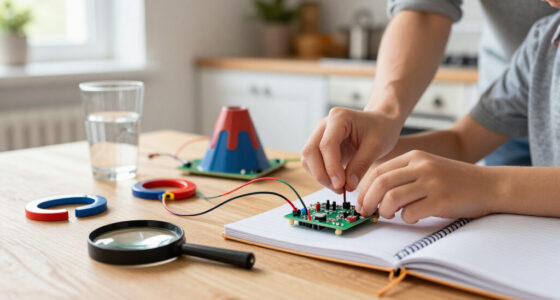
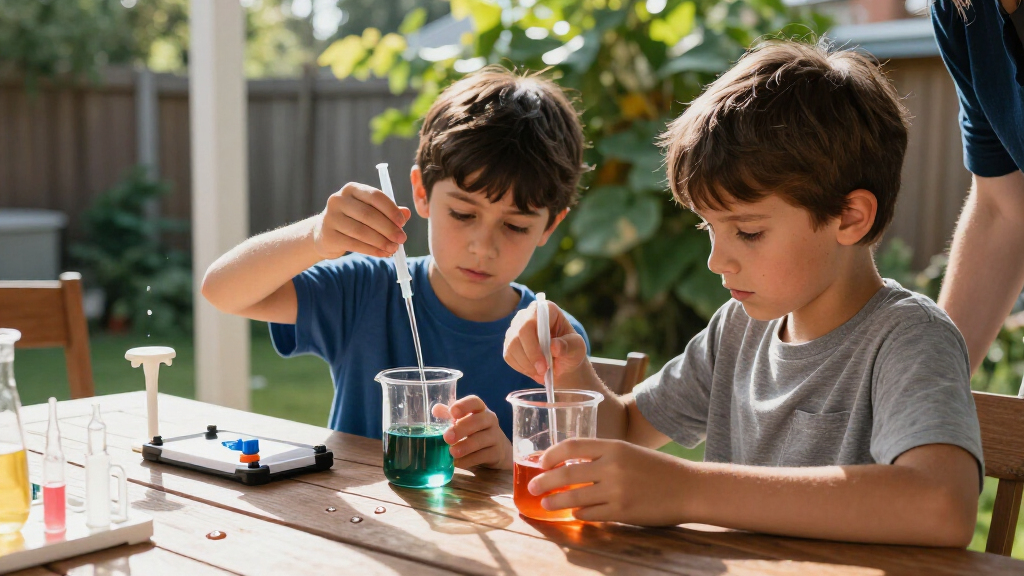
Science experiment kits give children a structured way to explore ideas through hands-on activities, from growing crystals to building circuits. Choose one that suits the child’s interests and abilities, check its materials and safety directions, and join in with questions that turn a surprising result into a conversation.
A crystal can grow overnight, a paper bridge can buckle under one extra coin, and a simple circuit can blink to life with a click. Those small surprises are why science experiment kits for kids can turn an ordinary afternoon into hands-on discovery.
The best kit for your family is not automatically the one with the biggest box or flashiest promise. This guide will help you match activities to your child, check what comes in the kit, and make room for the questions that help an experiment stick.
Treat the age range as a starting point, then check whether your child can follow the instructions and handle the materials with the stated supervision.
Before buying, check the subject, included supplies, number of projects, replacement needs, and safety information.
Ask your child to predict, observe, and explain; those conversations can connect a scripted activity to scientific thinking.
Follow the directions, keep small parts away from young children, and never let children taste materials unless the instructions say they are food-safe.
For group or digital kits, compare participant capacity, recurring costs, setup needs, and whether extra guidance adds real value.
What kids actually learn from a science kit
Science experiment kits for kids provide materials and instructions for exploring an idea through a hands-on activity. Depending on the kit, children might grow crystals, examine specimens, build a simple machine, or make a circuit light up. The activity gives them something concrete to observe, touch, measure, and talk about.
The learning often happens between the printed steps. Before starting, ask your child what they think will happen; afterward, ask what surprised them. For instance, if a paper bridge sags under a row of coins, you can compare it with a folded bridge and see how changing the shape affects what it holds. That comparison helps a child see that a result can be evidence: the folded design held more, so the shape may have changed how the paper distributed the load.
A kit can encourage prediction, observation, and explanation, but opening the box does not guarantee those skills will appear by themselves. A curious adult can connect the activity to the question behind it: What changed? What stayed the same? What might explain the result? These questions help children distinguish what they saw from what they think caused it, an important habit when results are unexpected or messy.
That conversation can be short. As you watch a seedling bend toward a sunny window, you might ask your child to describe what they see before explaining why they think it happened. The answer can lead to another experiment, a book, or simply a closer look tomorrow. Returning to the same observation also shows that some scientific changes take time, so a single glance may not tell the whole story.
Match the kit to your child, not just the age label
A good kit fits a child’s interests, abilities, and need for help as well as their age. Age ranges can point you toward suitable choices, but children vary in how comfortably they read instructions, handle small components, and manage several steps. Review the actual directions and supervision notes before you buy. A child who finds the written steps frustrating may still enjoy the experiment if an adult can guide the setup; if that help is not available, a simpler kit may make independent exploration more satisfying.
If your child loves taking apart old toys, a kit about simple machines or circuits may hold their attention longer than a chemistry set with a dramatic box. If they collect rocks, an earth science activity could give that interest a new direction. A familiar interest can make the first experiment feel inviting, while a new subject can broaden curiosity—though it may take more adult help to get started.
Compare a few practical details before choosing:
- Activity and subject: Does it cover biology, earth science, engineering, physics, or chemistry in a way your child finds appealing?
- Instructions: Are the steps clear, illustrated, and readable for the intended age group?
- Materials: Does the kit include everything, or will you need batteries, water, household supplies, or replacement parts?
- Number of projects: Are materials reusable, or does each activity use up something you will need to replace?
- Safety information: Can you find clear handling, supervision, and disposal guidance before you begin?
Imagine you have two kits in your hands: one promises twelve projects but needs several household supplies, while another includes materials for three projects and explains each step with drawings. Your child’s reading comfort and your time to help may matter more than the project count. The first could offer more variety if you already have the supplies and enjoy preparing together; the second may be easier to start and finish. Think about which tradeoff fits your household, since a kit is most useful when its activities are realistic to set up and repeat.
Turn one surprising result into a better experiment
Use each experiment to ask one clear question and notice what happens. A simple routine—predict, try, observe, and explain—gives a child a way to explore ideas through the kit’s instructions without making the activity feel like a test. You can write down a guess or just talk through it together. A prediction gives you something to compare with the outcome, while careful observation helps keep the explanation tied to what actually happened.
- Read the directions together. Gather the listed materials and check the setup before starting.
- Make a prediction. Ask, “What do you think will happen if we add the water slowly?”
- Follow the steps and observe. Let your child describe changes in color, shape, temperature, or movement.
- Compare the result with the prediction. Talk about what matched and what surprised you.
- Choose one safe follow-up question. Repeat the activity or compare one allowed variation if the instructions support it.
For instance, a child growing crystals might expect sparkling points to appear right away. If the mixture looks cloudy on the first evening, that is still something to notice; you can check again the next day and talk about how the result changed over time. Looking again helps distinguish an early stage from a failed result, and it gives the child a reason to be patient with changes that are gradual.
Some experiments use up their materials or produce a one-time result, while others can be repeated. Check the activity list before assuming that one box will support a whole afternoon of reruns. When something goes wrong, review the instructions and measurements together rather than improvising with extra materials. Repeating a step can help reveal whether a measurement or setup affected the result, but it is only useful if enough supplies remain and the repeat follows the kit’s directions.
Check safety before the first splash or click
Follow the kit’s age guidance, instructions, and supervision directions before beginning. Safety depends on the specific activity and materials, so read the warnings before a child handles anything. Set up in the space the instructions recommend, and use protective equipment or follow disposal directions whenever they call for it. Checking first matters because precautions can affect whether the activity is suitable for your child and whether you have the right space and supplies to complete it.
A chemistry activity might require an adult to handle a material or supervise closely, while a paper engineering project may call for help with scissors or small components. Keep small parts away from young children. Do not let children taste experiment materials unless the instructions explicitly identify them as food-safe. The level of help should match the task: close supervision can make a more involved activity manageable, but it should not replace clear instructions about who handles each material.
It can help to make the setup part of the shared activity. Before opening a packet, you and your child can read the directions, clear a workspace, and gather only the listed supplies. That simple pause makes it easier to catch a missing battery or a warning about cleanup. It also reduces the temptation to improvise midway through, when the materials are already out and a child may be eager to continue.
Stick to the stated procedure. Do not substitute chemicals or combine materials beyond the instructions; if a result surprises you, review the steps together and ask what may have happened. An interesting result is worth investigating only when the follow-up stays within the kit’s safety directions.
Choose between a physical kit, a digital guide, or a group set
Choose the format that fits how your child learns and where you plan to use it. Some recent kits combine familiar hands-on projects with engineering challenges, coding, robotics, online videos, or companion apps. These are broad market trends, and products differ; a digital feature is helpful only if it adds guidance your family will use. For example, a video that demonstrates an unfamiliar setup may reduce confusion, while an app that adds little beyond the printed directions may add screen time without making the experiment easier.
A child who likes to pause and replay directions may enjoy a video guide, while another may prefer a printed sheet they can spread beside a tray of materials. Space, setup time, cost, and the number of participants all shape the choice. Compare the practical tradeoffs before you buy:
| Format | What may work well | What to check |
|---|---|---|
| Physical kit | Materials and projects arrive together for a hands-on activity. | How many projects the supplies support and what household items are missing. |
| Digital companion | Videos or app instructions may help with setup or explain a project. | Any recurring cost, screen time, and whether the content adds useful guidance. |
| Classroom or group kit | Several children can share a project or equipment. | Participant count, quantity of materials, setup time, and adult support. |
Say you are planning a library activity for ten children. A kit advertised for “multiple experiments” may still provide only one set of goggles or enough material for a small group, so look for clear quantities before you choose it. If supplies are limited, children may have to take turns, changing how much hands-on time each gets; a kit with fewer projects but materials for everyone could work better for a group session.
Claims about educational outcomes deserve the same care as other product claims. A kit can introduce scientific ideas and practices, but it is a learning aid; the instructions and an interested adult help make sense of what happens. Consider whether the activities offer opportunities to observe, compare, and discuss results, rather than assuming a project count or a digital add-on guarantees learning.
Frequently Asked Questions
What age is appropriate for a science experiment kit?
It depends on the activity and the child. Check the age range, materials, reading demands, and supervision notes, then decide whether your child can use the kit safely with the help it calls for.
Do children need adult supervision?
Many kits call for some adult involvement, and the product instructions should explain what the activity needs. Younger children generally need closer supervision, especially around small parts or materials that require careful handling.
Are science experiment kits safe?
A kit can be used safely when it suits the child and you follow its directions and warnings. Check the handling and disposal instructions, use protective equipment when directed, and do not add or mix materials outside the stated procedure.
What should I look for in a good science kit?
Look for an activity that matches the child’s interests and abilities, with understandable instructions and clear safety guidance. Check what the box includes, what household supplies you must provide, and whether the materials support one project or several.
What should we do if an experiment does not work as expected?
Review the instructions and measurements together, then talk about what you noticed. An unexpected result can prompt a useful question, but avoid changing materials or procedures in a way that could create a safety risk.
Conclusion
Choose a kit your child will want to open, then take time to ask what they expect and what they notice. The experiment is the spark; the questions help it glow.
Halloween Picks
halloween
As an affiliate, we earn on qualifying purchases.