
To manage your pet’s travel documents, start by obtaining a pet passport or health certificate from your veterinarian, making sure all vaccinations, especially rabies, are up-to-date and properly documented. Make certain your pet has a microchip registered with the appropriate database for identification. Research the entry requirements of your destination country, including quarantine or additional health checks. Proper preparation helps avoid delays or issues—continue on to learn how to guarantee your pet’s documents meet all travel regulations.
Key Takeaways
- Ensure your pet’s passport includes current vaccination records, microchip details, and health certificates for smooth international travel.
- Obtain a pet passport through a licensed veterinarian, verifying all health and vaccination documentation as per destination requirements.
- Keep vaccination records up-to-date, especially rabies and other mandatory vaccines, to meet entry regulations of the travel country.
- Research specific pet travel regulations, including quarantine rules and import permits, to ensure compliance and avoid delays.
- Organize and verify all travel documents well in advance to prevent last-minute issues and facilitate hassle-free pet travel.
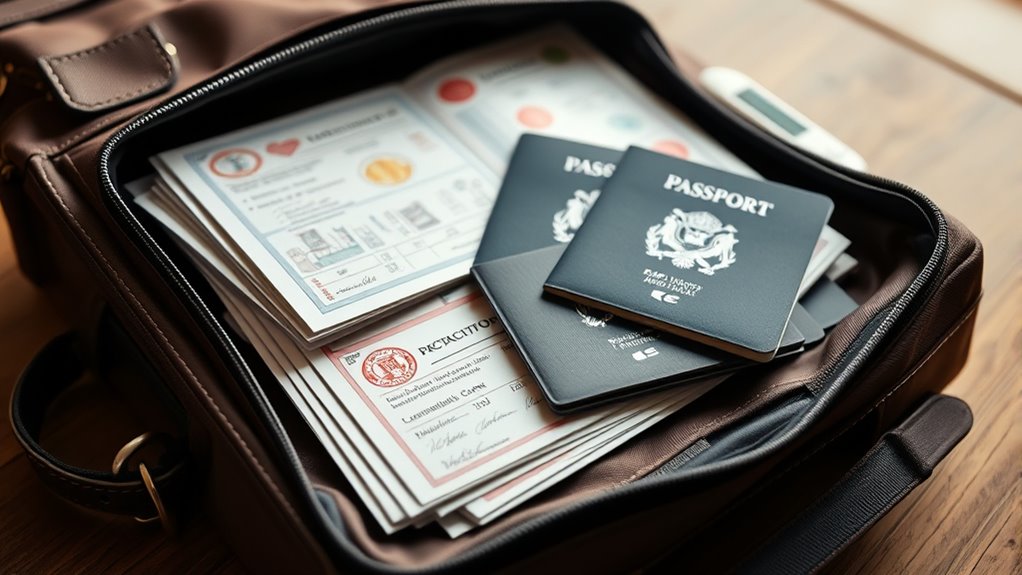
Have you ever wondered what it takes to travel with your pet smoothly and legally? Managing travel documents for pets is a pivotal step that often gets overlooked until the last minute. Your pet’s travel health and adherence to international pet regulations are fundamental to ensuring a hassle-free journey. Before you set out, it’s essential to gather all necessary documentation, including a valid pet passport, vaccination records, and any additional health certificates required by your destination country. These documents serve as proof that your pet is healthy, vaccinated, and compliant with the legal standards of the countries you’ll visit or transit through.
A pet passport is more than just a travel document; it’s an official record that consolidates your pet’s health information, vaccination history, microchip details, and other key data. Many countries now mandate a pet passport for international travel, especially within regions such as the European Union. To obtain one, you’ll need to visit your veterinarian, who can help you compile the necessary documents and ensure your pet’s health records are up to date. Your veterinarian will also administer any required vaccinations, such as rabies, and provide you with the appropriate certificates. These vaccination records are essential because they confirm your pet’s immunizations meet the entry requirements of your destination.
International pet regulations are strict, and they vary widely depending on where you’re headed. Some countries demand a specific period between vaccination and travel, while others require blood tests or additional health checks to verify your pet’s health status. It’s your responsibility to research these regulations well in advance. Many countries also require a microchip for identification, which must be registered with a national database. Ensuring your pet’s microchip is up-to-date and properly documented is a critical step in complying with international pet regulations. Additionally, understanding mindfulness about your pet’s comfort during travel can help reduce stress for both of you.
Furthermore, always check if your destination country has any quarantine rules or special import permits. These can greatly affect your travel plans if overlooked. Preparing all these documents early gives you ample time to address any issues, schedule necessary health checks, and avoid last-minute surprises. Remember, failure to meet the pet travel health and international pet regulations can lead to denied entry, quarantine, or even return of your pet, causing stress and logistical headaches. By staying organized and informed, you guarantee your furry friend’s journey is safe, legal, and comfortable from start to finish. In the end, thorough preparation and understanding of these key aspects are what make pet travel a positive experience for both you and your pet.
Frequently Asked Questions
Can I Travel Internationally With a Pet Without a Passport?
You can’t generally travel internationally with a pet without a passport. Airlines and countries have pet carrier regulations you must follow, and many require an official pet passport or health certificate. Also, quarantine policies may apply, especially if your pet’s vaccination records aren’t up-to-date. make certain you check specific country requirements beforehand, as lacking proper documentation can delay or prevent your pet’s entry.
How Long Are Pet Vaccination Records Valid for Travel?
Pet vaccination records are typically valid for travel as long as they are up-to-date and you’ve completed any required vaccination renewal. The validity period varies by destination, usually around one to three years, so you should verify record verification requirements well before your trip. Always check with your veterinarian or the destination’s regulations to confirm your pet’s vaccination records are current, valid, and meet entry criteria.
Do Different Countries Have Specific Pet Travel Documentation Requirements?
Did you know over 150 countries have specific pet travel documentation rules? Yes, different countries do have their own requirements, including regional regulations and quarantine policies. You’ll need to verify each destination’s rules before traveling, as some may require additional documents or quarantine periods. Failing to meet these requirements can result in delays or denied entry, so always verify the latest info to ensure smooth travel for your pet.
What Should I Do if My Pet’s Documents Are Lost or Stolen?
If your pet’s documents are lost or stolen, act quickly by contacting your veterinarian and the relevant authorities to report the issue. They can help you obtain emergency replacement documents and verify vaccination records. Keep copies of important documents in a separate, secure location to prevent future problems. Prompt action ensures your pet remains travel-ready and minimizes delays or complications during your trip.
Are There Age Restrictions for Traveling With Pets?
Imagine a 3-month-old puppy ready for its first international trip. Generally, travel age restrictions depend on the destination and airline policies. You should verify your pet has valid pet health certifications and meets specific age requirements for international travel. Always check travel safety tips and airline regulations beforehand. If your pet is too young, consider waiting until they reach the appropriate age to ensure their safety and compliance with travel rules.
Conclusion
By staying organized with your pet’s passports and vaccination records, you guarantee smooth travels and avoid last-minute surprises. For example, imagine forgetting your dog’s rabies shot before a trip abroad—causing delays and stress. Keeping these documents up-to-date and accessible means your furry friend can accompany you on adventures without hassle. So, take a few minutes now to gather and verify everything; it’ll save you time and worry when it’s time to hit the road.