
When traveling across borders, you should organize your medical documents, including prescriptions, medical history, and insurance proof, in a secure and accessible way. Carry original labels, translation summaries, and check country-specific regulations to prevent confiscation or legal issues. Keep digital copies on your phone or cloud with strong passwords. Inform trusted contacts about your medical needs and how to access your documents. For detailed tips to stay prepared, continue exploring how to manage your medical info abroad.
Key Takeaways
- Carry original, translated copies of medical history, prescriptions, and emergency contacts to facilitate quick access abroad.
- Verify medication regulations of the destination country and carry necessary permits or documentation.
- Keep digital copies of all medical documents securely stored on encrypted devices or cloud services.
- Update travel insurance details and carry proof of coverage for easy claims and emergency assistance.
- Organize documents in a dedicated medical kit and inform trusted contacts of their whereabouts and medical needs.
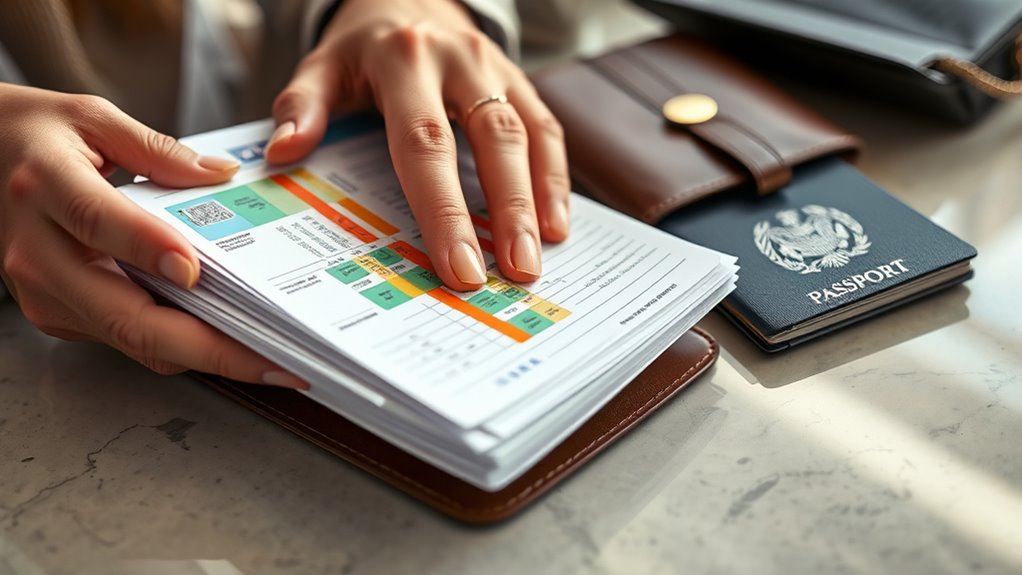
Traveling with medical documents can be a critical step in verifying your health and safety, especially if you have ongoing medical conditions or require emergency care. When planning your trip, it’s important to prepare your documents thoroughly to avoid any complications at border crossings or medical facilities in foreign countries. One of the first things you should do is review your travel insurance policy. Good travel insurance can cover unexpected medical expenses, but it often requires proof of your condition and relevant documents to streamline claims or get assistance quickly. Make sure your insurance details are up to date and carry proof of coverage, including contact info for emergency services provided by your insurer.
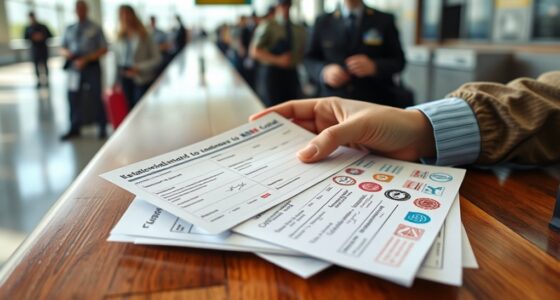
In addition, understanding prescription regulations in your destination country is essential. Different countries have varying rules about bringing medications across borders. Some medications available over the counter at home might be classified as controlled substances elsewhere, or vice versa. To avoid issues, carry a copy of your prescription along with the medication in its original packaging, clearly labeled with your name and the prescribing doctor’s details. It’s wise to check the specific regulations of your destination country well in advance, as some nations require special permits or documentation for certain drugs. This preparation can save you from confiscation or legal trouble and ensures continuous access to your medication.
You should also carry extensive medical documents that outline your medical history, current treatments, and any allergies or sensitivities. These documents can be invaluable in emergencies, especially if language barriers make communication difficult. Consider having translations of your medical records into the language of your destination, or at least a concise summary in the local language. This can help healthcare providers quickly understand your condition and provide appropriate treatment. Additionally, medical device regulations in some countries might restrict or require documentation for certain medical equipment, so check those details before traveling.
Another key step is to organize all your documents in a portable, easily accessible manner. Use a dedicated medical travel kit or digital copies stored securely on your phone or cloud storage. Digital copies can be especially useful if you lose physical documents; just ensure you have password protection for privacy. Keep your prescriptions, insurance cards, medical history, and emergency contacts together, and inform someone close to you about your medical needs and where your documents are stored.

ENGPOW Accordion File Organizer, Fireproof Expanding File Folder with 13 Pockets Document Organizer with Handle & Labels, Portable Home Travel Safe Storage for Letter A4 Files and More, Black
- Fireproof Material: Made of flame-retardant silicone-coated fiberglass
- Water-Resistant: Protects documents from fire, flood, and moisture
- Large Capacity: 13 pockets, zipper, pen, card, and mesh compartments
As an affiliate, we earn on qualifying purchases.
As an affiliate, we earn on qualifying purchases.
Frequently Asked Questions
How Can I Ensure My Medical Documents Are Accepted Internationally?
To guarantee your medical documents are accepted internationally, you should verify your insurance coverage beforehand and carry official, translated copies of your documents. Keep digital and printed versions handy, and confirm appointment scheduling with your healthcare provider if needed. Also, check specific country requirements, and carry any necessary authorizations or prescriptions. Being organized and proactive helps prevent issues, making your travel smoother and ensuring your medical info is recognized abroad.
What Are the Best Ways to Store Digital Copies Securely?
Imagine your digital copies are precious treasure chests. To keep them safe, store them in a secure cloud storage service that offers robust encryption techniques, like a vault protected by multiple locks. Always enable two-factor authentication, and regularly update your passwords. This way, your medical documents stay protected from intruders, ensuring you have quick, secure access whenever needed, just like a guarded treasure accessible only to you.
Are There Specific Legal Requirements for Medical Documents in Certain Countries?
You need to check each country’s medical document standards and legal compliance requirements before traveling. Different countries have specific rules about what information your medical documents must include and how they should be formatted. To avoid issues, verify your documents meet local legal standards, such as including authorized translations or particular certifications. Staying informed helps you travel smoothly and ensures your medical records are accepted without complications.
How Do I Handle Language Barriers With Medical Documents Abroad?
You can’t let language barriers turn your medical documents into a confusing maze. Opt for professional medical translation services to guarantee accuracy, avoiding costly mistakes. Be aware of cultural differences that might affect how information is interpreted or understood. Always carry both your original documents and translated copies, and consider having them notarized. This way, you confidently navigate international healthcare systems without your medical information becoming a mystery as vast as the universe.
What Should I Do if My Documents Are Lost or Stolen While Traveling?
If your medical documents are lost or stolen while traveling, stay calm and act quickly. Contact local authorities to report the theft or loss and get an official record. Reach out to your healthcare provider or embassy for emergency preparedness advice and document replacement options. Keep copies of important info, like insurance details, stored securely online or with a trusted contact, so you can access or replace your documents promptly.

Bluetooth Peak Flow Meter, Digital PEF FEV1 Monitor for Asthma
- Large, Easy-to-Read Display: Bright green backlight with large fonts
- Fast, Accurate Readings: Provides PEF and FEV1 in one second
- Bluetooth Data Transfer: Syncs data with smartphone in real-time
As an affiliate, we earn on qualifying purchases.
As an affiliate, we earn on qualifying purchases.
Conclusion
As you pack your medical documents for your journey, imagine crossing borders with confidence, knowing everything is in order. But what if you encounter unexpected questions or delays? Will your documents hold up under scrutiny? Stay prepared, double-check everything, and keep your records secure. Because in the moment you step into a new country, it’s not just your luggage that’s being inspected—your peace of mind is too. Are you ready for what’s next?

Urgent Care Travel Medicine Kit: Physician Designed Medication Pack w/ Thermometer – 20 OTC Medications (70 pieces): Pain, Allergy, Stomach, Nausea – HSA/FSA & TSA – Cruises, Flights, Dorms – USA Made
- Comprehensive Travel Medicine Kit: 70 pieces, 20 medication types
- Color-Coded Organization: Quickly find medications by category
- Physician & Pharmacist Designed: Expert-curated, USA-made kit
As an affiliate, we earn on qualifying purchases.
As an affiliate, we earn on qualifying purchases.

McGraw-Hill's Complete Medical Spanish, Premium Fourth Edition
As an affiliate, we earn on qualifying purchases.
As an affiliate, we earn on qualifying purchases.