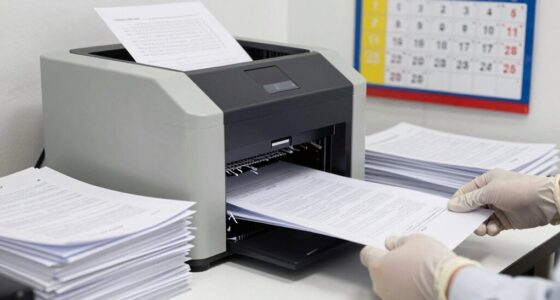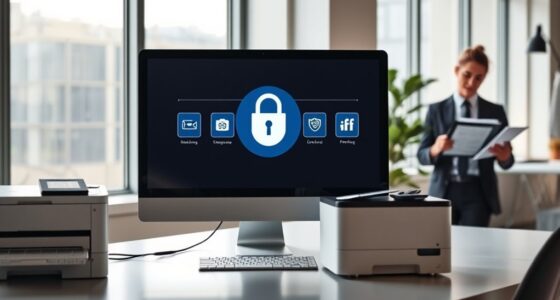
To effectively redact sensitive documents, identify all information that needs protection, such as names, addresses, or financial details. Use reliable redaction software to permanently remove data and double-check for any remaining visible or embedded metadata. Establish clear procedures, train staff, and include reviews to catch errors. Always verify that files are securely transmitted. Keep up with evolving laws to guarantee compliance. If you continue, you’ll learn more about best practices to safeguard your data.

Prime made for students and young adults
- Fast, free delivery for dorm and study essentials
- Prime Video and Amazon Music included
- Member-only deals
Key Takeaways
- Use specialized redaction software to permanently remove sensitive information, avoiding manual methods that can be reversed.
- Double-check redacted documents for residual data or visible sensitive info, including embedded metadata.
- Establish consistent redaction protocols and train staff to ensure high-quality, compliant document handling.
- Verify all files before sharing, and utilize secure transmission methods like encrypted email or trusted cloud services.
- Stay updated on legal regulations (GDPR, HIPAA, FOIA) and incorporate compliance into redaction practices.
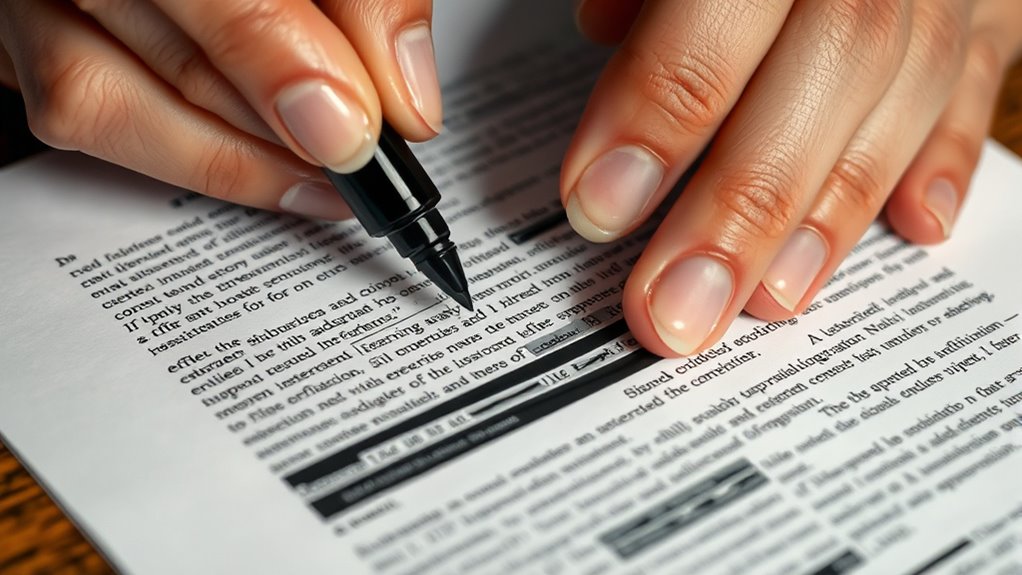
Redaction is a critical step in protecting sensitive information, and doing it correctly can prevent costly data breaches. When you redact information properly, you guarantee that confidential data remains secure, whether it’s for legal reasons, privacy concerns, or regulatory requirements. Proper redaction is essential for maintaining digital security, especially when sharing documents electronically or publishing publicly. If you fail to redact effectively, sensitive details could be exposed, leading to identity theft, legal liabilities, or damage to your organization’s reputation. Furthermore, redaction plays a crucial role in ensuring legal compliance. Many industries are governed by strict data protection laws that mandate the secure handling and removal of sensitive information before disclosure. Non-compliance can result in hefty fines and legal action, making meticulous redaction not just a best practice but a legal obligation.
Effective redaction protects sensitive data, ensures legal compliance, and prevents costly breaches.
To start, always identify all the information that needs redacting. This includes personal identifiers like names, addresses, social security numbers, financial details, or proprietary information. Use reliable redaction tools rather than manual methods like black markers or basic editing software, which can leave traces or be easily reversed. Digital security is strengthened when you use specialized redaction software that permanently removes the data, making it unreadable and unrecoverable. Before finalizing any redacted document, double-check to guarantee no sensitive information remains visible or embedded in metadata. Metadata can sometimes contain hidden data that could compromise your efforts if left unchecked. Additionally, understanding the importance of digital security in redaction helps ensure your procedures are thorough and effective.
You should also develop a consistent redaction protocol within your organization. This includes training staff on how to properly redact documents and establishing quality control procedures. For instance, after a document is redacted, have someone else review it to catch any oversight. This extra layer of scrutiny minimizes the risk of accidental exposure. When sharing redacted files, always verify that you’re transmitting the correct version and that no original unredacted documents are inadvertently included. Secure file transfer methods, such as encrypted email or trusted cloud services, further protect the documents during transmission.
Finally, stay updated on legal requirements related to redaction standards in your industry. Regulations such as GDPR, HIPAA, or FOIA have specific guidelines for handling sensitive data. Being familiar with these rules guarantees your redaction practices are compliant, safeguarding your organization from legal repercussions. Redacting effectively isn’t just about hiding information; it’s about understanding the importance of digital security and honoring your legal responsibilities. When you implement thorough, consistent, and compliant redaction practices, you defend both the individuals whose data you handle and your organization’s integrity.
redaction software for sensitive documents
As an affiliate, we earn on qualifying purchases.
As an affiliate, we earn on qualifying purchases.
Frequently Asked Questions
How Can I Verify That Redactions Are Permanent?
To verify that your redactions are permanent, you should use verification methods like applying a second layer of redaction or exporting the document as a flattened PDF. Check that redactions are not selectable or searchable, ensuring they are fully embedded. Always review the document after redaction to confirm no sensitive information remains accessible. This process guarantees permanent redaction, protecting your sensitive data effectively.
What Tools Are Most Effective for Redacting Digital Documents?
You should use specialized redaction software like Adobe Acrobat Pro, Foxit PDF Editor, or Nitro PDF to effectively redact digital documents. These tools guarantee that sensitive information is permanently removed, maintaining digital privacy. They allow precise redactions, prevent data leaks, and give you confidence that your redactions are secure. Always verify the redacted document after using the software to confirm the sensitive data is fully hidden and unrecoverable.
How Do I Handle Redacting Multi-Layered or Complex Files?
Handling layered redaction in complex files might seem intimidating, but you can master it with a strategic approach. Start by thoroughly analyzing the document structure, identifying all sensitive layers. Use specialized redaction tools that support layered redaction to guarantee each layer is securely masked. Double-check your work to prevent leaks, and consider breaking down large files into manageable sections. This method keeps your redactions accurate and exhaustive.
Are There Legal Standards for Redacting Sensitive Information?
Yes, there are legal standards for redacting sensitive information. You must guarantee compliance with privacy regulations like GDPR or HIPAA, depending on your jurisdiction. These laws require you to protect personal and confidential data properly. To stay legally compliant, you should follow established redaction protocols, verify that all sensitive info is thoroughly obscured, and keep documentation of your redaction process. Failing to adhere can lead to legal consequences and data breaches.
How Should Redacted Documents Be Stored Securely?
You should store redacted documents in secure storage, like encrypted digital folders or locked physical safes. Limit access through strict access controls, ensuring only authorized personnel can view or handle these files. Regularly update passwords and monitor access logs to prevent unauthorized entry. By implementing these measures, you protect sensitive information from breaches and maintain compliance with security standards. Always review your storage practices periodically for continuous security.
As an affiliate, we earn on qualifying purchases.
Conclusion
By mastering redaction, you’re shielding your sensitive information like a fortress guards its treasures. Think of each redaction as a brushstroke in a masterpiece—careful, deliberate, and precise. When you follow best practices, you transform a potentially chaotic process into a seamless shield that keeps prying eyes at bay. Remember, your documents are the map to your confidential world—protect them fiercely, and let your redaction be the sturdy lock that keeps everything secure.
encrypted email for secure file sharing
As an affiliate, we earn on qualifying purchases.
As an affiliate, we earn on qualifying purchases.
As an affiliate, we earn on qualifying purchases.
Halloween Picks
halloween
As an affiliate, we earn on qualifying purchases.