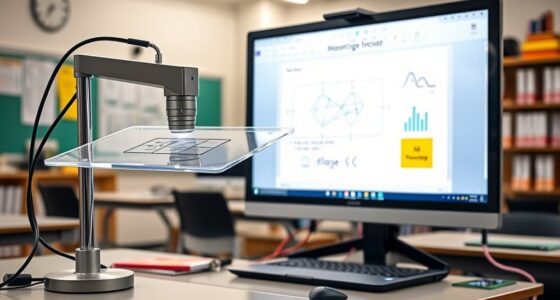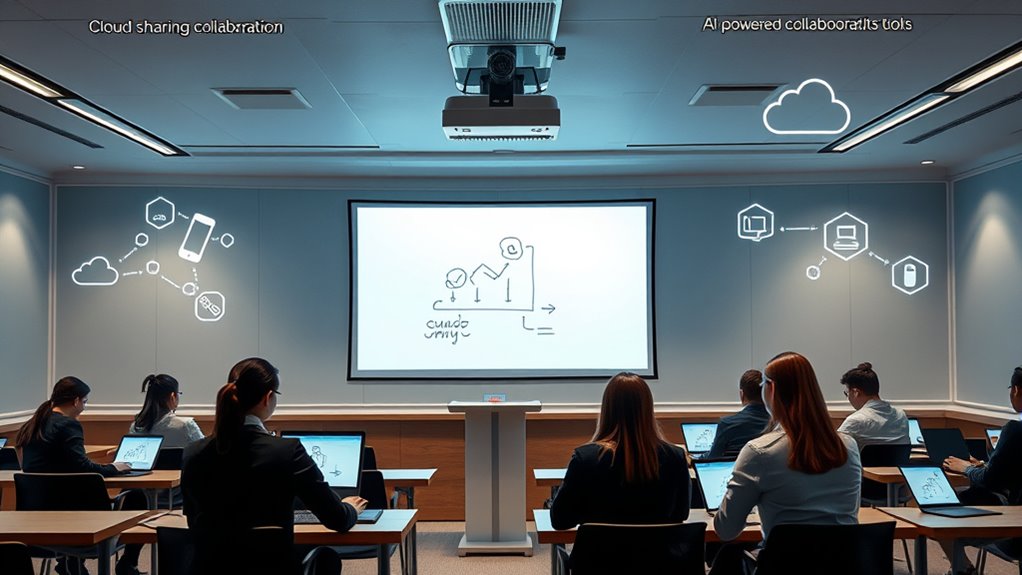

Future trends in document cameras and remote collaboration focus on integrating augmented reality and AI to create smarter, more interactive tools. You’ll see devices that overlay digital info onto real-world views, recognize content instantly, and automate adjustments for clearer visuals. These advancements make remote interactions more immersive and engaging, bridging the gap between physical and digital collaboration. By continuing, you’ll discover how these technologies are shaping the next generation of remote work and learning experiences.
Key Takeaways
- Integration of advanced AR overlays for more immersive and interactive collaboration experiences.
- AI-driven automation for real-time image enhancement, content recognition, and contextual insights.
- Enhanced accessibility features tailored to diverse learning and working needs.
- Smarter, adaptive document cameras that automatically optimize views and data during use.
- Greater industry investment leading to more user-friendly, immersive, and integrated remote collaboration tools.
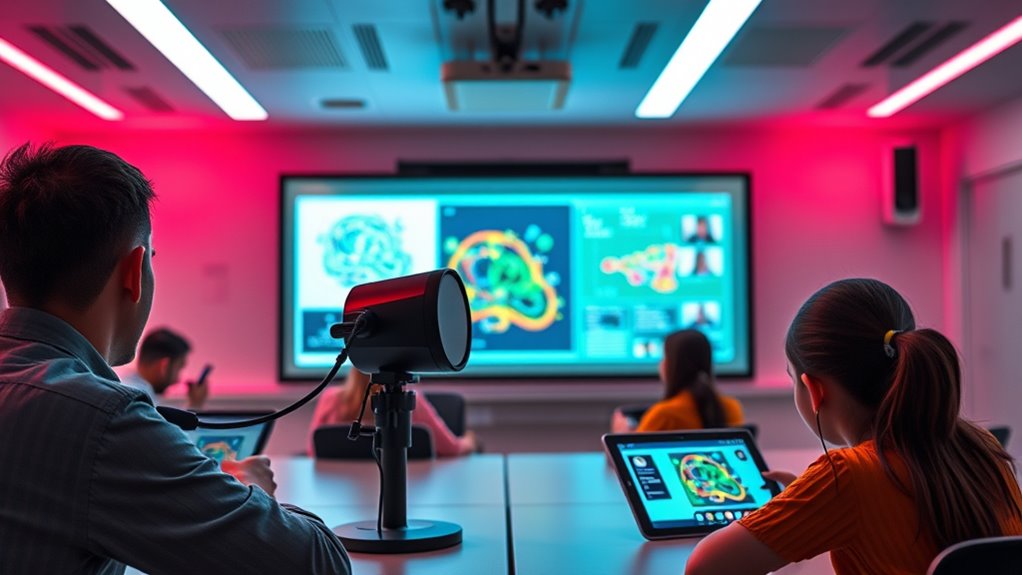
Have you ever wondered how educators and professionals are enhancing remote collaboration? The rapid evolution of technology has opened new doors, especially with the integration of augmented reality and AI into tools like document cameras. These advancements are transforming traditional methods, making remote interactions more immersive and effective. Instead of just viewing static images or documents, users now experience dynamic visualizations that bring content to life. Augmented reality overlays digital information onto real-world views, allowing you to see annotations, highlights, or additional data directly on physical documents during virtual meetings. This creates a richer, more interactive experience, whether you’re explaining complex diagrams or collaborating on detailed projects. Meanwhile, AI integration automates many tasks that once required manual effort, such as image enhancement, object recognition, or even summarizing content. When combined with document cameras, AI can automatically focus on important details, improve image clarity, and provide real-time insights, reducing the need for multiple devices or manual adjustments.
These innovations are also making remote collaboration more intuitive. Imagine pointing your document camera at a textbook page, and with AI assistance, it instantly recognizes the content, highlights key points, or even translates text on the fly. Augmented reality can overlay step-by-step instructions or interactive labels, guiding remote learners or team members through complex procedures without confusion. This seamless blend of AR and AI helps bridge the gap between physical and digital worlds, creating a natural, engaging experience that closely mimics in-person collaboration. As these technologies advance, expect document cameras to become smarter and more adaptive, responding to your specific needs and preferences in real time.
Furthermore, the integration of augmented reality and AI into remote collaboration tools promotes inclusivity and accessibility. Visual aids become more customizable, catering to diverse learning styles and needs. For example, users with visual impairments might benefit from AI-powered enhancements that improve contrast or provide audio descriptions, while AR can make content more accessible through interactive features. These enhancements make remote collaboration not only more productive but also more equitable. As the landscape continues to evolve, you’ll see software developers and hardware manufacturers investing heavily in these areas, pushing the boundaries of what’s possible with document cameras and remote communication. The future points toward a more immersive, intelligent, and user-friendly experience, where technology adapts to your workflow rather than forcing you to adapt to it. In essence, augmented reality and AI integration are key drivers shaping the next generation of remote collaboration tools, transforming how you teach, learn, and work from anywhere.
augmented reality document camera
As an affiliate, we earn on qualifying purchases.
As an affiliate, we earn on qualifying purchases.
Frequently Asked Questions
How Will AI Integration Enhance Document Camera Functionalities?
AI integration will enhance your document camera by enabling intelligent recognition, making it easier to identify text, images, or objects instantly. You’ll benefit from AI customization, tailoring the camera’s features to your specific needs, such as auto-focus, color correction, or document enhancement. This smart technology streamlines your workflow, improves clarity, and allows for seamless sharing during remote collaboration, ultimately making your presentations more engaging and efficient.
What Cybersecurity Measures Are Necessary for Remote Collaboration Tools?
Think of your remote collaboration tools as a fortress protecting precious treasures. To keep intruders out, you need strong data encryption and robust user authentication. These cybersecurity measures act like guards and locked gates, ensuring only authorized people access sensitive information. By implementing these strategies, you safeguard your digital assets, maintain privacy, and keep your collaborative environment secure from cyber threats.
Will Future Document Cameras Support Augmented Reality Features?
Yes, future document cameras will support augmented reality features, allowing you to experience immersive integration in your remote collaborations. You’ll be able to overlay digital content directly onto physical documents or objects, enhancing understanding and engagement. This technology will make your presentations more interactive and dynamic, giving you a seamless blend of real-world visuals and digital enhancements. As AR becomes more advanced, expect your document cameras to become powerful tools for immersive remote communication.
How Will Remote Collaboration Impact Traditional In-Person Workflows?
Remote collaboration becomes a bridge that spans the chasm between physical and digital worlds. Virtual meetings and cloud storage act as the sturdy cables connecting teams across distances. You’ll find your in-person workflows transforming into seamless digital threads, allowing real-time sharing and collaboration. This shift empowers you to work flexibly, breaking down geographic barriers and fostering a more interconnected, agile work environment where ideas flow as freely as sunlight through an open window.
Are There Ethical Concerns With Remote Document Sharing and Recording?
Yes, there are ethical concerns with remote document sharing and recording. You should be mindful of privacy concerns, ensuring sensitive information isn’t accidentally exposed. Data security is also vital; you need to protect shared documents from unauthorized access. By following best practices, like encryption and secure platforms, you can minimize risks and maintain trust, making sure your remote collaboration remains ethical and responsible.
AI-powered remote collaboration tools
As an affiliate, we earn on qualifying purchases.
As an affiliate, we earn on qualifying purchases.
Conclusion
While some might think remote collaboration limits interaction, future trends in document cameras will make virtual presence feel even more natural. Enhanced features like 4K resolution, real-time annotations, and seamless integration with collaboration tools will bridge the gap. So, don’t worry—these innovations won’t replace face-to-face connection but will make remote teamwork more engaging, productive, and accessible than ever before. Embrace these advancements, and you’ll see how they transform your collaborative experiences.
interactive document camera with AR
As an affiliate, we earn on qualifying purchases.
As an affiliate, we earn on qualifying purchases.
As an affiliate, we earn on qualifying purchases.