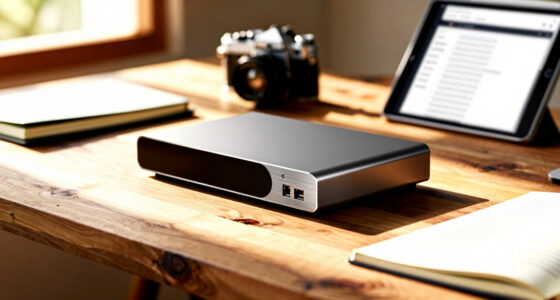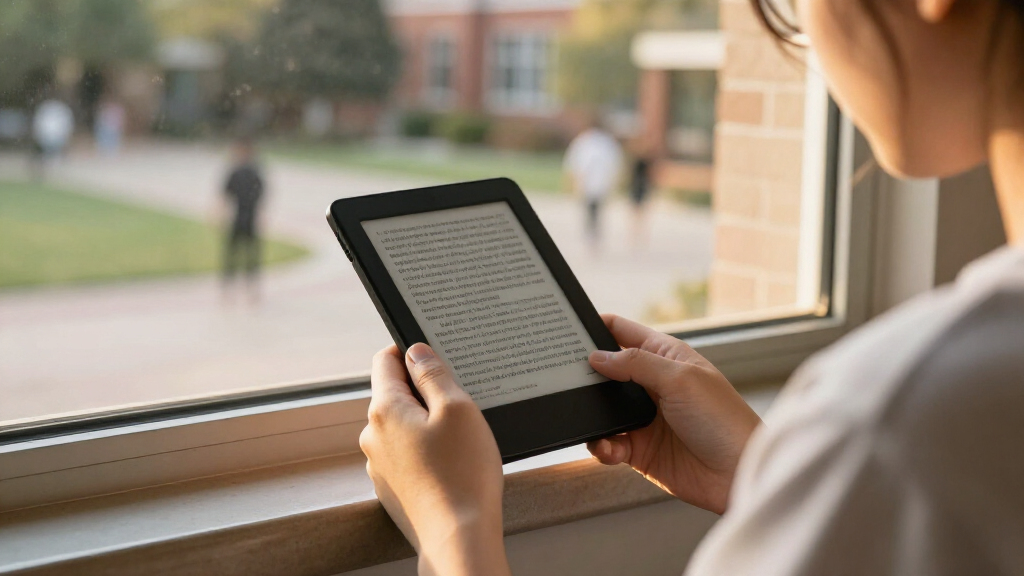

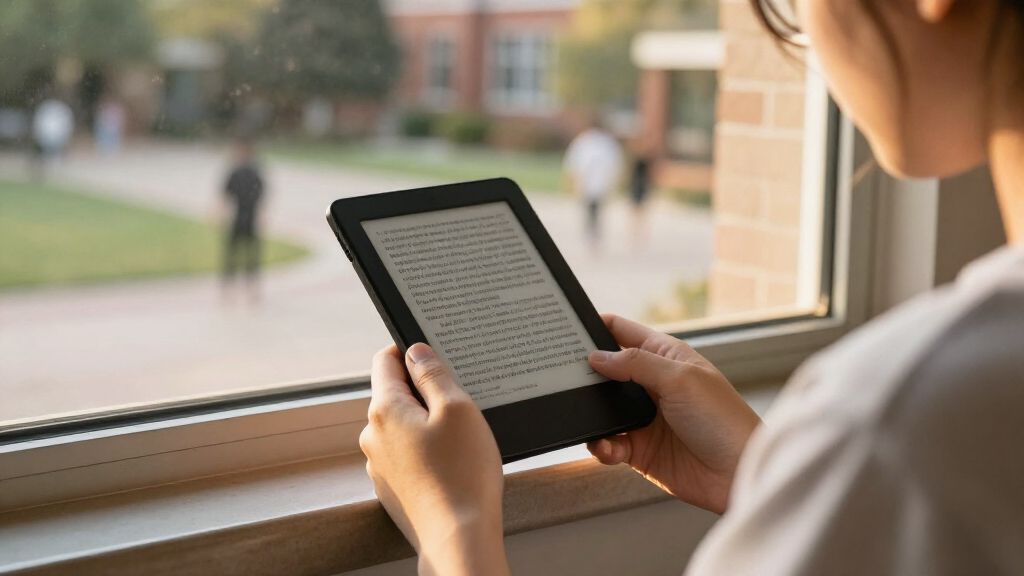
The best electronic reader for students depends on whether the priority is reading books, annotating course material, or getting help with printed text. I’d put the VIWOODS AiPaper first for students who need a large E Ink screen and stylus for reading and notes, while the PocketBook Verse Pro stands out for focused book reading and the HumanWare Victor Reader Stream 3 for audio-first accessibility. Reading pens add quick OCR, translation, and text-to-speech, but they cannot replace a full-screen reader for long study sessions. Screen size, file compatibility, note-taking, and accessibility features are the main tradeoffs. Read on for how all 15 options compare and which student each one suits.

Prime made for students and young adults
- Fast, free delivery for dorm and study essentials
- Prime Video and Amazon Music included
- Member-only deals
Key Takeaways
- Large-screen E Ink devices serve a different study task from pocket readers: the VIWOODS AiPaper and Geniatech KloudNote Slim are better suited to longer documents and handwritten notes, while the PocketBook Verse Pro and XTEINK X4 favor portable reading.
- Reading pens are support tools, not all-purpose e-readers: OCR, translation, and text-to-speech can help with printed passages, but they do not provide the same sustained reading and annotation space as a tablet-sized E Ink device.
- Accessibility needs change the ranking: the Victor Reader Stream 3 is the most purpose-built option here for audio-based reading, while reading pens may help students who benefit from scanning and listening to short passages.
- Student-specific controls can matter more than extra functions: Scanmarker Max’s phonics support and teacher lock make it a more targeted school tool than general-purpose translation pens.
- Portability comes with limits: the 4.3-inch XTEINK X4 and 6-inch readers are easier to carry, but students who regularly work with PDFs, diagrams, or side-by-side notes should look at larger screens.
| Multifunction Translator and Reading Pen with OCR, Text-to-Speech, and Recorder |  | Best for Multilingual Coursework | Touchscreen: 4.3 inches | OCR: 52 languages | Online translation: 142 languages | VIEW LATEST PRICE | See Our Full Breakdown |
| HumanWare Victor Reader Stream 3 Audio Book Player |  | Best for Nonvisual Study | Display: No display | Storage: 16 GB | Expandable storage: SD card up to 1 TB | VIEW LATEST PRICE | See Our Full Breakdown |
| VIWOODS AiPaper 10.65-Inch E Ink Tablet with Stylus and Folio |  | Best for Annotating Course PDFs | Display: 10.65-inch Carta 1300 E Ink | Resolution: 2560 × 1920 | Storage: 128GB | VIEW LATEST PRICE | See Our Full Breakdown |
| PocketBook Verse Pro Waterproof E-Reader, 6-Inch E-Ink Carta HD Touchscreen, 16GB, Passion Red |  | Best Compact Book Reader | Display: 6-inch E-Ink Carta touchscreen | Resolution: 1072 x 1448 | Storage: 16 GB | VIEW LATEST PRICE | See Our Full Breakdown |
| Scanmarker Pro Reading and Translation Pen |  | Best for Straightforward Text Scanning | Scanner type: Text | Connection type: Bluetooth | Resolution: 600 | VIEW LATEST PRICE | See Our Full Breakdown |
| Dam Skerisi 6-Inch E-Ink eBook Reader, 8GB, 2500mAh Battery |  | Best for Budget-Minded, Focused Reading | Display: 6-inch E-Ink | Resolution: 800 × 600 | Internal storage: 8GB | VIEW LATEST PRICE | See Our Full Breakdown |
| Scanmarker Max Reading Pen with Phonics Support and Teacher Lock |  | Best for Supported Reading and Language Study | Scanner types: Text and photo | Connectivity: Bluetooth and USB | Resolution: 400 dpi | VIEW LATEST PRICE | See Our Full Breakdown |
| NEWYES AI Reading and Translation Pen with Text-to-Speech, OCR, and 16GB Storage |  | Best for Multilingual Reading Support | Scanner type: Text | Resolution: 900 dpi | Storage: 16GB | VIEW LATEST PRICE | See Our Full Breakdown |
| Scanmarker Air Wireless Reading and Translation Pen |  | Best for Fast Text Capture | Scanner type: Text | Connection: Bluetooth 4.0 or higher | Resolution: 300 dpi | VIEW LATEST PRICE | See Our Full Breakdown |
| Geniatech KloudNote Slim 10.3-Inch E Ink Digital Notebook with Pen, 64 GB, Gray |  | Best for Reading and Annotating Course PDFs | Display: 10.3-inch E Ink | Resolution: 1404 × 1872 (227 ppi) | Processor: 1.8 GHz A55 quad-core | VIEW LATEST PRICE | See Our Full Breakdown |
| Scanmarker Pal Translation and Reading Pen |  | Best for Multilingual Text Scanning | Scanner type: Text | Connection: Bluetooth | Resolution: 600 dpi | VIEW LATEST PRICE | See Our Full Breakdown |
| WorldPenScan AI Reading Pen with Dictionary, Text-to-Speech, Translation, and AI Reading Support | 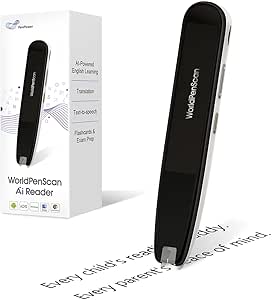 | Best for Reading Support and Comprehension | Scanner type: Text | Connection: Wi-Fi | Resolution: 300 dpi | VIEW LATEST PRICE | See Our Full Breakdown |
| XTEINK X4 Classic 4.3-Inch E-Reader |  | Best Compact Dedicated E-Reader | Display: 4.3-inch E-Ink, 800 × 480 resolution | Display material: High-aluminosilicate glass | Weight: 68 g (approximately 2.4 oz) | VIEW LATEST PRICE | See Our Full Breakdown |
| VORMOR AI Translator Reading Pen with OCR and Voice Translation |  | Best for Spoken Translation and Photo Text | Screen: 2.3-inch IPS | Scan speed: Up to 3,000 characters per minute | Battery capacity: 820 mAh | VIEW LATEST PRICE | See Our Full Breakdown |
| Simbago Translator and Scanner Reader Pen with OCR, Text-to-Speech, and Photo Translation |  | Best for Recording Lectures and Scanning Text | Connection: USB | Online scan translation: 55 languages | Online voice and recording translation: 112 languages | VIEW LATEST PRICE | See Our Full Breakdown |
| electronic readers for student | Resolution | Weight |
|---|---|---|
| Multifunction Translator and R | 300 dpi | 75 g |
| HumanWare Victor Reader Stream | — | 110 g |
| VIWOODS AiPaper 10.65-Inch E I | 2560 × 1920 | — |
| PocketBook Verse Pro Waterproo | 1072 x 1448 | 186 g |
| Scanmarker Pro Reading and Tra | 600 | 0.23 kg |
| Dam Skerisi 6-Inch E-Ink eBook | 800 × 600 | — |
| Scanmarker Max Reading Pen wit | 400 dpi | — |
| NEWYES AI Reading and Translat | 900 dpi | — |
| Scanmarker Air Wireless Readin | 300 dpi | 27.22 g |
| Geniatech KloudNote Slim 10.3- | 1404 × 1872 (227 ppi) | — |
| Scanmarker Pal Translation and | 600 dpi | 5.67 g |
| WorldPenScan AI Reading Pen wi | 300 dpi | 170 g |
| XTEINK X4 Classic 4.3-Inch E-R | — | 68 g (approximately 2.4 oz) |
| VORMOR AI Translator Reading P | — | — |
| Simbago Translator and Scanner | — | — |
More Details on Our Top Picks
Multifunction Translator and Reading Pen with OCR, Text-to-Speech, and Recorder
I’d choose this pen for students who regularly work with printed material in more than one language. Its 52-language OCR and text-to-speech can turn scanned passages into spoken study material, while online translation covers 142 languages. Compared with the Scanmarker Pro, it adds a 5MP camera for photo translation and mobile syncing for editing scanned text, making it the more flexible option for mixed study tasks. That range comes with a dependency: online voice and scanning translation need a network, and offline translation covers only 10 languages. The 4.3-inch touchscreen also gives it more on-device interaction than a simple scanning tool, but this is still a reading aid, not an E Ink reader for settling in with a full book.
Pros:- Reads scanned printed text aloud using OCR and text-to-speech
- Offers online translation in 142 languages and offline translation in 10
- Syncs scanned text to a mobile phone for editing
- Adds 5MP photo translation and voice recording
Cons:- Online voice and scanning translation features require a network connection
- Offline translation supports far fewer languages than online translation
- A reading pen is less suited than a dedicated e-reader to continuous book reading
Best for: Language learners and students who need to scan, hear, translate, and edit printed passages across multiple languages
Not ideal for: Students seeking a conventional e-reader for long books, or anyone who needs broad translation features without internet access
- Touchscreen:4.3 inches
- OCR:52 languages
- Online translation:142 languages
- Offline translation:10 languages
- Camera:5 MP
- Resolution:300 dpi
- Connectivity:Wi-Fi
- Weight:75 g
Our verdict“Choose this pen if multilingual printed coursework and scan-to-mobile editing matter more than a traditional e-reader experience.”
HumanWare Victor Reader Stream 3 Audio Book Player
For a student who is blind or has low vision, this is the most purpose-built study option in the group: tactile controls and audio navigation make it possible to manage books and media without depending on a screen. It supports DAISY books, text-to-speech, bookmarks, playback-speed control, and voice notes, giving it more structured listening tools than the PocketBook Verse Pro, which pairs a visual E Ink display with text-to-speech. The tradeoff is clear: the Stream 3 has no visual display, so it is not a fit for students who want to browse or read text on-screen. Wi-Fi supports online content, while Bluetooth and offline files add flexibility away from a network. Its 16GB storage can be expanded with an SD card, but online content still depends on Wi-Fi.
Pros:- Tactile controls support navigation without relying on a screen
- Handles DAISY books, text-to-speech, bookmarks, and playback-speed control
- Plays offline files and supports Wi-Fi and Bluetooth
- Offers voice notes and recording, with up to 15 hours of battery life
Cons:- No visual display for reading text or viewing diagrams
- Online content requires a Wi-Fi connection
- Audio-only use is less suitable for students who need to switch between text and visual material
Best for: Blind or low-vision students who rely on audio navigation for textbooks, DAISY books, notes, and other study media
Not ideal for: Students who need a visual display for reading, browsing, or reviewing diagrams and page layouts
- Display:No display
- Storage:16 GB
- Expandable storage:SD card up to 1 TB
- Connectivity:Wi-Fi, Bluetooth 4.2, USB-C
- Battery life:Up to 15 hours
- Weight:110 g
- Supported audio formats:MP3, AAC, FLAC, WAV, WMA, OGG
- Additional features:DAISY navigation, text-to-speech, bookmarks, voice recorder
Our verdict“Pick the Stream 3 when accessible, screen-free audio study is the priority and a visual e-reader is not needed.”
VIWOODS AiPaper 10.65-Inch E Ink Tablet with Stylus and Folio
I’d rank the AiPaper highest for students whose reading happens in long PDFs, lecture notes, and marked-up documents. Its 10.65-inch Carta 1300 display gives pages and annotations more room than the 6-inch PocketBook Verse Pro, while the included pressure-sensitive stylus supports handwriting and PDF markup. The 128GB storage also leaves space for a substantial library of course files. Its role is closer to a focused digital notebook than a simple book reader: that suits study workflows, but the E Ink refresh latency and limited general-purpose tablet design make it a weaker choice for video, fast browsing, or app-heavy work. The included folio, replacement nibs, and charging cable make the package ready for note-taking, though its larger format is less pocketable than a compact reader.
Pros:- Large 10.65-inch E Ink display provides room for documents and handwritten notes
- Included stylus supports 4096 pressure levels for handwriting and PDF annotation
- 128GB built-in storage accommodates course materials and documents
- Bundle includes a folio cover, replacement nibs, and USB-C charging cable
Cons:- E Ink refresh latency is less suited to fast interactions
- Focused reading and writing design may not replace a general-purpose tablet
- Larger screen is less pocketable than the PocketBook Verse Pro
Best for: University students who read and annotate lengthy PDFs, take handwritten lecture notes, and keep course documents together
Not ideal for: Students who want a small, pocketable book reader or a fast general-purpose tablet for video and demanding apps
- Display:10.65-inch Carta 1300 E Ink
- Resolution:2560 × 1920
- Storage:128GB
- Stylus:W2 Stylus Pro
- Stylus pressure levels:4096
- Pen gap:750 microns
- Included accessories:Folio cover, replacement pen nibs, USB-C charging cable
- Warranty:14 months
Our verdict“Choose the AiPaper if annotating large course documents and writing directly on an E Ink screen matter more than portability or tablet speed.”
PocketBook Verse Pro Waterproof E-Reader, 6-Inch E-Ink Carta HD Touchscreen, 16GB, Passion Red
Among these five, I’d pick the Verse Pro for students who mainly want to carry and read books, rather than annotate full-size coursework. The 6-inch E Ink screen is more portable than the VIWOODS AiPaper’s 10.65-inch panel, and its adjustable SMARTlight, automatic lighting, and Dark Mode support reading across different study settings. It also handles 25 file formats, which is useful when course material arrives in formats beyond standard EPUB. Text-to-speech in 26 languages and Bluetooth audio add options for listening, though the Stream 3 is better equipped for students who rely on audio navigation. The main compromise is screen area: PDFs and other document-heavy reading can feel cramped. Its IPX8 waterproofing adds reassurance around spills, but does not change that smaller-screen limitation.
Pros:- Compact 6-inch E Ink screen suits portable book reading
- SMARTlight, automatic lighting, and Dark Mode support varied reading conditions
- Supports 25 file formats, including EPUB, DOC, PDF, and comic formats
- IPX8 waterproofing and text-to-speech in 26 languages add flexibility
Cons:- Small display can make PDFs and other document-heavy material difficult to read
- Wireless audio playback requires Bluetooth headphones or a compatible system
- Lacks the larger writing and annotation workspace of the VIWOODS AiPaper
Best for: Students who want a lightweight, dedicated reader for books and varied e-book formats, including reading between classes
Not ideal for: Students who regularly study from large PDFs or need a roomy screen for diagrams and handwritten annotations
- Display:6-inch E-Ink Carta touchscreen
- Resolution:1072 x 1448
- Storage:16 GB
- Connectivity:Wi-Fi, Bluetooth
- Text-to-speech:26 languages
- Supported formats:25, including EPUB, FB2, DOC, DJVU, PDF, JPEG, CBR, and CBZ
- Water resistance:IPX8; fresh water immersion up to 2 m for up to 1 hour
- Weight:186 g
Our verdict“Choose the Verse Pro for portable book reading and broad file support, but look to a larger E Ink device for PDF-heavy study.”
Scanmarker Pro Reading and Translation Pen
The Scanmarker Pro makes sense for students who want printed passages read aloud and translated without carrying a larger document device. It highlights scanned words on its screen, adds dictionary definitions, and can capture notes and memos on the device. Compared with the multifunction translator pen in this roundup, it has a narrower toolset: there is no listed mobile syncing or photo-translation camera, so it is less adaptable for scanning and editing work across devices. Its online translation covers over 100 languages, but offline translation is limited to five languages. That makes it useful for common language pairs when internet access is unavailable, but a poor fit for students studying less-supported languages offline. It complements a conventional reader like the PocketBook Verse Pro rather than replacing one, since its job is scanning individual printed text, not reading whole books.
Pros:- Reads scanned text aloud and highlights words on-screen
- Provides dictionary definitions and word translations
- Supports online translation in over 100 languages
- Captures notes and memos directly on the device
Cons:- Does not scan text to other devices
- Offline translation is limited to English, Spanish, French, German, and Italian
- A scanning pen is not a substitute for a reader designed for full books
Best for: Students who need a simple handheld tool to scan printed passages, hear them aloud, and check definitions or translations
Not ideal for: Students who need scans sent to another device, offline translation across many languages, or a dedicated e-reader for books
- Scanner type:Text
- Connection type:Bluetooth
- Resolution:600
- Online translation:Over 100 languages
- Offline translation:English, Spanish, French, German, Italian
- Weight:0.23 kg
- Media type:USB
- Warranty:1 year
Our verdict“Choose the Scanmarker Pro for focused scanning and spoken text, but pick a connected alternative if mobile editing or broader offline translation is needed.”
Dam Skerisi 6-Inch E-Ink eBook Reader, 8GB, 2500mAh Battery
For students who want a dedicated screen for reading without tablet-style distractions, the Dam Skerisi covers the basics: a 6-inch E-Ink display, support for common ebook and document formats, and storage that can be expanded with a memory card. Its included case and screen protector also make it easier to carry between classes. Compared with the Geniatech KloudNote Slim, this is a simpler reading device rather than a large workspace for handwriting and PDF annotation. That simplicity comes with tradeoffs: the 800 × 600 resolution is modest, especially for dense academic PDFs, and the memory card needed for extra capacity is not included. I’d choose it for novels, assigned readings, and straightforward documents—not as a replacement for a note-taking tablet.
Pros:- E-Ink screen is designed for paper-like reading with reduced glare.
- Supports EPUB, PDF, DOC, TXT, and several other ebook and document formats.
- Storage can be expanded by up to 32GB with a separately purchased memory card.
- Included protective case and screen protector suit daily campus carry.
Cons:- The 800 × 600 display resolution may make small text and detailed academic PDFs less comfortable to read.
- The memory card for expanded storage is not included.
- It lacks the larger screen and handwriting tools offered by the Geniatech KloudNote Slim.
Best for: Students who mainly read ebooks and text documents and want a lightweight, one-handed reader with expandable storage.
Not ideal for: Students who regularly annotate complex PDFs, need a high-resolution display, or want handwriting and study-note tools.
- Display:6-inch E-Ink
- Resolution:800 × 600
- Internal storage:8GB
- Expandable storage:Up to 32GB via memory card; card not included
- Battery:2500mAh
- RAM:512MB
- Ebook formats:PDF, TXT, DOC, FB2, EPUB, RTF, PRC, MOBI
- Included accessories:User manual, charging cable, screen protector, protective case
Our verdict“Choose the Dam Skerisi for basic, portable ebook reading, but pick a larger E Ink tablet if your coursework depends on PDF annotation.”
Scanmarker Max Reading Pen with Phonics Support and Teacher Lock
The Scanmarker Max is for students who need help accessing printed material, not for replacing an ebook reader. It scans text and reads it aloud, with phonetic assistance and photo scanning for full paragraphs—useful when a passage is difficult to decode or a student needs audio support. Its teacher lock can limit access to functions, which gives it a more classroom-oriented role than the Scanmarker Air, whose emphasis is transferring scanned text to a connected device. Support for over 100 languages and online or offline use adds flexibility, though the learning tools in its web app depend on the Scanmarker platform. Buyers should also note that the listed connections are Bluetooth and USB, rather than a standalone reading interface. I’d treat it as an accessibility and study aid alongside course books, not as a device for storing a library.
Pros:- Reads scanned printed text aloud and provides phonetic assistance.
- Photo scanning can capture full paragraphs rather than only individual lines.
- Teacher lock offers a way to restrict access to selected functions.
- Supports over 100 languages and can work online or offline.
Cons:- It scans printed material rather than serving as a dedicated ebook reader or library device.
- Web app learning tools require a connection to the Scanmarker platform.
- The listed Bluetooth and USB connections may not suit students seeking broader device connectivity.
Best for: Students who benefit from text-to-speech or phonetic help while reading printed textbooks and need teacher-controlled functions.
Not ideal for: Students seeking a standalone electronic reader, or those who need app-based learning tools without access to the Scanmarker platform.
- Scanner types:Text and photo
- Connectivity:Bluetooth and USB
- Resolution:400 dpi
- Supported systems:Windows, macOS, Chromebook
- Languages:Over 100
- Reading support:Text-to-speech and phonetic assistance
- Included items:Reading pen, earbuds, reading ruler, USB cable, user manual
- Warranty:1 year manufacturer warranty
Our verdict“Choose the Scanmarker Max as a classroom reading aid for text-to-speech and phonics support, not as your primary device for electronic books.”
NEWYES AI Reading and Translation Pen with Text-to-Speech, OCR, and 16GB Storage
For students working across languages or needing printed passages read aloud, the NEWYES AI Pen combines OCR, adjustable text-to-speech, and translation across 112 languages. The ability to change reading speed and pause time, with British and American accent options, gives learners more control than a basic scan-and-transfer pen. Its 16GB storage and TXT, DOC, and PDF export make it useful for capturing class material to review on another device. Compared with the Scanmarker Air, the NEWYES adds a camera and AI dictionary and homework tools, while the Scanmarker Air lists broader OCR language support. This is still a scanning pen, not an E Ink reader for long sessions with digital books. The description also does not say whether every feature works offline, and its stated minimum system requirement is Windows 7.
Pros:- Adjustable reading speed and pause time, with British and American accent options.
- Translation supports 112 languages and includes text, photo, and voice input.
- 16GB storage and TXT, DOC, and PDF export support later review of scanned material.
- 5MP camera and AI dictionary and homework tools add study functions beyond text scanning.
Cons:- It scans printed material and does not provide an E Ink screen for reading a digital book directly.
- The product information does not specify whether all features work offline.
- The listed minimum system requirement is Windows 7, which may limit compatibility with some study setups.
Best for: Multilingual students and readers who want printed text read aloud, translated, and saved for later study on a phone, tablet, or computer.
Not ideal for: Students who want a standalone ebook reader, need confirmed offline access for every tool, or prefer a larger screen for extended reading.
- Scanner type:Text
- Resolution:900 dpi
- Storage:16GB
- Camera:5MP
- Translation languages:112
- Export formats:TXT, DOC, PDF
- Connection:Bluetooth
- Item weight:10 ounces
Our verdict“Choose the NEWYES for multilingual text scanning and adjustable read-aloud support, but choose an E Ink reader for sustained digital-book reading.”
Scanmarker Air Wireless Reading and Translation Pen
The Scanmarker Air makes the most sense for students who want to move printed text into digital notes, translation tools, or other applications. It scans text and sends it to a connected computer or mobile device, while its app can read scanned material aloud in real time. Its 27.22 g weight and compact dimensions make it easier to carry than a larger study tablet such as the Geniatech KloudNote Slim, but the two serve different purposes: the KloudNote is for reading and annotating on-screen, while the Scanmarker Air captures text from paper. The Air supports OCR in over 140 languages, yet it depends on a compatible device and Bluetooth 4.0 or higher to work. I’d favor it for research and note capture, not as a standalone reader or a tool for scanning whole-page passages.
Pros:- Transfers scanned printed text to a connected device for editing and use in other applications.
- OCR supports over 140 languages.
- The app can read scanned text aloud in real time.
- Compact dimensions and low weight suit a student bag or pencil case.
Cons:- Requires a compatible computer or mobile device and cannot operate as a standalone reader.
- Requires Bluetooth 4.0 or higher.
- Text scanning is less suited to capturing full-page passages than the Scanmarker Max’s photo scanning.
Best for: Students who regularly extract short passages from printed books or handouts into digital notes, translation apps, or accessible audio.
Not ideal for: Students who need a standalone reading device, want to scan full pages at once, or lack a compatible Bluetooth device.
- Scanner type:Text
- Connection:Bluetooth 4.0 or higher
- Resolution:300 dpi
- Optical sensor:CCD
- Supported platforms:Mac, Windows, iOS, Android
- Languages supported:Over 140
- Dimensions:5 × 0.9 × 0.7 inches
- Weight:27.22 g
Our verdict“Choose the Scanmarker Air for portable, multilingual text capture from paper, but skip it if you need an independent electronic reader.”
Geniatech KloudNote Slim 10.3-Inch E Ink Digital Notebook with Pen, 64 GB, Gray
The Geniatech KloudNote Slim is the strongest fit here for students who need to read and mark up course documents on one device. Its 10.3-inch E Ink display gives PDFs and notes more room than the Dam Skerisi’s 6-inch screen, and the included pen, 39 templates, OCR, and recording tools extend it beyond ordinary ebook reading. At 5.3 mm thick, it is built to stay portable despite its larger working area. The tradeoff is that it functions more like a digital notebook than a simple reader: students who mainly read novels may find the extra writing features unnecessary. It also has 2GB of RAM, and the listed audio limitation matters for anyone who expects PDF books to be read aloud. I’d choose it over a small reader when annotation is central to coursework.
Pros:- Large 10.3-inch E Ink display offers more room for academic PDFs and handwritten notes than a 6-inch reader.
- Included pen supports handwriting and document annotation.
- 39 note templates, OCR, and recording tools support varied study workflows.
- 64GB storage and support for selected third-party cloud services provide room for documents and syncing.
Cons:- PDF books are not supported for listening.
- The 2GB of RAM is limited for a device used alongside multiple study tools.
- Its note-taking focus may be unnecessary for students who only want a straightforward ebook reader.
Best for: University and college students who read lecture notes and course PDFs, annotate documents by hand, and want notes and reading on one E Ink device.
Not ideal for: Students who mainly read novels, need PDF books read aloud, or want a simple, compact reader rather than a digital notebook.
- Display:10.3-inch E Ink
- Resolution:1404 × 1872 (227 ppi)
- Processor:1.8 GHz A55 quad-core
- RAM:2GB
- Storage:64GB
- Battery:3000mAh lithium-ion; up to 40 hours
- Thickness:5.3 mm
- Cloud storage:500MB KloudNote cloud space; supports OneDrive, Dropbox, and Baidu Network Disk
- Included accessories:Pen and Type-C charging cable
Our verdict“Choose the KloudNote Slim if handwritten PDF annotation is central to your studies; choose a smaller reader if you mainly read books.”
Scanmarker Pal Translation and Reading Pen
I’d choose the Scanmarker Pal when a student needs to turn printed passages into spoken or translated text, rather than read whole books on a screen. It scans text, reads it aloud with on-screen highlighting, and can export scans as digital files—a useful combination for language study and collecting excerpts from handouts. Its online translation covers over 100 languages, while offline translation works in five: English, Spanish, French, German, and Italian. That offline limit matters for students who regularly work away from Wi-Fi. Compared with the WorldPenScan AI Reading Pen, Pal emphasizes broad translation and text export rather than AI reading explanations and comprehension activities. I’d skip it as a primary e-reader: it handles scanned text, not a full digital book library, and computer use requires Bluetooth and USB support.
Pros:- Scans and translates text online in over 100 languages.
- Reads text aloud with words highlighted on screen.
- Exports scanned text as a digital file.
- Compact design supports Bluetooth headphones.
Cons:- Offline translation is limited to English, Spanish, French, German, and Italian.
- Computer use requires Bluetooth and USB support.
Best for: Language students who scan printed handouts, want text read aloud, and need to export passages for later study.
Not ideal for: Students seeking a dedicated e-reader for full-length books or those who need offline translation in languages beyond the five listed.
- Scanner type:Text
- Connection:Bluetooth
- Resolution:600 dpi
- Weight:5.67 g
- Languages:Over 100
- Offline languages:English, Spanish, French, German, and Italian
- System requirements:Windows 10, macOS 10.15, or Linux; Bluetooth and USB support required
- Included components:Scanner pen, wireless earbuds, USB cable, user guide, and warranty
- Warranty:1 year
Our verdict“Choose the Scanmarker Pal for multilingual scanning and spoken study support, not for reading complete ebooks.”
WorldPenScan AI Reading Pen with Dictionary, Text-to-Speech, Translation, and AI Reading Support
The WorldPenScan AI Reading Pen is the most instruction-focused option here: it can explain scanned passages at a reading level, simplify them, and generate activities such as quizzes and fun facts. That makes it better suited to a student working through unfamiliar material than the Scanmarker Pal, which focuses more on translation, read-aloud support, and exporting scanned text. WorldPenScan also includes offline text-to-speech, translation, and dictionary tools, giving students some help without a connection. Its limits are the three supported languages—English, Spanish, and Chinese—and the fact that its AI companion and enhanced language tools need internet access. I’d treat it as a reading aid for selected passages, not an ebook reader. The 170 g body is also substantially heavier than the tiny Scanmarker Pal, so it is less of a pocket-sized scanning tool.
Pros:- Offers reading-level explanations and simpler versions of scanned text.
- Creates reading activities such as quizzes and fun facts.
- Includes offline text-to-speech, translation, and dictionary tools.
- Supports English, Spanish, and Chinese.
Cons:- AI Reading Companion and enhanced dictionaries and translation require an internet connection.
- Language support is limited to English, Spanish, and Chinese.
- At 170 g, it is heavier than the Scanmarker Pal.
Best for: Children, ESL learners, and students who need vocabulary help, simplified explanations, or practice questions while reading printed material.
Not ideal for: Students who need broad language coverage, fully offline AI features, or a lightweight pen for carrying around all day.
- Scanner type:Text
- Connection:Wi-Fi
- Resolution:300 dpi
- Media type:Micro SD
- Dimensions:2.4 × 1.33 × 6.92 in
- Weight:170 g
- Languages:English, Spanish, and Chinese
- Warranty:1 year
Our verdict“Pick WorldPenScan when guided comprehension matters more than broad translation coverage or pocketable weight.”
XTEINK X4 Classic 4.3-Inch E-Reader
Unlike the scanning pens in this roundup, the XTEINK X4 Classic is a dedicated ebook reader, making it the clearest fit for students who want to carry digital reading rather than scan paper. Its 4.3-inch anti-glare E-Ink display and 68 g weight favor short reading sessions on commutes or between classes. Physical page-turn buttons and shake-to-turn controls offer alternatives to tapping the screen, while EPUB, MOBI, PDF, and TXT support gives students several ways to bring in course material. Compared with the larger PocketBook Verse Pro in the wider roundup, this model is far easier to pack but gives up screen space that can help with PDFs and longer study sessions. I’d also be cautious with its glass display: its compact size is convenient, but it is not the best match for readers who want a roomy page or a device to handle roughly.
Pros:- 68 g body is easy to carry in a small bag or pocket.
- Anti-glare E-Ink display suits focused reading.
- Physical page-turn buttons and shake-to-turn control provide multiple ways to navigate.
- Supports EPUB, MOBI, PDF, TXT, and PNG files with several transfer options.
Cons:- The 4.3-inch display can feel cramped for PDFs and extended study sessions.
- Glass display needs care around sharp impacts and heavy pressure.
Best for: Students who want a very small, lightweight E-Ink reader for ebooks and brief reading sessions between classes.
Not ideal for: Students who regularly read textbooks or PDFs with complex layouts, prefer larger pages, or need a device suited to rough handling.
- Display:4.3-inch E-Ink, 800 × 480 resolution
- Display material:High-aluminosilicate glass
- Weight:68 g (approximately 2.4 oz)
- Dimensions:4.4 × 2.72 × 0.19 in
- Storage:16 GB
- Battery:920 mAh
- Connectivity:Bluetooth, USB, and Wi-Fi
- Supported file formats:EPUB, MOBI, PDF, TXT, and PNG
- Controls:Physical buttons and shake-to-turn gesture
Our verdict“Choose the XTEINK X4 for portable ebook reading, but favor a larger reader if course PDFs are a regular part of your workload.”
VORMOR AI Translator Reading Pen with OCR and Voice Translation
The VORMOR AI Translator Reading Pen suits students who move between printed text, spoken language practice, and text captured with a camera. It reads scanned text aloud, supports voice translation, and adds photo translation through its built-in 8-megapixel camera. That range is broader than the Scanmarker Pal’s scan-and-export emphasis, while VORMOR gives up Pal’s stated text-file export function. Its language counts vary by task: online scan translation covers 75 languages, voice translation lists 150, and offline translation covers 17 after packages are downloaded in advance. I’d check that the specific feature and language a student needs are supported before choosing it. The 2.3-inch screen and built-in speaker keep the device self-contained, but this remains a translation aid—not a substitute for a larger E-Ink reader such as the XTEINK X4 Classic for sustained ebook reading.
Pros:- Scans text and reads the original and translation aloud.
- Camera supports online and offline photo translation.
- Offers online scan translation in 75 languages and voice translation in up to 150.
- Adjustable voice speed and multiple accents support listening practice.
Cons:- Offline translation packages need to be downloaded in advance.
- Language availability varies by feature and is narrower offline.
- Its 2.3-inch screen is not suited to reading full-length books.
Best for: Language learners who want a standalone tool for scanning, listening to translations, and translating text from photos.
Not ideal for: Students who need one consistent language list across features, text-file export, or a full-size screen for reading books.
- Screen:2.3-inch IPS
- Scan speed:Up to 3,000 characters per minute
- Battery capacity:820 mAh
- Continuous operating time:Up to 8 hours
- Standby time:Up to 7 days
- Online scan translation:75 languages
- Real-time voice translation:150 languages (product data also states 143)
- Offline translation:17 languages; packages require advance download
- Camera:8 megapixels
Our verdict“Choose VORMOR for a portable language-learning tool with camera and voice features, rather than as a conventional student e-reader.”
Simbago Translator and Scanner Reader Pen with OCR, Text-to-Speech, and Photo Translation
The Simbago Translator and Scanner Reader Pen is the most recording-oriented pick in this group. It combines OCR scanning with text-to-speech, bookmarks and excerpts, a camera for photo translation, and voice or recording translation—useful for students who need to capture both printed passages and spoken material. Its stated recording range is up to 6.5 feet, but continuous use is limited to four hours, so I wouldn’t rely on it for a full day of classes without recharging. The online language counts also depend on the task: scan translation supports 55 languages, compared with 112 for voice and recording translation. Unlike the VORMOR AI Translator Reading Pen, which specifies offline translation options and a display, Simbago’s supplied details emphasize recording and dictionaries instead. Its USB connection and language-pair-specific dictionaries may narrow its fit for students who need broad, standalone reading support.
Pros:- Scans printed text, screens, and labels for translation.
- Reads scanned text aloud and supports excerpts and bookmarks.
- Built-in camera enables photo translation.
- Recording function supports audio capture within its stated range.
Cons:- Continuous use is limited to four hours.
- Online scan translation supports 55 languages, fewer than voice and recording translation.
- Listed dictionaries focus on Chinese, English, and Japanese combinations.
Best for: Students who want to scan printed material, save spoken language or audio, and use Chinese-English or English-Japanese dictionary tools.
Not ideal for: Students who need long continuous battery life, broad offline language coverage, or an E-Ink device for reading ebooks.
- Connection:USB
- Online scan translation:55 languages
- Online voice and recording translation:112 languages
- Photo translation:45 languages
- Scanning speed:Up to 3,000 characters per minute
- Recognition rate:98%
- Recording range:Up to 6.5 feet
- Standby time:160 hours
- Continuous use:4 hours
Our verdict“Pick Simbago if recording and text capture are central to your study routine, but skip it for long sessions or ebook reading.”
How We Picked
I compared these products by the study task they can realistically support: extended book reading, reviewing documents, handwritten annotation, listening, scanning printed text, or translating language. I weighed screen size and readability against portability, then considered input methods, storage, battery capacity where specified, accessibility features, and whether the product’s controls appear suited to independent study or classroom use. A device can be useful for students without being a conventional e-reader, so I distinguish full-screen reading devices, digital notebooks, audio players, and reading pens rather than treating them as interchangeable.
The ranking favors the options with the broadest fit for common student needs, followed by products with a narrower but clear advantage. The VIWOODS AiPaper ranks highly for combining a large E Ink display with a stylus and folio; the PocketBook Verse Pro is a stronger fit for straightforward book reading; and the Victor Reader Stream 3 earns a distinct place for audio access. Reading pens are judged on their value for short text, language support, and reading assistance, with specialized models ranked above general-purpose ones when their school-focused features suit a particular need. Product details supplied here do not establish textbook-store compatibility, supported file formats, or service availability, so students should verify those before buying.
Factors to Consider When Choosing Electronic Readers For Students
Before choosing, start with the material you actually study: novels and assigned reading, scanned handouts, long PDFs, printed textbooks, or audio content call for different tools. A device that handles one task well may add little to another, and buying a reader pen when you need to annotate chapters can leave a gap in your workflow.
Match the Screen to Your Course Materials
A compact reader works well for novels and short readings, but dense pages, charts, and academic PDFs can feel cramped on a small display. Larger E Ink devices provide more room for text and handwritten notes, though they take up more space in a bag and are less convenient for quick one-handed reading. Before choosing a screen size, check whether your courses rely on fixed-layout PDFs or reflowable text; those formats behave differently when enlarged. Students who mostly read books may gain little from a large tablet, while students who work through diagrams may regret choosing the smallest device. Do not assume that a bigger screen automatically means better textbook support: confirm file compatibility and document navigation first.
Separate Reading, Annotation, and Scanning Needs
These are three distinct tasks, and a single product category rarely handles all of them equally well. An E Ink reader is designed for sustained on-screen reading; a digital notebook adds a stylus for notes; a reading pen scans a line or passage from physical print. If your study routine involves marking up lecture slides, look for a screen and writing workflow that suit that material rather than relying on a scanning pen. If you mostly encounter unfamiliar vocabulary in printed books, OCR and translation may be more useful than handwriting support. A common mistake is treating a pen’s text-to-speech as a substitute for listening to a whole book, when its strength is often short passages. List the tasks you repeat each week and prioritize the one that currently slows you down most.
Check Compatibility Before Committing
A reader’s usefulness depends on whether it can open the files your school actually provides. Ask about supported document types, DRM restrictions, library lending, cloud transfers, and whether notes can be exported to a computer or learning platform. These details can matter more than storage capacity if readings arrive through a course portal or use protected formats. A product listing’s mention of OCR or translation does not establish how well it handles your language pair, page layout, or technical vocabulary. For a reading pen, verify the supported languages and whether the feature you need works offline or requires an app or network connection. When compatibility information is unclear, confirm it with the maker before purchase.
Treat Accessibility as a Workflow, Not a Feature List
Students who use text-to-speech, magnification, or audio books should check how these tools work in the materials they read most. A dedicated audio player may be a better fit for listening to long books than a scanner that reads short passages aloud. Likewise, a pen that scans printed text can help with brief excerpts, but it may not support the same range of documents as a full reader. Check whether speech controls, fonts, and navigation are comfortable for independent use, and whether the device supports the needed language or accessibility format. If a student relies on assistive technology for required coursework, test compatibility with school-provided content before treating a device as a complete solution. The best match is the one that fits daily study habits, not the one with the longest feature list.
Weigh Portability Against Study Comfort
Smaller devices are easier to carry between classes and fit naturally into short reading breaks, but limited screen space can mean more page turns and less room for notes. Larger E Ink tablets offer a more paper-like workspace for long sessions, yet their size may make them less appealing for commuting or casual reading. Battery capacity figures alone do not tell the whole story because screen use, wireless features, audio, and note-taking can affect how often a device needs charging. Think about where you study: a reader used mainly at a desk can be larger than one carried all day. Avoid paying for maximum portability if it makes your core materials awkward to read, and avoid a large device if it will stay at home.
Pay More Only for a Need You Can Name
Extra capabilities are worthwhile when they replace a real part of your study routine, such as annotating readings, listening to assigned text, or scanning foreign-language passages. They add complexity when you only want a distraction-light place to read books. Compare the cost of carrying a second device with the benefit of combining reading and notes, and include any required accessories or app services in that decision. For younger students, controls such as teacher lock or phonics support may be more useful than broad AI features. For students with a specialized need, compatibility and dependable access to that feature matter more than a large collection of unrelated functions. Choose the simplest tool that covers the tasks you will use regularly.
Frequently Asked Questions
Can an e-reader replace printed textbooks for college courses?
Sometimes, but the answer depends on the textbook format and how much you need to annotate. Reflowable text is generally easier to read on compact e-readers, while fixed-layout textbooks, equations, and diagrams can be harder to work with on small screens. A large E Ink tablet gives more room for pages and notes, but it still may not support every protected course file or campus platform. Check file formats, DRM, search, and note export using the materials your instructors assign. If your courses depend on complex diagrams or frequent side-by-side reference, keep a laptop or print option in the plan.
Should I choose a reading pen or a regular e-reader for dyslexia or language study?
Choose based on the material and the kind of support needed. A reading pen can scan short printed passages and may offer text-to-speech or translation, which can help with vocabulary and brief excerpts. A regular e-reader is better suited to sustained reading and may offer a more comfortable way to adjust how text appears, depending on the model. Neither category is automatically suitable for every learner, and features vary across products. Confirm support for the student’s language, reading workflow, and school materials before deciding.
Is a stylus worth choosing if I already take notes on a laptop?
A stylus can be useful when you prefer handwriting, mark up readings directly, or want a focused workspace without a laptop’s broader set of apps. It may be less valuable if your notes are mostly typed or already live in a workflow that syncs reliably across devices. A digital notebook also introduces questions about exporting notes and opening course files, so check those before relying on it for class. Consider whether handwriting on the same device where you read will reduce friction or simply duplicate your current setup. For many students, the decision comes down to how often they annotate PDFs and whether handwritten notes are part of their study method.
What should I verify before buying a reader for school-issued files?
Ask which formats the device opens and whether it supports the restrictions used by your school’s library, course portal, or textbook provider. Check whether PDFs retain their layout, whether search and highlighting work, and whether notes can be exported in a usable form. For reading pens, confirm that scanning works with the print size and language you expect to encounter. Also check whether translation or speech features require an internet connection, account, or companion app. Testing a sample file or confirming compatibility with the manufacturer can prevent a device from becoming a separate, limited reading library.
Is one device enough for reading, note-taking, and listening?
One device can cover several tasks, but the products in this roundup show why compromises are common. A large E Ink tablet can combine reading and handwriting, while an audio player is shaped around listening and a reading pen focuses on short scans and spoken text. A multifunction device may reduce what you carry, yet its smaller screen or specialized controls can be less comfortable for long sessions. Decide which task happens most often and choose around that; occasional needs can be handled with a second tool or an existing phone or computer. If accessibility or course requirements depend on a feature, verify that it works with the actual content rather than assuming a broad product label covers it.
Conclusion
For the broadest mix of study reading and handwritten annotation, I’d choose the VIWOODS AiPaper as the best overall fit, provided its file support matches your coursework. The PocketBook Verse Pro is my best value-style choice for students who mainly want a dedicated, portable book reader, while the Geniatech KloudNote Slim is the best premium-style pick for a larger digital notebook workflow. Beginners who want uncomplicated book reading should start with the PocketBook rather than a reading pen or note-heavy tablet. For specific needs, choose the Victor Reader Stream 3 for audio-first access, Scanmarker Max for its school-oriented phonics and teacher controls, or a translation pen for short printed passages and language support. Match the device to your main study task, then verify compatibility with your course materials before making the final choice.