For most families, Knowledge Encyclopedia: Science!, 2nd Edition is the best overall science encyclopedia for children because it gives science the focus rather than treating it as one topic among many. The Usborne Science Encyclopedia is a strong alternative for children who benefit from clear explanations, while Britannica’s Encyclopedia Infographica suits readers who absorb facts best through visual presentations. The main tradeoff is between a focused science reference, a broad all-subject encyclopedia, and a multi-book set that offers variety but may spread attention across topics. Age, reading confidence, and appetite for diagrams matter as much as the number of books. Read on for the full comparison and guidance on choosing the right format.

Prime made for students and young adults
- Fast, free delivery for dorm and study essentials
- Prime Video and Amazon Music included
- Member-only deals
Key Takeaways
- Focused science coverage came out ahead for science-first households: Knowledge Encyclopedia: Science!, 2nd Edition and Knowledge Encyclopedia: Science keep the subject central, unlike broad references that devote space to many areas.
- Visual presentation is a major point of difference: Encyclopedia Infographica and Science: A Visual Encyclopedia of STEM and Discovery favor picture-led learning, while text-oriented references may better suit children who want fuller explanations.
- Multi-book sets trade depth per volume for range: The six-book and eight-book collections can introduce several topics, but a single science encyclopedia may be easier for a child to use as a dependable reference.
- Specialist books serve narrower interests better: The Elements Book is the clearest fit for a child fascinated by the periodic table, but it cannot replace a general science reference.
- Several titles cover broad knowledge beyond science: DK Children’s Encyclopedia and Knowledge Encyclopedia: The World as You’ve Never Seen It Before make better picks for households seeking an all-round reference than for a science-only purchase.
| Science Knowledge Encyclopedia for Children: Collection of 6 Books (Box Set) |  | Best Multi-Book Set | Format: Box set | Number of books: 6 | Collection: Science Knowledge Encyclopedia for Children | VIEW LATEST PRICE | See Our Full Breakdown |
| Science: A Visual Encyclopedia of STEM and Discovery |  | Best Overall Visual Science Reference | Series: DK Children’s Visual Encyclopedias | Topic: Science, STEM, and discovery | Format: Visual encyclopedia | VIEW LATEST PRICE | See Our Full Breakdown |
| Britannica’s Encyclopedia Infographica: Facts and Figures Revealed in Pictures | 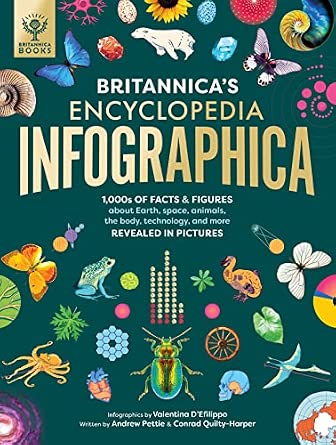 | Best for Visual Fact Browsing | Format: Visual encyclopedia | Presentation: Infographics | Content: Facts and figures | VIEW LATEST PRICE | See Our Full Breakdown |
| The Usborne Science Encyclopedia |  | Best for Digital Follow-Up | Topics: Gravity, flight, genes, and DNA | Video clips: Over 180 | Recommended websites: 1,000 | VIEW LATEST PRICE | See Our Full Breakdown |
| Knowledge Encyclopedia: Science |  | Best Simple Single-Volume Pick | Topic: Science | Audience: Children | Format: Encyclopedia | VIEW LATEST PRICE | See Our Full Breakdown |
| Knowledge Encyclopedia: The World as You’ve Never Seen It Before | 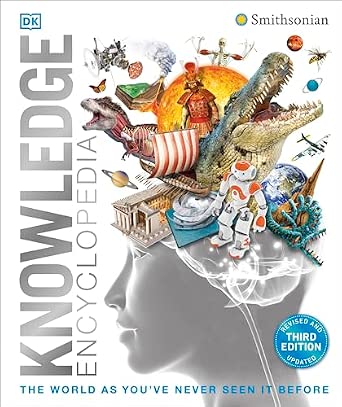 | Best for Big-Picture Exploration | Title: Knowledge Encyclopedia: The World as You’ve Never Seen It Before | ASIN: 0744081467 | Product type: Encyclopedia | VIEW LATEST PRICE | See Our Full Breakdown |
| Knowledge Encyclopedia for Children: Box Set of 8 Books |  | Best Multi-Book Set | Title: Knowledge Encyclopedia for Children: Box Set of 8 Books | ASIN: 9354405231 | Book count: 8 | VIEW LATEST PRICE | See Our Full Breakdown |
| 100,000 Whys for Kids: A Full-Color Visual Encyclopedia |  | Best for Curious Question-Askers | Title: 100,000 Whys for Kids: A Full-Color Visual Encyclopedia | ASIN: B0H2B1DH6L | Age range: 6–13 | VIEW LATEST PRICE | See Our Full Breakdown |
| DK Children’s Encyclopedia: The Book That Explains Everything! (DK Children’s Visual Encyclopedias) |  | Best for General Visual Reference | Title: DK Children’s Encyclopedia: The Book That Explains Everything! | ASIN: 0744059798 | Publisher or brand: DK | VIEW LATEST PRICE | See Our Full Breakdown |
| The Elements Book: A Visual Periodic Table Encyclopedia for Kids |  | Best for Chemistry Beginners | Title: The Elements Book: A Visual Periodic Table Encyclopedia for Kids | ASIN: 1465456600 | Series: DK Our World in Pictures | VIEW LATEST PRICE | See Our Full Breakdown |
| Knowledge Encyclopedia: Science!, 2nd Edition |  | Best for a Science-Focused Reference | ASIN: 0593964330 | Edition: 2nd Edition | Format: Encyclopedia | VIEW LATEST PRICE | See Our Full Breakdown |
| science encyclopedia sets for children | ASIN | Format | Audience |
|---|---|---|---|
| Science Knowledge Encyclopedia | 9354402003 | Box set | Children |
| Science: A Visual Encyclopedia | 1465473238 | Visual encyclopedia | Young learners |
| Britannica’s Encyclopedia Info | 1913750469 | Visual encyclopedia | — |
| The Usborne Science Encycloped | 1805079018 | Science encyclopedia | Young readers |
| Knowledge Encyclopedia: Scienc | 9354404359 | Encyclopedia | Children |
| Knowledge Encyclopedia: The Wo | 0744081467 | Not specified | Not specified |
| Knowledge Encyclopedia for Chi | 9354405231 | Box set | Children |
| 100,000 Whys for Kids: A Full- | B0H2B1DH6L | Full-color visual encyclopedia | Children |
| DK Children’s Encyclopedia: Th | 0744059798 | — | Children |
| The Elements Book: A Visual Pe | 1465456600 | Visual encyclopedia | Kids |
| Knowledge Encyclopedia: Scienc | 0593964330 | Encyclopedia | — |
More Details on Our Top Picks
Science Knowledge Encyclopedia for Children: Collection of 6 Books (Box Set)
For families who want several science books in one purchase, this six-book box set offers a broader shelf presence than the single-volume Knowledge Encyclopedia: Science. Its collection format may suit children who like switching between books or returning to different sections, though the available details do not identify the subjects covered or explain how the six volumes are organized. That missing information makes it harder to judge whether the set spans life science, space, and physics or repeats a narrower range. Compared with Science: A Visual Encyclopedia of STEM and Discovery, which is specifically described as image-led and STEM-focused, this set gives less assurance about its teaching approach. I would choose it for the multi-book format, not for a particular topic or level of depth.
Pros:- Six books are gathered in one box set
- Encyclopedia format is intended for children
- Multiple volumes may make it easier to browse different sections separately
Cons:- The subjects covered by the six books are not specified
- No details are provided about illustrations, reading level, or organization
- The limited description makes it difficult to compare depth with the other science references
Best for: Families looking for a children’s science collection with multiple volumes and who can confirm the set’s contents before buying
Not ideal for: Shoppers seeking a clearly described topic range, visual teaching style, or specific science reference for a school project
- Format:Box set
- Number of books:6
- Collection:Science Knowledge Encyclopedia for Children
- Audience:Children
- Subject:Science
- ASIN:9354402003
Our verdict“Choose this set if having six children’s science books together matters more than knowing the exact topics and teaching format in advance.”
Science: A Visual Encyclopedia of STEM and Discovery
This is the clearest all-purpose choice for children who learn well from images: its visual presentation and accessible explanations are designed to make STEM concepts easier to grasp. The stated coverage of science, STEM, and discovery gives it a more defined learning scope than Science Knowledge Encyclopedia for Children: Collection of 6 Books, whose individual subjects are not listed. Compared with Britannica’s Encyclopedia Infographica, this title is described as pairing images with clear explanations, rather than relying on infographics alone. That makes it a stronger fit for a child who wants context as well as visual summaries. The tradeoff is that image-led explanations may not provide enough detail for advanced study, and the supplied information does not specify age bands or individual chapters.
Pros:- Visual-heavy presentation can make unfamiliar ideas easier to understand
- Clear explanations are described as suited to young learners
- Covers science, STEM concepts, and discovery
- Provides a more clearly described learning approach than the six-book set
Cons:- May not offer enough depth for advanced academic study
- Visual emphasis may leave less room for detailed textual explanations
- Specific age range and chapter-level coverage are not provided
Best for: Curious school-age readers who want an approachable, image-rich introduction to a range of STEM ideas
Not ideal for: Older students who need detailed explanations for advanced coursework or a narrowly focused science reference
- Series:DK Children’s Visual Encyclopedias
- Topic:Science, STEM, and discovery
- Format:Visual encyclopedia
- Audience:Young learners
- Presentation:Images and clear explanations
- ASIN:1465473238
Our verdict“Pick this as the most clearly described visual introduction for children who want broad STEM coverage without advanced textbook-level detail.”
Britannica’s Encyclopedia Infographica: Facts and Figures Revealed in Pictures
Infographics are the defining feature here: facts and figures are presented visually across Earth, space, animals, the human body, technology, and other subjects. That makes this a natural pick for children who prefer scanning diagrams and data displays to reading long explanations. Compared with Science: A Visual Encyclopedia of STEM and Discovery, this title is more explicitly built around infographics, while the latter is described as pairing visuals with clear explanatory text. I would lean toward Britannica’s book for quick browsing and visual comparisons, and toward the DK title when a child needs more guided explanation of STEM concepts. The available details do not give a page count, binding, or reading level, so buyers have limited information about its physical format and suitability for a particular age.
Pros:- Uses infographics to present facts and figures visually
- Includes Earth, space, animals, the human body, and technology
- Offers broader subject browsing than a single-topic reference
- Distinct visual-data approach compared with explanation-led science encyclopedias
Cons:- The supplied description does not establish how much explanatory text accompanies the graphics
- Page count and binding details are not provided
- No age range or reading level is specified
Best for: Children who enjoy visual fact books and like exploring science topics through charts, illustrations, and data
Not ideal for: Readers who need step-by-step explanations, a stated reading level, or detailed information about the book’s format before choosing
- Format:Visual encyclopedia
- Presentation:Infographics
- Content:Facts and figures
- Topics:Earth, space, animals, the human body, technology, and more
- Title focus:Facts and figures revealed in pictures
- ASIN:1913750469
Our verdict“Choose this for a child who likes browsing science facts in infographic form, rather than following fuller text-led explanations.”
The Usborne Science Encyclopedia
Online extensions set this encyclopedia apart: it covers subjects such as gravity, flight, genes, and DNA, with access to over 180 video clips and recommendations for 1,000 websites. That gives curious readers routes to keep learning after a topic catches their attention, a feature not specified for Science: A Visual Encyclopedia of STEM and Discovery or Britannica’s Encyclopedia Infographica. It is the strongest fit here for families comfortable pairing a reference book with online material. The tradeoff is that the supplied description does not explain how the videos and website recommendations are organized, whether access has conditions, or what age range the book targets. Buyers looking for a self-contained, picture-led reference may find the added digital resources less useful than the visual formats offered by the other titles.
Pros:- Covers topics including gravity, flight, genes, and DNA
- Includes access to over 180 video clips
- Recommends 1,000 websites for further learning
- Offers digital follow-up not specified for the visual and infographic alternatives
Cons:- The description does not explain how online resources are arranged or accessed
- Reliance on websites may be less suitable for readers seeking an offline-only reference
- No age range or detail about the book’s visual format is provided
Best for: Families with curious young readers who like following science topics into videos and recommended online resources
Not ideal for: Buyers who want a fully self-contained reference, a clearly stated age range, or a primarily infographic-led book
- Topics:Gravity, flight, genes, and DNA
- Video clips:Over 180
- Recommended websites:1,000
- Format:Science encyclopedia
- Audience:Young readers
- ASIN:1805079018
Our verdict“Choose this when video clips and suggested websites are part of the learning experience you want, rather than a self-contained visual encyclopedia.”
Knowledge Encyclopedia: Science
This title has a straightforward appeal: it is a science encyclopedia for children without a more specific format or feature claim in the supplied details. That simplicity may suit families seeking a single science reference, but it leaves fewer clues for matching the book to a child’s interests. By comparison, Science: A Visual Encyclopedia of STEM and Discovery is explicitly image-led and aimed at young learners, while The Usborne Science Encyclopedia lists specific topics and digital learning resources. Those alternatives make their teaching approaches easier to judge. I would treat this as a basic, broad-category option only after checking a sample or fuller contents information. Its main tradeoff is not a known flaw in the book, but the lack of detail available to evaluate coverage, reading level, and presentation.
Pros:- Identified as a science encyclopedia for children
- Offers a single-title alternative to the six-book box set
- May suit shoppers seeking a general science reference rather than a specified specialist topic
Cons:- No specific subjects or chapter coverage are supplied
- Illustration style and explanation depth are not described
- Reading level and age range are not provided
Best for: Families who want a children’s science encyclopedia and are willing to check the contents or a sample before deciding
Not ideal for: Parents choosing by specific topic coverage, age level, visual style, or online learning features
- Topic:Science
- Audience:Children
- Format:Encyclopedia
- Collection:Knowledge Encyclopedia
- Volume format:Single title
- ASIN:9354404359
Our verdict“Consider this as a straightforward children’s science reference only if you can verify its contents and presentation before purchase.”
Knowledge Encyclopedia: The World as You’ve Never Seen It Before
Knowledge Encyclopedia: The World as You’ve Never Seen It Before is the broadest-sounding pick here, but the available product details do not confirm its subjects, age range, format, or science coverage. That makes it harder to recommend as a dependable science reference than The Elements Book, whose focus on the periodic table is clearly stated, or 100,000 Whys for Kids, which names its science and nature topics. Its title suggests a visual, wide-angle approach, but I would treat that as a possibility rather than a verified feature. The main tradeoff is potential breadth against limited information: families who want a general discovery book may find the concept appealing, while buyers choosing specifically for science lessons have little evidence to compare. I would check the edition’s contents before buying.
Pros:- Encyclopedia format may suit children who want to browse across subjects
- The title signals a broad, world-focused approach
- Could complement focused science books such as The Elements Book
Cons:- Available product data does not identify its subjects or science coverage
- No age range, format, or content details are provided
- The title alone does not establish how useful it is as a science reference
Best for: Families seeking a general knowledge encyclopedia and willing to verify the science topics and format before purchase
Not ideal for: Parents who need confirmed science coverage, a stated age range, or detailed specifications to match a child’s curriculum
- Title:Knowledge Encyclopedia: The World as You’ve Never Seen It Before
- ASIN:0744081467
- Product type:Encyclopedia
- Named subject:The world
- Audience:Not specified
- Format:Not specified
Our verdict“Choose it only if you want a broad encyclopedia and can confirm its contents, since its science scope is less clear than the named topics in 100,000 Whys for Kids.”
Knowledge Encyclopedia for Children: Box Set of 8 Books
Knowledge Encyclopedia for Children: Box Set of 8 Books stands out for offering eight volumes in one set, giving families more separate books to browse than the single-volume 100,000 Whys for Kids. That format may make it easier to keep a child’s reading varied, but the listing does not identify the subjects in each book or say how much of the set covers science. I would not assume that all eight volumes are science-focused. Compared with The Elements Book, which clearly targets one scientific subject, this set offers the promise of range but less certainty about depth and relevance. Its child-focused positioning and boxed collection are useful signals, yet missing details about age level, illustrations, and book contents limit a confident match. It suits families who value a multi-volume reference set and can confirm the titles before choosing.
Pros:- Includes eight books in one boxed collection
- Designed for children
- Multiple volumes may offer more browsing variety than a single encyclopedia
Cons:- The subjects covered by the eight books are not specified
- No age range or individual volume details are provided
- Science depth cannot be judged from the available description
Best for: Families who want a boxed collection of several children’s reference books and can check the volume titles for science coverage
Not ideal for: Buyers looking for a clearly defined science-only set or a specific subject such as chemistry
- Title:Knowledge Encyclopedia for Children: Box Set of 8 Books
- ASIN:9354405231
- Book count:8
- Format:Box set
- Audience:Children
- Series:Knowledge Encyclopedia
Our verdict“Pick this set for the appeal of eight children’s reference books, but verify the volume list if science coverage is your main goal.”
100,000 Whys for Kids: A Full-Color Visual Encyclopedia
100,000 Whys for Kids is the clearest fit for children who move between science questions and other interests: its listed topics include science, space, animals, nature, history, and inventions. The stated ages of 6–13 also make its intended audience easier to judge than that of Knowledge Encyclopedia: The World as You’ve Never Seen It Before, whose age range and contents are not supplied. A full-color visual format can make browsing more inviting for children who prefer images alongside explanations, while the broad topic mix helps connect science to everyday questions. The tradeoff is that this is not presented as a science-only reference, so a child seeking sustained coverage of one subject may be better served by The Elements Book. Its wide scope is a strength for discovery, but not proof of depth in every topic.
Pros:- States a clear intended age range of 6–13
- Full-color visual format supports browsing
- Combines science and space with animals, nature, history, and inventions
- Broad topics can connect science with children’s other interests
Cons:- The wide subject mix may provide less depth in science than a focused book such as The Elements Book
- No page count or specific chapter breakdown is provided
Best for: Children ages 6–13 who like visual browsing and ask questions across science, space, nature, and everyday topics
Not ideal for: Young readers seeking a focused science course or older students who need detailed coverage of a single discipline
- Title:100,000 Whys for Kids: A Full-Color Visual Encyclopedia
- ASIN:B0H2B1DH6L
- Age range:6–13
- Format:Full-color visual encyclopedia
- Topics:Science, space, animals, nature, history, inventions, and how the world works
- Audience:Children
Our verdict“Choose this for a visual, cross-subject question book for ages 6–13, not as a specialist reference for one branch of science.”
DK Children’s Encyclopedia: The Book That Explains Everything! (DK Children’s Visual Encyclopedias)
DK Children’s Encyclopedia: The Book That Explains Everything! is the general-reference choice in this group, with its series name identifying it as part of DK Children’s Visual Encyclopedias. That gives it a clearer visual-reference identity than the listings for Knowledge Encyclopedia for Children: Box Set of 8 Books, where the format of the individual books is not stated. But the available information does not name its science topics, age range, or specific features, so I cannot treat its broad title as evidence of detailed science coverage. For a child who enjoys browsing a general encyclopedia, it may be a sensible alternative to the more narrowly focused The Elements Book; for a specific science-learning goal, that focused title is easier to evaluate. Its central tradeoff is general scope against limited product detail.
Pros:- Identified as part of DK Children’s Visual Encyclopedias
- Its general encyclopedia positioning may support browsing across subjects
- Offers a broader reference role than the subject-specific The Elements Book
Cons:- Available details do not specify science topics or coverage
- No age range or format specifics are supplied beyond the series name
- The title does not establish the depth of its explanations
Best for: Families seeking a general children’s visual encyclopedia for browsing across subjects, rather than a known science curriculum
Not ideal for: Parents who need a confirmed age range, named science topics, or a focused reference for a particular subject
- Title:DK Children’s Encyclopedia: The Book That Explains Everything!
- ASIN:0744059798
- Publisher or brand:DK
- Series:DK Children’s Visual Encyclopedias
- Product type:Children’s encyclopedia
- Audience:Children
- Specific subjects:Not specified
Our verdict“Consider it for general visual-reference browsing, but choose a better-documented title if confirmed science content is your priority.”
The Elements Book: A Visual Periodic Table Encyclopedia for Kids
The Elements Book is the most focused science pick here: it introduces children to the elements of the periodic table through a visual encyclopedia format. That makes its purpose easier to judge than the general DK Children’s Encyclopedia, whose available details do not name specific subjects, and more specialized than 100,000 Whys for Kids, which spans many topics. The narrow focus is useful for a child curious about materials and chemistry, while the DK Our World in Pictures series signals an illustrated educational approach. The tradeoff is limited breadth: this is not a stand-in for a broad science encyclopedia covering space, animals, or nature. The listing also gives no age band or detail on the depth of explanations, so it may be best as a subject-focused starting point rather than a complete science reference.
Pros:- Clearly focused on the elements of the periodic table
- Visual encyclopedia format offers an illustrated route into chemistry
- Designed for kids
- Part of DK’s Our World in Pictures series
Cons:- Narrow subject scope cannot replace a broad science encyclopedia
- No age range or explanation-depth details are provided
Best for: Children curious about chemistry or the periodic table, and families seeking a visual introduction to the elements
Not ideal for: Readers who want one book to cover many areas of science, such as space, animals, and nature
- Title:The Elements Book: A Visual Periodic Table Encyclopedia for Kids
- ASIN:1465456600
- Series:DK Our World in Pictures
- Format:Visual encyclopedia
- Subject:Periodic table elements
- Audience:Kids
Our verdict“Choose this as a visual first reference for the periodic table, but pair it with a broader title if your child wants science across many subjects.”
Knowledge Encyclopedia: Science!, 2nd Edition
Knowledge Encyclopedia: Science!, 2nd Edition suits families seeking a single reference-style book centered on science, rather than a box set that spreads attention across several volumes. Its illustrated encyclopedia format signals a visual approach to scientific subjects, but the available product information does not identify specific topics, age guidance, or interactive features. Compared with Science: A Visual Encyclopedia of STEM and Discovery, this title is explicitly a second edition of a science encyclopedia, while the other book’s title emphasizes STEM and discovery; the supplied details do not support a closer content comparison. The main tradeoff is limited buying information: I can identify its format and edition, but not judge its depth, subject coverage, or suitability for a particular reading level. Choose it when a science-only reference is the priority; skip it if you need confirmed topic lists or a multi-book collection.
Pros:- Science-focused encyclopedia format keeps the reference subject clear.
- Illustrated presentation may help readers engage with scientific material visually.
- Second edition is clearly identified, distinguishing it from the earlier Knowledge Encyclopedia: Science.
- A single-volume reference may suit readers who prefer one science resource over a boxed collection.
Cons:- The supplied product information does not name the scientific topics covered.
- No age range, page count, or detail about illustrations and activities is provided.
- The available details make it difficult to compare its depth with other visual science encyclopedias.
Best for: Families looking for an illustrated, science-centered encyclopedia in a single reference-style volume and willing to check the full listing for topic and age details.
Not ideal for: Buyers who need a confirmed subject list, reading-level guidance, hands-on activities, or several books in one purchase; those details are not provided here.
- ASIN:0593964330
- Edition:2nd Edition
- Format:Encyclopedia
- Subject:Science
- Illustrated:Yes, described as illustrated
- Volume format:Single encyclopedia
Our verdict“Choose this second-edition reference if you want one illustrated book devoted to science, but verify its topics and reading level before buying.”

How We Picked
I compared these eleven titles as resources for children learning about science, not simply as books with science in the title. My criteria included how directly each book focuses on science, how clearly it presents information, whether its visual approach can help readers grasp unfamiliar ideas, and how useful its format is for browsing or looking up questions. I also weighed the difference between a single-volume reference, a set of books, a general encyclopedia, and a specialist title.
The ranking favors books that make a strong, clear case as science references for children while remaining accessible and useful beyond one narrow interest. Broad encyclopedias rank lower for this specific search because their wider coverage can come at the expense of science depth; specialist books are positioned for readers with a defined interest rather than as all-purpose picks. I also treat age suitability as a family decision: reading level, curiosity, and the child’s preferred way of learning can matter more than a publisher’s age label.
| science encyclopedia sets for children | Format | Audience |
|---|---|---|
| Science Knowledge Encyclopedia | Box set | Children |
| Science: A Visual Encyclopedia | Visual encyclopedia | Young learners |
| Britannica’s Encyclopedia Info | Visual encyclopedia | — |
| The Usborne Science Encycloped | Science encyclopedia | Young readers |
| Knowledge Encyclopedia: Scienc | Encyclopedia | Children |
| Knowledge Encyclopedia: The Wo | Not specified | Not specified |
| Knowledge Encyclopedia for Chi | Box set | Children |
| 100,000 Whys for Kids: A Full- | Full-color visual encyclopedia | Children |
| DK Children’s Encyclopedia: Th | — | Children |
| The Elements Book: A Visual Pe | Visual encyclopedia | Kids |
| Knowledge Encyclopedia: Scienc | Encyclopedia | — |
Factors to Consider When Choosing Science Encyclopedia Sets For Children
Choosing among these books is less about finding the single biggest collection and more about matching the reference to how a child asks questions. I’d start with the child’s reading habits and interests, then decide whether a focused science volume, a broad reference, or a set of smaller books will be used most.
Choose Focused Science or Broad Coverage
A science-focused encyclopedia gives more of its space to scientific topics, which is useful when science is the main reason for buying. A broad children’s encyclopedia can connect science with geography, history, and everyday knowledge, but that wider scope may leave less room for science explanations. A common mistake is buying a general reference because its title promises to explain everything, then expecting it to work like a dedicated science book. Think about the questions your child actually asks: repeated questions about animals, space, or materials may call for science-first coverage, while varied curiosity may favor a general reference. If you already own a broad encyclopedia, a focused science title can add more than another all-purpose volume.
Match the Page Style to the Reader
Large images, labeled diagrams, and infographic-style layouts can make complicated subjects easier to approach, especially for children who prefer scanning to reading long passages. They do not automatically mean a book explains more; a visual page may summarize a topic rather than develop it in detail. Children who enjoy reading fuller explanations may prefer a text-led reference, while reluctant readers may be more willing to browse a highly visual one. Check whether the design supports both quick browsing and careful reading, rather than relying on the cover’s promise of visual learning. When possible, compare a few sample pages with the child’s usual reading habits before choosing.
Consider Reading Confidence Alongside Age
Two children of the same age can have very different preferences for vocabulary, page density, and independence. A book with rich detail may reward a confident reader but frustrate a child who wants short answers and frequent illustrations. On the other hand, a very simple reference can lose its appeal quickly if the child is ready for more explanation. Look for a balance between accessible entry points and material that can support follow-up questions. A shared reading routine can also make a more advanced book useful, since an adult can help unpack unfamiliar terms without limiting the child’s curiosity.
Decide Whether a Set Is Better Than One Reference
A multi-book box set can give a household a variety of topics and make it easy to hand a child a smaller volume. Its tradeoff is that the science material may be distributed across books, and individual volumes may not function as a single, easy-to-scan reference. A standalone encyclopedia is often simpler when the goal is to keep one science resource within reach. Before choosing a set, check whether its books cover distinct subjects or repeat similar introductory material. Consider where the books will live and whether the child is likely to browse a collection or return to one familiar volume.
Pay for Breadth Only When the Child Will Use It
A larger or wider-ranging reference can be worthwhile when a child regularly moves between science and other subjects. But sheer scope is not a substitute for relevance: a broad book may spend pages on topics the child rarely explores. For a child with a strong interest in chemistry or the periodic table, a specialist title can be more engaging than a general encyclopedia, though it will not answer questions across all of science. Avoid choosing by page count or the number of books alone. Match the purchase to the likely pattern of use: repeated lookup, casual browsing, shared reading, or a deep interest in one subject.
Check What the Book Can and Cannot Cover
Print encyclopedias are useful for browsing and building background knowledge, but science changes and new discoveries appear after publication. A reference book should be a starting point for learning, not the only source for current facts or a school assignment requiring recent information. For hands-on learners, a book can explain a concept without providing experiments or activities, so families may need a separate activity resource. Specialist titles also have clear limits: a periodic-table guide can deepen one interest but cannot stand in for biology, Earth science, and physics. Choosing with these boundaries in mind helps prevent disappointment and makes it easier to pair the encyclopedia with other learning tools.
Frequently Asked Questions
Should I choose a science-only encyclopedia or a general children’s encyclopedia?
Choose a science-only title when the child repeatedly seeks science answers or you want a reference with science as its main purpose. A general encyclopedia makes more sense when the child’s questions range across many subjects and one broad book would be easier to keep on hand. The tradeoff is focus: broad coverage offers variety, while dedicated science coverage gives the subject more room. If your household already owns an all-purpose reference, adding a science-focused book is less likely to duplicate it. If not, decide whether breadth or science depth better matches the child’s current curiosity.
Is a box set better than one large science encyclopedia?
Not automatically. A box set offers multiple volumes and may feel approachable when a child prefers short, topic-based browsing, while one volume can keep science information together for easier reference. Sets can also contain books on subjects beyond science, so check how much of the collection actually matches the reason you are buying. A standalone title may be the better choice if the child wants a dependable book to revisit for science questions. Consider available shelf space and whether the child tends to explore one book deeply or sample several topics.
Are visual encyclopedias suitable for children who do not like reading?
They can be a helpful entry point because diagrams, captions, and images invite browsing without requiring a child to read long passages in order. Still, a visual format does not guarantee that every topic is explained in simple language or with enough detail for a child’s questions. Look for pages where images clarify ideas rather than merely decorate them, and check how much supporting text accompanies the visuals. If the child wants more explanation after browsing, a text-rich science reference can complement the visual book. The strongest choice depends on whether pictures prompt curiosity or replace the kind of explanation the child needs.
When does a specialist science book make more sense than a general encyclopedia?
A specialist title is a good match when a child has a recurring interest in one subject and is ready to explore it beyond basic definitions. A book about the elements, for example, can give that interest a clear home, but it will not cover the range of questions a general science encyclopedia can address. Avoid treating a narrow book as a complete science reference unless the child’s goal is specifically to learn that topic. For many families, a specialist volume works best alongside a broad science book, not instead of one. If choosing only one, prioritize the child’s sustained interest over a passing fascination.
How can I tell whether an encyclopedia will remain useful as my child gets older?
Look for a mix of approachable explanations and enough detail to support follow-up questions, rather than choosing only by age label. A book that offers clear diagrams, useful topic organization, and more than one level of information may stay relevant longer than a reference built around very brief answers. The child’s reading confidence also matters: a more advanced volume can work well when an adult is available to read together. Keep in mind that print science references may not reflect the newest discoveries, so they are better for foundations than live updates. A book that encourages a child to ask the next question can remain useful even as the child outgrows its simplest sections.
Conclusion
For a single science-first purchase, I’d choose Knowledge Encyclopedia: Science!, 2nd Edition as the best overall. Best value for varied interests goes to the Knowledge Encyclopedia for Children: Box Set of 8 Books for families who want a collection rather than one focused reference, while the Science Knowledge Encyclopedia for Children: Collection of 6 Books is another set-based option. For a premium-feeling, visually driven reference, consider Britannica’s Encyclopedia Infographica; for beginners who respond to clear, approachable explanations, I’d start with The Usborne Science Encyclopedia. If a child is drawn to chemistry and the periodic table, The Elements Book is the most targeted choice. Choose a broad title such as DK Children’s Encyclopedia when the goal is knowledge across subjects, not science alone.