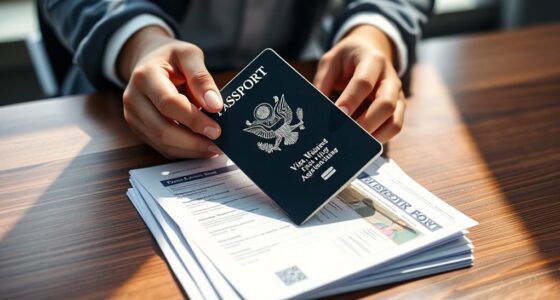
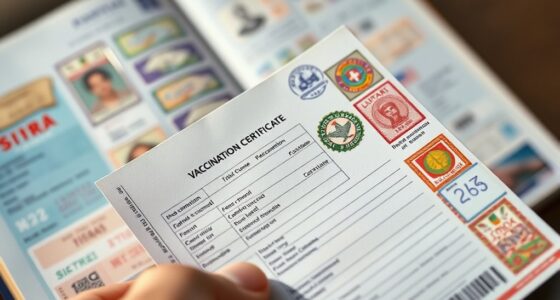
Vaccination certificates are crucial for international travel, serving as proof that you’ve received the required vaccines and helping you comply with destination country rules. They typically include your name, date of birth, vaccine details, and issuing authority. Digital certificates are becoming popular for their convenience and quick verification, reducing travel delays. To guarantee smooth border crossings, it’s imperative to understand vaccination requirements and keep your documents updated—stick around to discover more helpful tips.
Key Takeaways
- Vaccination certificates serve as proof of COVID-19 vaccination required for international border crossings.
- They include personal details, vaccine type, administration dates, and issuing authority for verification.
- Digital certificates enable quick, secure presentation at border checks, reducing delays.
- Verify destination country’s specific vaccination and documentation requirements before travel.
- Keep certificates updated and accessible to ensure smooth verification and compliance during travel.

With international travel resuming globally, vaccination certificates have become essential documents for crossing borders. These certificates serve as proof that you’ve received the necessary vaccines, making vaccine verification an integral part of modern travel. Airlines, border control agencies, and governments now rely heavily on this travel documentation to guarantee safety and compliance with health regulations. When you plan your trip, it’s crucial to have your vaccination certificate ready and up-to-date to avoid unnecessary delays or denial of entry. Many countries have streamlined their processes, allowing travelers to present digital or paper certificates that verify your vaccination status quickly and efficiently.
Your vaccination certificate acts as a key piece of travel documentation, confirming that you meet the health requirements of the destination country. This document typically includes vital details such as your name, date of birth, vaccine type, dates of administration, and issuing authority. Ensuring that this information is accurate and legible is essential, as discrepancies can lead to complications during border checks. Many countries now accept digital certificates, which can be stored on smartphones or in dedicated apps, making it easier to present your proof instantly when needed. Digital travel documentation also reduces the risk of loss or damage compared to physical copies, providing a more secure and convenient way to carry your vaccination proof. Additionally, some countries are adopting smart IoT technologies to verify vaccination status more efficiently at border points.
Ensure your vaccination details are accurate and legible to avoid border check issues and facilitate smooth travel.
As you prepare for your trip, double-check the specific vaccination requirements of your destination. Different countries may accept different vaccines or have varying thresholds for what qualifies as complete vaccination. Some regions might also require additional health documentation, such as negative test results or health declarations, alongside your vaccination certificate. It’s wise to verify these details well in advance and ensure your vaccine verification aligns with the latest guidelines. To avoid any last-minute issues, consider obtaining official, recognized certificates from your healthcare provider or vaccination center, which are often accepted universally and contain standardized information.
Furthermore, keep in mind that some countries may have digital portals or apps where you can upload and verify your vaccination status ahead of time. Use these tools to streamline your entry process, reducing wait times and the need for additional paperwork at border crossings. Ultimately, having a valid and easily verifiable vaccination certificate not only facilitates smoother travel but also demonstrates your commitment to public health efforts. By understanding the importance of vaccine verification and ensuring your travel documentation is complete, you can focus more on enjoying your trip and less on bureaucratic hurdles.
Top picks for "vaccination certificat international"
Open Amazon search results for this keyword.
As an affiliate, we earn on qualifying purchases.
Frequently Asked Questions
Are Digital Vaccination Certificates Universally Accepted?
Digital vaccination certificates aren’t universally accepted yet. Some countries trust digital verification methods, making it easier for you to travel, but others still prefer paper proofs. Privacy concerns often arise with digital certificates, as you might worry about data security. Before traveling, check the destination’s acceptance policies and verify your digital certificate complies with their verification systems. This way, you avoid surprises and ensure smooth entry.
How Do I Update My Vaccination Record After a Booster?
To update your vaccination record after a booster, start by contacting your healthcare provider or the vaccination site where you received the booster. They can guide you through the record update process, ensuring your vaccination certificate is accurate. Usually, they’ll input your new booster information into the system. Once updated, make sure to download or request an updated digital or paper vaccination certificate to reflect your latest booster process.
Can I Use a Paper Certificate in Digital-Only Countries?
Yes, you can use a paper certificate in digital-only countries. However, be aware of digital certificate limitations, as some countries may only accept digital proof of vaccination for entry. Paper certificates are generally valid, but their acceptance depends on the destination’s specific policies. Always check the country’s requirements beforehand. Carry both forms if possible, to avoid issues at border controls and ensure smoother travel.
What Should I Do if My Certificate Is Lost or Damaged?
If your vaccination certificate is lost or damaged, you should contact the issuing authority immediately to request a certificate replacement. Many countries or health organizations offer online processes for lost documentation, allowing you to apply for a new certificate quickly. Keep any proof of your previous vaccination handy, as it can help expedite the replacement process. Make sure to follow their instructions carefully to ensure you receive your updated certificate before your next travel.
Are There Age-Specific Vaccination Certificate Requirements?
You should verify if there are age-specific requirements for vaccination certificates before traveling. Some destinations may require proof of vaccination for certain age groups, while others might offer exemptions for specific ages or health conditions. If you’re unsure, contact your healthcare provider or the relevant authorities to confirm if you need to meet age-specific requirements or apply for vaccination exemptions. Staying informed helps ensure smooth travel plans.
Conclusion
Getting your vaccination certificate is your ticket to seamless international travel—without it, you might face more hurdles than a mountain climber. Make sure your document is up-to-date and ready to go, so you don’t get stuck in a bureaucratic maze. When you have everything in order, you’ll glide through border checks like a breeze. Don’t let paperwork be your travel villain—equip yourself now and turn your journey into an unforgettable adventure!