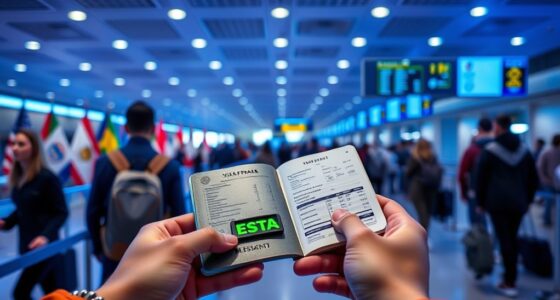
A machine-readable passport encrypts your personal details and biometric data into a format that border scanners can quickly interpret. It contains a Machine-Readable Zone (MRZ) with essential info like your name, passport number, and nationality, speeding up border checks. The passport also stores biometric data, such as fingerprints and facial features, to enhance security. These features make identity verification faster and more accurate, and if you want to discover more about how they work, keep exploring!
Key Takeaways
- Machine-readable passports contain a special zone (MRZ) with essential traveler information for quick data access.
- They incorporate biometric data like fingerprints and facial features stored securely in a digital chip.
- Security features such as holograms and encryption protect against counterfeiting and unauthorized access.
- These passports support automated border control systems for faster and more accurate identity verification.
- Overall, they enhance border security, reduce processing times, and prevent identity theft and fraud.

Machine-readable passports have revolutionized the way border control agencies verify travelers’ identities. These passports contain a machine-readable zone (MRZ) that encodes essential information, making it easier and faster for officials to process travelers. When you approach a border checkpoint, the machine reads the MRZ, instantly retrieving details like your name, passport number, date of birth, and nationality. This technology substantially reduces processing times and minimizes human error, ensuring smoother crossings for travelers.
Machine-readable passports streamline border checks by quickly retrieving traveler information, reducing errors and wait times.
Beyond the convenience, machine-readable passports enhance security through the integration of biometric data. Biometric data includes unique physical characteristics—such as fingerprints, facial features, or iris patterns—that are stored digitally within the passport’s chip. When you present your passport, border officers can verify your identity by comparing your biometric data stored in the chip to your current physical features. This process makes it much harder for someone to use a stolen or forged passport, boosting overall passport security. The inclusion of biometric information acts as a digital fingerprint, adding a robust layer of protection against identity theft and fraud.
The security features embedded in machine-readable passports are designed to combat counterfeiting and tampering. Modern passports incorporate advanced security elements like holograms, watermarks, microprinting, and specialized inks, all aimed at making forgery difficult. The digital chip itself is secured with encryption, ensuring that the biometric data cannot be easily accessed or altered. When border agencies scan the passport, they can authenticate the document’s validity and confirm that the biometric data matches the traveler’s physical appearance, providing a reliable method of identity verification. Additionally, the use of digital security features helps prevent unauthorized access and ensures the integrity of the passport’s data.
You’ll find that these passports also support automated border control systems, which use biometric verification to expedite processing. Instead of manual checks, you might simply look into a camera or place your finger on a scanner, and within seconds, your identity is confirmed. This seamless integration of biometric data and security measures not only enhances traveler convenience but also strengthens national security by making it harder for unauthorized individuals to cross borders unlawfully.
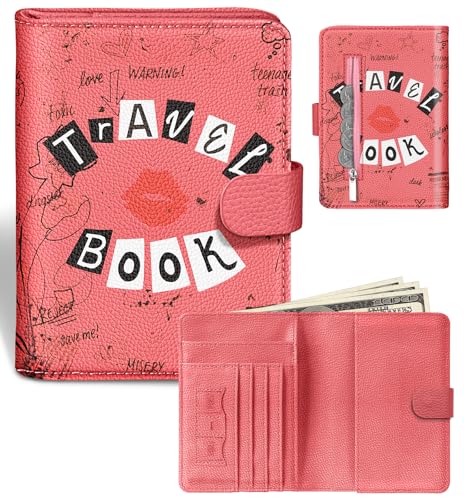
Slohif Passport Wallet Holder Cover for Travel – Women Men RFID Blocking Passport Book Case Protector, Pink Cute Lip Leather Personalized Organizer Slim Carrier Boarding Pass Cards Slots
Wallet Functionality: This passport holder doubles as a wallet, offering space for cash, credit cards, IDs, and travel…
As an affiliate, we earn on qualifying purchases.
As an affiliate, we earn on qualifying purchases.
Frequently Asked Questions
How Do I Verify if My Passport Is Machine-Readable?
To confirm if your passport is machine-readable, look at the data page; it should have two lines of readable characters at the bottom. These lines contain biometric data encoded for passport security, making it easier for authorities to scan and authenticate. If these lines are clear and formatted correctly, your passport is likely machine-readable. Always check for the presence of these features before traveling to ensure smooth border crossings.
Are All Countries Issuing Machine-Readable Passports?
Imagine a global tapestry where passports are threads woven to meet international standards. Not all countries issue machine-readable passports, but most follow the passport design that aligns with these standards for smooth crossings. While many nations embrace this technology, some still use traditional passports, so it’s wise to verify your country’s current passport issuance practices. This guarantees your travel documents are up-to-date and compatible with international border control systems.
Can a Machine-Readable Passport Be Used for Digital Travel Documents?
Yes, a machine-readable passport can be used for digital travel documents. You benefit from digital verification and biometric integration, enhancing security and convenience. These passports often support digital formats, allowing you to store and verify your travel information electronically. This streamlines border checks and reduces fraud. As countries adopt advanced passport technology, using a machine-readable passport for digital travel documents becomes more reliable and widely accepted, making your travel smoother.
What Should I Do if My Machine-Readable Data Is Damaged?
Ever found your passport’s data compromised just when you need it the most? Don’t panic. You should visit your passport office or a trusted passport repair specialist for professional help. They can assist with data recovery and determine if a replacement is necessary. Avoid trying to repair it yourself, as improper handling could make things worse. Acting quickly ensures your travel plans stay on track.
How Do Machine-Readable Passports Prevent Identity Theft?
You can prevent identity theft with a machine-readable passport by relying on biometric verification and data encryption. Biometric data, like fingerprints or facial scans, uniquely identify you, making it difficult for imposters to use stolen information. Meanwhile, data encryption safeguards your personal details from hackers during electronic processing. Together, these features ensure your identity remains protected, giving you peace of mind when traveling or verifying your identity internationally.

Portable ID & Passport Scanner for Bars, Clubs & Retail | Verifies Age & Expired IDs | Optional Fake ID Detection (Intellicheck) | Works in All 50 States | 2026 Model
Unlimited Standard ID Scanning — Always Free – Instantly verifies age and expiration on every scan and automatically…
As an affiliate, we earn on qualifying purchases.
As an affiliate, we earn on qualifying purchases.
Conclusion
Now that you know the basics of machine-readable passports, you can confidently complete your checks and travels. By understanding the importance of passports’ precision and protection, you’re better prepared for border battles and security scans. Remember, these documents are designed to streamline your steps and safeguard your stay. So, stay savvy, stay secure, and smoothly sail through your journeys with these smart, secure, and simple machines making your travels trouble-free.

25 ID Cards Security Hologram Overlay Stickers with Micro Secure Technology and Extra Security Futures SHID-05 "Corporate ID Hologram"
Easy to Apply Sticker-Like Design
As an affiliate, we earn on qualifying purchases.
As an affiliate, we earn on qualifying purchases.
automated border control device
As an affiliate, we earn on qualifying purchases.
As an affiliate, we earn on qualifying purchases.