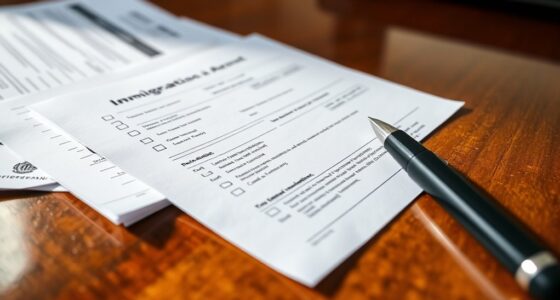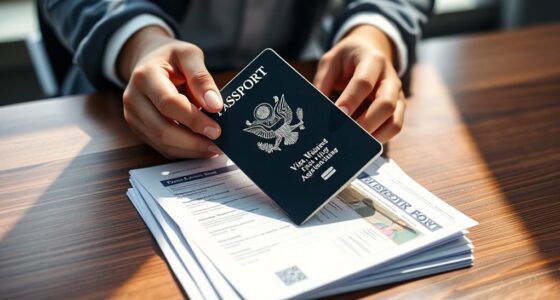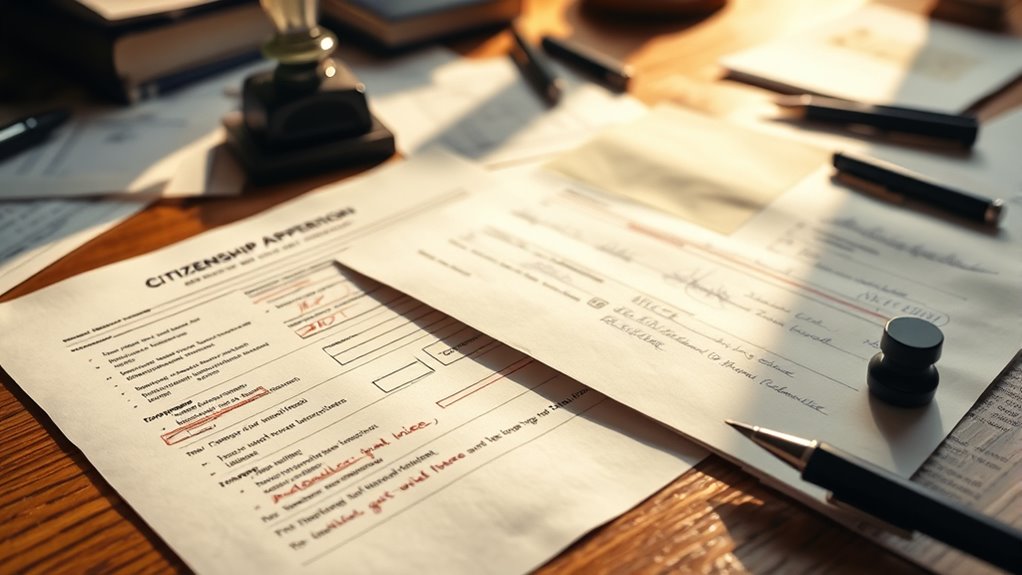
When documenting your citizenship application or naturalization papers, gather essential documents like your birth certificate, passport, or national ID, and proof of legal residence. Make certain all paperwork is current, legible, and translated if needed, with copies notarized if used. Organize supporting materials, including photographs and evidence of residence. Double-check that all forms are accurate and complete before submission. Continuing to explore this process will help you understand every step to strengthen your application.
Key Takeaways
- Provide valid identification documents such as birth certificates, passports, or national ID cards to establish citizenship.
- Ensure all documents are current, properly translated if necessary, and include notarized or certified copies.
- Collect supporting materials like marriage certificates, residency proof, and language test results as required.
- Organize documents neatly according to application instructions, verifying consistency and completeness before submission.
- Include recent photographs adhering to official standards and double-check application forms match supporting documentation.

Applying for citizenship involves careful documentation to guarantee your application is complete and accurate. Navigating the application process can seem overwhelming, but understanding what required documentation you need to gather simplifies the journey. Your goal is to provide clear, organized proof of your eligibility, so start early and double-check every item on the list. The documentation required varies depending on your specific circumstances, but generally, you’ll need to compile a mix of personal identification, residency records, and legal documents. Being meticulous ensures your application isn’t delayed or rejected due to missing or incorrect paperwork.
Gather and organize your documents carefully to ensure a complete and accurate citizenship application process.
First, you’ll want to collect essential identification documents such as your birth certificate, passport, or national ID card. These establish your identity and citizenship status. If you’re applying based on marriage, include your marriage certificate to demonstrate your relationship’s legitimacy. For those with a different immigration status, gather your permanent resident card, visa records, or other proof of lawful presence. It’s also wise to include proof of residence, like utility bills, lease agreements, or tax records, that confirm your physical presence in the country over the required period. Some applications may ask for evidence of language proficiency or knowledge of civics, so prepare any certificates or test results relevant to those requirements.
Keep in mind that every piece of required documentation must be current, legible, and, when applicable, translated into English by a certified translator. Original documents are typically preferred, but copies may suffice if they are notarized or certified. Make sure to organize your paperwork neatly, creating copies of everything for your records. Missing or incorrect documents can cause delays, so review the specific instructions of the application form carefully. Many agencies also request recent photographs, so check the guidelines for size and background specifications.
Additionally, understanding the divorce laws related to your situation can help you prepare any supporting documents needed if your application involves marital status verification. Filling out the application form accurately is just as essential as assembling the documentation. Double-check all information for consistency with your supporting documents. Any discrepancies could lead to delays or suspicion of fraud. Once you’ve gathered all required documentation and filled out the application form, compile everything into a neat package, following the submission instructions precisely—whether electronically or via mail. Remember, incomplete applications are often returned or rejected, so taking the time to verify every detail streamlines the process.

Forvencer Passport Holder Cover with Safe Zipper Closure, Premium Passport Wallet for Travel, Cute RFID Blocking Card Case, Waterproof Travel Accessories for Women, Black
Zipper Closure for Extra Security: This passport holder features a secure zipper to keep your cards, money, and…
As an affiliate, we earn on qualifying purchases.
As an affiliate, we earn on qualifying purchases.
Frequently Asked Questions
How Long Does the Naturalization Process Typically Take?
The naturalization process usually takes about 8 to 12 months, but processing times can vary depending on your local USCIS office. Case backlogs may delay your application, especially during busy periods. To stay informed, regularly check your case status online, and verify all your documents are complete to avoid unnecessary delays. Patience and timely follow-ups help you navigate the process more smoothly.
Are There Any Fees Associated With Citizenship Application Documentation?
Yes, there are application fees and documentation costs. While the application fee covers processing your citizenship request, you might also face additional documentation costs, like obtaining necessary certificates or translations. These expenses can vary depending on your situation and location. Keep in mind that paying fees isn’t just about costs; it’s an investment in your future citizenship journey. Budget accordingly to avoid delays or complications.
Can I Apply for Citizenship Online or Only in Person?
You can apply for citizenship online through the USCIS website by submitting an electronic application. However, you’ll still need to schedule an in-person appointment for biometrics and the interview. Electronic submission makes the process more convenient, but some steps, like the final interview, require your physical presence. Be sure to check USCIS guidelines for specific requirements and to confirm if online application is available for your situation.
What Documents Are Required for Minor Children’s Citizenship Applications?
For minor children’s citizenship applications, you need to gather essential citizenship documentation, including their birth certificate, proof of lawful permanent residence, and evidence of parental relationship. You may also need to submit photos, a completed application form, and any court or custody documents if applicable. Make certain all documents are current, certified, and properly translated if not in English. Gathering these materials helps streamline the process and avoids delays.
How Do I Replace Lost or Stolen Naturalization Papers?
Losing your naturalization papers might feel like losing a part of yourself, but you can get through it. To replace lost documents, you’ll need to file Form N-565, Application for Replacement Naturalization/Citizenship Document. Submit proof of your identity and citizenship, pay the fee, and wait for USCIS to process your request. This process restores your identity’s paper trail, reaffirming your citizenship, even when the original papers are gone.

SKYDUE Expanding File Organizer with 8 Pockets, Accordion File Folders with Labels, Portable Document Paper Bill Receipt Organizer, Home College School Office Supplies, Letter Size, Blue
Size: 13 x 10 x 0.7 inches. Fits A4 and letter-size paper, standard documents and filing needs.
As an affiliate, we earn on qualifying purchases.
As an affiliate, we earn on qualifying purchases.
Conclusion
By carefully documenting citizenship applications and naturalization papers, you’re like a skilled navigator guiding a ship through uncharted waters. Every record you keep is a steady anchor, ensuring a smooth journey for those seeking a new beginning. Your attention to detail helps build a clear, trustworthy path to citizenship. Remember, your work is essential—like the compass that keeps everything on course, making dreams of a new homeland come true.
notarized document certification kit
As an affiliate, we earn on qualifying purchases.
As an affiliate, we earn on qualifying purchases.

Humyoun 200 Pcs Thick Passport Photo Holder 5.31 x 3.54 Inches Passport Picture Folders with Compartment for 2 x 2 Print, Picture Display Safely for Office, Customers Deliver Pictures, Travel
Substantial Quantity Adapter: made from paper, these passport photo holder folders come in a bulk package, ideal for…
As an affiliate, we earn on qualifying purchases.
As an affiliate, we earn on qualifying purchases.