
When traveling with your child, make sure to carry all necessary documents like a valid passport and any required visas. You should also have a notarized or legalized consent letter from the other parent or guardian, especially if you’re sharing custody. These documents verify your authority and prevent problems at borders. Ensuring your child’s birth certificate and passport meet passport office standards can speed up processing. Keep in mind these tips to avoid travel hiccups; more helpful details await you.
Key Takeaways
- A notarized or legalized consent letter from the non-traveling parent is essential for legal and border compliance.
- Ensure the child’s passport is valid for at least six months beyond the travel dates and meets size and photo standards.
- Carry both original and certified copies of the child’s birth certificate to verify parentage if needed.
- Some countries require individual visas for children; apply early and check specific entry requirements.
- Proper documentation prevents delays, legal issues, or denial of travel, especially when surnames differ or custody restrictions exist.

Are you prepared to travel with a child? Ensuring you have the right travel documents is essential to avoid any unexpected setbacks at borders or airports. When traveling internationally with a child, you need to be aware of specific requirements that can vary depending on your destination. For example, international custody arrangements might influence the documentation needed if you share custody with the child’s other parent. Authorities often require proof that you’re authorized to take the child abroad, especially if one parent has sole custody or if there are legal restrictions in place. Carrying a consent letter from the other parent becomes critical. This letter should clearly state that the other parent agrees to the child’s travel and should be notarized or legalized, depending on the destination’s regulations. Not doing so could lead to delays, or worse, the child being prevented from leaving the country.
Visa requirements are another important aspect you must check well before your trip. Some countries require children to have their own visas, even if they’re traveling with a parent. Visa processing times can vary, so it’s wise to start the application process early. In some cases, countries might impose additional restrictions or documentation for minors, particularly if the child is traveling alone or with only one parent. Keep in mind that authorities may request to see the child’s birth certificate to verify parentage, especially if the last names differ or if the child has a different surname from the accompanying adult. It’s best to carry both the original documents and certified copies to avoid any issues.
Additionally, high-quality passport photos are often required for the application process and should meet specific size and background standards to prevent delays. Your child’s passport is, of course, a fundamental document. Make sure it’s valid for the duration of your trip and, ideally, six months beyond your return date. Many countries refuse entry if the passport is close to expiration. Some destinations also require the passport to have blank pages for visas and entry stamps. When applying for the passport, consider including your child’s biometric information if required, as this can facilitate smoother processing and entry.
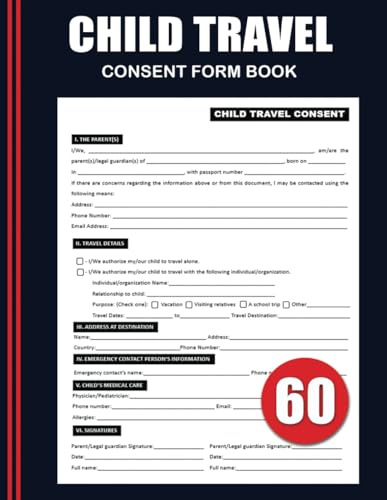
Child Travel Consent Form Book: Minor Trip Authorization Letter with One Parent, Individual or Organization
As an affiliate, we earn on qualifying purchases.
As an affiliate, we earn on qualifying purchases.
Frequently Asked Questions
Can a Child Travel Internationally Without Both Parents’ Consent?
You generally can’t have a child travel internationally without both parents’ consent unless you have legal custody or written parental authorization. If one parent has sole legal custody, that parent can authorize travel alone. However, if custody is shared, you’ll need the consent of both parents or appropriate legal documentation. Always check specific country requirements and carry necessary legal documents to avoid travel disruptions.
Are Digital or Electronic Copies of Child Travel Documents Accepted?
You might think digital copies are enough to get through airport security, but they aren’t! Most countries and airlines don’t accept electronic documents or digital copies of child travel documents as valid proof. Always carry physical, official passports and consent letters. Relying solely on digital versions can cause huge delays or denied boarding. So, keep your child’s travel documents in hand—digital copies just aren’t good enough for international travel!
How Long Are Child Passports Valid Before Renewal Is Needed?
Your child’s passport is typically valid for five years before you need to contemplate passport renewal. It’s important to keep track of travel document validity to avoid issues at border controls. As your child’s passport approaches expiration, plan for renewal early to guarantee seamless travel. Renewing on time helps maintain valid travel documents and prevents last-minute hassles during trips. Always check the specific validity period for your country’s passports, as it can vary.
What Emergencies Require Immediate Issuance of Travel Consent?
When seconds count, you must act fast. Emergencies like sudden illness, accidents, or legal issues require immediate issuance of travel consent and emergency authorization. In such urgent travel scenarios, you’ll need urgent travel documents to quickly move your child across borders. Always be prepared with the proper consent letters and understand the process for obtaining these essential documents swiftly, ensuring your child’s safety and compliance with legal requirements.
Are There Special Requirements for Traveling With Foster or Guardianship Children?
When traveling with foster or guardianship children, you must meet specific foster care regulations and carry appropriate guardianship documentation. Make certain you have legal guardianship papers or court orders to prove your authority. Some countries may require notarized consent letters from birth parents or agencies, even if guardianship is established. Always check destination-specific regulations and carry all relevant documents to avoid delays or legal issues during travel.

USA Visa Passport ID Photo Print 2 inch x 2 inch 2×2 Customized and Personalized 4 Pack (4 pcs)
You will get four photo prints two inches by two inches for USA passport, visa, citizenship application
As an affiliate, we earn on qualifying purchases.
As an affiliate, we earn on qualifying purchases.
Conclusion
So, next time you pack those child travel documents, remember that a simple consent letter can save you from unexpected delays — or worse, a denied boarding. It’s ironic how something so small can be such a big deal, isn’t it? You’d think passports and permissions would be obvious, but in travel, it’s the tiniest details that keep you moving smoothly. Stay prepared, and don’t let paperwork be the real delay in your journey.
children's travel visa kit
As an affiliate, we earn on qualifying purchases.
As an affiliate, we earn on qualifying purchases.

Magimack Family Passport Holder for Travel, RFID Blocking Travel Document Organizer with Flexible Carrying Style, Portable Passport Wallet and Essentials for Trip (Grey)
RFID-Blocking Passport Holder: Designed for peace of mind on the go, it features the RFID-blocking layers that shields…
As an affiliate, we earn on qualifying purchases.
As an affiliate, we earn on qualifying purchases.