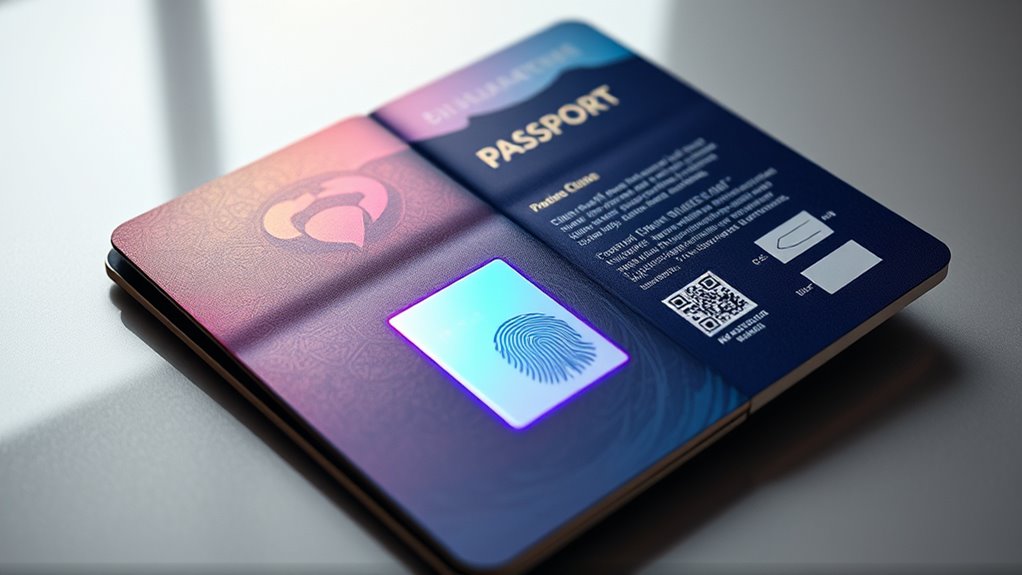

Biometric passports include microchips that securely store your personal details and biometric data like your photo, fingerprints, or iris scans. When you go through border checks, scanners read the chip, and specialized systems compare your biometric info with your face for quick, accurate verification. This technology enhances travel security and speeds up processes, making it harder for counterfeit or stolen passports to pass. Keep exploring to understand how these features keep your identity safe.
Key Takeaways
- Biometric passports contain microchips that securely store personal and biometric data like photos, fingerprints, and iris scans.
- The microchip’s data is encrypted to prevent hacking, tampering, and unauthorized access.
- At border control, scanners read the chip, and biometric data is compared with the traveler for verification.
- The process ensures quick, accurate identity confirmation, reducing errors and fraudulent documents.
- Overall, chips and biometrics enhance travel security and streamline border crossing procedures.
Have you ever wondered how modern passports verify your identity more securely? The answer lies in the advanced technology embedded within biometric passports, also known as e-passports. These passports incorporate microchips that store biometric data, considerably improving travel security. Instead of relying solely on visual inspection or basic information, biometric passports use sophisticated data to confirm your identity quickly and accurately at border control points. This process reduces the chance of identity fraud and makes travel smoother for travelers worldwide.
Biometric passports use microchips to securely verify your identity quickly and accurately at border control.
When you carry a biometric passport, the microchip inside contains your personal details, such as your name, date of birth, and passport number, along with your biometric data. This biometric data typically includes a digital photograph of your face and sometimes fingerprints or iris scans, depending on the country’s security protocols. The key purpose of storing this data is to enable border officials to verify that the person presenting the passport is indeed the rightful owner. The biometric data is securely stored within the chip to prevent unauthorized access or tampering, which is critical for maintaining the integrity of travel security.
The process of verifying your identity involves scanning the microchip at border crossings. When you approach the checkpoint, specialized reader devices access the data stored on the chip. They compare your biometric information—like your facial features—against the data stored in the passport. This comparison is swift and highly accurate, making it difficult for someone to use a stolen or fake passport. Biometric data storage ensures that the verification process isn’t just visual but scientifically validated, providing a much higher level of security. This not only speeds up the immigration process but also enhances the overall safety of international travel. Additionally, security measures implemented in biometric passports help prevent tampering and unauthorized data access.
Furthermore, biometric passports are designed with robust security features to protect your data. Cryptographic techniques encrypt the information stored on the chip, preventing hacking or data theft. The integration of biometric data into travel security protocols streamlines border checks, reduces human error, and helps authorities spot counterfeit documents quickly. As a traveler, you benefit from this technology because it minimizes delays and increases confidence in the authenticity of your passport.

Fingerprint Reader Biometric Authentication – DigitalPersona URU4500 USB – Fingerprint Scanner – Original HID Brand
New replacement old Red Logo Digital persona URU4500, HID , USB reader. Original HID Brand
As an affiliate, we earn on qualifying purchases.
As an affiliate, we earn on qualifying purchases.
Frequently Asked Questions
How Secure Are Biometric Passport Chips Against Hacking?
Biometric passport chips are quite secure, thanks to advanced encryption protocols that protect your data. These encryption methods make it difficult for hackers to access or decode the information stored on the chip. While no system is entirely immune, biometric passports are designed to minimize risks from data breaches. You can trust that the combination of encryption and security standards markedly reduces the likelihood of unauthorized access or hacking attempts.
Can Biometric Data Be Altered or Erased?
Sure, you can try to alter or erase biometric data, but good luck—biometric data storage is protected by tough data encryption techniques. Hackers might dream of hacking your biometric info, but the system’s designed to resist such tampering. While theoretically possible, in practice, your biometric data remains securely locked away, making you feel like a star in a spy movie rather than an open book ready for editing.
What Happens if My Biometric Data Is Mismatched?
If your biometric data mismatches during identity verification, it can cause delays or denial of entry. Authorities might ask for additional identification or conduct further checks to confirm your identity. This process safeguards data privacy and ensures only authorized individuals access secure areas. You should cooperate and provide extra documentation if needed. Remember, accurate biometric data helps maintain security and speeds up travel, so keep your details updated and correct.
Are Biometric Passports Compatible With All Countries?
Most countries accept biometric passports, but you should check each country’s entry requirements before traveling. When you renew your biometric passport, it undergoes biometric verification to guarantee security. Compatibility isn’t universal, so some countries may require additional documentation or manual verification. Always verify the specific entry rules for your destination, especially if you plan to travel frequently or renew your passport, to avoid surprises at border controls.
How Is My Biometric Data Protected During Travel?
Your biometric data is protected during travel through strict encryption standards that secure the information stored in your passport’s chip. The biometric data is stored securely and cannot be read without authorized equipment, ensuring privacy. When you pass through border controls, your data is transmitted using encrypted channels, preventing unauthorized access. These measures keep your biometric information safe from hacking or misuse while traveling internationally.
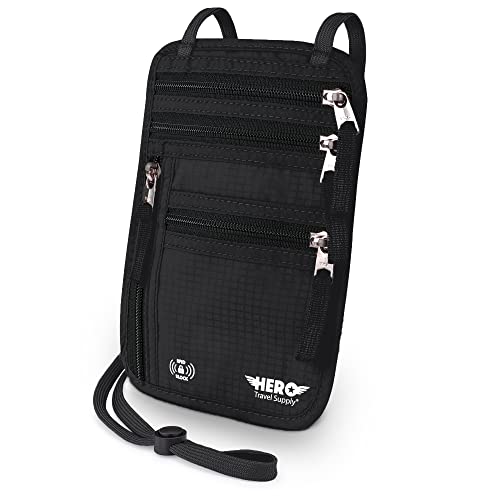
HERO Neck Wallet – RFID Blocking Passport Holder, Easy to Conceal and Pouch (Black)
LIFETIME REPLACEMENT GUARANTEE – We individually test every HERO Neck Wallet in the USA before shipping. And every…
As an affiliate, we earn on qualifying purchases.
As an affiliate, we earn on qualifying purchases.
Conclusion
Ultimately, biometric passports gently remind us that technology is quietly shaping our travel experiences. While they offer enhanced security and convenience, they also encourage us to embrace change with a open mind. As you carry your passport, remember it’s more than just a document—it’s a subtle step toward a future where borders become just a little more seamless. Embracing these innovations means welcoming a world that’s both familiar and gently redefined.

Passport Holder for Travel Essentials,RFID Blocking Passport Cover Wallet Card Case for Women and Men (Black)
【Multi-Purpose】:The travel passport holder has a unique interior design and multiple functions, which can provide safe storage for…
As an affiliate, we earn on qualifying purchases.
As an affiliate, we earn on qualifying purchases.

RFID Blocking Sleeve Anti Theft 4 Credit Card & 2 Passport Holder Wallet Pocket
Protect you information: The sleeves are equipped with advanced RFID SECURE Technology, a powerful electromagnetically opaque shield, which…
As an affiliate, we earn on qualifying purchases.
As an affiliate, we earn on qualifying purchases.