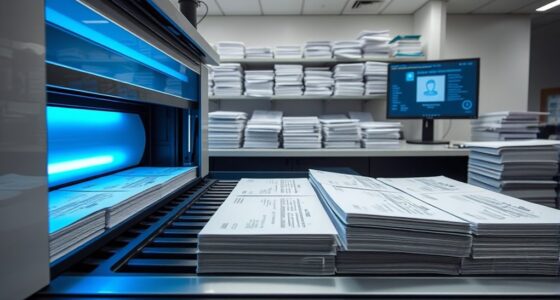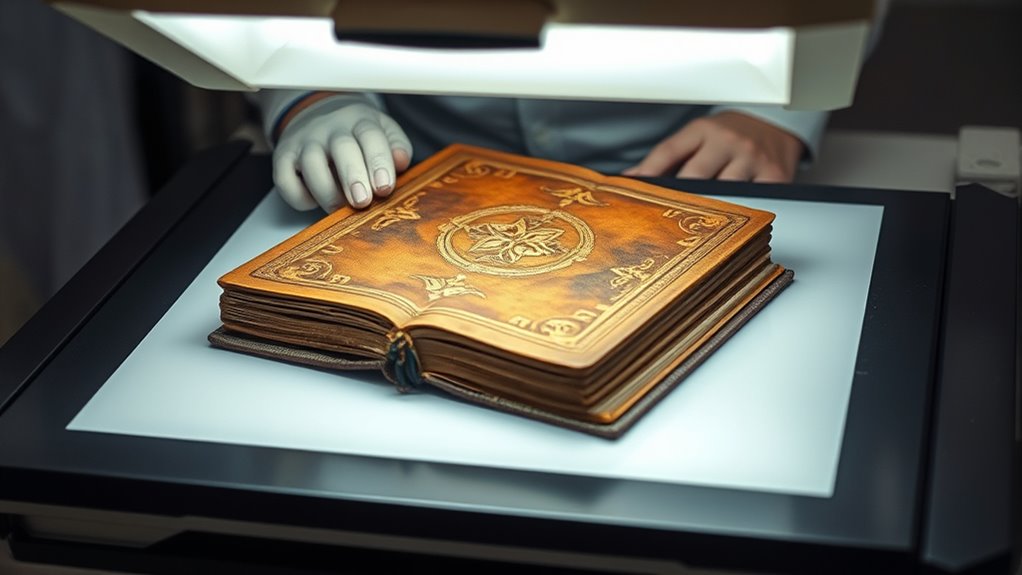

When scanning books without damaging their bindings, handle each book gently to avoid stress on the spine. Use supports like cradles or book holders to distribute pressure evenly, and turn pages carefully to prevent tears. Employ appropriate scanning settings and equipment designed for delicate materials, and support the binding properly during the process. By following these steps, you can preserve your books’ condition—keep going to discover more tips to protect your collection effectively.
Key Takeaways
- Use a book cradle or support tool to keep the binding intact during scanning.
- Avoid forcing books flat; scan at an angle to reduce stress on the spine.
- Turn pages gently and support the binding with your hand or a support device.
- Employ non-invasive scanning methods, such as overhead or non-contact digital capture.
- Handle books carefully, using proper techniques to prevent tears or creases while turning pages.
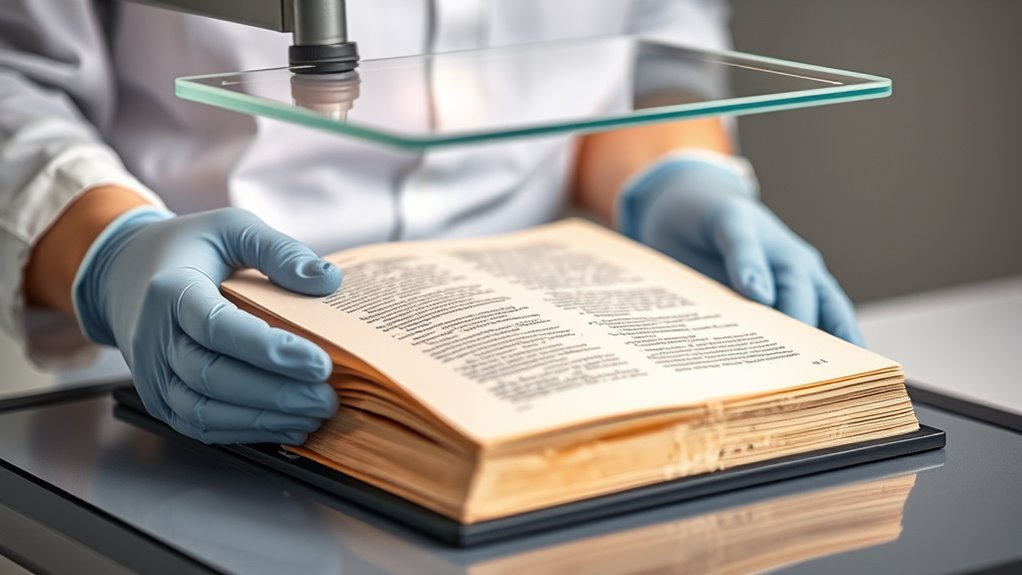
Have you ever worried that scanning a book might damage its binding? It’s a common concern among those who want to preserve their collections while making digital copies. The good news is that with the right techniques, you can scan books effectively without risking harm to their delicate spines and pages. The key lies in understanding how to approach page preservation during the digitization process and integrating best practices for digital archiving. By taking careful steps, you ensure that your physical copies stay intact for years to come, even as you create high-quality digital versions.
When you focus on page preservation, you’re protecting the physical integrity of your books. This means handling each book gently, avoiding forced openings that could crack or weaken the binding. Instead, you should support the spine properly and avoid pressing the book flat against a scanner. Using a cradle or book holder can help keep the binding intact while still allowing you to capture clear images of each page. These tools distribute pressure evenly and prevent unnecessary stress on the binding, which is especially important for older or fragile books. As you scan, take your time to avoid rushing, and handle each page with care, turning them gently to prevent tears or creases. Incorporating proper handling techniques can significantly reduce the risk of damage during the process.
Digital archiving plays a significant role in preserving your collection, but it shouldn’t come at the expense of damaging the original books. When you scan with care, you create accurate digital copies that serve as backups, reducing the need to handle the physical books repeatedly. This way, your collection remains safe from wear and tear caused by frequent handling. Additionally, high-quality digital files help preserve the content even if the physical copies deteriorate over time. Properly stored digital archives also make sharing and research easier, without risking physical damage. To achieve this, use appropriate scanning settings—such as low resolution for text documents or high resolution for detailed images—to balance quality and file size, ensuring your digital archive remains accessible and durable.
In essence, safeguarding your books during scanning is about more than just avoiding damage; it’s about ensuring their longevity through careful handling and strategic digital archiving. By using proper tools and techniques, you can create detailed, lasting digital copies while maintaining the physical integrity of your collection. This approach lets you enjoy the benefits of digital access without compromising the physical condition of your books. When you prioritize page preservation and approach digital archiving thoughtfully, you’re not just making copies—you’re actively extending the life of your treasured collection for future generations.
Top picks for "scann book without"
Open Amazon search results for this keyword.
As an affiliate, we earn on qualifying purchases.
Frequently Asked Questions
What Are the Best Portable Scanners for Fragile Books?
For fragile books, you should choose portable scanners designed for book preservation and scanner ergonomics. Look for handheld or portable book scanners with gentle, non-invasive scanning technology, like the CZUR Shine Ultra or the IRIScan Book 5. These devices allow you to scan without damaging your bindings, while their ergonomic design minimizes strain during use. They’re perfect for preserving delicate pages and ensuring high-quality digital copies.
How Can I Digitize Oversized or Irregularly Shaped Books Safely?
To digitize oversized or irregularly shaped books safely, you should use a book cradle to support the pages and prevent stress on the binding. Opt for non-contact scanning methods like overhead or camera-based scanners, which avoid direct contact and reduce damage risk. This setup allows you to capture high-quality images while keeping your books intact, ensuring they remain preserved for future use.
What Are the Cost Differences Between Professional and DIY Scanning Methods?
You’ll find that the cost comparison between professional and DIY scanning methods varies markedly. Professional services often charge per book or page, which can add up, but they include equipment investment, maintenance, and expertise. DIY scanning requires initial equipment investment like scanners and accessories, but it’s usually cheaper long-term if you regularly digitize books. Consider your volume and budget to decide whether the higher upfront cost of professional services or the ongoing DIY expenses make the most sense for you.
Are There Specific Storage Conditions to Preserve Scanned Digital Copies?
Your digital copies can last forever if you give them a fortress-like storage environment. Keep the humidity low and stable to prevent mold and warping, and maintain consistent temperature levels to avoid data loss or corruption. Use climate-controlled storage or high-quality digital backup solutions. These steps guarantee your scans stay pristine for generations, making your digital library as resilient as a mountain fortress against the elements.
How Do I Ensure Copyright Compliance When Digitizing Books?
To guarantee copyright compliance when digitizing books, you should first seek copyright clearance if the work isn’t in the public domain. If you’re working within fair use guidelines, make sure your purpose, nature, amount used, and effect on the market align with fair use. Always document your permissions and adhere to legal standards, avoiding unauthorized copying to protect yourself from potential infringement issues.
Conclusion
So, next time you’re tempted to treat rare books like fragile porcelain, remember there are clever ways to scan without turning them into modern art. With the right tools and a little patience, you can preserve those precious bindings while still satisfying your inner nerd. After all, who wants to be the villain in the story of your favorite book’s demise? Keep it gentle, keep it smart, and let your books live to tell their tales another day.