

To create a household inventory for insurance claims, start by photographing and documenting each item with detailed descriptions, purchase dates, and serial numbers if applicable. Use a digital catalog to organize your possessions, updating it regularly. For high-value items, obtain formal appraisals and keep receipts or appraisal documents. Storing copies off-site adds extra security. Building a layered system combining photos, appraisals, and detailed records guarantees you’re prepared—more tips on enhancing your inventory await you.

Prime made for students and young adults
- Fast, free delivery for dorm and study essentials
- Prime Video and Amazon Music included
- Member-only deals
Key Takeaways
- Document all household items with detailed descriptions, photographs, serial numbers, purchase dates, and receipts.
- Use a combination of professional appraisals for high-value items and digital photos for regular possessions.
- Organize inventory records digitally with categorization and location tagging for easy access and updates.
- Regularly review and update the inventory to ensure accuracy and include new acquisitions or disposals.
- Store copies of the inventory and supporting documents off-site or in secure cloud storage for safety.
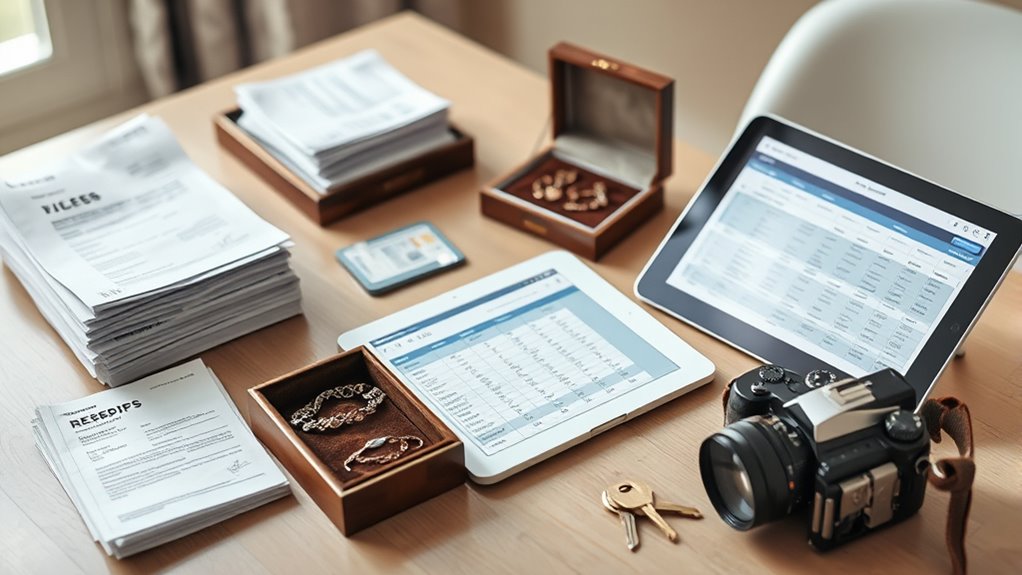
Creating a detailed household inventory is one of the most important steps you can take to safeguard your belongings and guarantee a smooth insurance claim process if disaster strikes. When you have an accurate record of your possessions, it becomes much easier to prove what you own and get fair compensation. One effective way to do this is by exploring different appraisal methods, which help determine the value of your items. For valuable possessions like jewelry, artwork, or collectibles, professional appraisals can provide precise valuations, ensuring you have documented their worth accurately. For everyday items, keeping receipts and photographs can suffice, but for high-value items, investing in a formal appraisal offers added security.
In addition to understanding appraisal methods, digital cataloging is a game-changer in creating a household inventory. Instead of relying solely on paper lists or scattered photos, digital tools allow you to compile, organize, and access your inventory easily. Using smartphone apps or specialized software, you can photograph each item, enter detailed descriptions, and assign categories or locations within your home. This approach not only saves time but also minimizes errors, making it easier to update your inventory as your belongings change. Plus, digital catalogs are easily backed up to cloud storage, meaning your records remain safe even if your physical files are lost or damaged in a disaster.
When you combine appraisal methods with digital cataloging, you develop a thorough, reliable inventory system. For instance, you might use appraisals for high-value items and digital photos with detailed descriptions for everything else. This layered approach ensures you’re prepared for any scenario, whether you need to file a claim for a stolen laptop or replace a damaged sofa. As you create your inventory, be meticulous—include serial numbers, purchase dates, and receipts whenever possible. Regularly update your digital catalog to reflect new purchases or disposals, and keep a printed or electronic copy off-site as a backup. Incorporating reliable valuation techniques can further enhance the accuracy of your inventory and streamline your insurance claims process.
As an affiliate, we earn on qualifying purchases.
Frequently Asked Questions
How Often Should I Update My Household Inventory?
You should update your household inventory at least once a year. Use an insurance app or inventory software to keep track of any new purchases or changes. Regular updates guarantee your records stay accurate, making claims smoother if needed. Also, review your inventory after major events like renovations or acquisitions. Staying current helps you maximize coverage and avoid disputes during claims, giving you peace of mind.
What Should I Include in My Inventory List?
You should include everything valuable in your inventory list, like luxury collectibles and sentimental items, because accidents can happen unexpectedly. Think about jewelry, art, electronics, heirlooms, and rare finds that hold emotional or monetary worth. Be thorough—catalog each item’s description, purchase date, and estimated value. Incorporating these details guarantees you’re prepared for any claim, reminding you that life’s surprises can make the smallest things unexpectedly significant.
Can I Use Photos Instead of Written Descriptions?
Yes, you can definitely use photos instead of written descriptions for your household inventory. Photo documentation provides clear visual records that make it easier to identify items and verify their condition. Take detailed photos from multiple angles and include close-ups of serial numbers or unique features. Keep these images organized digitally or printed alongside your written list to strengthen your insurance claim and confirm everything is accurately documented.
How Do I Estimate the Value of High-End Items?
To tackle treasured items, take thorough photos and seek a luxury appraisal or collectible valuation. You’ll want to compare current market prices, consult expert appraisers, or research similar sales to estimate their worth accurately. Remember, detailed documentation and professional assessments help you confidently claim coverage. This ensures your valuable possessions are properly protected, providing peace of mind and precise payment should a claim arise.
What Should I Do if I Lose Receipts for Purchased Items?
If you lose receipts for purchased items, don’t worry. You should use digital storage to keep copies of your receipts or proof of purchase. Additionally, organize your items through item categorization in your inventory, including photos, descriptions, and estimated values. This way, even without receipts, you can provide detailed records to support your insurance claim, making the process smoother and more accurate.
professional jewelry appraisal service
As an affiliate, we earn on qualifying purchases.
As an affiliate, we earn on qualifying purchases.
Conclusion
Creating a household inventory simplifies insurance claims and guarantees you get fair compensation. Did you know that 60% of homeowners don’t have an up-to-date list of their belongings? Don’t be part of that statistic—take a few minutes to document your possessions today. It’s a small effort that can save you big headaches later. Stay organized and confident, knowing you’re prepared for any unexpected events. Your future self will thank you!
As an affiliate, we earn on qualifying purchases.
cloud storage for home inventory
As an affiliate, we earn on qualifying purchases.
As an affiliate, we earn on qualifying purchases.
Halloween Picks
halloween
As an affiliate, we earn on qualifying purchases.